Caracul Lamb Fur Cuttings
CN → US| HS Code | Tariff Rate | Origin | Destination | Doc |
|---|---|---|---|---|
| 4103901190 | 17.5% | CN | US | Official Doc |
| 4103901140 | 17.5% | CN | US | Official Doc |
Product Images
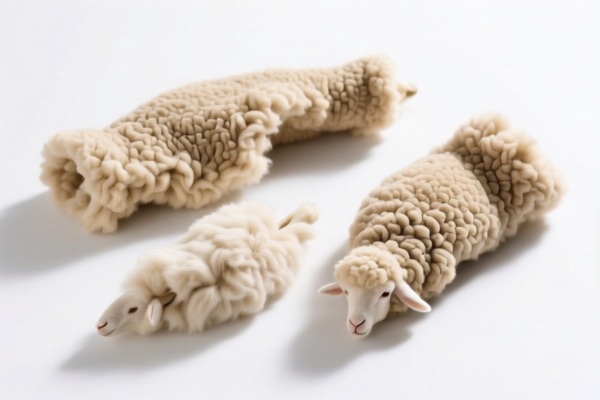
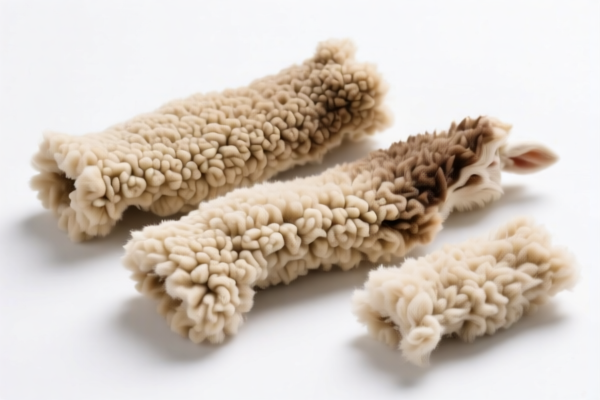
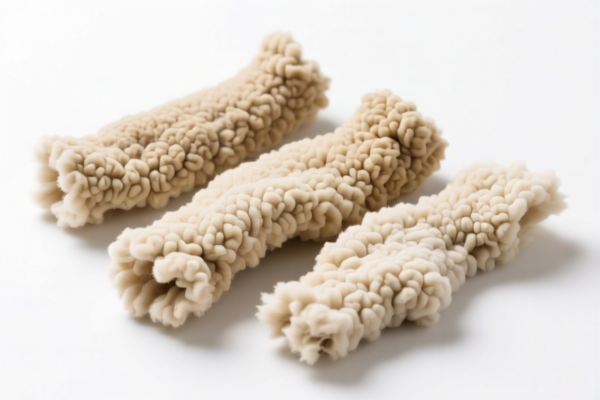
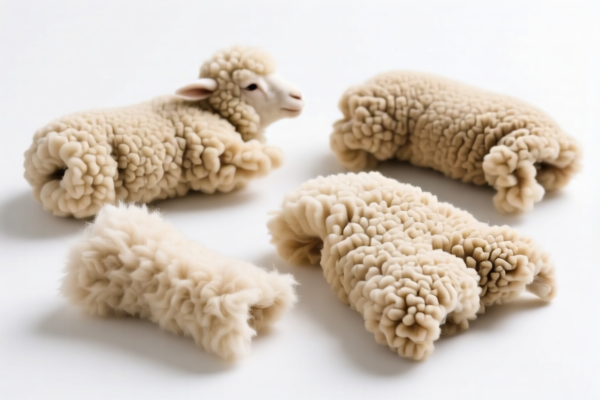
AI Analysis
🐑 Caracul Lamb Fur Cuttings (Shearling Offcuts & Scraps)
🌐 HS Code Reference & Clearance Guide | 2026 Latest Tariff Analysis | Professional Customs Strategy
📌 I. Product Definition & Classification: What Exactly Are "Caracul Lamb Fur Cuttings"?
Caracul Lamb Fur Cuttings refer to the residual pieces, scraps, or offcuts obtained from the processing of Caracul lamb pelts. Caracul lambs are known for their distinctive curly, lustrous fur (often used in high-end fashion, coats, and trims). These "cuttings" are not finished garments or accessories but rather raw material remnants.
In international trade, these are classified under Chapter 41: Raw Hides and Skins (other than fur skins) and Leather.
⚠️ Key Distinction:
- If the fur is merely preserved (salted, dried, or limed) but not tanned into leather → It falls under Heading 4103 (Raw hides/skins, not tanned).
- If the fur has been tanned or further prepared → It falls under Heading 4302 (Fur skins, tanned or further prepared).Note: The provided DATA specifically lists items under HS Code 4103, which corresponds to raw hides/skins that are not tanned or only "not pretanned."
📦 II. HS Code Classification Details (2026 Latest Tariff Authority Comparison)
Based on the provided <DATA>, the specific HS Codes for Caracul Lamb Fur Cuttings (assuming they are raw/preserved and not yet tanned into leather/fur for fashion use) are as follows:
| HS Code | Product Description | Applicable Scenario | Tax Rate (China Origin to US) |
|---|---|---|---|
4103.90.11.90 |
Other raw hides and skins (fresh, salted, dried, limed, pickled, or preserved, not tanned), other than goats or kids | General raw caracul lamb cuttings (not specifically identified as goats/kids) | 7.5% (Base 0% + Additional 7.5%) |
4103.90.11.40 |
Other raw hides and skins (fresh, salted, dried, limed, pickled, or preserved, not tanned), Of goats or kids | If the caracul lambs are misclassified or specifically deemed as "goats/kids" in some regional contexts (less common for Caracul, but possible in broad categories) | 0.0% (Base 0% + Additional 0%) |
🔍 Critical Clarification:
- Caracul is a type of sheep/lamb. Therefore, it typically does not fall under "goats or kids" (4103.90.11.40).
- The correct classification for raw Caracul lamb fur cuttings is most likely4103.90.11.90("Other" raw hides/skins, not pretanned).
- Do NOT assume they are "fur skins" under Chapter 43 unless they are already tanned and prepared for furrier use. Raw cuttings remain in Chapter 41.
💰 III. 2026 Latest Tariff Rate Breakdown (Detailed Tax Clauses)
✅ Applicable Country: United States (US)
✅ Country of Origin: China (CN)
✅ Effective Time: 2025/2026 (Current Trade Policy)
🎯 1. 4103.90.11.90 – Raw Hides and Skins, Not Pretanned (Other, Including Caracul Lamb)
| Item | Content |
|---|---|
| Basic Tariff | 0.0% (Ad valorem) |
| Additional Tariff (Section 301/IEEPA) | +7.5% (Surtax on Chinese goods) |
| Total Tax Rate | 7.5% |
| Tax Calculation | CIF Value × 7.5% |
| De Minimis Exemption? | ❌ Not Eligible (Deny De Minimis for Chinese origins under current 301 rules) |
| Legal Basis Path | USITC:4103.90.11.90 → FOOTNOTE:301.01.03 (Surtax applicable) |
📌 Explanation:
- The base duty for raw hides/skins is 0% in the US General Tariff Schedule.
- However, due to US-China trade tensions, an additional 7.5% tariff is applied to many raw animal products from China under Section 301 measures.
- Total Cost Impact: If you import $10,000 worth of raw Caracul cuttings, you pay $750 in duties.
🎯 2. 4103.90.11.40 – Raw Hides and Skins of Goats or Kids (For Comparison)
| Item | Content |
|---|---|
| Basic Tariff | 0.0% |
| Additional Tariff | 0.0% |
| Total Tax Rate | 0.0% |
| Tax Calculation | $0 |
| De Minimis Exemption? | ❌ Not Eligible (but rate is 0, so irrelevant) |
📌 Warning:
- Do not misdeclare Caracul lamb as "goat skin" to save on taxes. Caracul is distinctly sheep/lamb. Misclassification can lead to severe penalties, back taxes, and customs holds.
- Only use4103.90.11.40if the product is genuinely from goats (e.g., kid goat skin for leather).
🛠️ IV. Customs Clearance Practical Advice (Real-World Pitfall Guide)
✅ 1. Required Documentation Checklist
| Document | Mandatory? | Notes |
|---|---|---|
| ✅ Commercial Invoice | ✔️ | Must clearly state: "Caracul Lamb Fur Cuttings, Raw, Salted/Dried, Not Tanned" |
| ✅ Packing List | ✔️ | Detail weight, number of pieces, and packaging type |
| ✅ Proof of Origin | ✔️ | Certificate of Origin (CO) from China |
| ✅ Product Description | ✔️ | Must specify: Raw vs. Tanned. If tanned, HS Code changes to Chapter 43! |
| ✅ Photos | ✔️ | Show the cuttings, labeling, and preservation method (salted/dried) |
✅ 2. Declaration Tips (Key Mnemonics)
🔥 "Raw is 41, Tanned is 43; Mislabeling Means Fines and No Chance!"
| Situation | Correct HS Code | Incorrect HS Code | Consequence |
|---|---|---|---|
| Raw, salted Caracul cuttings | 4103.90.11.90 (7.5%) |
4302.xxx (Higher duty) |
Overpayment |
| Raw, salted Caracul cuttings | 4103.90.11.90 (7.5%) |
4104.11.00 (Tanned leather) |
Misclassification penalty |
| Tanned Caracul fur (for fashion) | 4302.10.00 (Chapter 43) |
4103.90.11.90 |
High Risk of Audit & Penalty |
✅ 3. Special Cases
| Scenario | Handling Advice |
|---|---|
| Mixed with Goat Skins | Declare separately! Mixing leads to complex classification. |
| Wet-Fresh Skins | Ensure proper phytosanitary certificates to prevent odor/decay issues at customs. |
| Value Declaration | Declaring too low triggers inspections. Use market value for raw cuttings. |
| Origin Marking | Clearly mark "Made in China" on all packages. |
🌍 V. Global Market Comparison (2026)
| Country/Region | Recommended HS Code | Tariff (China Origin) | Notes |
|---|---|---|---|
| 🇺🇸 USA | 4103.90.11.90 |
7.5% | Subject to Section 301 surtax |
| 🇪🇺 EU | 4103 90 | Varies (0-5%) | No Section 301 surtax, but check EU trade policies |
| 🇨🇳 China | 4103 90 | 5-10% | Import duty for raw hides |
| 🇬🇧 UK | 4103 90 | Varies | Post-Brexit trade rules apply |
📌 Conclusion:
- The US is the most taxed market for raw Chinese hides/skins due to 7.5% additional tariff.
- For tanned caracul fur, rates in the EU may be lower, but Chapter 43 applies.
📌 VI. Common Mistakes & Pitfall Guide (Lessons Learned)
❌ Mistake 1: Declaring tanned fur as "raw" to avoid higher duties.
👉 Result: Customs lab tests will reveal tanning agents → Penalties + Back Taxes.
❌ Mistake 2: Using "Fur Cuttings" without specifying "Raw/Not Tanned."
👉 Result: Customs assumes Chapter 43 (Tanned) → Higher Duty & Delay.
❌ Mistake 3: Misclassifying Lamb as "Goat" (4103.90.11.40) to get 0% tax.
👉 Result: Severe Penalties for fraudulent declaration. Caracul is sheep/lamb.
❌ Mistake 4: Ignoring the 7.5% Section 301 surtax.
👉 Result: Unexpected cost at customs, cash flow issues.
✅ Correct Practice:
"Caracul Lamb Fur Cuttings, Raw, Salted, Not Tanned, HS Code: 4103.90.11.90, Origin: China"
🎯 VII. Conclusion: Precision Classification Saves Money!
🎯 Remember:
🔹 "Raw = 41, Tanned = 43; Don't Guess, Check the Data!"
🔹 "7.5% Surtax on Chinese Raw Hides; Factor it in!"
📌 Pro Tip:
If you are importing large volumes, consider applying for a Customs Ruling to confirm HS Code classification before shipment. This avoids surprises at the border.
📣 Take Action Now:
📞 Verify with your customs broker: Is it Raw or Tanned?
🚀 Correct classification = Smooth Clearance + Predictable Costs!
✨ Professional Customs Clearance Starts with Accurate Classification!
💼 Every Dollar Counts in International Trade!
Customer Reviews
About HS Code Classification
The Harmonized System (HS) is an internationally standardized nomenclature developed by the World Customs Organization (WCO) to classify traded products. Over 200 countries use the HS system as the basis for customs tariffs, trade statistics, and import/export regulations.
Each HS code follows a hierarchical structure:
- Chapter (2 digits) — Broad category of goods (e.g., Chapter 84: Machinery and Mechanical Appliances)
- Heading (4 digits) — More specific grouping within the chapter
- Subheading (6 digits) — Internationally standardized breakdown, used by all WCO member countries
- National subdivisions (8-10 digits) — Country-specific extensions for further classification, such as US HTSUS 10-digit codes
Correct HS code classification is essential for smooth customs clearance, accurate duty payment, and compliance with trade regulations. Misclassification can lead to customs delays, overpayment of duties, or penalties.
When importing from CN to US, the applicable tariff rates may include:
- Most-Favored-Nation (MFN) rate — The standard duty rate applied to WTO members
- General rate — Applied to countries without trade agreements
- Trade remedy duties — Additional tariffs such as Section 301 (anti-dumping), Section 232 (national security), or countervailing duties
The information provided on this page is for reference purposes only. For official classification, please consult with your local customs authority or a licensed customs broker.