Carbendazim Wettable Powder
CN → US| HS Code | Tariff Rate | Origin | Destination | Doc |
|---|---|---|---|---|
| 3809935000 | 41.0% | CN | US | Official Doc |
| 3809925000 | 41.0% | CN | US | Official Doc |
| 3808921500 | 41.5% | CN | US | Official Doc |
| 3808925080 | 40.0% | CN | US | Official Doc |
| 2933392100 | 16.5% | CN | US | Official Doc |
Product Images
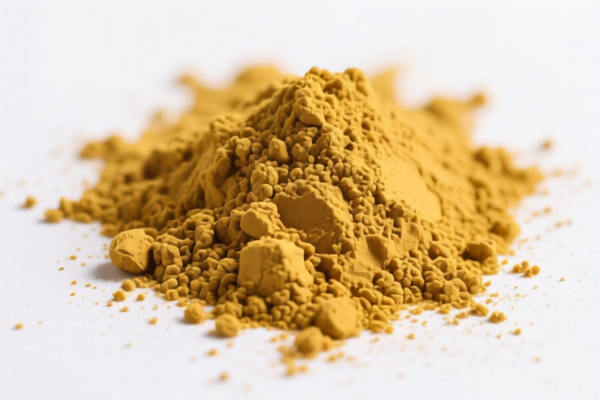
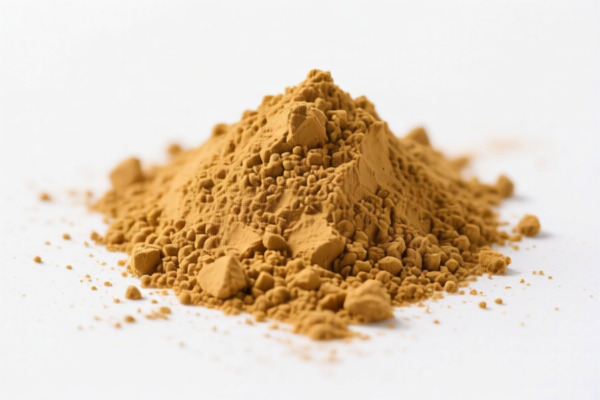
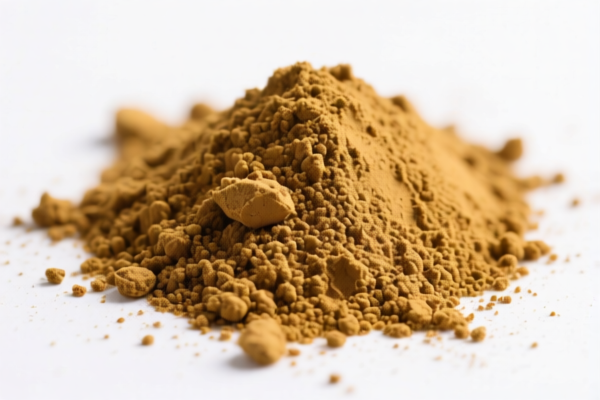
AI Analysis
🌾 Carbendazim Wettable Powder: HS Code & Customs Clearance Guide (2026)
🌐 HS Code Reference & Customs Clearance Guide | 2026 Latest Tariff Analysis | Professional Clearance Strategy
📌 I. Product Definition & Classification: Do You Really Understand "Carbendazim Wettable Powder"?
Carbendazim Wettable Powder (WP) is a broad-spectrum, systemic fungicide widely used in agriculture and industry. In international trade, its classification depends heavily on whether it is classified as a raw chemical active ingredient or a formulated pesticide product. The physical form is "wettable powder," but the chemical structure and intended use dictate the HS Code.
Key Distinction Points: - Active Ingredient vs. Formulation: If the product is pure Carbendazim (chemical compound), it falls under Chapter 29 (Organic Chemicals). If it contains other excipients/additives and is packaged for immediate agricultural use, it often falls under Chapter 38 (Miscellaneous Chemical Products). - Chemical Structure: Carbendazim is a benzimidazole derivative (a nitrogen-containing heterocyclic compound with a pyridine-like ring structure).
⚠️ Critical Note:
- Pure Chemical: Classified under 2933.39 (Heterocyclic compounds).
- Pesticide Formulation: Classified under 3808 (Pesticides/Rodenticides/Fungicides) or 3809 (Tanning/Printing Preparations, though less common for pure fungicides).
📦 II. HS Code Classification Details (2026 Latest Tariff Authority)
| HS Code | Product Description | Application Scenario | Tax Rate (China Origin to US) |
|---|---|---|---|
2933.39.21.00 |
Carbendazim as a pure organic chemical (Heterocyclic compound with pyridine ring structure), powder form. | Active Ingredient (AI) production, bulk chemical trade. | 16.5% |
3808.92.15.00 |
Carbendazim as an aromatic fungicide formulation, wettable powder. | Formulated pesticide for agricultural use. | 41.5% |
3808.92.50.80 |
Carbendazim explicitly classified as a fungicide formulation, wettable powder. | Formulated pesticide, specific fungicide subheading. | 40.0% |
3809.93.50.00 |
Carbendazim as an agricultural/industrial biocide preparation, powder form. | Broad "other preparations" category. | 41.0% |
3809.92.50.00 |
Carbendazim as a chemical additive/preparation, powder form. | Additive role or miscellaneous chemical preparation. | 41.0% |
🔍 Key Insight:
- There is a massive tax difference (up to 25 percentage points) between the Active Ingredient (2933) and the Formulation (3808/3809). - Classification must be precise. Misclassifying a pure chemical as a formulation can lead to underpayment of duties; misclassifying a formulation as a chemical may lead to duty evasion penalties.
💰 III. 2026 Latest Tariff Rate Breakdown (Including Surtaxes & Policy Add-ons)
✅ Applicable Country: United States (US)
✅ Origin: China (CN)
✅ Effective Date: November 10, 2025 (and subsequent imports)
🎯 1. 2933.39.21.00 —— Carbendazim (Active Ingredient / Heterocyclic Compound)
| Item | Content |
|---|---|
| Base Tariff | 6.5% (Ad valorem) |
| Section 301 Surtax | 0.0% (Note: Some chemical inputs may be exempted or lower, but base is 6.5%) |
| IEEPA Surtax | +10% (Section 122 Tariff for Chinese/PRC products) |
| Total Tariff | 16.5% |
| Tax Calculation | CIF Value × 16.5% |
| De Minimis Exemption | ❌ Not Eligible (deny_de_minimis) |
| Legal Basis Path | USITC:2933.39.21.00 → IEEPA:9903.01.24 → Section 122:10% |
📌 Explanation:
- This is the lowest tax bracket for Carbendazim.
- The "Section 301" surtax is 0% here, which is significantly lower than the 25% often applied to finished goods.
- However, the IEEPA 10% surtax still applies.
- Strategy: If you are exporting pure Carbendazim API (Active Pharmaceutical/Agrochemical Ingredient), fight for this classification!
🎯 2. 3808.92.50.80 —— Carbendazim (Fungicide Formulation)
| Item | Content |
|---|---|
| Base Tariff | 5.0% |
| Section 301 Surtax | +25.0% |
| IEEPA Surtax | +10% (Section 122) |
| Total Tariff | 40.0% |
| Tax Calculation | CIF Value × 40.0% |
| De Minimis Exemption | ❌ Not Eligible |
| Legal Basis Path | USITC:3808.92.50.80 → Section 301:25% → IEEPA:9903.01.24 → Section 122:10% |
📌 Explanation:
- This is the most favorable classification within the Pesticide Formulation (Chapter 38) category.
- Even though the base tariff is low (5%), the 25% Section 301 surtax is the dominant cost driver.
- Total tax is 40%, which is high but still lower than other formulation codes (41.0-41.5%).
🎯 3. 3808.92.15.00 & 3809.* —— Other Pesticide/Chemical Preparations
| Item | Content |
|---|---|
| Base Tariff | 6.0% - 6.5% |
| Section 301 Surtax | +25.0% |
| IEEPA Surtax | +10% |
| Total Tariff | 41.0% - 41.5% |
| De Minimis Exemption | ❌ Not Eligible |
📌 Explanation:
- These codes are often used if the product does not fit the specific "Fungicide" subheading of3808.92.50.
- The tax burden is slightly higher than3808.92.50.80due to a slightly higher base tariff.
- Avoid these if possible if3808.92.50.80is applicable.
🛠️ IV. Customs Clearance Operational Advice (Practical Pitfall Avoidance)
✅ 1. Required Documentation Checklist (Mandatory)
| Document | Must Provide | Description |
|---|---|---|
| ✅ Technical Data Sheet (TDS) | ✔️ | Must specify Carbendazim content %, molecular formula, and whether it is API or Formulation. |
| ✅ Certificate of Analysis (COA) | ✔️ | Proves purity level. Critical for distinguishing between HS 2933 (API) and 3808 (Formulation). |
| ✅ Product Label & SDS | ✔️ | Must show "Fungicide" for Chapter 38 codes. If it says "Industrial Chemical Intermediate," it supports Chapter 29. |
| ✅ Commercial Invoice | ✔️ | Description must be precise: e.g., "Carbendazim 50% WP Fungicide" vs. "Carbendazim 95% TC (Technical Concentrate)." |
| ✅ US EPA Registration Number | ✔️ | Crucial for Chapter 38 imports. The product must be EPA-registered to be legally imported as a pesticide. |
| ✅ Supply Chain Statement | ✔️ | Proof of origin and manufacturing process to determine if it's a "Chemical" or "Formulated Product." |
✅ 2. Classification Strategy (Key Mantra)
🔥 “Pure Chemical goes to 2933, Formulation goes to 3808. API saves 25%, Formulation pays the price!”
| Scenario | Correct HS Code | Wrong Code | Consequence |
|---|---|---|---|
| Carbendazim Technical Concentrate (TC) ≥95% | 2933.39.21.00 |
3808.92.50.80 |
Savings: ~23.5% Tax! (16.5% vs 40%) |
| Carbendazim WP (Formulated with Fillers) | 3808.92.50.80 |
2933.39.21.00 |
Penalty: Misclassification, potential fraud charges. |
| Carbendazim + Other Fungicides (Mixture) | 3808.92.50.80 |
2933.39.21.00 |
Penalty: Must be classified as a mixture/preparation. |
| Carbendazim for Industrial Non-Agri Use | Check 3809 or 3824 |
3808 |
Risk: If not for agriculture, 3808 may be rejected. |
✅ 3. Special Case Handling
| Situation | Handling Advice |
|---|---|
| EPA Registration Status | If the product is not EPA-registered, it cannot be imported under 3808. It may be held at customs or rejected. |
| Mixed Consignments | If Carbendazim WP is shipped with other fungicides, declare them separately or use the highest applicable rate. Do not lump them under one code. |
| OEM/Private Label | Ensure the label matches the EPA registration. Discrepancies cause delays. |
| Small Sample Shipments | Even small shipments of pesticides require proper HS classification and EPA compliance. Do not use "gifts" to bypass this. |
🌍 V. Global Market Comparison (2026 Latest)
| Country/Region | Recommended HS Code | Tariff (China Origin) | Certification Requirements | Notes |
|---|---|---|---|---|
| 🇺🇸 USA | 2933.39.21.00 (API)3808.92.50.80 (Formulation) |
16.5% (API) 40.0% (Formulation) |
EPA Registration (Mandatory) + SDS | High compliance cost. Section 301 and IEEPA surtaxes apply. |
| 🇨🇳 China | 2933.39.21.00 |
6.5% | None for Import (but strict for Export) | Lower tax for API. |
| 🇪🇺 EU | 3808.94 (Fungicides) |
6.5% | EU BPR Registration (Biocidal Products Regulation) | Strict environmental standards. |
| 🇯🇵 Japan | 3808.93 |
5.0% - 10% | Ministry of Agriculture Registration | Varies by formulation. |
| 🇧🇷 Brazil | 3808.94 |
14.0% - 20% | IBAMA Registration | High import duties, strict biosecurity. |
📌 Conclusion:
- The USA is one of the most expensive markets due to the 25% Section 301 + 10% IEEPA surtax on formulations.
- API imports (2933) are significantly cheaper but require rigorous proof of chemical purity.
- EPA Registration is non-negotiable for any pesticide import into the US.
📌 VI. Common Mistakes & Pitfall Guide (Blood & Tears Lessons)
❌ Mistake 1: Classifying "Carbendazim 50% WP" as 2933.39.21.00 to save taxes.
👉 Result: Customs will reject it because it’s a formulated product, not a pure chemical. Back taxes + penalties.
❌ Mistake 2: Importing without EPA Registration under HS 3808.
👉 Result: Seizure and Destruction of goods. FDA/EPA will block entry.
❌ Mistake 3: Ignoring the IEEPA 10% Surtax in cost calculations.
👉 Result: Profit margin erosion. Many traders forget this surtax applies to both API and Formulation from China.
❌ Mistake 4: Using "Chemical Reagent" as the description for a pesticide formulation.
👉 Result: Misdeclaration. Customs may audit and find it’s actually a pesticide, leading to fraud allegations.
✅ Correct Practice:
“Carbendazim 50% Wettable Powder Fungicide, EPA Reg No. [XXXX-XX], HS Code 3808.92.50.80, SDS Available.”
🎯 VII. Conclusion: Professional Classification Saves Money!
🎯 Remember the Mantra:
🔹 “API is 16.5%, Formulation is 40%. EPA is Mandatory, Don’t Be Lazy!”
🔹 “HS Code determines tax, Tax determines profit. Declare correctly, stay safe!”
📌 Pro Tip:
If you are importing Carbendazim Technical Concentrate (TC), ensure your supplier provides a Certificate of Analysis proving >90% purity to support HS
2933.39.21.00. This can save you 23.5% in duties compared to importing the formulated powder.
📣 Immediate Action:
📞 Verify EPA Registration Status
📄 Obtain TDS & COA
🚀 Apply for Pre-Ruling if unsure between2933and3808.
✨ Professional Clearance Starts with Precise Classification!
💼 Every Cent of Duty Saved is Pure Profit!
Customer Reviews
About HS Code Classification
The Harmonized System (HS) is an internationally standardized nomenclature developed by the World Customs Organization (WCO) to classify traded products. Over 200 countries use the HS system as the basis for customs tariffs, trade statistics, and import/export regulations.
Each HS code follows a hierarchical structure:
- Chapter (2 digits) — Broad category of goods (e.g., Chapter 84: Machinery and Mechanical Appliances)
- Heading (4 digits) — More specific grouping within the chapter
- Subheading (6 digits) — Internationally standardized breakdown, used by all WCO member countries
- National subdivisions (8-10 digits) — Country-specific extensions for further classification, such as US HTSUS 10-digit codes
Correct HS code classification is essential for smooth customs clearance, accurate duty payment, and compliance with trade regulations. Misclassification can lead to customs delays, overpayment of duties, or penalties.
When importing from CN to US, the applicable tariff rates may include:
- Most-Favored-Nation (MFN) rate — The standard duty rate applied to WTO members
- General rate — Applied to countries without trade agreements
- Trade remedy duties — Additional tariffs such as Section 301 (anti-dumping), Section 232 (national security), or countervailing duties
The information provided on this page is for reference purposes only. For official classification, please consult with your local customs authority or a licensed customs broker.