Carbon Belt Sander
CN → US| HS Code | Tariff Rate | Origin | Destination | Doc |
|---|---|---|---|---|
| 8465930004 | 38.0% | CN | US | Official Doc |
| 8465930065 | 38.0% | CN | US | Official Doc |
Product Images
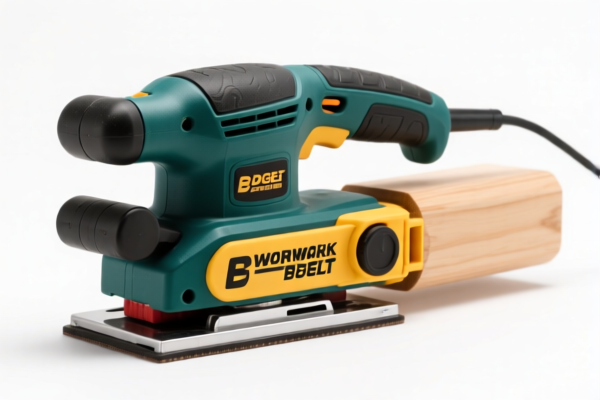
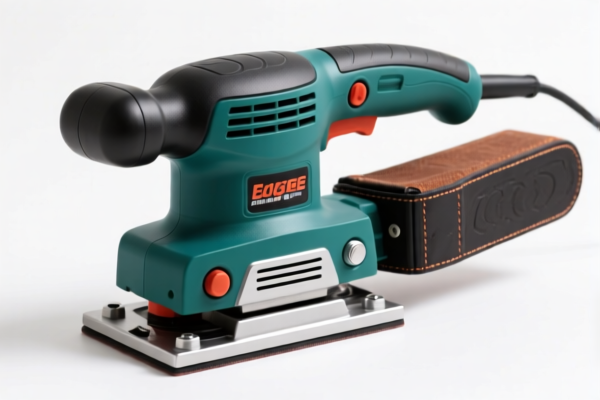
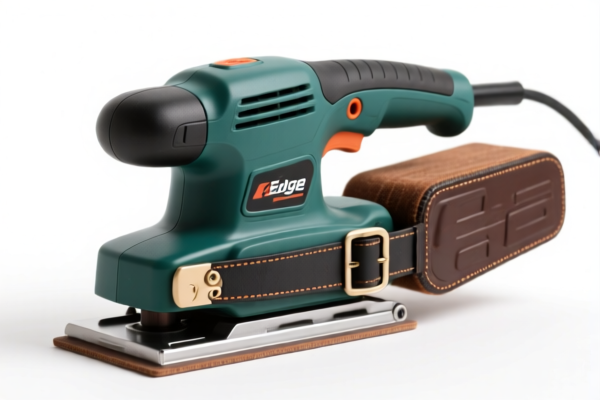
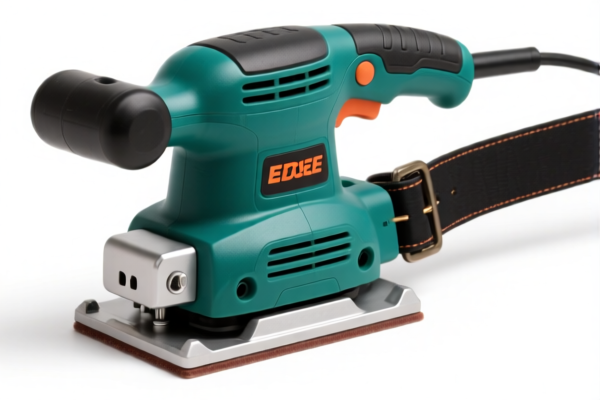
AI Analysis
🪚 Carbon Belt Sanders & Woodworking Machinery (HS Code 8465.93.00)
🌐 HS Code Reference & Customs Clearance Guide | 2026 Latest Tariff Analysis | Professional Clearance Strategy
📌 I. Product Definition and Classification: What Exactly is a "Carbon Belt Sander"?
In the context of international trade, "Carbon Belt Sander" typically refers to industrial or professional-grade belt sanders used for woodworking, often distinguished by their carbon motor brushes (a common feature in heavy-duty tools) or sometimes referring to carbon fiber reinforced components in high-end models. However, for HS Code classification purposes, the key factor is function and application, not just the motor type.
These machines fall under:
Chapter 84: Nuclear reactors, boilers, machinery and mechanical appliances; parts thereof.
Heading 84.65: Machine tools for working wood, cork, bone, hard rubber, hard plastics or similar hard materials.
Specifically, they are classified under:
8465.93: Grinding, sanding or polishing machines for woodworking
Sub-classified by belt width and condition (new/used/rebuilt).⚠️ Key Distinction:
- If the machine is a standalone belt sander for woodworking →归入 8465.93.xx
- If it is a handheld tool (e.g., portable belt sander) → It may fall under 8207.30 (hand tools) or 8467.21 (portable tools with self-contained electric motor), NOT 8465.93.
- Critical Point: The HS codes provided in your data explicitly mention "For woodworking" and "Belt sanders, for a belt width <60 cm or wider", which confirms these are industrial/static machines, not handheld tools.
📦 II. HS Code Classification Details (2026 Latest Tariff Concordance)
Based on your provided <DATA>, here are the two relevant HS Codes for used/rebuilt belt sanders for woodworking:
| HS Code | Product Description | Condition | Belt Width | Applicable Scenario |
|---|---|---|---|---|
8465.93.00.04 |
Grinding, sanding or polishing machines for woodworking: Belt sanders, for a belt width <60 cm | Used or Rebuilt | <60 cm | Industrial stationary belt sanders with narrow belts (common in smaller workshops or precision sanding) |
8465.93.00.65 |
Grinding, sanding or polishing machines for woodworking: Belt sanders, for a belt width ≥60 cm | Used or Rebuilt | ≥60 cm | Heavy-duty industrial belt sanders with wide belts (common in large-scale furniture manufacturing) |
🔍 Important Notes:
- Both codes apply only to used or rebuilt machines. New machines would fall under different subheadings (e.g., 8465.93.00.00 or similar, depending on exact width).
- "Carbon" in the product name does not change the HS Code. It is a marketing or technical detail about the motor.
- "For woodworking" is mandatory. If used for metal, plastic, or other materials, it may fall under different headings (e.g., 84.63 for metalworking tools).
💰 III. 2026 Latest Tariff Rate Details (Including Surcharges, Policy Add-ons)
✅ Applicable Country: United States (US)
✅ Origin: China (CN) (Assumed based on typical trade context; adjust if origin differs)
✅ Effective Date: 2025–2026
🎯 1. 8465.93.00.04 —— Used Belt Sanders for Woodworking (Belt Width <60 cm)
| Item | Content |
|---|---|
| Base Tariff | 0.0% |
| Section 301 Surcharge | 0.0% |
| Total Tax Rate | 0.0% |
| Tax Detail | Base Tariff: 0.0%, Surcharges: 0.0% |
| De Minimis Exemption | ❌ Not Applicable (This is machinery, not small parcels) |
| Legal Basis | HTSUS 8465.93.00.04 → Section 301 Footnote Check |
📌 Explanation:
- This HS Code currently enjoys 0% total tariff in the US.
- No Section 301 surcharge applies to this specific subheading for Chinese goods as of 2026.
- This is a significant cost advantage compared to many other woodworking machines.
🎯 2. 8465.93.00.65 —— Used Belt Sanders for Woodworking (Belt Width ≥60 cm)
| Item | Content |
|---|---|
| Base Tariff | 0.0% |
| Section 301 Surcharge | 0.0% |
| Total Tax Rate | 0.0% |
| Tax Detail | Base Tariff: 0.0%, Surcharges: 0.0% |
| De Minimis Exemption | ❌ Not Applicable |
| Legal Basis | HTSUS 8465.93.00.65 → Section 301 Footnote Check |
📌 Explanation:
- Identical tariff treatment as the narrower belt version.
- Zero tariff for used/rebuilt woodworking sanders from China to the US.
- This is likely due to non-compete status or specific exclusions for industrial machinery in this category.
🛠️ IV. Customs Clearance Practical Advice (Real-World Pitfall Avoidance)
✅ 1. Required Documentation Checklist (Non-Negotiable)
| Document | Mandatory? | Notes |
|---|---|---|
| ✅ Commercial Invoice | ✔️ | Must clearly state "Used Belt Sander for Woodworking", include HS Code, origin, and condition (used/rebuilt) |
| ✅ Packing List | ✔️ | Detail dimensions, weight, and belt width (to justify <60 cm vs ≥60 cm) |
| ✅ Product Photos | ✔️ | Show the machine, motor, belt, and any labels indicating "for woodworking" |
| ✅ Certificate of Origin (CO) | ✔️ | If claiming preferential treatment elsewhere, but for US, no preference applies |
| ✅ Condition Declaration | ✔️ | Explicitly state "Used" or "Rebuilt" to match HS Code 8465.93.00.04/65 |
| ✅ Motor Specification Sheet | ✔️ | Confirm it is a carbon brush motor (optional but helpful for verification) |
✅ 2. Declaration Tips (Key Mantras)
🔥 "Specify Condition, Confirm Woodwork, Measure Belt Width!"
| Scenario | Correct Declaration | Wrong Practice |
|---|---|---|
| New Machine | ❌ Do NOT use 8465.93.00.04/65 | Use wrong HS → Delay/Rejection |
| Handheld Sander | ❌ Do NOT use 8465.93.00.xx | Use 8467.21/8207 instead |
| Belt Width = 59 cm | Use 8465.93.00.04 |
Use 8465.93.00.65 → Risk of reclassification |
| Belt Width = 60 cm | Use 8465.93.00.65 |
Use 8465.93.00.04 → Risk of reclassification |
| Non-Wood Use | ❌ Do NOT use 8465.93.xx | Use metal/plastic working codes instead |
✅ 3. Special Cases Handling
| Case | Recommendation |
|---|---|
| OEM/White-Label Machines | Provide original manufacturer’s specs to prove "for woodworking" |
| Rebuilt Machines | Ensure rebuild documentation is available to justify "Rebuilt" status |
| Mixed Shipments | Separate new vs. used items; do not mix under one HS Code |
| Carbon Fiber Components | Still classify as 8465.93 if the primary function is woodworking sanding |
🌍 V. Global Market Customs Comparison (2026 Latest)
| Country/Region | Recommended HS Code | Tariff Rate | Certification | Notes |
|---|---|---|---|---|
| 🇺🇸 USA | 8465.93.00.04 / 8465.93.00.65 |
0% | No special cert. required | Zero tariff for used woodworking sanders |
| 🇨🇳 China | 8465.93.00 |
0–5% | CCC (if new) | Import duty may apply if new |
| 🇪🇺 EU | 8465.93 |
0% | CE Mark required | No surcharge |
| 🇬🇧 UK | 8465.93 |
0% | UKCA Mark | Post-Brexit alignment |
| 🇦🇺 Australia | 8465.93 |
5% | RCM | No surcharge |
📌 Conclusion:
- USA offers the best tariff advantage at 0% for used/rebuilt woodworking belt sanders.
- EU and UK also have 0%, but stricter certification (CE/UKCA) is required.
- China and Australia have low or zero rates, but certification differs.
📌 VI. Common Mistakes & Pitfalls (Lessons Learned)
❌ Mistake 1: Declaring as "New" when it is "Used"
👉 Consequence: Wrong HS Code → Potential penalty or seizure.
❌ Mistake 2: Omitting "For Woodworking" in description
👉 Consequence: Customs may classify under metalworking tools → Higher tariff.
❌ Mistake 3: Not specifying Belt Width
👉 Consequence: Unclear classification → Risk of being placed in general machinery category → 2.5%–5% tariff.
❌ Mistake 4: Using 8465.93.00.00 (general) instead of specific subcodes
👉 Consequence: Misses the 0% preferential rate for specific used/rebuilt categories.
✅ Correct Practice:
"Used Belt Sander for Woodworking, Carbon Motor, Belt Width 50 cm, Model ABC, Made in China"
🎯 VII. Conclusion: Precision in Classification Saves Money!
🎯 Remember:
🔹 "Used + Woodworking + Belt Width = 0% Tariff in US"
🔹 "Condition matters: New ≠ Used"
🔹 "Belt width decides the subcode: <60 cm vs ≥60 cm"
📌 Pro Tip:
If you are importing new belt sanders, check for different HS Codes (e.g., 8465.93.00.00), as tariffs may differ. For used/rebuilt, you are in a zero-tariff sweet spot for the US.
📣 Immediate Action:
📞 Contact a customs broker with product photos and specifications.
📄 Provide a Condition Declaration explicitly stating "Used" or "Rebuilt".
🚀 Clear customs smoothly, avoid delays, and enjoy 0% tariff!
✨ Professional classification starts with precise description!
💼 Every dollar counts in global trade!
Customer Reviews
About HS Code Classification
The Harmonized System (HS) is an internationally standardized nomenclature developed by the World Customs Organization (WCO) to classify traded products. Over 200 countries use the HS system as the basis for customs tariffs, trade statistics, and import/export regulations.
Each HS code follows a hierarchical structure:
- Chapter (2 digits) — Broad category of goods (e.g., Chapter 84: Machinery and Mechanical Appliances)
- Heading (4 digits) — More specific grouping within the chapter
- Subheading (6 digits) — Internationally standardized breakdown, used by all WCO member countries
- National subdivisions (8-10 digits) — Country-specific extensions for further classification, such as US HTSUS 10-digit codes
Correct HS code classification is essential for smooth customs clearance, accurate duty payment, and compliance with trade regulations. Misclassification can lead to customs delays, overpayment of duties, or penalties.
When importing from CN to US, the applicable tariff rates may include:
- Most-Favored-Nation (MFN) rate — The standard duty rate applied to WTO members
- General rate — Applied to countries without trade agreements
- Trade remedy duties — Additional tariffs such as Section 301 (anti-dumping), Section 232 (national security), or countervailing duties
The information provided on this page is for reference purposes only. For official classification, please consult with your local customs authority or a licensed customs broker.