Carbon Copy Paper
CN → US| HS Code | Tariff Rate | Origin | Destination | Doc |
|---|---|---|---|---|
| 4809202000 | 35.0% | CN | US | Official Doc |
| 4811493000 | 35.0% | CN | US | Official Doc |
| 4816200000 | 35.0% | CN | US | Official Doc |
| 4816900100 | 35.0% | CN | US | Official Doc |
| 4809204000 | 35.0% | CN | US | Official Doc |
Product Images
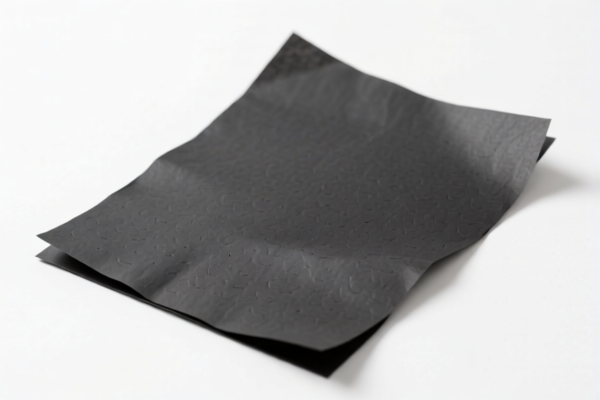
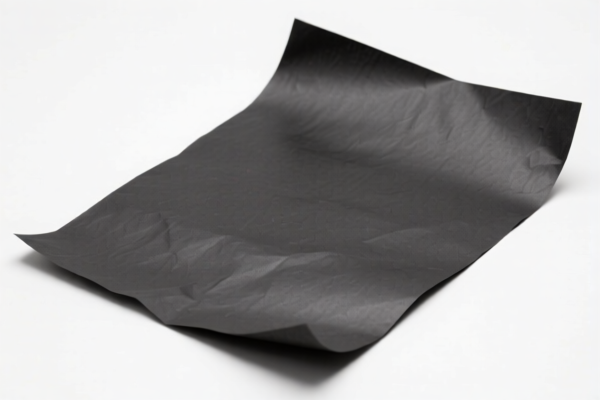


AI Analysis
📄 Carbon Copy Paper (Carbonless Copy Paper / NCR Paper)
🌐 HS Code Reference & Customs Clearance Guide | 2026 Latest Tariff Analysis | Professional Clearance Strategy
📌 One: Product Definition and Classification: Do You Really Understand "Carbon Copy Paper"?
Carbon Copy Paper, often referred to as NCR (No Carbon Required) paper or simply Carbonless Copy Paper, is a specialized stationery item used to create duplicate copies of documents without the need for chemical carbon paper between sheets. It relies on micro-encapsulated dye and clay coatings on the paper surface to produce images upon impact (typewriter, printer, or handwriting).
In international trade, it is strictly classified under Chapter 48 (Paper and Paperboard). The key to accurate classification lies in its manufacturing process and surface treatment: 1. Surface Treatment: It involves coating paper with reactive chemicals (front side) and clay/resin (back side). 2. Classification Dilemma: It can be classified under "Carbon Paper" (Heading 4809) or "Other Paper Products" (Heading 4816), depending on the specific technical definition used by different customs authorities, though the summary notes in your data suggest multiple potential codes with identical tax outcomes.
⚠️ Key Distinction:
- If the product is explicitly defined as "Carbon Paper" (using dry carbon coating) or "Self-Copying Paper" that falls under the traditional definition of carbon paper substitutes in specific national tariff books → It may fall under 4809 or 4816. - If it is considered a "Coated/Decorated Paper" → It may fall under 4811.
📦 Two: HS Code Classification Details (2026 Latest Tariff Authority Comparison)
Based on the provided data, there are five potential HS Codes. Crucially, all of them share the exact same tax structure for US imports from China.
| HS Code | Product Description & Rationale | Applicability |
|---|---|---|
4809.20.20.00 |
Carbon Paper (Traditional/General): Summary states: "Product name 'Carbon Paper' completely matches the classification explanation for 'Carbon Paper', material and usage match." |
Standard carbon copy sheets, often including older-style carbon paper or direct equivalents. |
4811.49.30.00 |
Coated/Decorated Paper (Adhesive/Chemically Treated): Summary states: "Carbon paper belongs to coated, colored, or decorated paper products. Material is paper-based, fitting the material attribute of 'Adhesive Paper and Paperboard' (a category of coated paper)." |
NCR paper viewed as a chemically treated/coated paper product. |
4816.20.00.00 |
Carbon Paper (Specific Subheading): Summary states: "Product name 'Carbon Paper' completely matches the classification explanation for 'Carbon Paper', material and usage match." |
Similar to 4809, often used for specific types of carbonless sheets in certain jurisdictions. |
4816.90.01.00 |
Other Paper Products: Summary states: "Product name 'Carbon Paper' and the 'Carbon Paper' in the classification completely match in usage and form." |
Fallback category if not strictly "Carbon Paper" but similar in form/usage. |
4809.20.40.00 |
Self-Copying Carbon Paper: Summary states: "Product name 'Carbon Paper' and the 'Self-Copying Carbon Paper' in the classification are completely consistent in usage and material attributes." |
Specifically highlights "Self-Copying" (NCR) nature. |
🔍 Important Note:
- All five codes listed in the data result in the exact same total tax rate. - The choice among these codes often depends on the specific customs broker's interpretation or local tariff book nuances, but the financial impact is identical.
💰 Three: 2026 Latest Tariff Rate Details (Including Additional Taxes)
✅ Applicable Country: United States (US)
✅ Country of Origin: China (CN)
✅ Effective Date: 2025/2026 (Current Trade Environment)
🎯 1. All HS Codes (4809.20.20.00, 4811.49.30.00, 4816.20.00.00, 4816.90.01.00, 4809.20.40.00)
| Item | Content |
|---|---|
| Base Tariff Rate | 0.0% (Ad Valorem) |
| Section 301 Additional Tariff | +25.0% (From USITC Footnote 9903.88.01 / Section 301) |
| IEEPA Additional Tariff | +10.0% (Targeting Chinese/HK products, effective from late 2025/2026) |
| Total Tariff Rate | 35.0% |
| Tax Calculation | CIF Value × 35% |
| De Minimis Eligibility | ❌ Not Eligible (Deny De Minimis for Section 301/IEEPA goods) |
| Legal Basis Path | IEEPA:9903.01.25 → IEEPA:9903.01.24 → USITC:48xx.xx.xx.xx → FOOTNOTE:9903.88.01 |
📌 Explanation:
- "Additional Tariff 25%": Comes from the Section 301 tariffs imposed on Chinese imports. - "IEEPA 10%": An additional levy under the International Emergency Economic Powers Act (IEEPA) targeting Chinese products. - Total 35%: This is a high tariff rate. Even though the base rate is 0%, the additional duties make it costly. - No De Minimis: Packages under $800 (Section 321) cannot bypass these tariffs. They must be formally declared and taxed.
🛠️ Four: Practical Customs Clearance Advice (Real-World Pitfall Guide)
✅ 1. Documentation Checklist (Essential)
| Document | Required | Notes |
|---|---|---|
| ✅ Product Specification Sheet | ✔️ | Must state: "Carbonless Copy Paper" or "NCR Paper", include GSM, number of plies (e.g., 2-part, 3-part), and coating type. |
| ✅ Material Composition | ✔️ | Specify: Base paper, micro-encapsulated dye coating, clay coating. |
| ✅ Commercial Invoice | ✔️ | Clearly describe as "Carbon Copy Paper (NCR)". Avoid vague terms like "Office Supplies" only. |
| ✅ Packing List | ✔️ | Detail dimensions, weight, and carton count. |
| ✅ Labeling | ✔️ | Mark products with country of origin "Made in China" prominently. |
| ✅ Customs Declaration | ✔️ | Select one of the five HS codes above. Since taxes are identical, choose the one your broker prefers for consistency. |
✅ 2. Declaration Tips (Key Mnemonic)
🔥 "Specify 'NCR' or 'Carbonless', State Origin Clearly, Tax is 35% No Matter Which Code!"
| Situation | Correct Declaration | Error |
|---|---|---|
| Standard NCR Paper | 4809.20.20.00 or 4816.20.00.00 |
Describing only as "Paper" → Risk of misclassification |
| Multi-part Forms (e.g., 3-part) | 4816.90.01.00 |
Not specifying "Multi-part" → May trigger further scrutiny |
| Bulk Rolls | 4811.49.30.00 |
Assuming lower tax → Still 35% |
| Any Carbon Copy Paper from China | All HS Codes above | Tax is always 35% |
✅ 3. Special Circumstances
| Situation | Handling Advice |
|---|---|
| OEM Custom Printing | Provide customer order + design files. Ensure the description says "Custom Printed Carbon Copy Paper." |
| Small Samples | No De Minimis! Even small shipments are subject to the 35% tariff. Do not use DHL/UPS "Gift" exemption. |
| Warehousing in 3rd Country | If shipped from Vietnam/Malaysia, you may apply for Origin Change benefits, but must prove substantial transformation (not just transshipment). |
| Misclassification Risk | Do not try to classify under general "Paper" (e.g., 4810) to avoid tariffs. Customs will inspect the coating and reclassify, leading to penalties + back taxes. |
🌍 Five: Global Market Comparison (2026 Latest)
| Country/Region | Recommended HS Code | Tariff (CN Origin) | Certification | Notes |
|---|---|---|---|---|
| 🇺🇸 USA | 4809.20.20.00 / 4816.20.00.00 |
35% (0% Base + 25% Sec 301 + 10% IEEPA) | None specific | High Cost. No de minimis. |
| 🇨🇳 China | 4809.20.20.00 |
5% - 10% | None | Standard import duty. |
| 🇪🇺 EU | 4816.90.00 |
6.5% | CE (if office equipment) | No Section 301 equivalent. |
| 🇦🇺 Australia | 4816.90.00 |
5% | ACMA (if electronic) | Low duty, no additional tariffs. |
| 🇯🇵 Japan | 4816.90.00 |
3% - 5% | None | Competitive market. |
📌 Conclusion:
- The USA is the only major market imposing a 35% total tariff due to current trade policies. - Cost Impact: A $1,000 shipment of carbon paper from China to the US will incur $350 in tariffs alone. - Strategy: Factor this 35% cost into your pricing. Consider sourcing from non-China countries (e.g., Vietnam, Thailand) if possible to reduce tariff burden.
📌 Six: Common Mistakes & Pitfall Guide (Blood-Teaching Lessons)
❌ Mistake 1: Assuming "Office Supplies" or "Paper" has a 0% tariff.
👉 Consequence: Customs reclassifies to Carbon Paper → 35% tax + Penalties.
❌ Mistake 2: Using "De Minimis" for small packages (< $800).
👉 Consequence: Rejected Entry. The goods will be held, and you will still owe the 35% tax + storage fees.
❌ Mistake 3: Vague Description "Paper Sheets".
👉 Consequence: Customs inspection delay. You may be asked for a Letter of Explanation detailing the chemical coating, delaying clearance by weeks.
❌ Mistake 4: Mixing Carbon Paper with Other Paper in One Shipment.
👉 Consequence: If not clearly separated, the entire shipment may be scrutinized. Recommendation: Ship separately or clearly label each box.
✅ Correct Practice:
"Carbonless Copy Paper (NCR), 2-Ply, 210x297mm, 80gsm, Made in China"
🎯 Seven: Conclusion: Precise Classification, Cost Control, Efficient Clearance!
🎯 Remember the Mnemonic:
🔹 "Carbon Paper from China? 35% Tax, No Exemption!"
🔹 "Specify NCR or Carbonless, Choose Any of the 5 Codes, Tax is the Same!"
🔹 "De Minimis is Dead for This Item. Plan Your Shipping Cost!"
📌 Pro Tip:
If your carbon paper is original from Vietnam, Malaysia, or Thailand, you may apply for preferential tariffs (0%~5%) under various trade agreements (like CPTPP or ASEAN).
Recommendation:
📞 Contact a professional customs broker + Provide product specs + Apply for Advance Ruling if volume is large.
🚀 Let your office supplies clear customs smoothly, avoid hidden costs, and protect your margins!
✨ Professional Clearance, Starts with Accurate Classification!
💼 Every cent of your cost deserves precise calculation!
Customer Reviews
About HS Code Classification
The Harmonized System (HS) is an internationally standardized nomenclature developed by the World Customs Organization (WCO) to classify traded products. Over 200 countries use the HS system as the basis for customs tariffs, trade statistics, and import/export regulations.
Each HS code follows a hierarchical structure:
- Chapter (2 digits) — Broad category of goods (e.g., Chapter 84: Machinery and Mechanical Appliances)
- Heading (4 digits) — More specific grouping within the chapter
- Subheading (6 digits) — Internationally standardized breakdown, used by all WCO member countries
- National subdivisions (8-10 digits) — Country-specific extensions for further classification, such as US HTSUS 10-digit codes
Correct HS code classification is essential for smooth customs clearance, accurate duty payment, and compliance with trade regulations. Misclassification can lead to customs delays, overpayment of duties, or penalties.
When importing from CN to US, the applicable tariff rates may include:
- Most-Favored-Nation (MFN) rate — The standard duty rate applied to WTO members
- General rate — Applied to countries without trade agreements
- Trade remedy duties — Additional tariffs such as Section 301 (anti-dumping), Section 232 (national security), or countervailing duties
The information provided on this page is for reference purposes only. For official classification, please consult with your local customs authority or a licensed customs broker.