Carbon Dioxide Fire Extinguishing Agent Mixer
CN → US| HS Code | Tariff Rate | Origin | Destination | Doc |
|---|---|---|---|---|
| 2811210000 | 38.7% | CN | US | Official Doc |
| 2811196190 | 39.2% | CN | US | Official Doc |
| 3813001000 | 35.0% | CN | US | Official Doc |
| 3813005000 | 38.7% | CN | US | Official Doc |
Product Images
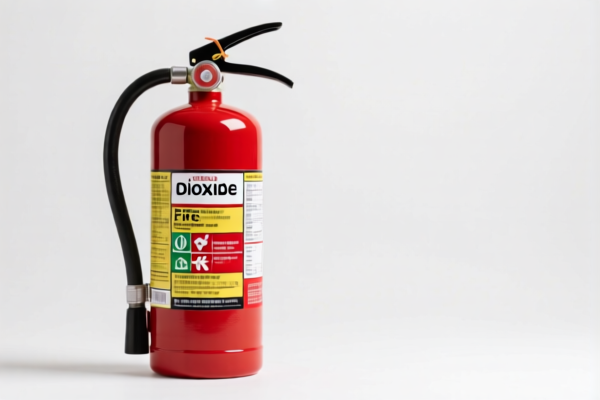
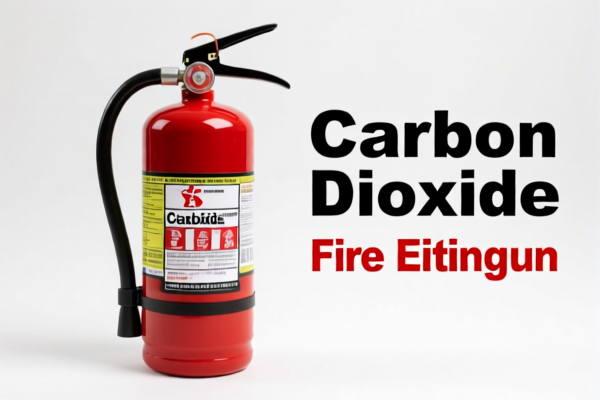

AI Analysis
🧯 Carbon Dioxide Fire Extinguishing Agent Mixer
🌐 HS Code Reference & Customs Clearance Guide | 2026 Latest Tariff Analysis | Professional Strategy for Chemicals
📌 I. Product Definition & Classification: What is a "CO2 Fire Extinguishing Agent Mixer"?
A Carbon Dioxide Fire Extinguishing Agent Mixer is typically a mechanical or chemical processing device used to prepare, mix, or handle carbon dioxide (CO₂) for use in fire suppression systems. It may involve pressurizing, blending, or filling CO₂ into cylinders or storage tanks.
In international trade, the classification depends on two key factors: 1. Material/Composition: Is it primarily composed of inorganic oxides (CO₂ itself)? 2. Function/Purpose: Is it classified as a fire extinguishing agent preparation or a chemical mixture?
⚠️ Key Distinction Point:
- If the product is primarily pure CO₂ used in fire extinguishers → Classified under Chapter 28 (Inorganic Chemicals).
- If the product is a pre-mixed fire extinguishing agent (even if primarily CO₂) → Classified under Chapter 38 (Fire Extinguishing Preparations).
📦 II. HS Code Classification Details (2026 Latest Tariff Authority Comparison)
| HS Code | Product Description | Applicable Scenario | Key Matching Criteria |
|--------|--------------------------|-----------------------------|
| 2811.21.00.00 | Carbon Dioxide (Inorganic Non-Metal Oxide) | Pure CO₂ for industrial or fire suppression use | Material Match: Explicitly contains "Carbon Dioxide"; belongs to inorganic non-metal oxides. |
| 2811.19.61.90 | Other Inorganic Acids & Non-Metal Oxides (Other) | CO₂ as an inorganic oxide without specific subheading | Material Match: CO₂ fits the category of "other inorganic oxides"; no material conflict. |
| 3813.00.10.00 | Fire Extinguishing Preparations | CO₂-based fire extinguishing agents (mixed/pressurized) | Function Match: Matches "fire extinguishing agents"; composition includes CO₂ (inorganic chemical). |
| 3813.00.50.00 | Fire Extinguishing Preparations (Other) | CO₂ fire extinguishing mixtures | Function & Material: Product is CO₂ (material) used as fire extinguishing agent (function); fits fire extinguisher category. |
🔍 Key Reminder:
- Pure CO₂ (unmixed, raw material) → Chapter 28 (2811.21.00.00/2811.19.61.90).
- Pre-mixed Fire Extinguishing Agent (CO₂ prepared for fire suppression) → Chapter 38 (3813.00.10.00/3813.00.50.00).
- Misclassification Risk: Declaring a fire extinguishing agent as pure CO₂ (or vice versa) can lead to significant duty differences and customs delays.
💰 III. 2026 Latest Tariff Rate Breakdown (Including Additional Duties & Policy Surcharges)
✅ Applicable Country: United States (US)
✅ Origin: China (CN)
✅ Effective Date: From November 10, 2025 (for subsequent imports)
🎯 1. 2811.21.00.00 —— Carbon Dioxide (Inorganic Non-Metal Oxide)
| Item | Content |
|---|---|
| Base Duty Rate | 3.7% (ad valorem) |
| Section 301 Additional Duty | +25.0% |
| 122 Clause Duty | +10.0% |
| Total Duty Rate | 38.7% |
| Tax Calculation | CIF Value × 38.7% |
| De Minimis Eligibility | ❌ Not Eligible (deny_de_minimis) |
| Legal Basis Path | USITC:2811.21.00.00 → SECTION301:9903.01.03 → 122CLAUSE:9903.11.01 |
📌 Explanation:
- Base Duty 3.7%: Standard tariff for inorganic non-metal oxides.
- Section 301 25%: Added under the US Trade Act Section 301 against Chinese goods.
- 122 Clause 10%: Additional surcharge under Section 122 of the Trade Expansion Act (for national security concerns).
- Total 38.7%: High duty burden; pure CO₂ imports face significant costs.
🎯 2. 2811.19.61.90 —— Other Inorganic Acids & Non-Metal Oxides (Other)
| Item | Content |
|---|---|
| Base Duty Rate | 4.2% (ad valorem) |
| Section 301 Additional Duty | +25.0% |
| 122 Clause Duty | +10.0% |
| Total Duty Rate | 39.2% |
| Tax Calculation | CIF Value × 39.2% |
| De Minimis Eligibility | ❌ Not Eligible (deny_de_minimis) |
| Legal Basis Path | USITC:2811.19.61.90 → SECTION301:9903.01.03 → 122CLAUSE:9903.11.01 |
📌 Note:
- Slightly higher base duty (4.2%) than2811.21.00.00(3.7%) due to less specific classification.
- Same additional duties apply.
- Total 39.2%; recommended to use2811.21.00.00if CO₂ is explicitly identified.
🎯 3. 3813.00.10.00 —— Fire Extinguishing Preparations
| Item | Content |
|---|---|
| Base Duty Rate | 0.0% (ad valorem) |
| Section 301 Additional Duty | +25.0% |
| 122 Clause Duty | +10.0% |
| Total Duty Rate | 35.0% |
| Tax Calculation | CIF Value × 35.0% |
| De Minimis Eligibility | ❌ Not Eligible (deny_de_minimis) |
| Legal Basis Path | USITC:3813.00.10.00 → SECTION301:9903.01.03 → 122CLAUSE:9903.11.01 |
📌 Explanation:
- Base Duty 0%: Fire extinguishing preparations often have zero base duty.
- Additional Duties: Still subject to Section 301 (25%) and 122 Clause (10%).
- Total 35.0%: Lowest total rate among the four options; optimal for pre-mixed fire extinguishing agents.
🎯 4. 3813.00.50.00 —— Fire Extinguishing Preparations (Other)
| Item | Content |
|---|---|
| Base Duty Rate | 3.7% (ad valorem) |
| Section 301 Additional Duty | +25.0% |
| 122 Clause Duty | +10.0% |
| Total Duty Rate | 38.7% |
| Tax Calculation | CIF Value × 38.7% |
| De Minimis Eligibility | ❌ Not Eligible (deny_de_minimis) |
| Legal Basis Path | USITC:3813.00.50.00 → SECTION301:9903.01.03 → 122CLAUSE:9903.11.01 |
📌 Note:
- Similar to3813.00.10.00but with a base duty of 3.7%.
- Total 38.7%; use3813.00.10.00if the product fits the specific "fire extinguishing preparation" definition.
🛠️ IV. Customs Clearance Practical Advice (Battle-Tested Pitfall Avoidance Guide)
✅ 1. Required Documentation Checklist (None Can Be Skipped)
| Document | Mandatory? | Description |
|---|---|---|
| ✅ Product Specification Sheet | ✔️ | Includes CO₂ purity, pressure rating, mixer capacity, intended use. |
| ✅ Formula/Mixing Ratio | ✔️ | If classified under Chapter 38, provide composition details. |
| ✅ Product Photos (with Label) | ✔️ | Clear view of model, brand, input/output parameters, safety warnings. |
| ✅ Third-Party Test Report | ✔️ | UL, FM, CE (if applicable) for fire safety compliance. |
| ✅ Commercial Invoice | ✔️ | Must clearly state: "Carbon Dioxide Fire Extinguishing Agent Mixer" or "CO₂ Fire Extinguisher Preparation". |
| ✅ Certificate of Origin (CO) | ✔️ | For potential preferential rates (if non-China origin). |
| ✅ Packing List | ✔️ | Details full system vs. components; avoid splitting申报. |
✅ 2. Declaration Tips (Key Mantra)
🔥 "Pure CO₂ goes to Ch.28, Mixed Agent to Ch.38. Name precisely, duty drops!"
| Scenario | Correct Declaration | Wrong Practice |
|---|---|---|
| Pure CO₂ Gas | 2811.21.00.00 |
Misdeclare as "Fire Extinguisher" → 35% (lower base, but higher base duty) |
| Pre-mixed CO₂ Agent | 3813.00.10.00 |
Misdeclare as "Pure CO₂" → 38.7% (higher total duty) |
| Mixer Equipment (Machine) | Not Covered in DATA | Misdeclare chemical as machinery → Delay/Seizure |
| CO₂ Cylinder + Mixer | Full System Declaration | Split declaration → Higher administrative risk |
✅ 3. Special Circumstances Handling
| Situation | Handling Advice |
|---|---|
| OEM Custom Mixer | Provide customer order + design drawings to avoid "non-standard" classification. |
| Used/Refurbished Equipment | Provide repair history; may face additional scrutiny. |
| CO₂ with Additives | If additives change function, may shift from Ch.28 to Ch.38. Provide formula. |
| Fire Safety Certification | UL/FM certification may help justify Chapter 38 classification as "preparation". |
🌍 V. Global Main Market Customs Comparison (2026 Latest)
| Country/Region | Recommended HS Code | Duty Rate (China Origin) | Certification Required | Notes |
|---|---|---|---|---|
| 🇺🇸 USA | 3813.00.10.00 |
35.0% | UL/FM | Lowest total rate for extinguishing agents. |
| 🇨🇳 China | 2811.21.00.00 |
0-5% | CCC | No additional surcharges. |
| 🇪🇺 EU | 3813.00.50.00 |
0-2% | CE/REACH | Low base duty; strict chemical registration. |
| 🇦🇺 Australia | 3813.00.10.00 |
5% | RCM | No additional tariffs. |
| 🇯🇵 Japan | 2811.21.00.00 |
0-3% | PSE | No additional surcharges. |
📌 Conclusion:
- USA imposes the highest total duty (35-39.2%) due to Section 301 and 122 Clause.
- Chapter 38 (3813.00.10.00) offers the lowest total rate (35%) in the US, but only if the product is clearly a "fire extinguishing preparation."
- Chapter 28 (2811.21.00.00) is safer for pure CO₂ but incurs a higher base duty (3.7% vs. 0%).
📌 VI. Common Mistakes & Pitfall Avoidance (Blood-Tested Lessons)
❌ Mistake 1: Declaring a pre-mixed fire extinguishing agent as pure CO₂.
👉 Consequence: Duty increases from 35% to 38.7% → Extra cost + potential misclassification penalty.
❌ Mistake 2: Splitting "Mixer Equipment" and "CO₂ Agent" into separate declarations.
👉 Consequence: Higher administrative fees, potential rejection of de minimis, and delays.
❌ Mistake 3: Using vague terms like "Chemical Mixer" without specifying "Fire Extinguishing Agent."
👉 Consequence: Customs may classify under a higher-duty chemical category or request additional documentation.
❌ Mistake 4: Ignoring the 122 Clause and Section 301 impacts.
👉 Consequence: Unexpected total duty of 35-39.2%; profit margins erased.
✅ Correct Practice:
"Carbon Dioxide Fire Extinguishing Agent Mixer, Model XYZ, 100% CO₂ Content, UL Certified, For Fire Suppression Systems Only"
🎯 VII. Conclusion: Precise Classification Saves Money and Time!
🎯 Remember the Mantra:
🔹 "Pure CO₂ = Ch.28 (38.7%), Mixed Agent = Ch.38 (35%). Name it right, save 3.7%!"
🔹 "HS Code is life or death; 3.7% difference means thousands saved."
📌 Pro Tip:
If your CO₂ is sourced from Vietnam, Mexico, Thailand, or Malaysia, you may apply for IEEPA Exemptions or Section 301 Exclusions, reducing duties to 0-5%.
Recommend Applying for Advance Rulings (Pre-classification) to avoid customs disputes.
📣 Call to Action:
📞 Contact a Professional Customs Broker + Provide Product Photos + Apply for HS Code Advance Ruling
🚀 Ensure Your Carbon Dioxide Mixer Passes Customs Smoothly, Maximizing Profit Margins!
✨ Professional Clearance Starts with Precise Classification!
💼 Every Cent of Your Cost Deserves Exact Calculation!
Customer Reviews
About HS Code Classification
The Harmonized System (HS) is an internationally standardized nomenclature developed by the World Customs Organization (WCO) to classify traded products. Over 200 countries use the HS system as the basis for customs tariffs, trade statistics, and import/export regulations.
Each HS code follows a hierarchical structure:
- Chapter (2 digits) — Broad category of goods (e.g., Chapter 84: Machinery and Mechanical Appliances)
- Heading (4 digits) — More specific grouping within the chapter
- Subheading (6 digits) — Internationally standardized breakdown, used by all WCO member countries
- National subdivisions (8-10 digits) — Country-specific extensions for further classification, such as US HTSUS 10-digit codes
Correct HS code classification is essential for smooth customs clearance, accurate duty payment, and compliance with trade regulations. Misclassification can lead to customs delays, overpayment of duties, or penalties.
When importing from CN to US, the applicable tariff rates may include:
- Most-Favored-Nation (MFN) rate — The standard duty rate applied to WTO members
- General rate — Applied to countries without trade agreements
- Trade remedy duties — Additional tariffs such as Section 301 (anti-dumping), Section 232 (national security), or countervailing duties
The information provided on this page is for reference purposes only. For official classification, please consult with your local customs authority or a licensed customs broker.