Carbon Electrodes
CN → US| HS Code | Tariff Rate | Origin | Destination | Doc |
|---|---|---|---|---|
| 8545110010 | 35.0% | CN | US | Official Doc |
| 8545110020 | 35.0% | CN | US | Official Doc |
| 3801300000 | 39.9% | CN | US | Official Doc |
| 3801105010 | 35.0% | CN | US | Official Doc |
| 6815190000 | 35.0% | CN | US | Official Doc |
| 6815110000 | 35.0% | CN | US | Official Doc |
Product Images
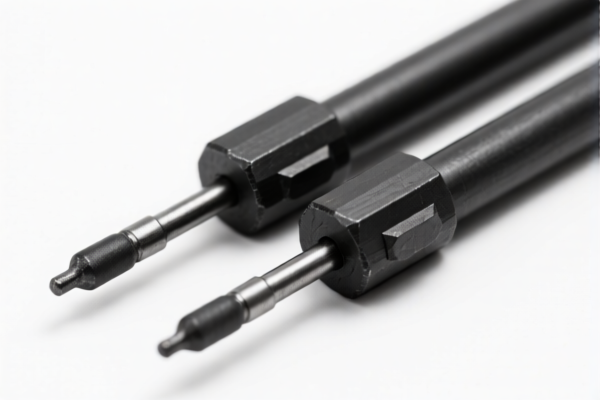
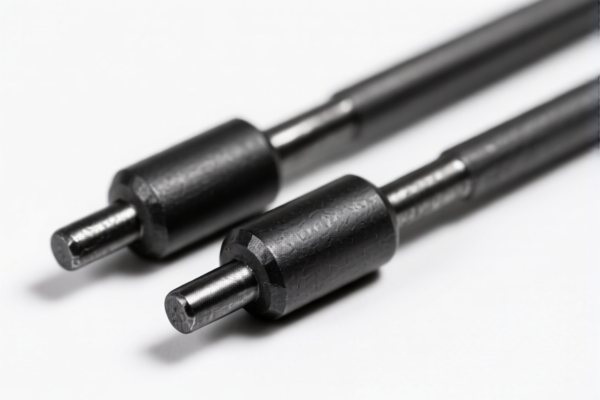
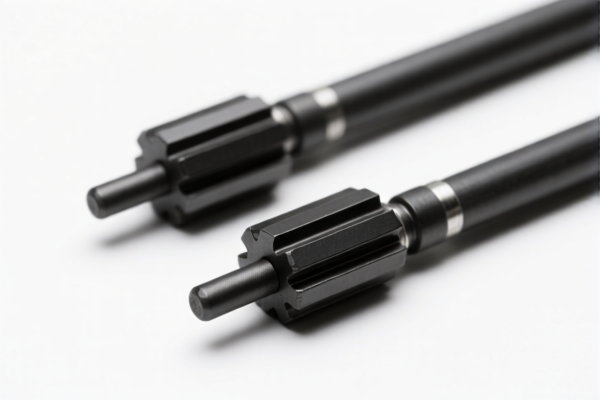
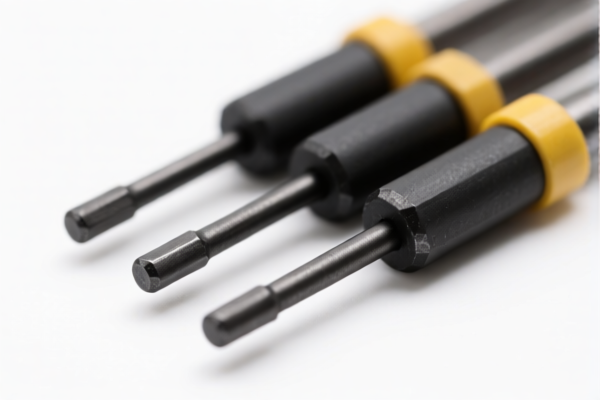
AI Analysis
⚡ Carbon Electrodes (High-Purity Graphite & Carbon Anodes)
🌐 HS Code Reference & Customs Clearance Guide | 2026 Tariff Structure for US-China Trade | Strategic Classification Strategy
📌 I. Product Definition & Classification: Are You Sure It’s Just "Carbon"?
Carbon Electrodes are critical conductive materials used in electric arc furnaces (EAF), electrolysis, and industrial heating. In international trade, they are not a single unified category. Their classification depends strictly on material composition, form factor, and specific application.
Two Main Categories: 1. Graphite/Electrode Grade (Chapter 85): High-purity graphite electrodes used specifically for electrical conduction (e.g., steelmaking EAF). 2. Raw Carbon/Carbonaceous Goods (Chapter 38/68): Less processed carbon powders, rods, or blocks not yet classified as finished electrodes, or carbon articles for non-electrical uses.
⚠️ Key Distinction Point:
- If the item is a finished, shaped electrode for electrical use (e.g., EAF electrodes) → Look at 8545 or 3801.
- If it is raw carbon material or carbon articles not specifically defined as electrical electrodes → Look at 3801, 6815.
- Conflict Check: Some codes have "use conflicts" (e.g., carbon for non-electrical uses vs. electrical use). The summaries provided confirm "No Conflict" for the selected codes.
📦 II. HS Code Classification Details (2026 Latest Tariff Authority)
| HS Code | Product Description | Applicability Logic | Total Tax Rate (China Origin → US) |
|---|---|---|---|
8545.11.00.10 |
Carbon or graphite electrodes; material: Carbon/Graphite; Use: Electrode | Direct Match: Material and use are explicitly matched. No conflict. | 35.0% |
8545.11.00.20 |
Carbon or graphite electrodes; Material: Carbon/Graphite; Form: Electrode | Logical Match: Although diameter/use isn't explicitly stated, form matches. No conflict. | 35.0% |
3801.30.00.00 |
Graphite in powder form or paste; material: Carbonaceous; Use: For electrodes | Direct Match: Specifically for carbonaceous materials used in electrode manufacturing. | 39.9% |
3801.10.50.10 |
Graphite, not spherical; Material: Carbon/Graphite-based | Bottom-Up Inference: Categorized as graphite/graphite-based material under residual items. | 35.0% |
6815.19.00.00 |
Articles of carbon; Material: Carbon | Category Match: Carbon products. Explicitly notes No electrical use conflict. | 35.0% |
6815.11.00.00 |
Articles of carbon; Form: Electrode application; Material: Carbon | Application Match: Carbon articles used in electrode applications. No material/classification conflict. | 35.0% |
🔍 Key Insight:
- 8545 codes are the most specific for finished electrodes (0% base tariff but +25% Section 301 + 10% IEEPA = 35%).
- 3801.30 has a higher total tax (39.9%) because it carries a 4.9% base duty.
- 6815 codes are for carbon articles rather than pure electrical components, but are valid if the product fits the "carbon article" definition without conflicting electrical use claims.
💰 III. 2026 Latest Tariff Rate Breakdown (Including Surcharges)
✅ Applicable Country: United States (US)
✅ Origin: China (CN)
✅ Effective Date: Post-November 2025 (Current Trade Policy)
🎯 1. Codes with 35.0% Total Tax: 8545.11.00.10, 8545.11.00.20, 3801.10.50.10, 6815.19.00.00, 6815.11.00.00
| Item | Content |
|---|---|
| Base Duty | 0.0% (ad valorem) |
| USITC Additional Duty (Section 301) | +25% |
| IEEPA Additional Duty (China Specific) | +10% |
| Total Tax Rate | 35.0% |
| Tax Calculation | CIF Value × 35% |
| De Minimis Exemption Eligible? | ❌ No (deny_de_minimis) |
| Legal Basis Path | USITC:8545.11.00.10/20 / USITC:6815.11.00.00/19 → FOOTNOTE:301 → IEEPA:9903.01.24 |
📌 Explanation:
- The 0% base duty makes these codes attractive compared to others, but the 25% Section 301 tariff (for Chinese goods) and 10% IEEPA surcharge push the total to 35%.
- 8545 is the most standard classification for graphite electrodes in steelmaking.
- 6815 and 3801.10 are alternatives when the product is less clearly defined as a "standard electrode" but still carbon-based.
🎯 2. Code with 39.9% Total Tax: 3801.30.00.00
| Item | Content |
|---|---|
| Base Duty | 4.9% (ad valorem) |
| USITC Additional Duty (Section 301) | +25% |
| IEEPA Additional Duty (China Specific) | +10% |
| Total Tax Rate | 39.9% |
| Tax Calculation | CIF Value × 39.9% |
| De Minimis Exemption Eligible? | ❌ No |
| Legal Basis Path | USITC:3801.30.00.00 → FOOTNOTE:301 → IEEPA:9903.01.24 |
📌 Explanation:
- This code applies to graphite powder/paste specifically for electrode use.
- It is 4.9% more expensive than the 35% codes due to the higher base duty.
- Use this only if the product is clearly a raw material (powder/paste) rather than a shaped electrode.
🛠️ IV. Customs Clearance Practical Advice (Avoid Pitfalls)
✅ 1. Document Checklist (Essential)
| Document | Required | Notes |
|---|---|---|
| ✅ Product Specification Sheet | ✔️ | Must detail: Material (Carbon/Graphite), Purity, Dimensions, Density. |
| ✅ Usage Declaration | ✔️ | Explicitly state: "Used in Electric Arc Furnace" or "Industrial Heating". |
| ✅ Product Photos | ✔️ | Show shape, markings, and any packaging. |
| ✅ Commercial Invoice | ✔️ | Description must match HS Code logic (e.g., "Graphite Electrode" vs. "Carbon Rod"). |
| ✅ Certificate of Origin (CO) | ✔️ | Critical for proving China origin to apply correct surcharges. |
| ✅ MSDS (if powder/paste) | ✔️ | Required for 3801.30.00.00 (graphite paste/powder). |
✅ 2. Declaration Tips (Golden Rules)
🔥 "Match Material, Match Use, Avoid Ambiguity!"
| Scenario | Correct Declaration | Wrong Approach |
|---|---|---|
| Shaped Graphite Electrodes (for EAF) | 8545.11.00.10 or 8545.11.00.20 |
Call it "Carbon Rod" → Risk of misclassification. |
| Graphite Powder/Paste | 3801.30.00.00 |
Call it "Electrode" → Rejected as not finished. |
| Carbon Articles (non-standard) | 6815.11.00.00 or 6815.19.00.00 |
Call it "Electrical Component" → Conflict check fails. |
| Mixed Shipments | Split by HS Code | Declare all as "Carbon Goods" → High audit risk. |
✅ 3. Special Case Handling
| Situation | Recommendation |
|---|---|
| OEM Custom Electrodes | Provide client design specs. Ensure description matches 8545 if shaped for electrical use. |
| Carbon Blocks/Rods not for Electricity | Use 6815.19.00.00. Do not claim "electrode" use. |
| Graphite Powder for Lubricant vs. Electrode | If for electrode → 3801.30.00.00. If for lubricant → Different code. Be precise. |
| Origin: Not China | If Vietnam/Malaysia origin, IEEPA 10% may not apply → Total tax could be 25% (only Section 301). Verify CO. |
🌍 V. Global Market Comparison (2026)
| Region | Recommended HS Code | Est. Total Tax (China Origin) | Key Certification |
|---|---|---|---|
| 🇺🇸 USA | 8545.11.00.10/20 |
35.0% | None specific (General) |
| 🇨🇳 China | 8545.11.00.10 |
~0-5% | CCC (if applicable) |
| 🇪🇺 EU | 8545.11.00 |
0-4% | REACH |
| 🇯🇵 Japan | 8545.11.00 |
0% | PSE (if electrical) |
| 🇮🇳 India | 8545.11.00 |
7.5% + SWS | BIS (if applicable) |
📌 Conclusion:
- USA imposes the highest effective tariff (35%) for Chinese-origin carbon electrodes.
- EU/Japan are more tariff-friendly.
- Supply Chain Strategy: If exporting to the US, ensure origin documentation is flawless to avoid additional penalties. Consider transshipment only if legally compliant (avoiding transshipment fraud).
📌 VI. Common Mistakes & Pitfalls (Lessons Learned)
❌ Mistake 1: Declaring "Graphite Electrode" as "Carbon Fiber"
👉 Consequence: Wrong HS Code → 30% penalty + Back taxes!
❌ Mistake 2: Using 6815 for Shaped EAF Electrodes
👉 Consequence: Customs may flag it as "Electrical Article" → Re-classification to 8545 + Delay.
❌ Mistake 3: Ignoring IEEPA 10% Surcharge
👉 Consequence: Underpayment of 10% → Seizure or Demand for Payment + Interest.
❌ Mistake 4: Mislabeling Powder as "Electrode"
👉 Consequence: 3801.30.00.00 (39.9%) vs 8545 (35%). Small difference, but consistency matters.
✅ Best Practice:
"Specify Material: Graphite/Carbon. Specify Form: Rod/Block/Powder. Specify Use: Electrode/Non-Electrical."
🎯 VII. Conclusion: Precision Saves Money
🎯 Remember the Formula:
🔹 Shaped Electrode →
8545.11.00(35% Total)
🔹 Carbon Article →6815(35% Total)
🔹 Graphite Powder →3801.30.00(39.9% Total)🔹 Always Include: 0% Base + 25% Sec 301 + 10% IEEPA = 35% for most China-origin carbon electrodes in the US.
📌 Pro Tip:
If your product is spherical graphite or specialty carbon, check 3801.10.50.10 (35%).
If you are not of Chinese origin, IEEPA 10% may be waived → Total tax drops to 25%.
Verify Origin Certificate!
📣 Immediate Action:
📞 Consult a licensed customs broker.
📄 Prepare Product Datasheet with clear "Graphite/Carbon" and "Electrode Use" statements.
🚀 Accurate Declaration = Smooth Customs Clearance!
✨ Expert Classification, Effortless Clearance!
💼 Every Percent of Tariff Matters!
Customer Reviews
About HS Code Classification
The Harmonized System (HS) is an internationally standardized nomenclature developed by the World Customs Organization (WCO) to classify traded products. Over 200 countries use the HS system as the basis for customs tariffs, trade statistics, and import/export regulations.
Each HS code follows a hierarchical structure:
- Chapter (2 digits) — Broad category of goods (e.g., Chapter 84: Machinery and Mechanical Appliances)
- Heading (4 digits) — More specific grouping within the chapter
- Subheading (6 digits) — Internationally standardized breakdown, used by all WCO member countries
- National subdivisions (8-10 digits) — Country-specific extensions for further classification, such as US HTSUS 10-digit codes
Correct HS code classification is essential for smooth customs clearance, accurate duty payment, and compliance with trade regulations. Misclassification can lead to customs delays, overpayment of duties, or penalties.
When importing from CN to US, the applicable tariff rates may include:
- Most-Favored-Nation (MFN) rate — The standard duty rate applied to WTO members
- General rate — Applied to countries without trade agreements
- Trade remedy duties — Additional tariffs such as Section 301 (anti-dumping), Section 232 (national security), or countervailing duties
The information provided on this page is for reference purposes only. For official classification, please consult with your local customs authority or a licensed customs broker.