Carbon Fiber Board
CN → USProduct Images
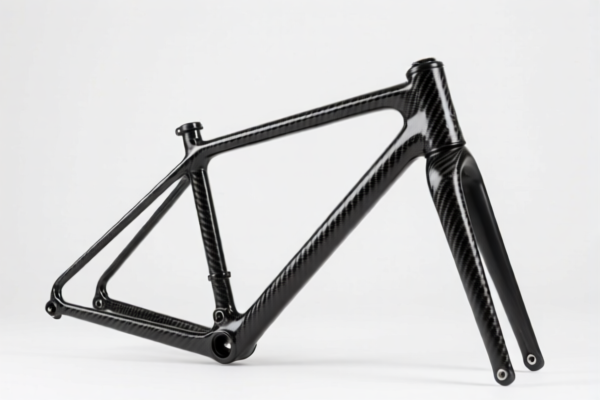
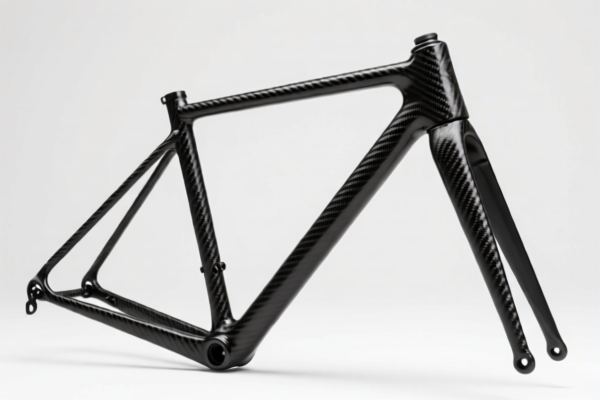
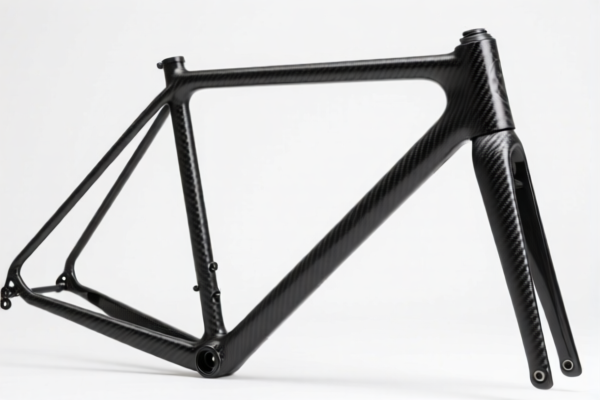
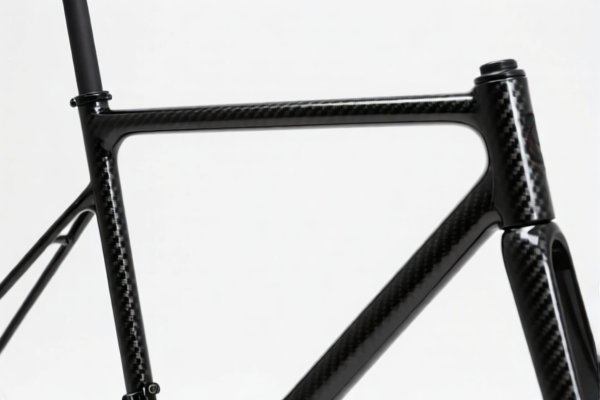
AI Analysis
🏗️ Carbon Fiber Boards (CFRP Panels)
🌐 HS Code Reference & Customs Clearance Guide | 2026 Latest Tariff Analysis | High-Value Material Strategy
📌 I. Product Definition & Classification: What Exactly is a "Carbon Fiber Board"?
Carbon Fiber Reinforced Polymer (CFRP) boards are high-performance composite materials consisting of carbon fibers embedded in a polymer matrix (usually epoxy, vinyl ester, or thermoplastic). In international trade, classification depends heavily on the state of processing and the final intended use.
1. Raw/Intermediate Composite Sheets:
Unformed sheets, woven fabrics, or pre-preg rolls that have not yet been molded into a specific shape for a specific machine.
2. Finished Structural Components:
Molded plates, panels, or sheets used specifically in aerospace, automotive, or sports equipment.
3. Semi-Finished Articles:
Boards cut to standard sizes but not yet shaped for a specific end-use machine.
⚠️ Key Distinction Point:
- If the material is unwoven, unimpregnated carbon fiber → It is a fiber (Chapter 54/55).
- If the material is woven fabric → It is textile/carbon fiber fabric (Chapter 54/55).
- If the material is impregnated with resin and cured → It is a Composite Plastic Article (Chapter 39) or Base Metal/Other depending on structure.
- Crucial: Most "Carbon Fiber Boards" used in industry are Plastics/Composites if the polymer matrix is the binder. If it is purely metal with carbon coating, it falls elsewhere. Most common commercial CFRP sheets fall under Chapter 39 (Plastics) or Chapter 68 (Mineral Products) if ceramic-based, but primarily Chapter 39.
📦 II. HS Code Classification Details (2026 Latest Tariff Authority Alignment)
| HS Code | Product Description | Applicable Scenario | Matrix Material |
|---|---|---|---|
3926.90.98 |
Other articles of plastics and articles of other materials of headings 3901 to 3914 | Standard CFRP sheets, panels, structural plates not more specifically named elsewhere | Epoxy/Vinyl (Plastic) |
8486.40.00.00 |
Parts and accessories for machines for assembling electronic integrated circuits | High-End Tech: Precision flat panels used in semiconductor manufacturing equipment (e.g., wafer carriers, chucks) | Specific Industrial Use |
7610.10.00.00 |
Aluminum structures and parts of structures (if Aluminum-Carbon Hybrid) | Hybrid panels where Aluminum is the primary structural base | Aluminum + Carbon Layer |
6815.99.00.00 |
Other articles of stone or of other mineral substances (if Ceramic/Carbon Composite) | Carbon-Ceramic composites for high-temp aerospace parts | Ceramic Matrix |
🔍 Critical Reminder:
-3926.90.98is the most common HS Code for general-purpose carbon fiber sheets/boards (e.g., for DIY, prototyping, general fabrication).
- If the board is specifically designed for a machine (e.g., a specific part of a CNC router or a drone frame), it may be classified under the parts of that machine (Chapter 84/85/88).
- Do NOT classify raw carbon fiber cloth as3926. Raw cloth is Chapter 54/55.
💰 III. 2026 Latest Tariff Rate Breakdown (US Market Focus)
✅ Applicable Country: United States (US)
✅ Origin: China (CN)
✅ Effective Date: Post-November 2025 Adjustments
🎯 1. 3926.90.98 —— Other Plastic Articles (General CFRP Sheets)
| Item | Detail |
|---|---|
| Base MFN Rate | 5.3% (General) |
| USITC Section 301 Surcharge | +7.5% (Note: Rate reduced from 25% in 2024/2025 adjustments for some plastic articles, but check latest list) |
| IEEPA Surcharge | +10% (If applicable under recent executive orders for strategic materials) |
| Total Effective Rate | ~15% - 25% (Varies by specific subheading and ongoing trade policy) |
| De Minimis Exemption | ❌ Not Eligible (Valuation usually exceeds $800, and composite materials often excluded) |
| Legal Basis Path | USITC:3926.90.98 → Footnote 9903.88.01 (if applicable) |
📌 Explanation:
- Carbon fiber reinforced plastics are considered "advanced materials."
- While base rates are low, Section 301 tariffs significantly impact costs.
- Note: Recent US trade reviews have scrutinized "dual-use" carbon fiber products. If the CFRP is for aerospace/military use, it may face EAR (Export Administration Regulations) restrictions in addition to tariffs.
🎯 2. 8486.40.00.00 —— Parts for Semiconductor Assembly Equipment
| Item | Detail |
|---|---|
| Base MFN Rate | 0% (Many industrial parts have 0% base) |
| USITC Section 301 Surcharge | +25% (High-tech components often retain higher surcharges) |
| IEEPA Surcharge | +10% (Strategic tech component) |
| Total Effective Rate | ~35% |
| De Minimis Exemption | ❌ Not Eligible |
| Legal Basis Path | USITC:8486.40.00.00 → Footnote 9903.01.24 |
📌 Explanation:
- If your carbon fiber board is a precision part for chip-making equipment, it is classified as a machine part.
- High-tech tariffs apply. Ensure your invoice clearly states "Part for Semiconductor Assembly Machine" and not just "Carbon Fiber Sheet."
🛠️ IV. Customs Clearance Practical Advice (Real-World Pitfall Guide)
✅ 1. Documentation Checklist (Non-Negotiable)
| Document | Must Provide | Purpose |
|---|---|---|
| ✅ Material Safety Data Sheet (MSDS) | ✔️ | For resin content and volatile organic compounds (VOCs). |
| ✅ Product Specification Sheet | ✔️ | Must state: % Carbon Fiber, Resin Type, Dimensions, Weight. |
| ✅ Use Statement | ✔️ | Critical: Is it for consumer use (e.g., skateboard deck), industrial (e.g., CNC part), or aerospace? |
| ✅ Commercial Invoice | ✔️ | Value must be accurate; misdeclaration leads to seizure. |
| ✅ Certificate of Origin | ✔️ | To verify if any exemptions apply (e.g., if made in Vietnam/Malaysia for CFRP processing). |
| ✅ BOM (Bill of Materials) | ✔️ | To prove % of plastic vs. fiber (for tariff duty calculations). |
✅ 2. Declaration Strategy (Key Mantras)
🔥 "Specify the Matrix, Define the Use, Avoid 'Miscellaneous'!"
| Scenario | Correct Declaration | Wrong Declaration | Consequence |
|---|---|---|---|
| Generic Sheet | 3926.90.98 - "Carbon Fiber Reinforced Plastic Sheet" |
"Carbon Fiber Board" (Too vague) | Customs may assign higher default rate or request detailed info. |
| Drone Part | 8803.30.00.00 - "Parts of Aircraft" |
3926.90.98 |
If classified as plastic, you pay 15-25%. If classified as aircraft part, rate might be different (check FTAs). |
| Semiconductor Part | 8486.40.00.00 - "Part for IC Assembly Machine" |
"Composite Panel" | Risk of misclassification penalty + 25% surcharge. |
✅ 3. Special Cases & Risk Management
| Case | Handling Advice |
|---|---|
| Dual-Use Control | If the CFRP has high tensile strength (>2.7 GPa) and modulus (>294 GPa), it may be controlled under EAR99 or ITAR. Ensure you have proper export licenses if shipping to restricted entities. |
| Hybrid Materials | If the board has aluminum honeycomb core + carbon skin, it may be classified as 7610 or 3926 depending on which material provides the essential character. Provide detailed cross-section diagrams. |
| Value Misdeclaration | CFRP is expensive. Undervaluing to save tariffs is a red flag for CBP. Use actual transaction value. |
| Origin Tracing | If you buy carbon fiber cloth from China but weave/cure it in the USA, it might be "Made in USA." Document the substantial transformation process. |
🌍 V. Global Market Customs Comparison (2026)
| Country/Region | Recommended HS Code | Tariff Rate (CN Origin) | Certification | Notes |
|---|---|---|---|---|
| 🇺🇸 USA | 3926.90.98 |
~15-25% (incl. 301) | No special cert | High scrutiny on dual-use. |
| 🇨🇳 China | 3926.90.99 |
0-5% | CCC (if electrical) | Low import barrier. |
| 🇪🇺 EU | 3926.90.97 |
0% (Most goods 0-4%) | REACH (Chemicals) | Must register resins under REACH. |
| 🇯🇵 Japan | 3926.90.90 |
0-4% | PSE (if electrical) | Strict on fiber content labeling. |
| 🇮🇳 India | 3926.90.99 |
10-15% | BIS (if applicable) | High duties on composites to protect local textile industry. |
📌 Conclusion:
- EU and Japan are the most tariff-friendly for CFRP.
- USA has the highest effective tariff burden due to Section 301.
- EU requires strict REACH compliance for the resin used.
📌 VI. Common Mistakes & Pitfalls (Blood & Tears Lessons)
❌ Mistake 1: Declaring "Carbon Fiber" as "Plastic" without specifying "Reinforced"
👉 Consequence: Customs may classify it as generic plastic (lower duty) but then audit and impose penalties for misdescription.
❌ Mistake 2: Ignoring the Resin Type
👉 Consequence: If the resin is hazardous, you need additional hazardous material declarations. Failure to declare can lead to shipment rejection.
❌ Mistake 3: Using "Carbon Fiber" for items that are Aluminum-Carbon Hybrid
👉 Consequence: If the aluminum is the structural core, it may be classified under Chapter 76 (Aluminum), not Chapter 39. Misclassification leads to duty differences.
❌ Mistake 4: Assuming all CFRP is "Dual-Use"
👉 Consequence: Don't overcomplicate. If it's a simple kayak deck or bicycle frame, it's likely not controlled. Only high-spec aerospace-grade fibers trigger EAR restrictions.
✅ Correct Approach:
"Carbon Fiber Reinforced Polymer Sheet, Epoxy Matrix, 300mm x 600mm, 2mm Thickness, For Prototyping, Model XYZ"
🎯 VII. Conclusion: Precision in Classification, Profit in Clearance
🎯 Remember:
🔹 "Define the Matrix, Declare the Use, Avoid Vague Terms!"
🔹 "HS Code 3926 is the Safe Harbor for General CFRP, but 8486/8803 for Specific Parts."
📌 Pro Tip:
If you are exporting CFRP to the USA, consider third-country processing (e.g., cutting/shaping in Vietnam or Malaysia) to potentially mitigate Section 301 tariffs, provided substantial transformation occurs. Always consult a customs broker for Advance Rulings on high-value CFRP components.
📣 Immediate Action:
📞 Engage a licensed customs broker + Provide detailed product specs (Resin type, Fiber weave, Dimensions)
🚀 Ensure REACH/MSDS compliance for European markets.
📉 Optimize your HS Code strategy to reduce tariff burden legally.
✨ Expert Clearance Starts with Precise Classification!
💼 Your High-Value Material Deserves High-Value Compliance!
Customer Reviews
About HS Code Classification
The Harmonized System (HS) is an internationally standardized nomenclature developed by the World Customs Organization (WCO) to classify traded products. Over 200 countries use the HS system as the basis for customs tariffs, trade statistics, and import/export regulations.
Each HS code follows a hierarchical structure:
- Chapter (2 digits) — Broad category of goods (e.g., Chapter 84: Machinery and Mechanical Appliances)
- Heading (4 digits) — More specific grouping within the chapter
- Subheading (6 digits) — Internationally standardized breakdown, used by all WCO member countries
- National subdivisions (8-10 digits) — Country-specific extensions for further classification, such as US HTSUS 10-digit codes
Correct HS code classification is essential for smooth customs clearance, accurate duty payment, and compliance with trade regulations. Misclassification can lead to customs delays, overpayment of duties, or penalties.
When importing from CN to US, the applicable tariff rates may include:
- Most-Favored-Nation (MFN) rate — The standard duty rate applied to WTO members
- General rate — Applied to countries without trade agreements
- Trade remedy duties — Additional tariffs such as Section 301 (anti-dumping), Section 232 (national security), or countervailing duties
The information provided on this page is for reference purposes only. For official classification, please consult with your local customs authority or a licensed customs broker.