Carbon Fiber Reinforced Carbon Paste
CN → US| HS Code | Tariff Rate | Origin | Destination | Doc |
|---|---|---|---|---|
| 6815110000 | 35.0% | CN | US | Official Doc |
| 6815190000 | 35.0% | CN | US | Official Doc |
Product Images
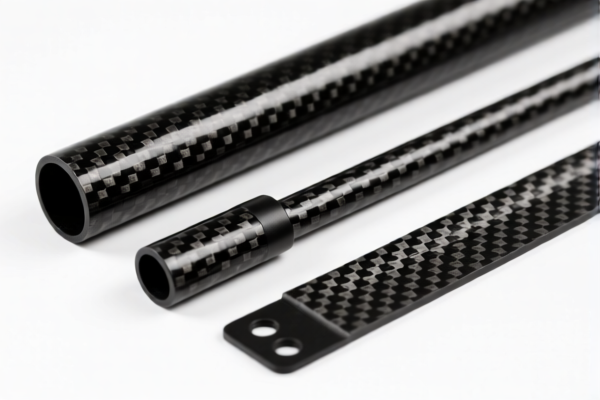
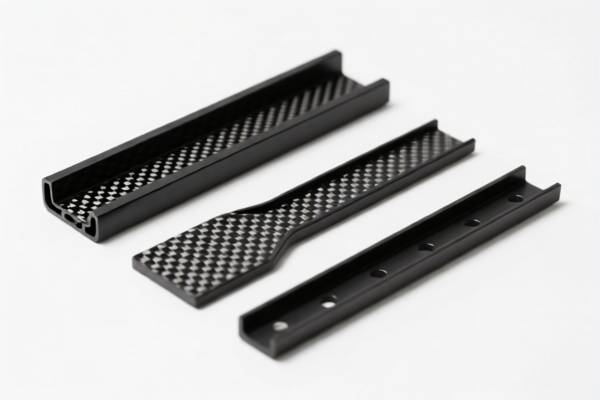
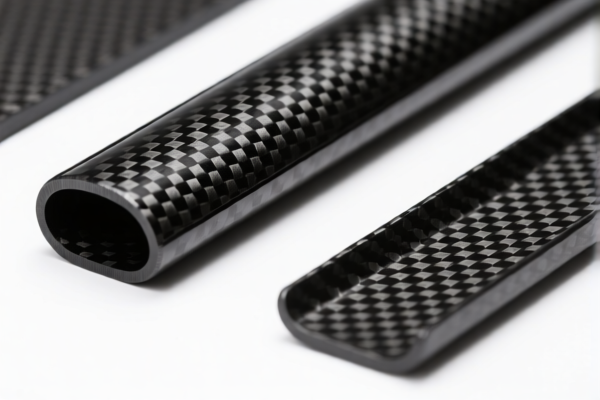
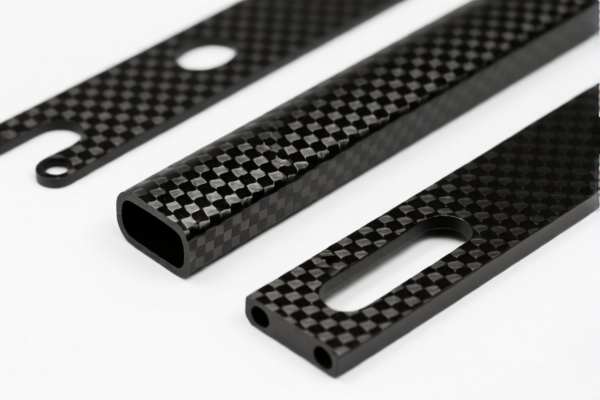
AI Analysis
✈️ Carbon Fiber Reinforced Carbon Paste (CF-RCC)
🌐 HS Code Classification & Customs Clearance Guide | 2026 Latest Tariff Analysis | Professional Compliance Strategy
📌 I. Product Definition & Classification: Do You Really Know "Carbon Fiber Reinforced Carbon Paste"?
"Carbon Fiber Reinforced Carbon Paste" (often referred to as Carbon Paste or Reinforced Carbon) is a specialized composite material primarily used in high-temperature, wear-resistant, or non-electrical industrial applications. In international trade, it falls under the broad category of Articles of Stone or Other Mineral Substances (including Carbon Fibers and Peat).
The classification depends heavily on whether the carbon fibers are in their raw form or incorporated into a structured article/paste. Based on the provided data, there are two primary HS Code possibilities:
1. Raw Carbon Fibers (6815.11.00.00):
If the product is essentially loose or bundled carbon fibers without being formed into a specific "article" or complex paste matrix intended for a specific non-electrical use, it may be classified as Carbon Fibers.
2. Other Articles of Carbon (6815.19.00.00):
If the "paste" is a formulated mixture, paste, or composite article (e.g., electrodes, brush seals, or specific industrial pastes) that is not specifically named elsewhere, it falls under the Other category for non-electrical carbon articles.
⚠️ Key Distinction Point:
- If the product is loose fibers or unformed fiber bundles →归入 6815.11.00.00
- If the product is a paste, mixture, formed article, or composite (non-electrical) →归入 6815.19.00.00
📦 II. HS Code Classification Details (2026 Latest Tariff Authority Comparison)
| HS Code | Product Description | Application Scenario | Electrical Use? |
|---|---|---|---|
6815.11.00.00 |
Carbon Fibers | Raw carbon fibers, unformed, loose bundles, or tow | ❌ No |
6815.19.00.00 |
Other Articles of Carbon | Carbon pastes, composites, electrodes, brush seals, formed articles | ❌ No (Non-electrical) |
🔍 Key Reminder:
- The chapter 6815 explicitly excludes electrical carbon articles (which usually fall under Chapter 85).
- The term "Paste" implies a mixture or semi-finished article, which strongly suggests 6815.19.00.00 unless it is purely unformed fibers.
- Both codes are for Non-Electrical Uses. If used electrically, different HS codes (e.g., 8545) may apply.
💰 III. 2026 Latest Tariff Rate Details (Including Additional Taxes)
✅ Applicable Country: United States (US)
✅ Country of Origin: China (CN)
✅ Effective Time: 2025 November 10 onwards (including subsequent imports)
🎯 1. 6815.11.00.00 —— Carbon Fibers
| Item | Detail |
|---|---|
| Base Duty Rate | 0.0% (ad valorem) |
| Additional Tariff (Section 301 / USITC) | +25.0% |
| Total Duty Rate | 25.0% |
| Tax Calculation | CIF Value × 25% |
| De Minimis Exemption Eligibility | ❌ No (Denied) |
| Legal Basis | USITC Section 301 Tariff List |
📌 Explanation:
- Base Tax: 0% is the standard Most-Favored-Nation (MFN) rate for carbon fibers.
- Additional Tax: 25% is the punitive tariff imposed under Section 301 of the Trade Act for Chinese-origin carbon materials.
- Total Cost: Importers must pay 25% of the CIF value. This is a significant cost driver.
🎯 2. 6815.19.00.00 —— Other Articles of Carbon (e.g., Carbon Paste)
| Item | Detail |
|---|---|
| Base Duty Rate | 0.0% (ad valorem) |
| Additional Tariff (Section 301 / USITC) | +25.0% |
| Total Duty Rate | 25.0% |
| Tax Calculation | CIF Value × 25% |
| De Minimis Exemption Eligibility | ❌ No (Denied) |
| Legal Basis | USITC Section 301 Tariff List |
📌 Note:
- Despite being an "article" or "paste," the tariff treatment is identical to raw fibers in this context.
- The 25% additional tariff applies uniformly to both subheadings under the current USITC list for Chinese-origin goods.
- Whether it is6815.11or6815.19, the financial impact is the same: 25% total duty.
🛠️ IV. Customs Clearance Practical Advice (Real-World Pitfall Avoidance)
✅ 1. Required Documentation Checklist (None of these can be missed)
| Document | Must Provide? | Description |
|---|---|---|
| ✅ Product Specification Sheet | ✔️ | Detailed composition, binder content, fiber length, viscosity (if paste) |
| ✅ Certificate of Non-Electrical Use | ✔️ | Crucial to confirm it is NOT for electrical applications (which would change HS Code) |
| ✅ Product Photos | ✔️ | Clear images of packaging, label, and physical state (powder, paste, fiber) |
| ✅ Commercial Invoice | ✔️ | Must explicitly state "Carbon Fiber Reinforced Carbon Paste – Non-Electrical Use" |
| ✅ Bill of Lading / Air Waybill | ✔️ | Standard shipping documents |
| ✅ HS Code Pre-Ruling (Optional but Recommended) | ✔️ | To confirm classification between 6815.11 and 6815.19 |
✅ 2. Declaration Tips (Key Mantra)
🔥 "Non-Electrical! Non-Electrical! Non-Electrical!"
🔹 "State clearly: 'For Non-Electrical Use'. If ambiguous, risk misclassification."
| Scenario | Correct Declaration | Wrong Practice |
|---|---|---|
| Carbon Paste for Bearings/Seals | 6815.19.00.00 - "Carbon Paste for Non-Electrical Industrial Use" |
"Carbon Material" (Too vague) |
| Loose Carbon Fibers | 6815.11.00.00 - "Carbon Fibers, Unformed" |
"Carbon Paste" (Misleading) |
| Carbon Electrodes (Electrical) | NOT 6815 (Usually 8545) | Declaring under 6815 → Seizure/Fines |
✅ 3. Special Case Handling
| Situation | Handling Advice |
|---|---|
| Ambiguous "Paste" Composition | If the "paste" contains high percentages of carbon fibers, ensure documentation proves it is not an electrical component. |
| Origin Declaration | Clearly state Country of Origin: China. Misdeclaring origin to avoid tariffs is high-risk. |
| De Minimis (Section 321) | ❌ Not Eligible. Carbon materials from China under these HS codes are explicitly excluded from the $800 de minimis exemption. Full duty applies. |
| Pre-Ruling | Given the technical nature, consider applying for an HS Code Pre-Ruling from CBP to ensure the correct subheading (11 vs 19) is used, even if the tax rate is the same. |
🌍 V. Global Market Customs Comparison (2026 Latest)
| Country/Region | Recommended HS Code | Tariff (China Origin) | Certification | Notes |
|---|---|---|---|---|
| 🇺🇸 USA | 6815.11.00.00 / 6815.19.00.00 |
25.0% | N/A | High tariff barrier; no de minimis. |
| 🇨🇳 China | 6815.11.00 / 6815.19.00 |
~0-5% | N/A | Low entry barrier for imports. |
| 🇪🇺 EU | 6815.10 / 6815.90 |
Varies (0-6%) | REACH | REACH registration mandatory for carbon materials. |
| 🇯🇵 Japan | 6815.10 / 6815.90 |
0-5% | N/A | Generally low tariffs. |
| 🇬🇧 UK | 6815.10 / 6815.90 |
Varies | N/A | Post-Brexit rules apply. |
📌 Conclusion:
- USA is the most expensive market for these products due to the 25% additional tariff.
- EU and other markets have lower base tariffs but require strict REACH (chemical) compliance.
- No de minimis exemption in the US means small shipments still incur the full 25% duty.
📌 VI. Common Mistakes & Pitfall Guide (Lessons from Experience)
❌ Mistake 1: Claiming "De Minimis" for small shipments of carbon paste
👉 Consequence: Denial of entry or forced payment of duties + storage fees. Carbon materials from China are explicitly excluded.
❌ Mistake 2: Vague description "Carbon Material"
👉 Consequence: Customs delay for reclassification. CBP will demand detailed specs. May be assessed at a higher duty rate if unclear.
❌ Mistake 3: Ignoring "Non-Electrical" requirement
👉 Consequence: If used electrically, it belongs in Chapter 85 (e.g., 8545). Misclassification can lead to fraud allegations or significant duty underpayments.
❌ Mistake 4: Confusing "Carbon Paste" with "Graphite Paste"
👉 Consequence: Graphite may have different tariff treatments. Ensure the product is indeed Carbon Fiber Reinforced as stated.
✅ Correct Practice:
"Carbon Fiber Reinforced Carbon Paste, for Non-Electrical Industrial Use, Model XYZ, Made in China"
🎯 VII. Conclusion: Professional Declaration, Cost Control, Compliance!
🎯 Remember the Mantra:
🔹 "Non-Electrical is Key. 25% Duty Applies. No De Minimis. Be Specific!"
🔹 "Carbon Paste = 6815.19 (usually). Fibers = 6815.11. Both = 25% in US."
📌 Pro Tip:
- If your carbon paste is not from China (e.g., from Switzerland, Japan, or the US), you may avoid the 25% additional tariff.
- Consider HS Code Pre-Ruling to confirm the exact subheading (
11vs19) for your specific formulation.- Always verify REACH compliance for EU exports.
📣 Immediate Action:
📞 Consult with a licensed customs broker
📄 Prepare detailed technical specifications
🚀 Ensure correct HS Code declaration to avoid clearance delays!
✨ Professional Clearance Starts with Accurate Classification!
💼 Your every dollar of cost is worth precise calculation!
Customer Reviews
About HS Code Classification
The Harmonized System (HS) is an internationally standardized nomenclature developed by the World Customs Organization (WCO) to classify traded products. Over 200 countries use the HS system as the basis for customs tariffs, trade statistics, and import/export regulations.
Each HS code follows a hierarchical structure:
- Chapter (2 digits) — Broad category of goods (e.g., Chapter 84: Machinery and Mechanical Appliances)
- Heading (4 digits) — More specific grouping within the chapter
- Subheading (6 digits) — Internationally standardized breakdown, used by all WCO member countries
- National subdivisions (8-10 digits) — Country-specific extensions for further classification, such as US HTSUS 10-digit codes
Correct HS code classification is essential for smooth customs clearance, accurate duty payment, and compliance with trade regulations. Misclassification can lead to customs delays, overpayment of duties, or penalties.
When importing from CN to US, the applicable tariff rates may include:
- Most-Favored-Nation (MFN) rate — The standard duty rate applied to WTO members
- General rate — Applied to countries without trade agreements
- Trade remedy duties — Additional tariffs such as Section 301 (anti-dumping), Section 232 (national security), or countervailing duties
The information provided on this page is for reference purposes only. For official classification, please consult with your local customs authority or a licensed customs broker.