Carbon Paper (Boxed)
CN → US| HS Code | Tariff Rate | Origin | Destination | Doc |
|---|---|---|---|---|
| 4823901000 | 35.0% | CN | US | Official Doc |
| 4823908000 | 35.0% | CN | US | Official Doc |
| 4823902000 | 35.0% | CN | US | Official Doc |
| 4823908000 | 35.0% | CN | US | Official Doc |
| 4823901000 | 35.0% | CN | US | Official Doc |
Product Images


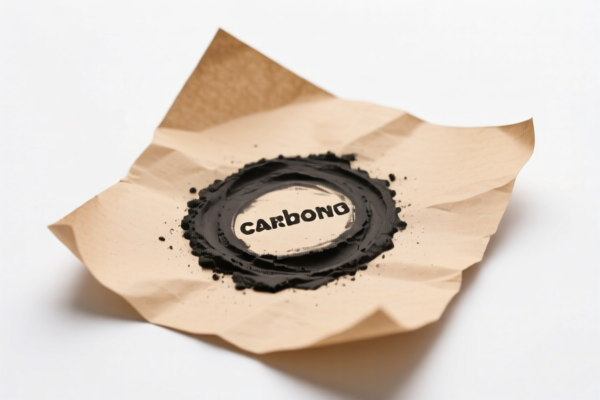

AI Analysis
📄 Carbon Paper (Boxed) – 2026 US Import Compliance Guide
🌐 HS Code Reference & Customs Clearance Strategy | 2026 Latest Tariff Analysis | Professional Classification Strategy
📌 1. Product Definition & Classification: Do You Really Understand “Carbon Paper”?
Carbon paper, in its boxed form, is a specialized paper product used for making duplicate copies of documents. In international trade, it is primarily classified under Chapter 48 (Paper and Paperboard). The key classification factors are its material composition (paper/cellulose) and its state (cut to size, packaged).
⚠️ Key Classification Point:
- If the carbon paper is simply paper coated with wax/ink, packaged in boxes, it falls under 4823.90.
- It is not considered a “writing instrument” or “office machinery accessory” in HS 90 or 84, but strictly a paper product.
📦 2. HS Code Classification Details (2026 Latest Tariff Authority Comparison)
| HS Code | Product Description | Application Scenario | Material Type |
|---|---|---|---|
4823.90.10.00 |
Carbon paper (boxed), paper product, cut to size | Standard office use, boxed copy paper | Paper/Cut to size |
4823.90.20.00 |
Carbon paper (boxed), paper pulp/product | General paper category classification | Paper/Pulp-based |
4823.90.80.00 |
Carbon paper (boxed), cellulose/carbon attribute | Gasket/seal category inference (material match) | Cellulose/Carbon-related |
🔍 Important Note:
- All variants fall under HS 4823.90 because carbon paper is fundamentally a processed paper product.
- The specific 8-digit subheading may vary slightly depending on the exact manufacturing process or regional customs interpretation (e.g., whether it’s classified as “cut to size” vs. “other paper products”), but the tax rate remains consistent across these codes.
- Do not misclassify as “office supplies” under HS 96 (e.g., pencils, erasers) – this is a common error that leads to penalties.
💰 3. 2026 Latest Tariff Rate Details (Including Additional Taxes & Policy Surcharges)
✅ Applicable Country: United States (US)
✅ Country of Origin: China (CN)
✅ Effective Date: November 10, 2025 (and subsequent imports)
🎯 1. All HS Codes: 4823.90.10.00, 4823.90.20.00, 4823.90.80.00
| Item | Content |
|---|---|
| Base Tariff Rate | 0% (ad valorem) |
| USITC Surcharge Tariff | +25% (under USITC Footnote 9903.88.01) |
| Section 122 Tariff | +10% (针对中国产品,25%基础上的附加) |
| Total Tariff Rate | 35% |
| Tax Calculation | CIF Value × 35% |
| De Minimis Exemption | ❌ Not Eligible (deny_de_minimis) |
| Legal Basis Path | USITC:4823.90.10.00 → FOOTNOTE:9903.88.01 → Section 122: 10% |
📌 Explanation:
- The 25% USITC surcharge applies to most Chinese-origin paper products under Section 301 tariffs.
- The additional 10% Section 122 tariff is a specific levy imposed on certain Chinese goods, including paper products like carbon paper.
- Combined Rate: 35%. This is a significant cost factor for importers.
- No de minimis exemption applies – all shipments, regardless of value, are subject to full duty.
🛠️ 4. Customs Clearance Practical Advice (Battle-Tested Pitfall Avoidance Guide)
✅ 1. Required Documentation Checklist (All Mandatory)
| Document | Required | Notes |
|---|---|---|
| ✅ Product Specification Sheet | ✔️ | Must specify: material (paper/cellulose), size, packaging type |
| ✅ Product Photos (with Label) | ✔️ | Clear view of box, label, and product inside |
| ✅ Commercial Invoice | ✔️ | Must state “Carbon Paper (Boxed)” and HS Code |
| ✅ Packing List | ✔️ | Detail box count, weight, dimensions |
| ✅ Certificate of Origin (CO) | ✔️ | Proves Chinese origin; required for tariff calculation |
| ✅ Third-Party Test Report (if any) | ✔️ | RoHS/REACH compliance (if required by buyer) |
⚠️ Critical Tip:
- Do not list “Carbon Paper” as “Office Supplies” or “Stationery” without specifying HS Code 4823.90.
- Ensure the invoice clearly states “Boxed” to confirm it’s a finished product, not raw paper rolls.
✅ 2. Declaration Tips (Key Rules)
🔥 “Paper Product, Not Office Tool; Boxed Form, Clear Description”
| Scenario | Correct Declaration | Wrong Practice |
|---|---|---|
| Carbon Paper in Boxes | 4823.90.10.00 / 4823.90.80.00 |
Misclassify as 9609.10 (pencils) or 4802 (unprocessed paper) |
| Mixed Shipment (Carbon Paper + Pens) | Separate HS Codes | Combined declaration → audit risk |
| Bulk Rolls (not boxed) | 4802.55 or 4802.61 |
Boxed vs. Roll matters for classification |
✅ 3. Special Cases
| Case | Handling Advice |
|---|---|
| OEM Branding | Provide private label agreement; still classified as paper product |
| Recycled Carbon Paper | Must declare “recycled content” if applicable; may affect environmental compliance |
| Small Quantity Samples | Still subject to 35% tariff; no de minimis exemption |
🌍 5. Global Market Clearance Comparison (2026 Latest)
| Country/Region | Recommended HS Code | Tariff | Certification | Notes |
|---|---|---|---|---|
| 🇺🇸 USA | 4823.90.10.00 |
35% (China) | None required | High tariff due to 25% + 10% |
| 🇨🇳 China | 4823.90.10.00 |
5% | None | No surcharges |
| 🇪🇺 EU | 4823.90.10.00 |
0% (if CE/RoHS) | REACH/RoHS | No additional tariffs |
| 🇬🇧 UK | 4823.90.10.00 |
0% | UKCA | Post-Brexit rules apply |
| 🇯🇵 Japan | 4823.90.10.00 |
0% | PSE (if applicable) | Free trade benefits |
📌 Conclusion:
- USA imposes the highest tariff (35%) due to Section 301 and Section 122.
- China, EU, UK, and Japan offer significantly lower or zero tariffs.
- Strategic Recommendation: If targeting the US market, consider supply chain diversification (e.g., sourcing from Vietnam, India, or Mexico) to avoid the 35% tariff.
📌 6. Common Errors & Pitfall Avoidance (Lessons Learned)
❌ Error 1: Classifying Carbon Paper under HS 96 (Office Supplies)
👉 Consequence: Penalty for misclassification; retroactive duty + fines
❌ Error 2: Declaring “Paper” without specifying “Boxed Carbon Paper”
👉 Consequence: Customs may request additional documentation, delaying clearance
❌ Error 3: Assuming de minimis exemption applies
👉 Consequence: No exemption – all shipments are taxed at 35%
❌ Error 4: Ignoring Section 122 Tariff
👉 Consequence: Unexpected 10% surcharge; budget miscalculation
✅ Correct Practice:
“Carbon Paper (Boxed), Paper Product, 8.5x11 inches, 100 sheets/box, Model CP-100, HS Code 4823.90.10.00”
🎯 7. Conclusion: Professional Declaration, Save Time, Reduce Costs!
🎯 Remember This Mantra:
🔹 “Paper Product, Not Office Tool; Boxed Form, HS 4823; 35% Tariff, No Exemption; Clear Declaration, Smooth Clearance!”
🔹 “HS Code Determines Duty; 35% Can’t Be Ignored; Misclassification Costs More!”
📌 Pro Tip:
If your carbon paper is originating from Vietnam, India, or Mexico, you may qualify for lower or zero tariffs under free trade agreements.
Recommendation:
📞 Consult a licensed customs broker + Provide product photos + Apply for Advance Ruling
🚀 Ensure your carbon paper passes US customs smoothly, reduces costs, and maximizes profit!
✨ Professional Clearance Starts with Accurate Classification!
💼 Every Cent of Your Cost Deserves Precise Calculation!
Customer Reviews
About HS Code Classification
The Harmonized System (HS) is an internationally standardized nomenclature developed by the World Customs Organization (WCO) to classify traded products. Over 200 countries use the HS system as the basis for customs tariffs, trade statistics, and import/export regulations.
Each HS code follows a hierarchical structure:
- Chapter (2 digits) — Broad category of goods (e.g., Chapter 84: Machinery and Mechanical Appliances)
- Heading (4 digits) — More specific grouping within the chapter
- Subheading (6 digits) — Internationally standardized breakdown, used by all WCO member countries
- National subdivisions (8-10 digits) — Country-specific extensions for further classification, such as US HTSUS 10-digit codes
Correct HS code classification is essential for smooth customs clearance, accurate duty payment, and compliance with trade regulations. Misclassification can lead to customs delays, overpayment of duties, or penalties.
When importing from CN to US, the applicable tariff rates may include:
- Most-Favored-Nation (MFN) rate — The standard duty rate applied to WTO members
- General rate — Applied to countries without trade agreements
- Trade remedy duties — Additional tariffs such as Section 301 (anti-dumping), Section 232 (national security), or countervailing duties
The information provided on this page is for reference purposes only. For official classification, please consult with your local customs authority or a licensed customs broker.