Carbon Paper (Vertical)
CN → US| HS Code | Tariff Rate | Origin | Destination | Doc |
|---|---|---|---|---|
| 4823908000 | 35.0% | CN | US | Official Doc |
| 4823902000 | 35.0% | CN | US | Official Doc |
Product Images
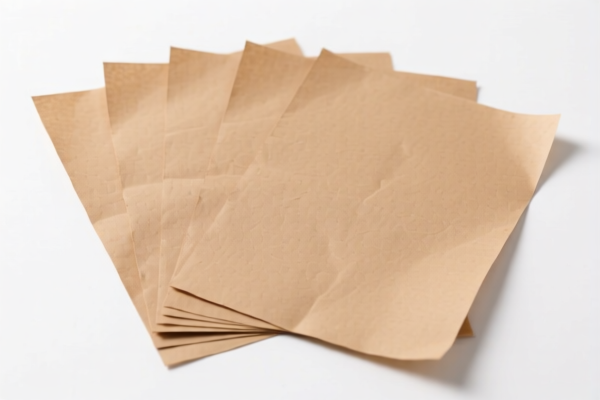
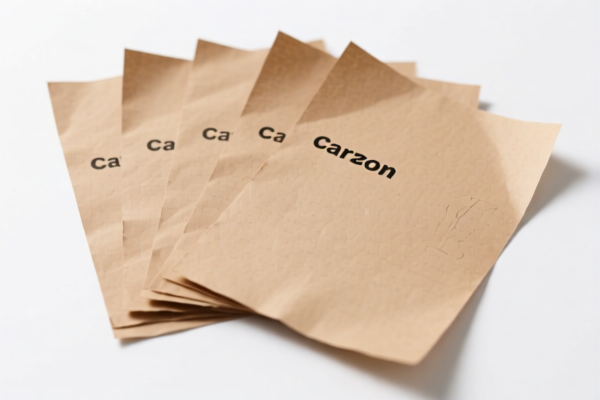

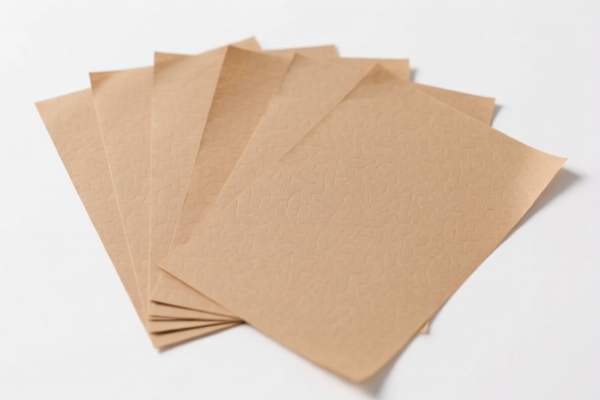
AI Analysis
📝 Carbon Paper (Vertical)
🌐 HS Code Reference & Customs Clearance Guide | 2026 Latest Tariff Analysis | Professional Clearance Strategy
📌 I. Product Definition & Classification: Do You Really Understand "Carbon Paper"?
Carbon Paper (specifically Vertical packing/boxes), a traditional office supply used for creating duplicate copies of handwritten or typed documents. In international trade, it is strictly classified under Paper, Paperboard, Cellulose Wadding, and Articles Thereof.
It is generally categorized based on two main interpretations: 1. Paper/Cellulose Articles (Shape-based): Considered as pads, gaskets, or other shaped paper products. 2. Cut-to-Size Paper Products: Considered as pulp-based paper products cut to specific dimensions.
⚠️ Key Distinction:
- If the carbon paper is described primarily by its material composition (paper/cellulose) and form (sheets/pads in boxes), it falls under 4823.90.80.00.
- If the description emphasizes the manufacturing process (pulp, cut-to-size), it falls under 4823.90.10.00.
- Crucial Note: Both classifications carry the same high tariff burden for US imports from China due to Section 301 and IEEPA penalties.
📦 II. HS Code Classification Details (2026 Latest Tariff Authority Comparison)
| HS Code | Product Description | Application Scenario | Tariff Complexity |
|---|---|---|---|
4823.90.80.00 |
Other articles of paper, paperboard, cellulose wadding or webs of cellulose fibers (e.g., pads, gaskets, other shaped articles) | Boxed carbon paper, vertical/horizontal packing, office stationery | ❌ High Tariff (35%) |
4823.90.10.00 |
Pulp, paper, or paperboard cut to size or shape (excluding items of heading 4801 to 4805) | Paper-based products defined by cut dimensions, pulp-based articles | ❌ High Tariff (35%) |
🔍 Important Reminder:
- Regardless of whether it is classified as "Other Paper Articles" (80.00) or "Cut-to-Size Pulp Products" (10.00), the total tax rate is identical.
- The distinction matters for internal accounting or specific regulatory reporting, but not for duty cost calculation for US-bound goods from China.
- Both codes fall under Chapter 48, indicating they are non-electronic, analog office supplies.
💰 III. 2026 Latest Tariff Rate Breakdown (Including Surtaxes & Policy Surcharges)
✅ Applicable Country: United States (US)
✅ Origin: China (CN)
✅ Effective Time: From November 10, 2025 onwards
🎯 1. 4823.90.80.00 & 4823.90.10.00 —— Carbon Paper (Boxed/Vertical)
| Item | Content |
|---|---|
| Basic Tariff | 0.0% (ad valorem) |
| Section 301 Surcharge | +25.0% (USITC Footnote) |
| IEEPA Surcharge | +10.0% (Section 122, targeting China/HK products, effective Nov 10, 2025) |
| Total Tax Rate | 35.0% |
| Tax Calculation | CIF Value × 35% |
| De Minimis Exemption | ❌ Not Eligible (deny_de_minimis) |
| Legal Basis Path | USITC:4823.90.80.00 → SECTION_301:25% → IEEPA:10% |
📌 Explanation:
- "Base Tariff 0%": Standard MFN (Most Favored Nation) rate for paper articles.
- "Section 301 Surcharge 25%": Imposed under the US Trade Act Section 301, targeting specific Chinese imports.
- "IEEPA Surcharge 10%": New layer of tariff under the International Emergency Economic Powers Act, effective Nov 10, 2025, further increasing the cost.
- Total 35%: This is a heavy duty burden. Even though the base rate is zero, the additional tariffs make it expensive.
- De Minimis: Since this is likely entering the US, the $800 de minimis threshold does not apply to these surtaxes. Every unit is subject to the 35% levy.
🛠️ IV. Customs Clearance Practical Advice (Real-World Pitfall Guide)
✅ 1. Required Documents List (None Can Be Missing)
| Document | Mandatory | Description |
|---|---|---|
| ✅ Commercial Invoice | ✔️ | Clearly state "Carbon Paper (Vertical)" and HS Code. |
| ✅ Packing List | ✔️ | Detail box contents: number of sheets, size, packaging type (horizontal/vertical). |
| ✅ Product Photos | ✔️ | Show the product, packaging, and any labeling to prove it is paper-based. |
| ✅ Material Declaration | ✔️ | Confirm composition: 100% Paper/Cellulose. No electronic components. |
| ✅ Certificate of Origin | ✔️ | Essential to prove Origin: China (CN) for tariff calculation. |
✅ 2. Declaration Tips (Key Mnemonic)
🔥 "Paper is Paper, Box it Right, Don't Split, Pay 35%!"
| Scenario | Correct Declaration | Wrong Practice |
|---|---|---|
| Boxed Carbon Paper | 4823.90.80.00 or 4823.90.10.00 as a single unit |
Splitting into "Paper" + "Box" → Misclassification risk |
| Loose Sheets (Not boxed) | Still under 4823 if cut to size | Declare as "Stationery" vaguely → Delays |
| Digital Carbon Paper (Electronic) | Different HS Code (e.g., 8523) | Misdeclare paper as electronic → Fraud/Seizure |
📌 Critical Warning:
- Do NOT split the declaration into "Paper Sheets" and "Cartons/Boxes". The carbon paper and its immediate packaging (if for retail/office use) should be declared together.
- Ensure the description clearly indicates "Paper" to avoid confusion with synthetic materials or plastic films, which might have different subheadings.
✅ 3. Special Cases Handling
| Situation | Handling Advice |
|---|---|
| Mixed Shipment | If carbon paper is mixed with other non-surtaxed items, ensure clear separation in documentation to avoid cross-contamination of tariff audits. |
| Re-export to 3rd Country | If transiting through Mexico or Canada, ensure US-specific surtaxes are not incorrectly applied at intermediate ports. |
| High-Volume Imports | Consider Advance Ruling from CBP to lock in the HS Code classification and avoid post-audit penalties. |
🌍 V. Global Market Comparison (2026 Latest)
| Country/Region | Recommended HS Code | Tariff | Certification | Notes |
|---|---|---|---|---|
| 🇺🇸 USA | 4823.90.80.00 / 4823.90.10.00 |
35% (Total) | None specific | High tariff due to Section 301 + IEEPA |
| 🇨🇳 China | 4823.90.80.00 |
~5-6% | GB Standard | Low entry barrier |
| 🇪🇺 EU | 4823.90.80.00 |
~6.5% | REACH (if chemical-coated) | Moderate tariff |
| 🇬🇧 UK | 4823.90.80.00 |
~6.5% | UKCA (if applicable) | Post-Brexit rules apply |
| 🇯🇵 Japan | 4823.90.80.00 |
~6-8% | JIS | Standard tariff |
📌 Conclusion:
- The US is the most expensive market for Carbon Paper due to the 35% combined tariff.
- Europe and Asia have significantly lower duties (around 6-8%).
- Strategy: For US-bound goods, factor the 35% cost into your pricing model. Consider sourcing from non-China origins (e.g., Vietnam, Thailand) if possible to mitigate Section 301, though IEEPA may still apply depending on final assembly.
📌 VI. Common Mistakes & Pitfall Guide (Lessons Learned)
❌ Mistake 1: Declaring Carbon Paper as "Office Supplies" (Generic)
👉 Consequence: CBP may reclassify it, leading to audit delays and penalties.
✅ Correct: Use specific HS Code 4823.90.80.00 or 4823.90.10.00.
❌ Mistake 2: Ignoring the IEEPA 10% Surcharge
👉 Consequence: Underpayment of duties by 10%. CBP will issue a Bill for Additional Duties + Interest.
✅ Correct: Always include the 10% IEEPA in cost calculations.
❌ Mistake 3: Splitting "Carbon Paper" and "Packing Box"
👉 Consequence: If the box is declared separately, it might be subject to different tariffs or deemed a separate article, complicating clearance.
✅ Correct: Declare as a single unit if the box is part of the retail packaging.
🎯 VII. Conclusion: Professional Declaration, Cost Control, Efficiency!
🎯 Remember the Mantra:
🔹 "Paper is Paper, HS 4823, 35% Total Tax, Don't Skip the IEEPA!"
🔹 "Base 0%, Section 301 is 25%, IEEPA adds 10%, Total is 35%!"
📌 Pro Tip:
- If your carbon paper is originating from Vietnam, Malaysia, or Thailand, check if it qualifies for USMCA or other free trade agreements. However, be aware that transshipment from China to avoid tariffs is illegal.
- Always verify the latest IEEPA status, as policies may evolve.
- Recommendation: Apply for a CBP Advance Ruling to confirm the exact HS Code classification and ensure compliance with the latest 2026 tariff rules.
📣 Act Now:
📞 Contact a licensed customs broker + Provide product images + Check latest IEEPA exemptions
🚀 Let your Carbon Paper clear smoothly, avoid costly audits, and protect your margins!
✨ Professional Customs Clearance Starts with Accurate Classification!
💼 Every Cent of Duty Counts!
Customer Reviews
About HS Code Classification
The Harmonized System (HS) is an internationally standardized nomenclature developed by the World Customs Organization (WCO) to classify traded products. Over 200 countries use the HS system as the basis for customs tariffs, trade statistics, and import/export regulations.
Each HS code follows a hierarchical structure:
- Chapter (2 digits) — Broad category of goods (e.g., Chapter 84: Machinery and Mechanical Appliances)
- Heading (4 digits) — More specific grouping within the chapter
- Subheading (6 digits) — Internationally standardized breakdown, used by all WCO member countries
- National subdivisions (8-10 digits) — Country-specific extensions for further classification, such as US HTSUS 10-digit codes
Correct HS code classification is essential for smooth customs clearance, accurate duty payment, and compliance with trade regulations. Misclassification can lead to customs delays, overpayment of duties, or penalties.
When importing from CN to US, the applicable tariff rates may include:
- Most-Favored-Nation (MFN) rate — The standard duty rate applied to WTO members
- General rate — Applied to countries without trade agreements
- Trade remedy duties — Additional tariffs such as Section 301 (anti-dumping), Section 232 (national security), or countervailing duties
The information provided on this page is for reference purposes only. For official classification, please consult with your local customs authority or a licensed customs broker.