Carbon Paper Black and White
CN → US| HS Code | Tariff Rate | Origin | Destination | Doc |
|---|---|---|---|---|
| 4816200000 | 35.0% | CN | US | Official Doc |
| 4816900100 | 35.0% | CN | US | Official Doc |
| 4809202000 | 35.0% | CN | US | Official Doc |
| 4809204000 | 35.0% | CN | US | Official Doc |
| 4811492100 | 35.0% | CN | US | Official Doc |
Product Images
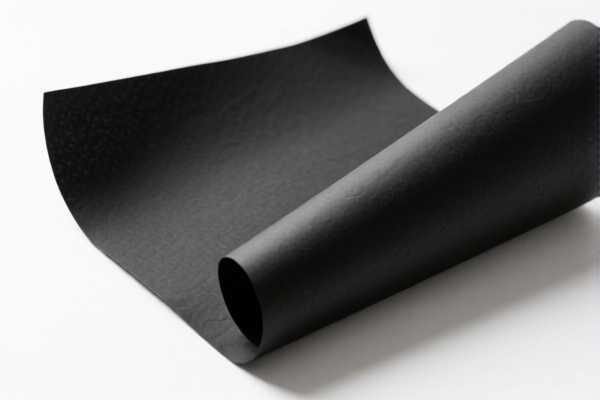
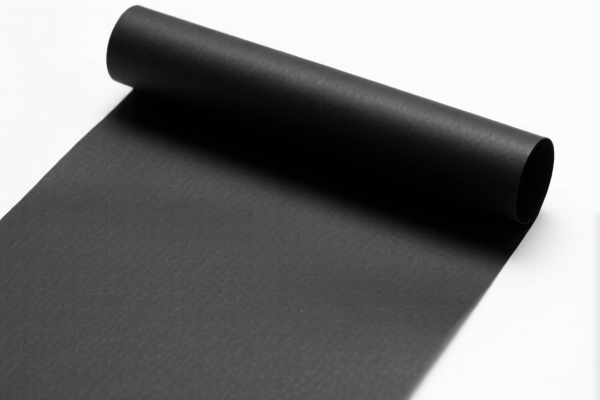

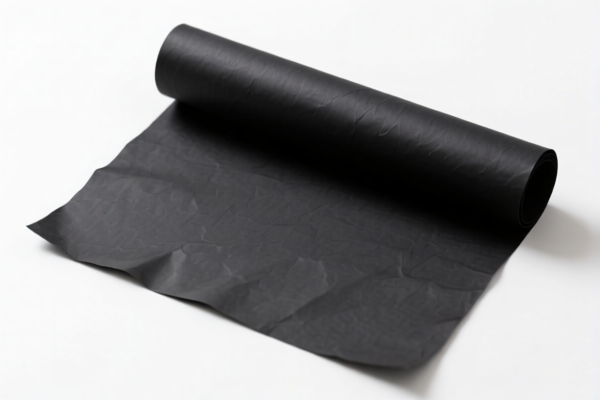
AI Analysis
🖊️ Carbon Paper (Black & White) | 复写纸 (黑白)
🌐 HS Code Reference & Customs Clearance Guide | 2026 Latest Tariff Analysis | Professional Clearance Strategy
📌 I. Product Definition & Classification: Do You Really Understand "Carbon Paper"?
Carbon paper, in its traditional form, is a sheet of paper coated with a dry ink (usually black or blue) on one side, used to create a copy of a document while writing or typing on the original. In international trade, especially under US Customs regulations, it is not a single monolithic category. It is fragmented based on material composition, format (roll vs. sheet), and specific chemical treatment.
For "Black and White Carbon Paper," the key distinction lies in whether it is classified as a dedicated "Carbon Paper" or a general "Treated Paper."
⚠️ Key Classification Distinction:
- If the product is specifically manufactured as carbon paper, coated with carbon/black ink, and sold for duplication → It likely falls under Heading 4809 or 4816.
- If it is a general treated paper (e.g., coated for surface coloring) rather than a dedicated carbon sheet, it may fall under 4811.
- Critical Factor: The exact coating material and whether it is "Self-copying" or traditional carbon paper.
📦 II. HS Code Classification Details (2026 Latest Tariff Authority Comparison)
| HS Code | Product Description | Application Scenario | Material/Format Match |
|---|---|---|---|
4816.20.00.00 |
Carbon paper, offset copying papers, and other copying or transfer papers (whether or not coated or inked on one side) | Traditional black/white carbon paper rolls or sheets | ✅ Full Match: Material and Use |
4816.90.01.00 |
Other carbon paper and offset copying papers | Specific shapes or non-standard formats of carbon paper | ✅ Full Match: Use and Form |
4809.20.20.00 |
Carbon papers, self-copy papers, and duplicator stencil papers, whether or not in rolls | Dedicated carbon paper in rolls or sheets | ✅ Consistent: Material and Use |
4809.20.40.00 |
Self-copy papers and duplicator stencil papers, whether or not in rolls | "Self-writing" carbon paper (no separate carbon sheet needed) | ✅ Consistent: Use and Material Attributes |
4811.49.21.00 |
Coated or surface-colored paper, in rolls or rectangular shapes (other than those of heading 4803-4809) | General treated paper, surface-colored for printing or copying | ⚠️ Partial Match: Format and Coating, but less specific than 4809/4816 |
🔍 Key Reminder:
- HS 4809/4816 are the most precise for dedicated "Carbon Paper."
- HS 4811 is a broader category for treated papers. If customs inspectors view your product as "general treated paper" rather than specific carbon paper, they may shift the code here, but the tax rate remains the same in this dataset.
- All listed codes apply to Black and White Carbon Paper as described in the data.
💰 III. 2026 Latest Tariff Rate Breakdown (Including Additional Taxes & Policy Surcharges)
✅ Applicable Country: USA (US)
✅ Country of Origin: China (CN)
✅ Effective Date: From Nov 10, 2025 (including subsequent imports)
🎯 1. All Listed HS Codes (4816.20.00.00, 4816.90.01.00, 4809.20.20.00, 4809.20.40.00, 4811.49.21.00)
| Item | Content |
|---|---|
| Base Tariff Rate | 0.0% (Ad Valorem) |
| Section 301 Additional Tariff | +25.0% (From USITC Footnote 9903.88.01 / Section 301 List 4) |
| Section 122 Tariff (IEEPA) | +10.0% (Against Chinese/HK products, effective Nov 10, 2025) |
| Total Tariff Rate | 35.0% |
| Tax Calculation | CIF Value × 35% |
| De Minimis Eligibility | ❌ NOT Applicable (deny_de_minimis) |
| Legal Basis Path | IEEPA:9903.01.25 → Section 301:9903.88.01 → USITC:[HS Code] |
📌 Explanation:
- The 25% surcharge is due to the Section 301 investigation into China's trade practices.
- The 10% surcharge is a new IEEPA (International Emergency Economic Powers Act) measure effective late 2025.
- Total 35% is a high tariff rate, significantly impacting profit margins.
- De Minimis Exemption ($800): NOT AVAILABLE. Even small shipments are subject to this 35% tariff.
🛠️ IV. Customs Clearance Practical Advice (Battle-Tested Pitfall Guide)
✅ 1. Document Preparation Checklist (No Exceptions)
| Document | Must Provide | Description |
|---|---|---|
| ✅ Product Specification Sheet | ✔️ | Must specify: "Carbon Paper, Black/White," dimensions, coating type, and quantity. |
| ✅ Product Photos | ✔️ | Clear images of the product showing the coated side, packaging, and labels. |
| ✅ Commercial Invoice | ✔️ | Clearly state: "Carbon Paper for Duplicating Documents" – avoid vague terms like "Paper." |
| ✅ Packing List | ✔️ | Detail weight, dimensions, and number of rolls/sheets per box. |
| ✅ Certificate of Origin (CO) | ✔️ | Required for origin verification; does not reduce tax but essential for compliance. |
🔥 "Name Precise, Tax Clear; Vague Description, Delayed Release!"
| Scenario | Correct Declaration | Error to Avoid |
|---|---|---|
| Traditional Carbon Paper | 4809.20.20.00 or 4816.20.00.00 |
Declaring as "Copy Paper" (0% tax) → Customs Penalty & Back Tax |
| Self-Copy Paper | 4809.20.40.00 |
Declaring as "Printer Paper" → Misclassification |
| General Treated Paper | 4811.49.21.00 |
If not clearly carbon paper, use this but still pay 35% |
✅ 2. Special Handling Tips
| Situation | Advice |
|---|---|
| Small Samples | Do NOT rely on De Minimis ($800 exemption). It is denied for these HS codes. Pay the 35% tariff upfront. |
| Mixed Shipments | If shipping carbon paper with other goods, declare separately. Do not bundle under a general "Stationery" code. |
| Labeling | Ensure packaging clearly states "Carbon Paper" and indicates if it is "Black" or "White" ink type. |
🌍 V. Global Market Comparison (2026 Latest)
| Country/Region | Recommended HS Code | Tariff Rate | Certification | Notes |
|---|---|---|---|---|
| 🇺🇸 USA | 4809.20.00.00 / 4816.20.00.00 |
35% | None specific | High Tariff: 301 + IEEPA |
| 🇨🇳 China | 4809.20.00.00 |
~5-10% | N/A | Lower import tariff |
| 🇪🇺 EU | 4809.00.00.00 |
0-6% | CE/REACH (if applicable) | No Section 301 equivalent |
| 🇬🇧 UK | 4809.00.00.00 |
0-6% | UKCA | Post-Brexit standards |
📌 Conclusion:
- The USA is the most expensive market for carbon paper due to the 35% combined tariff.
- EU/UK/China offer significantly lower tariff barriers.
- Consider supply chain diversification if targeting the US market to mitigate tariff costs.
📌 VI. Common Mistakes & Pitfalls (Lessons Learned)
❌ Mistake 1: Declaring Carbon Paper as "Copy Paper" or "Stationery"
👉 Consequence: Customs detects mismatch → Audit, Penalties, and Retroactive 35% Tax + Interest.
❌ Mistake 2: Assuming De Minimis ($800) Applies
👉 Consequence: Shipment seized or returned because these HS codes are explicitly excluded from de minimis.
❌ Mistake 3: Vague Description ("Paper")
👉 Consequence: Customs classifier assigns highest possible duty or delays clearance for further inspection.
✅ Correct Declaration Example:
"Carbon Paper, Black Coated, Roll Format, 100 Sheets per Roll, Model XYZ, HS 4809.20.20.00"
🎯 VII. Conclusion: Professional Declaration, Cost Control, Efficient Clearance!
🎯 Remember the Rule:
🔹 "Carbon Paper, No De Minimis; 35% Tax, Pay Early; Vague Name, Big Problem!"
🔹 "HS Code Determines Tax; 35% Difference, Budget Wisely!"
📌 Pro Tip:
If your carbon paper is originally from Vietnam, Mexico, Thailand, or Malaysia, you may qualify for IEEPA/Section 301 exemptions or lower rates under FTAs.
Recommendation:
📞 Consult a Licensed Customs Broker + Provide Product Samples/Photos + Apply for Advance Ruling
🚀 Ensure Smooth Clearance, Reduce Costs, Maximize Profit!
✨ Professional Clearance Starts with Accurate Classification!
💼 Every Cent of Your Cost Deserves Precision!
Customer Reviews
About HS Code Classification
The Harmonized System (HS) is an internationally standardized nomenclature developed by the World Customs Organization (WCO) to classify traded products. Over 200 countries use the HS system as the basis for customs tariffs, trade statistics, and import/export regulations.
Each HS code follows a hierarchical structure:
- Chapter (2 digits) — Broad category of goods (e.g., Chapter 84: Machinery and Mechanical Appliances)
- Heading (4 digits) — More specific grouping within the chapter
- Subheading (6 digits) — Internationally standardized breakdown, used by all WCO member countries
- National subdivisions (8-10 digits) — Country-specific extensions for further classification, such as US HTSUS 10-digit codes
Correct HS code classification is essential for smooth customs clearance, accurate duty payment, and compliance with trade regulations. Misclassification can lead to customs delays, overpayment of duties, or penalties.
When importing from CN to US, the applicable tariff rates may include:
- Most-Favored-Nation (MFN) rate — The standard duty rate applied to WTO members
- General rate — Applied to countries without trade agreements
- Trade remedy duties — Additional tariffs such as Section 301 (anti-dumping), Section 232 (national security), or countervailing duties
The information provided on this page is for reference purposes only. For official classification, please consult with your local customs authority or a licensed customs broker.