Carbon Paper Box
CN → US| HS Code | Tariff Rate | Origin | Destination | Doc |
|---|---|---|---|---|
| 4816200000 | 35.0% | CN | US | Official Doc |
| 4816900100 | 35.0% | CN | US | Official Doc |
| 4809202000 | 35.0% | CN | US | Official Doc |
| 4809204000 | 35.0% | CN | US | Official Doc |
| 4811492100 | 35.0% | CN | US | Official Doc |
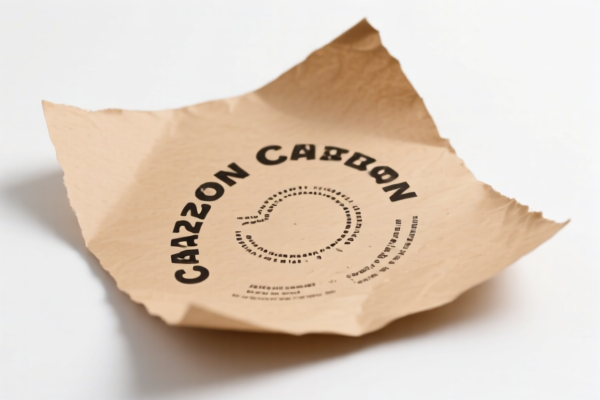
Product Images



AI Analysis
📝 Carbon Paper Box (Carbonless Copy Paper / Multi-ply Paper)
🌐 HS Code Reference & Clearance Guide | 2026 Latest Tariff Analysis | Professional Customs Strategy
📌 I. Product Definition & Classification: Do You Really Understand "Carbon Paper"?
Carbon Paper (or Carbonless Copy Paper) is an essential office supply used to create duplicate copies of documents simultaneously. In international trade, it is strictly categorized based on its material composition (coated vs. uncoated) and physical form (rolls vs. sheets).
The term "Carbon Paper Box" typically refers to packaged units of carbon paper, but customs classification depends on the inner product characteristics, not the packaging.
⚠️ Key Distinction Points:
- If the paper is coated on one side with a dry ink substance (traditional carbon paper) or microcapsule chemical coating (carbonless multi-ply) → It falls under Chapter 48 (Paper/Paperboard).
- If it is merely packaging (the box itself) without the paper → It would fall under Chapter 49 or 4813.
- Assumption: Based on the provided data, we are classifying the Carbon Paper inside the box.
📦 II. HS Code Classification Details (2026 Latest Authorized Reference)
Based on the provided dataset, here are the 5 valid HS Codes for Carbon Paper, along with their specific matching criteria:
| HS Code | Product Description & Matching Logic | Key Attributes |
|---|---|---|
| 4816.20.00.00 | Carbon Paper, Material & Use Match | Specifically designated for carbon paper products. Matches physical form and intended use precisely. |
| 4816.90.01.00 | Carbon Paper, Use & Form Match | Classified under "Other" carbon paper. Used when the specific form (e.g., sheets) aligns with this subheading rather than the general carbon paper heading. |
| 4809.20.20.00 | Carbon Paper, Material & Use Consistent | Refers to "Copier carbon paper" or similar multi-ply systems where material and end-use are identical to standard carbon paper definitions. |
| 4809.20.40.00 | Self-Imprinting Carbon Paper | Specifically for Carbonless Copy Paper (no oil/wax coating, relies on microcapsules). "Use and material attributes consistent" with carbonless systems. |
| 4811.49.21.00 | Coated/Surface-Colored Paper (Rolls/Sheets) | For carbon paper that is coated or surface-colored, whether in rolls or sheets. Broad category for treated paper products. |
🔍 Critical Note:
- All listed HS Codes apply to Carbon Paper products.
- The choice depends on whether the product is traditional dry-ink carbon paper (4816) or carbonless multi-ply copy paper (4809/4811).
- "4809.20.40.00" is most common for modern carbonless office supplies (NCR paper).
- "4816.20.00.00" is the most direct classification for traditional carbon paper sheets.
💰 III. 2026 Latest Tariff Rate Breakdown (Including Surcharges & Policy Surcharges)
✅ Applicable Country: United States (US)
✅ Origin: China (CN)
✅ Effective Time: 2025/2026 (Current Trade Policies)
🎯 1. Unified Tariff Structure for All Listed HS Codes
All five HS codes share the identical tariff structure under current US-China trade policies:
| Item | Content |
|---|---|
| Base Tariff Rate | 0.0% (ad valorem) |
| Section 301 Surcharge | +25.0% (USITC Footnote) |
| Section 122 Tariff | +10.0% (Specific policy surcharge) |
| Total Tax Rate | 35.0% |
| Tax Calculation | CIF Value × 35% |
| De Minimis Exemption | ❌ Not Eligible (Deny de minimis for China-origin goods under current thresholds) |
| Legal Basis Path | USITC:48xx.xx.xx.xx → SECTION_301:25% → SECTION_122:10% |
📌 Explanation:
- "Base Tariff 0%": Paper products generally have low base MFN rates.
- "Section 301 Tariff 25%": The primary punitive tariff on Chinese goods, including paper and office supplies.
- "Section 122 Tariff 10%": Additional surcharge applied under specific trade enforcement provisions.
- Total 35%: This is a high effective tariff rate. Importers must account for this in cost calculations.
🛠️ IV. Customs Clearance Practical Advice (Real-World Pitfall Guide)
✅ 1. Required Documentation Checklist
| Document | Mandatory? | Description |
|---|---|---|
| ✅ Product Specification Sheet | ✔️ | Must specify: Type (Carbonless vs. Traditional), Ply count (2-ply, 3-ply), Size, Quantity per box. |
| ✅ Commercial Invoice | ✔️ | Clearly state: "Carbon Paper" or "Carbonless Copy Paper," NOT just "Paper Boxes." |
| ✅ Packing List | ✔️ | Detail contents: Number of sheets, weight per box, dimensions. |
| ✅ Certificate of Origin (CO) | ✔️ | To verify China origin (critical for tariff assessment). |
| ✅ HS Code Pre-Ruling (Optional but Recommended) | ✔️ | To confirm whether it falls under 4816 (Carbon) or 4809/4811 (Carbonless). |
✅ 2. Declaration Tips (Key Mnemonic)
🔥 "Define the Type: Traditional or Carbonless? Choose the Right Code!"
| Scenario | Correct HS Code | Incorrect Code | Risk |
|---|---|---|---|
| Traditional Carbon Paper (Dry ink, one-sided coating) | 4816.20.00.00 |
4809.20.40.00 |
Misclassification → Potential duty adjustment + penalties |
| Carbonless Copy Paper (NCR, multi-ply, no ink) | 4809.20.40.00 |
4816.20.00.00 |
Misclassification → 35% vs. 35% (Same rate, but wrong legal basis) |
| Coated Paper in Rolls | 4811.49.21.00 |
4816.20.00.00 |
Misclassification → May trigger additional scrutiny |
| Empty Boxes (No paper) | Not Listed in Data | Any of the above | Severe Misclassification → High penalties |
📌 Note: Since all listed HS codes have the same 35% tariff, the primary risk is legal compliance and duty drawback eligibility, not just cost. However, correct classification ensures smooth customs clearance and avoids audits.
✅ 3. Special Circumstances
| Situation | Handling Advice |
|---|---|
| Mixed Packages (Carbon Paper + Pens + Clips) | Declare separately. Carbon Paper → 35%; Pens → Different HS/Tariff. Do not combine under one HS code. |
| Small Samples (De Minimis) | ❌ Not Exempt: China-origin carbon paper is subject to 35% tariff even if value is low. |
| Carbonless vs. Traditional | Provide material composition in description. Customs may require a sample for testing if ambiguous. |
| Packaging Materials | The "Box" itself is not the primary good. Declare the content (Carbon Paper) as the principal item. |
🌍 V. Global Market Clearance Comparison (2026 Latest)
| Country/Region | Recommended HS Code | Tariff Rate | Key Requirement | Note |
|---|---|---|---|---|
| 🇺🇸 USA | 4816.20.00.00 |
35% | FCC/No FCC (Paper doesn't need) | High tariff due to Section 301 & 122 |
| 🇨🇳 China | 4816.20.00.00 |
~5-6% | CE (if exporting to EU) | Standard import duty for office supplies |
| 🇪🇺 EU | 4816.20.00.00 |
0% (if GSP) | CE Marking (if applicable) | No additional surcharges |
| 🇬🇧 UK | 4816.20.00.00 |
0-5% | UKCA (if applicable) | Post-Brexit tariffs may vary |
📌 Conclusion:
- USA is the most expensive market due to 35% combined tariffs.
- EU/UK/China have significantly lower or zero tariffs.
- Cost Optimization: Consider sourcing from non-China origins if targeting the US market to avoid 301/122 tariffs.
📌 VI. Common Errors & Pitfalls (Blood-Teaching Lessons)
❌ Error 1: Declaring as "Paper" generally (4816.90.90.00)
👉 Consequence: If misclassified, customs may assess higher duties or reject the entry.
✅ Fix: Use specific HS codes (4816.20.00.00 for carbon paper).
❌ Error 2: Ignoring Section 122 Tariff
👉 Consequence: Underpayment of duties → Penalties + Interest.
✅ Fix: Always include +10% in cost calculations for China-origin goods to the US.
❌ Error 3: Confusing Carbon Paper with Copy Paper (Blank Paper)
👉 Consequence: Blank paper may have different HS codes and tariffs.
✅ Fix: Clearly state "Carbon" or "Carbonless" in the description.
🎯 VII. Conclusion: Professional Declaration, Cost Control!
🎯 Remember:
🔹 "Carbon Paper: 35% Total Tax (USA)"
🔹 "HS Code 4816/4809: Choose Based on Type"
🔹 "Declaration Must Be Specific: No 'Paper Box' Only!"
📌 Pro Tip:
If your carbon paper is carbonless (NCR), use 4809.20.40.00.
If it is traditional dry-ink, use 4816.20.00.00.
Both incur 35% in the US, but correct classification prevents customs audits.
📣 Immediate Action:
📞 Contact a Licensed Customs Broker + Provide Product Specs + Confirm Origin
🚀 Ensure Compliance, Avoid Delays, Protect Margins!
✨ Professional Clearance Starts with Accurate Classification!
💼 Every 35% Matters – Get It Right!
Customer Reviews
About HS Code Classification
The Harmonized System (HS) is an internationally standardized nomenclature developed by the World Customs Organization (WCO) to classify traded products. Over 200 countries use the HS system as the basis for customs tariffs, trade statistics, and import/export regulations.
Each HS code follows a hierarchical structure:
- Chapter (2 digits) — Broad category of goods (e.g., Chapter 84: Machinery and Mechanical Appliances)
- Heading (4 digits) — More specific grouping within the chapter
- Subheading (6 digits) — Internationally standardized breakdown, used by all WCO member countries
- National subdivisions (8-10 digits) — Country-specific extensions for further classification, such as US HTSUS 10-digit codes
Correct HS code classification is essential for smooth customs clearance, accurate duty payment, and compliance with trade regulations. Misclassification can lead to customs delays, overpayment of duties, or penalties.
When importing from CN to US, the applicable tariff rates may include:
- Most-Favored-Nation (MFN) rate — The standard duty rate applied to WTO members
- General rate — Applied to countries without trade agreements
- Trade remedy duties — Additional tariffs such as Section 301 (anti-dumping), Section 232 (national security), or countervailing duties
The information provided on this page is for reference purposes only. For official classification, please consult with your local customs authority or a licensed customs broker.