Carbon Paper and Copy Paper
CN → US| HS Code | Tariff Rate | Origin | Destination | Doc |
|---|---|---|---|---|
| 4809202000 | 35.0% | CN | US | Official Doc |
| 4811493000 | 35.0% | CN | US | Official Doc |
| 4816200000 | 35.0% | CN | US | Official Doc |
| 4816900100 | 35.0% | CN | US | Official Doc |
| 4809204000 | 35.0% | CN | US | Official Doc |
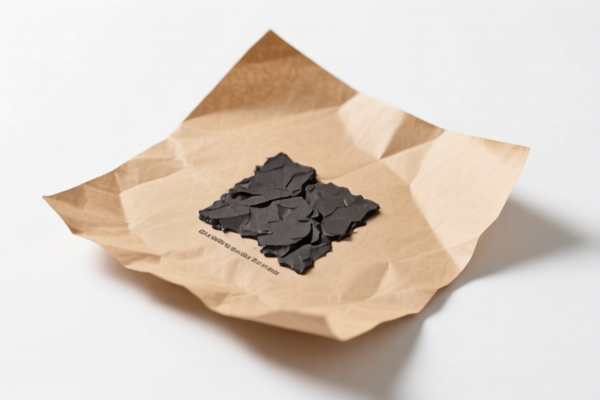
Product Images



AI Analysis
📄 Carbon Paper & Copy Paper: HS Code Classification & Customs Clearance Guide (2026)
🌐 HS Code Reference & Customs Strategy | 2026 Latest Tariff Analysis | Professional Clearance Protocol
📌 I. Product Definition & Classification: Do You Truly Understand "Carbon Paper"?
Carbon paper and copy paper (specifically self-copying carbonless paper) are essential stationery items used for duplicating handwritten or typed documents. In international trade, despite their simple appearance, they are subject to strict classification due to their manufacturing process (coating vs. plain paper) and potential US trade restrictions.
They are generally categorized into two main types: 1. Traditional Carbon Paper: Paper coated with a dry ink substance (carbon black or wax) on one side, used between sheets to transfer ink to the bottom sheet when pressure is applied. 2. Self-Copying/Carbonless Paper (NCR Paper): Paper coated with micro-encapsulated dyes and clay. No separate carbon sheet is needed; pressure causes the dye to react and create an impression on the underlying sheet.
⚠️ Key Distinction for Customs: - If the product is plain paper coated with ink/wax for transfer → It falls under Heading 4809 or 4816. - If the product is colored/coated for printing/copying purposes → It falls under Heading 4811. - Crucial Warning: Most of these products originate from China and are subject to Section 301 Tariffs and Section 122 Tariffs, significantly increasing the landed cost.
📦 II. HS Code Classification Matrix (2026 Latest Tariff Rules)
Based on the provided data, here are the four valid HS Codes for Carbon Copy Paper and its variants, along with their specific applications.
| HS Code | Product Description | Summary / Match Criteria | Total Tax Rate |
|---|---|---|---|
| 4809.20.20.00 | Carbon Copy Paper | Material and Use Completely Match | 35.0% |
| 4811.49.30.00 | Coated/Colored Paper Products (Adhesive/Pressured Sensitive Category) | Belonging to the category of adhesive paper and paperboard | 35.0% |
| 4816.20.00.00 | Carbon Copy Paper | Use and Morphology Completely Match | 35.0% |
| 4816.90.01.00 | Carbon Copy Paper (Other) | Use and Morphology Completely Match | 35.0% |
| 4809.20.40.00 | Self-Copying Paper (NCR) | Use and Material Attributes Consistent | 35.0% |
🔍 Why This Classification? - 4809: Specifically covers "Carbon Copy Paper and Other Copying or Transfer Papers." This is the most direct classification for traditional carbon sheets. - 4816: Covers "Self-copying paper and other copying or transfer paper; carbon paper, inked and not inked, of any kind." Subheading .20 is for specific carbon papers, while .90 is for "Other." - 4811: Covers "Paper, paperboard, cellulose wadding and webs of cellulose fibres, coated, impregnated, covered, surface-coloured, surface-decorated or printed, other than goods of heading 4803, 4809 or 4810 to 4814." If the paper is heavily coated for adhesive or specific printing purposes, it may fall here.
💰 III. 2026 Tariff Rate Breakdown (US Market Focus)
✅ Applicable Country: United States (US)
✅ Origin: China (CN)
✅ Effective Date: 2025/2026 (Current Trade Policies)
All HS Codes listed above carry the same tariff structure due to the origin and product nature.
🎯 1. Tariff Structure for All Listed HS Codes
| Item | Detail |
|---|---|
| Base Tariff (MFN) | 0.0% (Ad Valorem) |
| Section 301 Additional Tariff | +25.0% (Trade Act of 1974) |
| Section 122 Tariff | +10.0% (Historical/Specific Trade Action) |
| Total Effective Duty | 35.0% |
| Tax Calculation | CIF Value × 35% |
| De Minimis Exemption | ❌ Not Applicable (Usually, Section 301 goods are excluded from de minimis benefits if declared as Section 301 items, though specific CBP enforcement varies. Assume Full Tax for safety.) |
| Legal Basis Path | HTSUS:4809/4816 → Section 301: Footnote 9903.88 → Section 122: Relevant Statute |
📌 Explanation: - The 0% base rate indicates that carbon paper is considered a necessary office supply with low protective tariffs for domestic industry. - However, the 25% Section 301 tariff is the dominant cost driver for Chinese-origin goods. - The 10% Section 122 tariff adds an additional layer of protectionism. - Total Liability: 35%. This is a HIGH duty rate for simple paper products. Importers must budget accordingly.
🛠️ IV. Customs Clearance Practical Advice (Pitfall Avoidance Guide)
✅ 1. Preparation Checklist (Mandatory)
| Document | Required? | Purpose |
|---|---|---|
| Product Specification Sheet | ✅ Yes | Must detail: Type (Carbonless vs. Traditional), Coating Type, Sheet Size, Number of Sets (e.g., NCR 2-ply, 3-ply). |
| Material Composition | ✅ Yes | Confirm it is Paper (Cellulose), not Plastic-based film. Misclassification can lead to penalties. |
| Commercial Invoice | ✅ Yes | Must explicitly state: "Carbon Copy Paper" or "Self-Copying Paper." Avoid vague terms like "Stationery." |
| Certificate of Origin | ✅ Yes | Proves Chinese origin (triggering 35% tax) or other origin (potentially lower tax if eligible for FTA, e.g., USMCA). |
| Bill of Lading | ✅ Yes | Ensure HS Code is pre-filled correctly. |
✅ 2. Declaration Tips (Key Mnemonic)
🔥 "Be Specific, Not Generic. 'Stationery' is a Trap!"
| Scenario | Correct Declaration | Risk of Error |
|---|---|---|
| Traditional Carbon Sheets | "Carbon Copy Paper, Paper-based, Coated with Ink" | If declared as "Stationery" without HS code, CBP may inspect and reassess. |
| NCR Paper (Self-Copying) | "Self-Copying Paper (NCR), 2-Ply, Coated Paper" | If declared as "Paper for Writing" (4802), it is WRONG. Must use 4809/4816. |
| Bulk Rolls vs. Cut Sheets | Specify if cut to size or on rolls | Affects classification slightly within the subheadings, but tax rate remains 35%. |
| Origin Declaration | Clearly state "Made in China" | Hiding origin to avoid Section 301 is SMUGGLING. Penalties include seizure and fines. |
✅ 3. Special Cases
| Case | Handling Advice |
|---|---|
| Office Supplies Bundles | If carbon paper is bundled with pens/notepads, declare Separately. Do not try to average the duty rate. |
| Adhesive Backing | If the carbon paper has an adhesive backing for easy replacement, consider 4811.49.30.00 as a valid alternative, but ensure the adhesive is minor compared to the paper function. |
| Sample Imports | Even samples are subject to duties if over $800 (though de minimis may apply, Section 301 goods are tricky). Check current CBP guidance on Section 301 de minimis. |
🌍 V. Global Market Comparison (2026)
| Market | Recommended HS Code | Estimated Duty (China Origin) | Certification/Notes |
|---|---|---|---|
| 🇺🇸 USA | 4809.20.20.00 / 4816.20.00.00 |
35% (25% Sec 301 + 10% Sec 122) | Strict HS Code enforcement. No VAT. |
| 🇨🇳 China | 4809.20.20.00 |
~6-13% | Import tax + VAT (13%). |
| 🇪🇺 EU | 4809.00.00 |
~6.5% | No Section 301 equivalent, but standard MFN applies. |
| 🇬🇧 UK | 4809.00.00 |
~6.5% | Post-Brexit tariffs similar to EU. |
| 🇯🇵 Japan | 4809.00.00 |
~3-6% | EPA benefits may apply if certified. |
📌 Conclusion: - The USA is the most expensive market for this product due to trade wars. - EU and Asia have much lower barriers, making them more attractive for distribution centers if not directly serving the US.
📌 VI. Common Errors & Pitfalls (Lessons Learned)
❌ Error 1: Declaring as "Paper for Writing" (HS 4802)
👉 Consequence: Incorrect classification. CBP will correct to 4809/4816 and apply the 35% duty, plus potential penalties for misdeclaration.
❌ Error 2: Using "Office Supplies" as the product description
👉 Consequence: Too vague. CBP will detain the shipment for inspection, causing delays and storage fees.
❌ Error 3: Ignoring Section 301 Tariffs
👉 Consequence: Underpaying duty by 25%. CBP audits will result in back-taxes, interest, and fines.
❌ Error 4: Confusing Carbon Paper with Thermal Paper
👉 Consequence: Thermal paper (for receipts) may have different HS codes (often 4811 or 4823). Using the wrong code can lead to incorrect tax calculation.
✅ Correct Practice:
"Self-Copying Paper, NCR Type, 2-Ply, 8.5x11 Inches, Paper-Based, Origin: China"
🎯 VII. Conclusion: Professional Clearance, Cost Control
🎯 Remember This Mnemonic:
🔹 "Carbon Paper is Paper, Not Just Stationery."
🔹 "China Origin Means 35% Tax in the US."
🔹 "Detail the Coating, Specify the Ply, Avoid the Penalty."
📌 Pro Tip:
If you are importing large volumes, consider pre-ruling with CBP to confirm the exact HS Code (4809 vs 4816) to avoid post-entry audits. Also, explore if any FTAs (Free Trade Agreements) can reduce the duty if sourced from non-China countries (e.g., Vietnam, Mexico).
📣 Immediate Action:
📞 Consult a Customs Broker: Provide product samples and specs.
📄 Verify Origin Certificates: Ensure they are accurate to avoid anti-circumvention investigations.
📉 Calculate Landed Cost: Include the 35% duty in your pricing strategy.
✨ Accurate Classification Saves Money!
💼 Don't Let 35% Duty Eat Your Margin!
Customer Reviews
About HS Code Classification
The Harmonized System (HS) is an internationally standardized nomenclature developed by the World Customs Organization (WCO) to classify traded products. Over 200 countries use the HS system as the basis for customs tariffs, trade statistics, and import/export regulations.
Each HS code follows a hierarchical structure:
- Chapter (2 digits) — Broad category of goods (e.g., Chapter 84: Machinery and Mechanical Appliances)
- Heading (4 digits) — More specific grouping within the chapter
- Subheading (6 digits) — Internationally standardized breakdown, used by all WCO member countries
- National subdivisions (8-10 digits) — Country-specific extensions for further classification, such as US HTSUS 10-digit codes
Correct HS code classification is essential for smooth customs clearance, accurate duty payment, and compliance with trade regulations. Misclassification can lead to customs delays, overpayment of duties, or penalties.
When importing from CN to US, the applicable tariff rates may include:
- Most-Favored-Nation (MFN) rate — The standard duty rate applied to WTO members
- General rate — Applied to countries without trade agreements
- Trade remedy duties — Additional tariffs such as Section 301 (anti-dumping), Section 232 (national security), or countervailing duties
The information provided on this page is for reference purposes only. For official classification, please consult with your local customs authority or a licensed customs broker.