Carbonized Wood
CN → US| HS Code | Tariff Rate | Origin | Destination | Doc |
|---|---|---|---|---|
| 4418790100 | 38.2% | CN | US | Official Doc |
| 4402900100 | 35.0% | CN | US | Official Doc |
| 4418919140 | 38.2% | CN | US | Official Doc |
| 4407190093 | 35.0% | CN | US | Official Doc |
| 4407990295 | 35.0% | CN | US | Official Doc |
Product Images
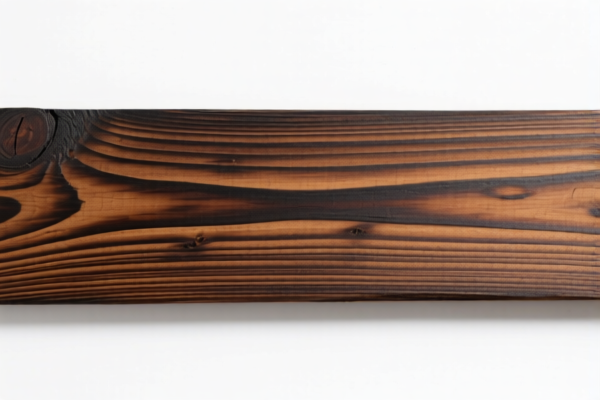
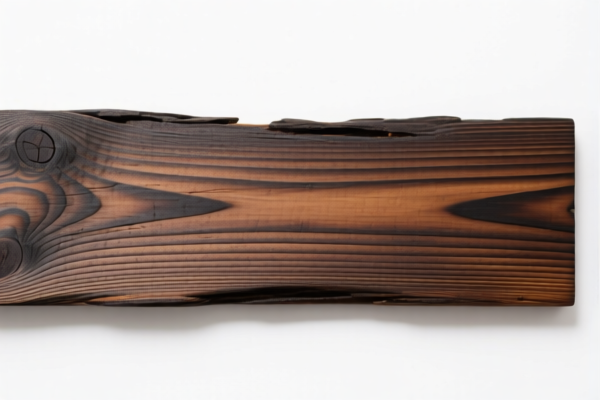
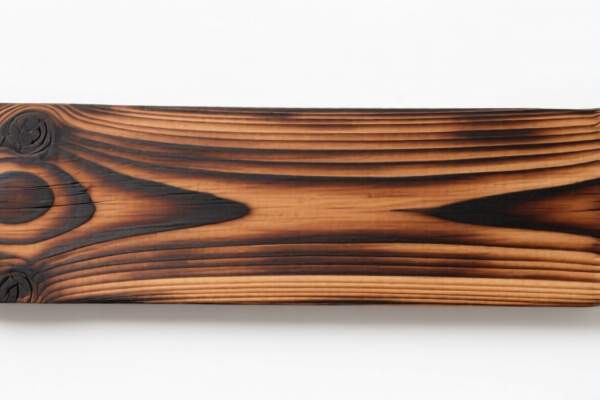
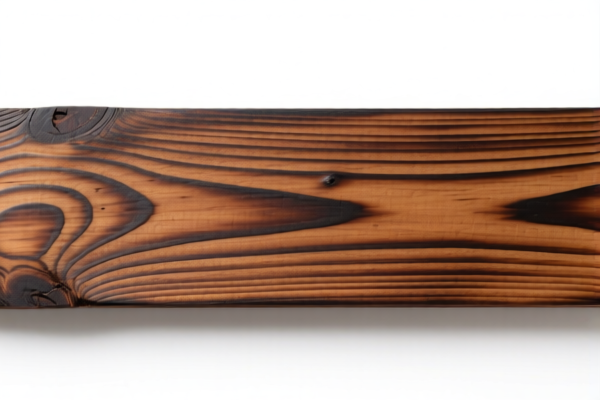
AI Analysis
🌲 Carbonized Wood (Thermo-Wood / Charred Timber)
🌐 HS Code Reference & Customs Clearance Guide | 2026 Latest Tariff Analysis | Professional Clearance Strategy
📌 I. Product Definition & Classification: What is "Carbonized Wood"?
Carbonized Wood, often referred to as Thermo-Wood or Shou Sugi Ban, is wood that has been subjected to high-temperature heat treatment in the absence of oxygen. This process alters the chemical composition of the wood, enhancing its durability, resistance to decay, and aesthetic appeal.
In international trade, its classification depends heavily on the degree of processing and the final form of the product. It can be categorized into two main streams: 1. Processed Timber Products (Building Materials): If the wood is shaped, planed, or used as construction components (e.g., decking, siding). 2. Raw/Basic Charred Timber: If the wood is primarily characterized by its charring/chemical treatment process without complex shaping.
⚠️ Key Distinction Point: - If the wood is shaped, milled, or used as a building component (e.g., planks, beams) → Falls under Chapter 44, Heading 4418 (Builders' carpentry and joinery). - If the wood is essentially raw timber with a charred/chemically treated surface → May fall under Heading 4407 (Wood sawn or chipped lengthwise) or 4402 (Wood charcoal).
📦 II. HS Code Classification Details (2026 Latest Tariff Authority Comparison)
Based on the provided data, here are the specific HS Codes and their logical justifications:
| HS Code | Product Description | Logical Justification (From Data) | Tax Rate (Total) |
|---|---|---|---|
4418.79.01.00 |
Other Builders' Carpentry | Carbonized wood is a wood material fitting the category of "Wood Products" in builders' carpentry. Based on the "Other" (兜底) rule for this category. | 38.2% |
4402.90.01.00 |
Wood Charcoal | Carbonized wood falls under the category of "Wood Charcoal/Charred Wood Products." It meets the core material requirement of "Charcoal" without conflict in form or use. | 35.0% |
4418.91.91.40 |
Other Construction Components | The material is wood, belonging to the primary or semi-finished form of wooden components. It matches the material requirements for wooden building components. | 38.2% |
4407.19.00.93 |
Sawn Wood, Other | The material is wood, falling under the category of "Untreated Wood (except chemical processing)." It fits the material attribute of "Coniferous/Other Wood." | 35.0% |
4407.99.02.95 |
Sawn Wood, Other | The material is Non-Coniferous Wood. The form is wood sawn longitudinally or sliced. Classified under the "Other" (兜底) catch-all principle. | 35.0% |
🔍 Key Insight: -
4418.xxxxxxcodes generally apply if the wood is already shaped for construction (e.g., decking boards, wall panels). These attract higher duties due to the "manufactured" nature. -4407.xxxxxxand4402.xxxxxxcodes apply if the wood is sawn/planked but not yet formed into a final building component, or if it is classified strictly by its "charred" material property. These generally have lower base tariffs (0%) before surcharges.
💰 III. 2026 Latest Tariff Rate Breakdown (Including Surcharges & Policy Add-ons)
✅ Applicable Country: United States (US)
✅ Origin: China (CN)
✅ Effective Date: From November 10, 2025 (including subsequent imports)
🎯 1. 4418.79.01.00 & 4418.91.91.40 —— Builders' Carpentry & Components
| Item | Content |
|---|---|
| Base Tariff | 3.2% (Ad Valorem) |
| Section 301 Surcharge (USITC) | +25.0% (From USITC Footnote 9903.88.01) |
| IEEPA Surcharge | +10.0% (Targeting China/HK products, effective from Nov 10, 2025) |
| Total Tariff Rate | 38.2% |
| Tax Calculation | CIF Value × 38.2% |
| De Minimis Exemption | ❌ Not Eligible (deny_de_minimis) |
| Legal Basis Path | IEEPA:9903.01.25 → IEEPA:9903.01.24 → USITC:4418.xxxxx → FOOTNOTE:9903.88.01 |
📌 Explanation: - The 25% surcharge is from the Section 301 investigation under the "Tariff Act of 1930." - The 10% IEEPA surcharge is an additional national security-related tariff on Chinese goods. - Total 38.2% is a high tariff for building materials. You must budget for this cost upfront!
🎯 2. 4402.90.01.00, 4407.19.00.93, 4407.99.02.95 —— Wood Charcoal & Sawn Timber
| Item | Content |
|---|---|
| Base Tariff | 0.0% (Ad Valorem) |
| Section 301 Surcharge (USITC) | +25.0% (From USITC Footnote 9903.88.01) |
| IEEPA Surcharge | +10.0% (Targeting China/HK products, effective from Nov 10, 2025) |
| Total Tariff Rate | 35.0% |
| Tax Calculation | CIF Value × 35.0% |
| De Minimis Exemption | ❌ Not Eligible (deny_de_minimis) |
| Legal Basis Path | IEEPA:9901.25 → IEEPA:9903.01.24 → USITC:4402/4407.xxxxx → FOOTNOTE:9903.88.01 |
📌 Note: - Although the base tariff is 0%, the 35% total rate is still significant. - This classification is beneficial if you can prove the product is sawn timber or charcoal-like material rather than a finished building component. - Even "Charred Wood" is subject to the 25% + 10% surcharges, so there is no tax avoidance here, only optimization via classification.
🛠️ IV. Customs Clearance Practical Advice (Real-World Pitfall Guide)
✅ 1. Documentation Checklist (None of these can be missing)
| Document | Required | Description |
|---|---|---|
| ✅ Product Specification Sheet | ✔️ | Must detail heat treatment temperature, duration, moisture content, and wood species. |
| ✅ Process Flow Chart | ✔️ | To justify "Carbonization/Charring" vs. "Chemical Treatment." |
| ✅ Product Photos (Including Label) | ✔️ | Clear images showing the charred surface, dimensions, and any markings. |
| ✅ Commercial Invoice | ✔️ | Must accurately describe the product as "Carbonized Wood" or "Thermo-Wood" and match the HS Code. |
| ✅ Packing List | ✔️ | Details net/gross weight and packaging type. |
| ✅ Certificate of Origin (CO) | ✔️ | Mandatory for origin verification (China). |
| ✅ Treatment Certificate | ✔️ | Proof of heat treatment (to avoid ISPM 15 pest concerns, though heat-treated wood is usually exempt, proof helps). |
✅ 2. Declaration Strategy (Key Mantras)
🔥 "Shape Defines Code, Char defines Base, Don't Split, Don't Lie!"
| Scenario | Correct Declaration | Wrong Practice | Consequence |
|---|---|---|---|
| Finished Decking/Siding | 4418.79.01.00 / 4418.91.91.40 |
Declare as "Raw Wood" | High Risk: Customs may reclassify and fine for misdeclaration. |
| Sawn Planks (Unshaped) | 4407.19.00.93 / 4407.99.02.95 |
Declare as "Furniture Part" | Wrong Code: May attract higher duties or rejection. |
| Bulk Charred Logs | 4402.90.01.00 |
Declare as "Finished Wood" | Wrong Code: Undervaluation of processing level. |
| Mixed Shipment | Split Declaration | Bundle all under one code | Audit Trigger: Leads to delays and potential seizure. |
✅ 3. Special Situations Handling
| Situation | Handling Advice |
|---|---|
| OEM Custom Sizes | Provide detailed cut lists. If cut to size for a specific project, it leans toward 4418. If standard plank, 4407. |
| Chemical vs. Thermal | If the "char" is due to chemical fire retardants, it may be classified differently. Ensure it is Thermal/Physical for these codes. |
| Export to USA | Be prepared for 35%-38.2% duty. Factor this into your FOB pricing. |
| ISPM 15 | Although heat-treated wood is generally exempt from fumigation, provide the HT Mark to avoid port delays. |
🌍 V. Global Market Comparison (2026 Latest)
| Country/Region | Recommended HS Code | Tariff (China Origin) | Certification Requirements | Remarks |
|---|---|---|---|---|
| 🇺🇸 USA | 4418.xxxx or 4407.xxxx |
35.0% - 38.2% | ISPM 15 (HT Mark), CITES (if exotic) | Highest Cost: High surcharges apply. |
| 🇨🇳 China | 4418.xxxx |
0% - 9% | GB Standards | No extra surcharges. |
| 🇪🇺 EU | 4418.xxxx |
0% - 5% | CE (if construction product), FSC | No 25%/10% surcharges. |
| 🇦🇺 Australia | 4418.xxxx |
5% | Fumigation/Heat Treatment | Moderate duties. |
| 🇯🇵 Japan | 4418.xxxx |
0% - 1.7% | Phytosanitary Cert | Low tariffs, strict quality checks. |
📌 Conclusion: - The US market is the most expensive for carbonized wood imports from China due to the 35-38.2% total duty rate. - EU and Japan are more cost-effective, with tariffs close to 0-5%. - If targeting the US, consider value-added processing in a third country (e.g., Vietnam) to potentially alter origin rules, but ensure substantial transformation occurs.
📌 VI. Common Mistakes & Pitfall Guide (Blood & Tears Lessons)
❌ Mistake 1: Declaring "Carbonized Wood" as "Regular Pine" to avoid scrutiny
👉 Consequence: Customs inspection reveals charring → Misdeclaration fines + Back taxes!
❌ Mistake 2: Splitting a deck kit into "Wood Planks" + "Screws" + "Nails"
👉 Consequence: Screws/Nails may have different duties, but the kit should be declared as a complete building component → Complex clearance + delays.
❌ Mistake 3: Ignoring the "Heat Treatment" Mark
👉 Consequence: Port may hold shipment for fumigation or destroy cargo if ISPM 15 proof is missing.
❌ Mistake 4: Using vague descriptions like "Wooden Material"
👉 Consequence: Customs will ask for detailed breakdown → Clearance delay of 2-4 weeks.
✅ Correct Approach:
"Carbonized Oak Decking Boards, Heat Treated (190°C), 21x145mm, USPTA Certified, ISPM 15 HT Mark, Model XYZ"
🎯 VII. Conclusion: Professional Declaration, Save Time, Cut Costs!
🎯 Remember the Mantra:
🔹 "Heat-Treated Wood is Not Raw Wood; Charred Surface is Key."
🔹 "US Tariff is High (35-38%), Plan Ahead or Reroute."
🔹 "Documentation is King: Spec Sheets, HT Marks, and Photos are Non-Negotiable."
📌 Pro Tip: If your carbonized wood is originally from Vietnam, Mexico, or Thailand, you may qualify for lower or zero IEEPA surcharges. Recommend applying for an Advance Ruling from US Customs to confirm the correct HS Code before shipment.
📣 Act Now:
📞 Contact a professional customs broker + Provide product images + Apply for HS Code Advance Ruling
🚀 Let your Carbonized Wood clear smoothly, efficiently, and profitably!
✨ Professional clearance starts with accurate classification!
💼 Every cent of duty counts!
Customer Reviews
About HS Code Classification
The Harmonized System (HS) is an internationally standardized nomenclature developed by the World Customs Organization (WCO) to classify traded products. Over 200 countries use the HS system as the basis for customs tariffs, trade statistics, and import/export regulations.
Each HS code follows a hierarchical structure:
- Chapter (2 digits) — Broad category of goods (e.g., Chapter 84: Machinery and Mechanical Appliances)
- Heading (4 digits) — More specific grouping within the chapter
- Subheading (6 digits) — Internationally standardized breakdown, used by all WCO member countries
- National subdivisions (8-10 digits) — Country-specific extensions for further classification, such as US HTSUS 10-digit codes
Correct HS code classification is essential for smooth customs clearance, accurate duty payment, and compliance with trade regulations. Misclassification can lead to customs delays, overpayment of duties, or penalties.
When importing from CN to US, the applicable tariff rates may include:
- Most-Favored-Nation (MFN) rate — The standard duty rate applied to WTO members
- General rate — Applied to countries without trade agreements
- Trade remedy duties — Additional tariffs such as Section 301 (anti-dumping), Section 232 (national security), or countervailing duties
The information provided on this page is for reference purposes only. For official classification, please consult with your local customs authority or a licensed customs broker.