Carbonless Copy Book
CN → US| HS Code | Tariff Rate | Origin | Destination | Doc |
|---|---|---|---|---|
| 4819200040 | 35.0% | CN | US | Official Doc |
| 4820104000 | 10.0% | CN | US | Official Doc |
| 4820400000 | 35.0% | CN | US | Official Doc |
| 4811908050 | 35.0% | CN | US | Official Doc |
Product Images
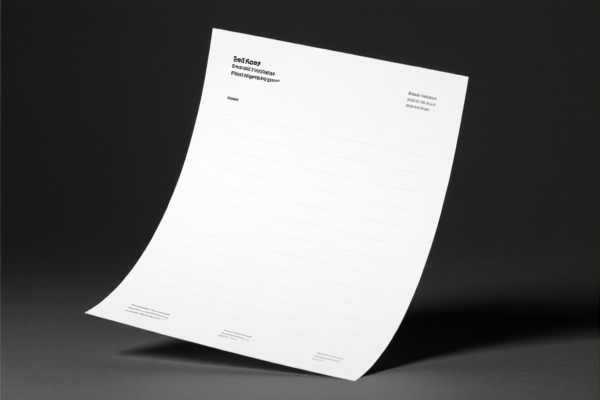
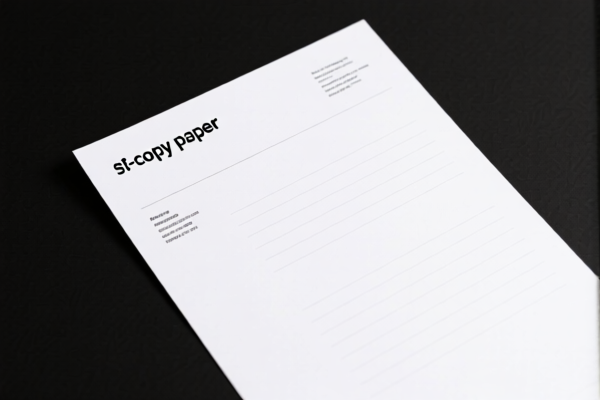
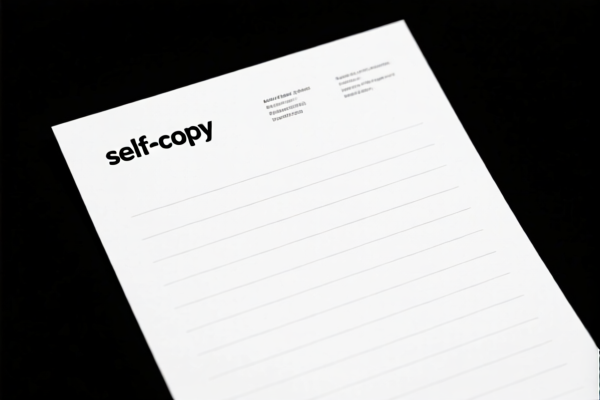
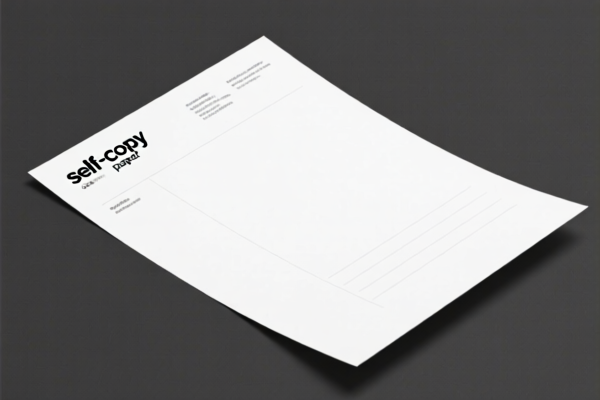
AI Analysis
📝 Carbonless Copy Books (NCR Paper)
HS Code Classification, Tariff Analysis & Customs Clearance Guide | 2026 Edition
🌐 HS Code Reference & Customs Clearance Guide | Latest 2026 Tariff Regulations | Professional Clearance Strategy
📌 I. Product Definition: What Exactly is a "Carbonless Copy Book"?
A Carbonless Copy Book (often referred to as NCR Paper – No Carbon Required) is a type of paper used to make multiple copies of documents simultaneously without the use of carbon paper. It relies on microscopic micro-encapsulated dye on the back of one sheet that bursts upon writing pressure, transferring the image to the next sheet.
In international trade, these are primarily classified under Chapter 48 (Paper and Paperboard). The key classification challenge lies in distinguishing whether the product is viewed as: 1. A Writing/Stationery Article (Notebooks, Forms); or 2. A Paper Product/Packaging Material.
⚠️ Critical Distinction:
- If the item is structured as a notebook, ledger, or bound forms intended for writing/recording → It leans towards Heading 4820.
- If the item is considered coated paper, printed sheets, or packaging containers → It leans towards Heading 4811 or 4819.
📦 II. HS Code Classification Details (2026 Latest Tariff Authority)
Based on the provided data, there are four potential HS Code classifications. The choice depends on the physical structure and primary use of the goods.
| HS Code | Product Description | Application Scenario | Key Classification Feature |
|---|---|---|---|
4820.40.00.00 |
Other stationery articles | Multi-part business forms, triplicate pads | Matches "Carbonless Pad" form & function |
4811.90.80.50 |
Other processed/coated paper | Coated/printed paper sheets, unbound or loosely bound | Fits "Coated/Printed Paper" characteristics |
4819.20.00.40 |
Folded/boxed paper containers | Folded stationery or paper-based containers | Matches "Folded/Bound Paper Container/Stationery" |
4820.10.40.00 |
Notebooks, account books | Notebook-style carbonless copies | Fits "Notebook/Account Book" material & use |
🔍 Key Reminder:
-4820.40.00.00is often used for pre-printed multi-part forms (like invoices or delivery slips) that function as "stationery."
-4820.10.40.00is typically for notebook-style carbonless books (blank pages, bound like a diary).
-4811&4819are used if the product is more akin to raw coated paper stock or folded packaging/stationery boxes.
💰 III. 2026 Latest Tariff Rate Breakdown (Including Surtaxes & Policy Add-ons)
✅ Applicable Country: United States (US)
✅ Origin: China (CN)
✅ Effective Date: 2025/2026 (Post-Retaliatory Tariffs)
🎯 1. High-Tariff Categories: 4820.40.00.00, 4811.90.80.50, 4819.20.00.40
| Item | Content |
|---|---|
| Base Rate | 0.0% (Ad Valorem) |
| Section 301 Surtax | +25.0% (USITC Footnote 9903.88.01) |
| Section 122 Tariff | +10.0% (Retaliatory/Specific Policy Tariff) |
| Total Effective Rate | 35.0% |
| Tax Calculation | CIF Value × 35% |
| De Minimis Exemption | ❌ Not Eligible (deny_de_minimis) |
| Legal Basis Path | USITC:4820.40.00.00/4811.90.80.50/4819.20.00.40 → SECTION301:9903.88.01 → SECTION122:10% |
📌 Explanation:
- Base 0%: Standard US MFN rate for most paper products is low.
- 301 Tariff (+25%): These codes are included in the list of Chinese goods subject to Section 301 tariffs due to their classification under paper products or stationery subject to trade remedies.
- 122 Tariff (+10%): This is an additional retaliatory or specific policy tariff applied to Chinese imports in this category.
- Total 35%: This is a high cost. Importers must plan for significant duty expenses.
🎯 2. Low-Tariff Category: 4820.10.40.00 (Notebooks/Account Books)
| Item | Content |
|---|---|
| Base Rate | 0.0% (Ad Valorem) |
| Section 301 Surtax | 0.0% (Exempt or not listed for this specific subheading) |
| Section 122 Tariff | +10.0% |
| Total Effective Rate | 10.0% |
| Tax Calculation | CIF Value × 10% |
| De Minimis Exemption | ❌ Not Eligible (deny_de_minimis) |
| Legal Basis Path | USITC:4820.10.40.00 → SECTION122:10% |
📌 Strategic Insight:
- If your carbonless copy books are structured as notebooks (e.g., blank carbonless pads bound together) rather than pre-printed forms, you may qualify for4820.10.40.00.
- This results in a massive tax saving: 10% vs. 35%.
- Crucial: You must provide product samples and technical specs to prove it is a "notebook" and not a "printed form" to customs.
🛠️ IV. Customs Clearance Practical Advice (Real-World Pitfall Avoidance)
✅ 1. Documentation Checklist (Mandatory)
| Document | Required? | Description |
|---|---|---|
| ✅ Product Specification Sheet | ✔️ | Must detail: Paper weight, coating type, number of parts (2-part, 3-part), binding method (stapled, glue, spiral). |
| ✅ Technical Data / Diagrams | ✔️ | Show internal structure. Is it a "notebook" or "loose forms"? This determines HS Code. |
| ✅ Product Photos | ✔️ | Clear images of front, back, inside pages, and binding. |
| ✅ Commercial Invoice | ✔️ | Description must match HS Code rationale (e.g., "Carbonless Notebook" vs. "Carbonless Forms"). |
| ✅ Packing List | ✔️ | Detailed weights and dimensions. |
| ✅ Origin Certificate | ✔️ | Proof of Chinese origin (triggers 301/122 tariffs). |
✅ 2. Classification Strategy (Key Mantra)
🔥 "Notebook = 10% | Forms = 35%! Structure is King!"
| Scenario | Correct HS Code | Tax Rate | Risk |
|---|---|---|---|
| Blank Carbonless Pads (Bound like a book) | 4820.10.40.00 |
10% | ✅ Low Risk if truly unprinted/bound |
| Pre-printed Business Forms (Invoices, Receipts) | 4820.40.00.00 |
35% | ⚠️ High Duty |
| Loose Coated Sheets | 4811.90.80.50 |
35% | ⚠️ High Duty |
| Folded Paper Packaging | 4819.20.00.40 |
35% | ⚠️ High Duty |
📌 Clearance Tip:
- If you are shipping pre-printed forms (e.g., logistics waybills), you cannot misdeclare them as "notebooks" to avoid the 35% tariff. Customs may inspect and levy penalties.
- If you are shipping blank carbonless pads, ensure they are bound (stapled/glued) to justify4820.10.40.00. Loose sheets should not be declared as notebooks.
✅ 3. Special Case Handling
| Situation | Advice |
|---|---|
| Mixed Shipments (Notebooks + Forms) | Separate Declarations! Do not mix. Declare notebooks at 10% and forms at 35%. Mixed declaration may trigger a full audit. |
| Sample Shipments | Even for samples, if value > $800, duties apply. Use 4820.10.40.00 if possible for lower duty. |
| OEM Custom Printing | If the buyer requires custom printing, clarify if it changes the classification. Custom printed forms = 4820.40.00.00 (35%). |
| De Minimis (Section 321) | ❌ Not Eligible. Carbonless paper products are explicitly excluded from the $800 de minimis exemption. Full duties apply even for small parcels. |
🌍 V. Global Market Comparison (2026)
| Country/Region | Recommended HS Code | Tariff (China Origin) | Notes |
|---|---|---|---|
| 🇺🇸 USA | 4820.10.40.00 (Notebooks) |
10% | Best option for unbound/bound blanks |
| 🇺🇸 USA | 4820.40.00.00 (Forms) |
35% | Higher duty for printed forms |
| 🇪🇺 EU | 4820.10/4820.40 | Varies (0-5%) | No Section 301/122 equivalents |
| 🇨🇳 China | 4820.10/4820.40 | 5-10% | Standard import duty |
📌 Conclusion:
- The US market is the most tariff-sensitive due to Section 301 and 122 tariffs.
- Strategy: Maximize the use of4820.10.40.00by offering blank, bound carbonless notebooks rather than pre-printed forms.
- Warning: If you sell pre-printed forms, budget for 35% duty.
📌 VI. Common Mistakes & Pitfalls (Lessons Learned)
❌ Mistake 1: Declaring pre-printed forms as "Notebooks" to save 25%
👉 Consequence: Customs inspection reveals pre-printed text → Reclassification to 4820.40.00.00 → Back taxes + Penalties.
❌ Mistake 2: Claiming De Minimis ($800 exemption)
👉 Consequence: Carbonless paper is excluded from Section 321 → Shipment held, duties assessed retroactively.
❌ Mistake 3: Ignoring the "122 Clause"
👉 Consequence: Only calculating 301 tariffs (25%) → Missing the extra 10% → Underpayment.
✅ Correct Approach:
"Carbonless Notebook, 100 sheets, 2-part, blank pages, spiral-bound, Model XYZ"
(Ensure product is actually a notebook, not a form pad)
🎯 VII. Conclusion: Professional Classification Saves Money!
🎯 Key Takeaway:
🔹 "Blank Notebooks = 10% | Printed Forms = 35%"
🔹 "No De Minimis for Paper Products!"
📌 Action Item:
1. Audit your product: Is it a notebook (blank, bound) or a form (printed)?
2. Choose HS Code wisely: 4820.10.40.00 if possible.
3. Prepare Documentation: Ensure specs match the HS Code definition.
4. Budget for Duties: 35% is significant; factor it into your pricing.
📣 Immediate Action:
📞 Contact a Customs Broker to apply for an Advance Ruling if your product structure is borderline.
🚀 Optimize your product line: Shift towards blank, bound carbonless notebooks to reduce tariffs by 25 percentage points.
✨ Professional Customs Clearance Starts with Accurate Classification!
💼 Every 1% of duty saved is pure profit!
Customer Reviews
About HS Code Classification
The Harmonized System (HS) is an internationally standardized nomenclature developed by the World Customs Organization (WCO) to classify traded products. Over 200 countries use the HS system as the basis for customs tariffs, trade statistics, and import/export regulations.
Each HS code follows a hierarchical structure:
- Chapter (2 digits) — Broad category of goods (e.g., Chapter 84: Machinery and Mechanical Appliances)
- Heading (4 digits) — More specific grouping within the chapter
- Subheading (6 digits) — Internationally standardized breakdown, used by all WCO member countries
- National subdivisions (8-10 digits) — Country-specific extensions for further classification, such as US HTSUS 10-digit codes
Correct HS code classification is essential for smooth customs clearance, accurate duty payment, and compliance with trade regulations. Misclassification can lead to customs delays, overpayment of duties, or penalties.
When importing from CN to US, the applicable tariff rates may include:
- Most-Favored-Nation (MFN) rate — The standard duty rate applied to WTO members
- General rate — Applied to countries without trade agreements
- Trade remedy duties — Additional tariffs such as Section 301 (anti-dumping), Section 232 (national security), or countervailing duties
The information provided on this page is for reference purposes only. For official classification, please consult with your local customs authority or a licensed customs broker.