Carbonless Copy Paper Delivery Note
CN → US| HS Code | Tariff Rate | Origin | Destination | Doc |
|---|---|---|---|---|
| 4820104000 | 35.0% | CN | US | Official Doc |
| 4820400000 | 35.0% | CN | US | Official Doc |
| 4816900100 | 35.0% | CN | US | Official Doc |
| 4816200000 | 35.0% | CN | US | Official Doc |
| 4907000000 | 17.5% | CN | US | Official Doc |
Product Images
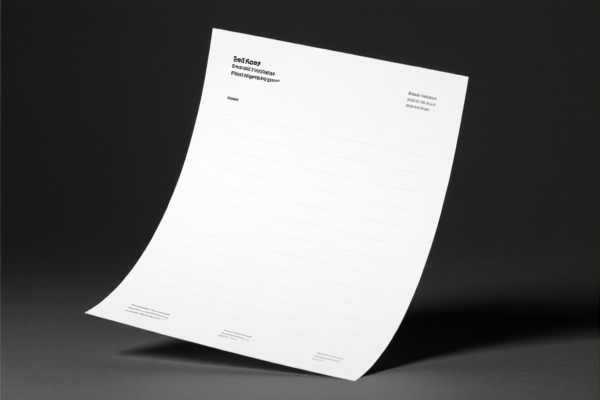
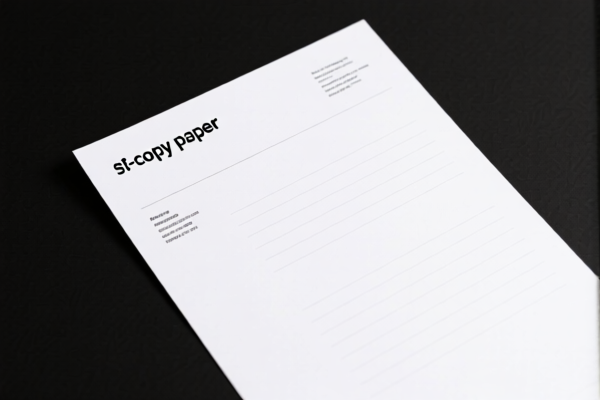
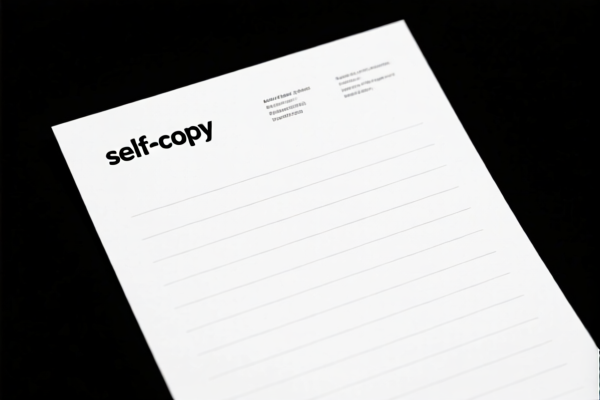
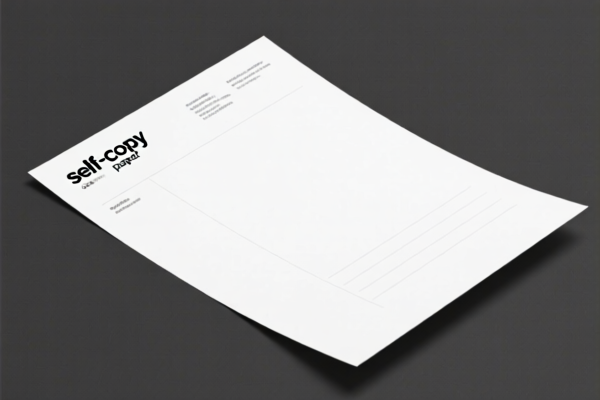
AI Analysis
📝 Carbonless Copy Paper Delivery Notes (Multi-Part Forms)
🌐 HS Code Reference & Customs Clearance Guide | 2026 Latest Tariff Analysis | Professional Compliance Strategy
📌 I. Product Definition & Classification: Understanding "Carbonless Copy Paper"
Carbonless copy paper (NCR paper - No Carbon Required) delivery notes are specialized stationery used for creating multiple copies of documents simultaneously without the need for carbon paper. In international trade, the classification depends heavily on the physical structure, function, and specific composition of the document.
The key distinction lies in whether the item is classified as: 1. Stationery/Office Supplies: Multi-part business forms (ledger sheets, account books). 2. Writing/Reproducing Paper: Self-copying paper or transfer paper (NCR sheets). 3. Printed Documents/Receipts: Used specifically as evidence or records (stamped paper/note carriers).
⚠️ Critical Distinction:
- If it is structured as a multi-part business form (e.g., 3-ply delivery receipt with specific fields), it often falls under Chapter 48 (Ledgers/Account Books) or Self-copying Paper.
- If it is viewed simply as printed paper used for recording, it may fall under Chapter 49 (Printed Media/Receipts).
- Material Composition: The presence of microcapsules (blue/black dye) vs. developer paper defines the NCR technology, but the form factor drives the HS code choice.
📦 II. HS Code Classification Details (2026 Latest Tariff Authority Comparison)
Based on the provided data, here are the 5 possible HS Code classifications for Carbonless Copy Paper Delivery Notes, ranging from strict stationery definitions to broader printed media definitions.
| HS Code | Product Description | Applicability Scenario | Key Classification Logic |
|---|---|---|---|
4820.10.40.00 |
Delivery Note Duplex Forms | Classified as Ledgers/Account Books (登记簿、账簿类). Material is paper. | Form-Factor Driven: If the document is structured like an accounting ledger or business log. |
4820.40.00.00 |
Paper Stationery Items | Classified as Paper/Cardboard Stationery (纸或纸板制文具用品). Form is multi-part business form. | General Stationery: Broad category for paper office supplies, specifically multi-part forms. |
4816.90.01.00 |
Carbonless Multi-Part Documents | Classified as Other Writing/Reproducing Paper. NCR is a specific variety. | Material/Technology Driven: Focuses on the "NCR" chemical mechanism and paper material. |
4816.20.00.00 |
Self-Copying/Transfer Paper | Classified as Self-copying/Other Copy/Transfer Paper. Matches use and form. | Functional Definition: Explicitly targets "Self-copying paper" (自复写纸) and transfer papers. |
4907.00.00.00 |
Printed Receipts/Note Carriers | Classified as Stamped Paper/Note Carriers (印花纸及类似性质的票据载体). Has record/certificate function. | Document Function: Focuses on the purpose as a proof of transaction or receipt, not just the paper type. |
🔍 Key Insight:
- Chapters 48 vs 49: Chapters 48 cover materials and basic goods (paper, stationery), while Chapter 49 covers processed printed matter (books, newspapers, receipts).
- Tax Impact: Classifications in 48xx attract a 35% total tax rate, while 49xx attracts 17.5%. This is a critical cost difference.
💰 III. 2026 Latest Tariff Rate Details (Including Surcharges & Policy Add-ons)
✅ Applicable Country: United States (US)
✅ Origin: China (CN)
✅ Effective Date: From Nov 10, 2025 (for subsequent imports)
🎯 1. HS Codes 4820.10.40.00 & 4820.40.00.00 (Stationery/Ledger Category)
| Item | Content |
|---|---|
| Base Tariff | 0% (ad valorem) |
| USITC Surcharge | +25% (From USITC Footnote under Section 301) |
| IEEPA Surcharge | +10% (Against Chinese/HK products, effective Nov 10, 2025) |
| Total Tax Rate | 35% |
| Tax Calculation | CIF Value × 35% |
| De Minimis Exemption | ❌ Not Eligible (deny_de_minimis) |
| Legal Path | IEEPA:9903.01.24 → USITC:4820.xx.xx.xx → FOOTNOTE:301 |
📌 Explanation:
- The 25% USITC surcharge is a standard Section 301 tariff on many Chinese paper products.
- The 10% IEEPA surcharge is an additional layer on top of the 25%.
- Total 35% is a significant cost, impacting profit margins for low-value office supplies.
🎯 2. HS Codes 4816.90.01.00 & 4816.20.00.00 (Self-Copying Paper Category)
| Item | Content |
|---|---|
| Base Tariff | 0% |
| USITC Surcharge | +25% |
| IEEPA Surcharge | +10% |
| Total Tax Rate | 35% |
| Tax Calculation | CIF × 35% |
| De Minimis Exemption | ❌ Not Eligible |
| Legal Path | IEEPA:9903.01.24 → USITC:4816.xx.xx.xx → FOOTNOTE:301 |
📌 Note:
- NCR paper is explicitly targeted in some Section 301 lists. Even if the base rate is 0%, the 35% effective duty remains high.
- Classification here depends on whether you declare it as "Paper" (4816) rather than "Stationery Form" (4820).
🎯 3. HS Code 4907.00.00.00 (Printed Receipts/Note Carriers)
| Item | Content |
|---|---|
| Base Tariff | 0% |
| USITC Surcharge | +7.5% |
| IEEPA Surcharge | +10% |
| Total Tax Rate | 17.5% |
| Tax Calculation | CIF × 17.5% |
| De Minimis Exemption | ❌ Not Eligible |
| Legal Path | IEEPA:9903.01.24 → USITC:4907.xx.xx.xx → FOOTNOTE:301 |
📌 Key Advantage:
- This code offers a 50% reduction in tariff burden compared to Chapter 48 codes (17.5% vs 35%).
- Justification Required: You must prove the item is a "Note Carrier" (票据载体) or "Printed Receipt" used for transaction records, rather than just blank stationery. The content and layout (pre-printed fields like "Date", "Amount", "Signature") are crucial evidence.
🛠️ IV. Customs Clearance Practical Advice (Real-World Pitfall Guide)
✅ 1. Required Documentation Checklist
| Document | Must Provide | Purpose |
|---|---|---|
| ✅ Product Sample | ✔️ | Physical copy to show multi-ply structure and NCR mechanism. |
| ✅ Structure Diagram | ✔️ | Explain how the sheets interact (e.g., CB, CF, CBB sheets). |
| ✅ Print Layout/Template | ✔️ | Crucial for 4907.00.00.00. Shows it's a "record/proof" form, not blank paper. |
| ✅ Commercial Invoice | ✔️ | Clearly state "Carbonless Multi-Part Delivery Note". Avoid vague terms like "Paper". |
| ✅ Material Safety Data Sheet (MSDS) | ✔️ | Some NCR dyes may require chemical disclosure for transport. |
| ✅ Certification (CE/RoHS) | ✔️ | If applicable for chemical compliance in destination markets. |
✅ 2. Declaration Strategy (Key Mantra)
🔥 "Function over Material, Layout over Paper!"
| Scenario | Correct Declaration | Wrong Approach |
|---|---|---|
| Blank NCR Paper Rolls/Sheets | 4816.20.00.00 or 4816.90.01.00 (35% Tax) |
Declaring as "Receipts" without pre-printed fields. |
| Pre-Printed Delivery Notes | Try 4907.00.00.00 (17.5% Tax) |
Declaring as "Paper Stationery" (35% Tax). |
| Custom-Printed NCR Forms | 4907.00.00.00 (If primarily for record-keeping) |
Declaring as "Booklets" under 4820 (35% Tax). |
| Unprinted NCR Sheets | 4816.20.00.00 |
Cannot use 4907 if there is no pre-printed content. |
✅ 3. Special Handling Tips
| Situation | Handling Advice |
|---|---|
| High-Value Custom Forms | Provide client PO and design files. Emphasize "Business Record" function to support 4907. |
| Bulk Unprinted NCR Rolls | Must use 4816. No alternative. Cost is 35%. |
| Mixed Shipments | Separate "Blank NCR Paper" (4816) from "Pre-Printed Receipts" (4907). Do not mix in one line item if possible. |
| Origin Marking | Ensure "Made in China" is visible on packaging. IEEPA 10% applies strictly to CN origin. |
🌍 V. Global Market Comparison (2026 Latest)
| Country/Region | Recommended HS Code | Total Tax Rate (China Origin) | Certification Requirements | Notes |
|---|---|---|---|---|
| 🇺🇸 USA | 4907.00.00.00 |
17.5% (Best Case) 4820/4816: 35% |
FDA (if food contact), Prop 65 | 4907 requires proof of "Printed Document" status. |
| 🇨🇳 China | 4907.00.00.00 |
0-6% (Import Duty) | N/A | No Section 301 tariffs. |
| 🇪🇺 EU | 4820.10.00 |
6.5% | REACH (Chemicals) | NCR paper contains chemicals; REACH compliance is vital. |
| 🇬🇧 UK | 4820.10.00 |
6.5% | UKCA (if applicable) | Post-Brexit rules mirror EU largely. |
| 🇯🇵 Japan | 4820.10.00 |
6.0% | JIS | Low duty, but high inspection standard for paper quality. |
📌 Conclusion:
- USA is the most complex due to Section 301 + IEEPA.
- Strategic Choice: For pre-printed delivery notes, fighting for HS Code 4907.00.00.00 saves 17.5% in duties compared to other codes.
- EU/Asia: Tariffs are low, but Chemical Compliance (REACH/Prop 65) is the real barrier.
📌 VI. Common Errors & Pitfall Guide (Lessons from Experience)
❌ Mistake 1: Declaring pre-printed NCR forms as "Blank Paper" (4816)
👉 Consequence: Missed opportunity for 4907 (17.5% vs 35%). Overpaying 17.5% duties.
👉 Fix: Provide layout/design proof to customs broker.
❌ Mistake 2: Declaring blank NCR rolls as "Receipts" (4907)
👉 Consequence: Customs rejection for "Misclassification". Goods detained.
👉 Fix: Only use 4907 if the paper has pre-printed text/tables (e.g., "Delivery Note", "Date:", "Amount:").
❌ Mistake 3: Ignoring IEEPA 10% Surcharge
👉 Consequence: Unexpected high tax at border.
👉 Fix: Always include IEEPA in cost calculation for CN-origin goods.
❌ Mistake 4: Not separating NCR Chemicals
👉 Consequence: Shipping carrier refusal (Hazmat check).
👉 Fix: Provide MSDS to forwarder. Some NCR dyes are regulated.
✅ Correct Approach:
"Pre-printed Carbonless Multi-Part Delivery Note (3-ply), Used for Sales Record, HS Code 4907.00.00.00"
🎯 VII. Conclusion: Precise Classification for Cost Efficiency
🎯 Remember the Mantra:
🔹 "Blank Paper = 35% Tax (48xx)"
🔹 "Pre-Printed Receipts = 17.5% Tax (4907)"
🔹 "Prove the 'Printed Document' Status to Save 17.5%!"
🔹 "IEEPA 10% is Mandatory for China Origin!"
📌 Pro Tip:
If your delivery notes are custom-designed with specific legal disclaimers or transaction fields, emphasize the "Record/Proof" function in your invoice description to support HS Code 4907.00.00.00.
If they are blank sheets for the buyer to print, stick to 4816/4820.
📣 Immediate Action:
📞 Contact your customs broker with sample photos of the pre-printed layout.
🚀 Apply for a Pre-Ruling (if possible) to lock in the 17.5% rate for4907.
💼 Save costs by choosing the right chapter!
✨ Professional Clearance Starts with Precise Classification!
💼 Every 1% of duty saved is 1% of pure profit!
Customer Reviews
About HS Code Classification
The Harmonized System (HS) is an internationally standardized nomenclature developed by the World Customs Organization (WCO) to classify traded products. Over 200 countries use the HS system as the basis for customs tariffs, trade statistics, and import/export regulations.
Each HS code follows a hierarchical structure:
- Chapter (2 digits) — Broad category of goods (e.g., Chapter 84: Machinery and Mechanical Appliances)
- Heading (4 digits) — More specific grouping within the chapter
- Subheading (6 digits) — Internationally standardized breakdown, used by all WCO member countries
- National subdivisions (8-10 digits) — Country-specific extensions for further classification, such as US HTSUS 10-digit codes
Correct HS code classification is essential for smooth customs clearance, accurate duty payment, and compliance with trade regulations. Misclassification can lead to customs delays, overpayment of duties, or penalties.
When importing from CN to US, the applicable tariff rates may include:
- Most-Favored-Nation (MFN) rate — The standard duty rate applied to WTO members
- General rate — Applied to countries without trade agreements
- Trade remedy duties — Additional tariffs such as Section 301 (anti-dumping), Section 232 (national security), or countervailing duties
The information provided on this page is for reference purposes only. For official classification, please consult with your local customs authority or a licensed customs broker.