Card Cotton Paper Roll
CN → US| HS Code | Tariff Rate | Origin | Destination | Doc |
|---|---|---|---|---|
| 4811904090 | 35.0% | CN | US | Official Doc |
| 4814900200 | 17.5% | CN | US | Official Doc |
| 4823903100 | 35.0% | CN | US | Official Doc |
| 4823906700 | 35.0% | CN | US | Official Doc |
| 4811904090 | 35.0% | CN | US | Official Doc |
Product Images
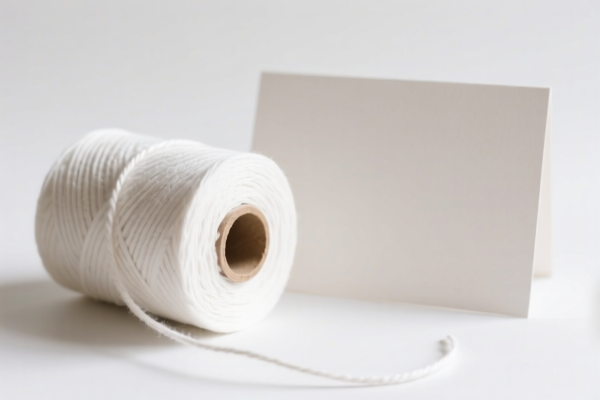


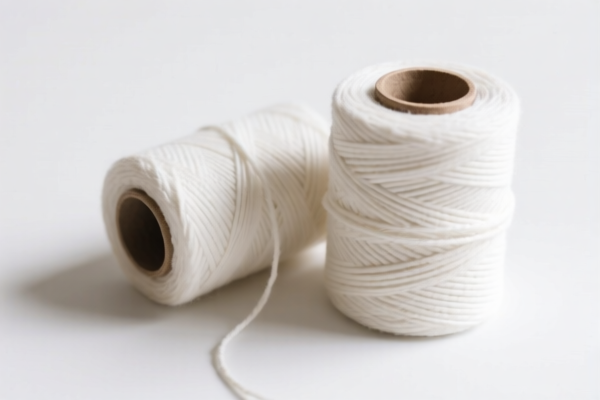
AI Analysis
🧻 Card Cotton Paper Roll (Carded Cotton Paper Rolls)
🌐 HS Code Reference & Customs Clearance Guide | 2026 Latest Tariff Structure | Professional Compliance Strategy
📌 I. Product Definition & Classification: What Exactly is a "Card Cotton Paper Roll"?
"Card Cotton Paper Roll" refers to paper products made from cellulose fibers (often processed via the "carding" or non-woven technique, or simply referring to the texture/origin of the cotton-based fiber) in a rolled form. In international trade, these are typically classified under Chapter 48 (Paper and Paperboard).
The classification depends heavily on the specific use, processing state (coated, uncoated, perforated), and physical form. Misclassification can lead to severe tariff penalties due to the high "Section 301" and "IEEPA"附加 taxes on Chinese goods.
⚠️ Key Distinction Points:
- Raw/Unprocessed Rolls: If it is basic cellulose paper in rolls without special coatings or specific end-use machinery integration → Chapter 48 General.
- Specific End-Use: If used for punch cards, covering, or specific industrial applications → Specific Subheadings.
- Material: Must be verified as Paper/Cellulose (not fabric/textile which would fall under Chapter 50-55).
📦 II. HS Code Classification Details (2026 Latest Tariff Authority Match)
Based on the provided <DATA>, here are the exact HS Codes associated with "Card Cotton Paper Roll":
| HS Code | Product Description & Summary | Application Scenario | Key Characteristic |
|---|---|---|---|
4811.90.40.90 |
Cotton Paper Roll, Rolled Form: Consistent with other paper product classifications. | General paper rolls, packaging materials, basic cellulose sheets. | ✅ Rolled state, generic classification |
4814.90.02.00 |
Cotton Paper Roll, Covering Form: Classified under "Other" categories. | Wall coverings, protective paper layers, decorative paper applications. | ✅ Used as a covering layer |
4823.90.31.00 |
Cotton Paper Roll, Unperforated: Intended for punch card usage. | Industrial punch cards, data storage media (legacy/specialty), mechanical input media. | ❌ Unperforated (specific subtype for punch cards) |
4823.90.67.00 |
Cotton Paper Roll, Cellulose Fiber Product: Classified as Coated Paper. | Industrial liners, coated protective papers, specialized cellulose films. | ✅ Treated as coated cellulose fiber product |
4811.90.40.90 |
Cotton Paper Roll, Rolled Description: Consistent with other paper product classifications. | Duplicate entry confirming general rolled paper status. | ✅ Rolled state, generic classification |
🔍 Critical Note:
- The term "Cotton Paper" often causes confusion. If it contains >10% cotton fiber, it may still fall under Chapter 48 if it meets the definition of paper (flexible, fibrous network).
-4811covers papers treated with coatings, impregnated, etc., in rolls.
-4814covers wall coverings of paper.
-4823covers other paper, paperboard, cellulose wadding and webs thereof, cut to size or shape.
💰 III. 2026 Latest Tariff Rate Breakdown (Including Additional Taxes & Policy Surcharges)
✅ Applicable Country: United States (US)
✅ Country of Origin: China (CN)
✅ Effective Time: 2025/2026 (Current Trade War Policies)
🎯 1. HS Codes 4811.90.40.90 & 4823.90.67.00 & 4823.90.31.00 (General/Coated/Specialty)
| Item | Content |
|---|---|
| Base Tariff Rate | 0.0% (Ad Valorem) |
| Section 301 Additional Tariff | +25.0% (Under US Trade Act Section 301) |
| Section 122 (IEEPA/Other) Tariff | +10.0% (Specific policy surcharge for Chinese cellulose products) |
| Total Effective Tariff Rate | 35.0% |
| Tax Calculation | CIF Value × 35% |
| De Minimis Eligibility | ❌ Not Eligible (High risk of audit) |
| Legal Basis Path | USITC:4811.90.40.90 → Section 301: Footnote 9903.88.01 → IEEPA: Section 122 Surcharge |
📌 Explanation:
- These HS codes attract the maximum standard surcharges for paper products from China.
- The 25% is the standard Section 301 tariff for many paper/board items.
- The 10% is an additional layer (often referred to as "122 Clause" or specific executive order surcharges) applied to certain Chinese-origin goods.
- Total 35% is a significant cost increase. Must be factored into FOB/CIF pricing.
🎯 2. HS Code 4814.90.02.00 (Covering/Decorative Paper)
| Item | Content |
|---|---|
| Base Tariff Rate | 0.0% (Ad Valorem) |
| Section 301 Additional Tariff | +7.5% (Reduced rate for specific covering papers) |
| Section 122 (IEEPA/Other) Tariff | +10.0% (Same specific policy surcharge) |
| Total Effective Tariff Rate | 17.5% |
| Tax Calculation | CIF Value × 17.5% |
| De Minimis Eligibility | ❌ Not Eligible |
| Legal Basis Path | USITC:4814.90.02.00 → Section 301: Footnote 9903.75.00 → IEEPA: Section 122 Surcharge |
📌 Note:
- This code offers a significant advantage (17.5% vs 35%).
- Crucial: You must prove the product is a "Covering" (e.g., wall paper, decorative overlay) and not just a generic roll.
- If customs determines it is merely a "paper roll" and not a "covering," they may reassess to 4811.90.40.90, triggering the 35% rate + penalties.
🛠️ IV. Customs Clearance Operational Advice (Practical Pitfall Avoidance)
✅ 1. Required Documentation Checklist (Non-negotiable)
| Document | Mandatory? | Description |
|---|---|---|
| ✅ Product Specification Sheet | ✔️ | Must clearly state: Material (Cellulose/Cotton), Weight (gsm), Width, Length, Coating status. |
| ✅ Commercial Invoice | ✔️ | Must specify "Card Cotton Paper Roll" and correct HS Code. Do not use vague terms like "Paper". |
| ✅ Packing List | ✔️ | Detail roll dimensions, number of rolls, gross/net weight. |
| ✅ Certificate of Origin (CO) | ✔️ | Essential for proving Chinese origin (to assess correct surcharges). |
| ✅ Photo of Product & Label | ✔️ | Show the roll core, packaging, and any labels indicating "Wall Covering" or "Punch Card Material". |
| ✅ End-Use Declaration | ✔️ | Critical for 4814.90.02.00: Declare if it is used for wall covering. If generic, declare as general paper roll. |
✅ 2. Declaration Strategy (Key Mnemonic)
🔥 "Identify Use First, Avoid Generic Labels, Match HS to Function!"
| Scenario | Correct Declaration | Risk if Incorrect |
|---|---|---|
| General Paper Rolls (Packaging, general use) | 4811.90.40.90 (35% Tax) |
Low risk, but high tax. |
| Wall Covering/Decorative Paper | 4814.90.02.00 (17.5% Tax) |
High Risk: If not proven as "covering", reassessed to 35%. |
| Punch Card Material (Unperforated) | 4823.90.31.00 (35% Tax) |
Very niche. Must prove industrial use for punch cards. |
| Coated/Impregnated Paper | 4823.90.67.00 (35% Tax) |
Must provide proof of coating process. |
📌 Pro Tip:
- If your product is generic cotton paper roll, declare as4811.90.40.90.
- If you can legitimately classify it as a wall covering (e.g., textured cotton paper for interior design), use4814.90.02.00to save 17.5% in duties. BUT ensure your marketing materials and product specs support "Covering" use.
✅ 3. Special Handling for "Cotton" Content
- Myth: "Cotton" means it's a textile.
- Fact: If the product is paper (fibrous mat, flexible, used like paper), it stays in Chapter 48.
- Risk: If the cotton content is high and it behaves like a non-woven fabric, Customs might try to move it to Chapter 56 (Non-wovens). However, based on the provided data, it is firmly placed in Chapter 48. Stick to Chapter 48 declarations but have material composition tests ready to prove it meets the definition of Paper.
🌍 V. Global Market Comparison (2026)
| Country/Region | Recommended HS Code | Tariff (China Origin) | Notes |
|---|---|---|---|
| 🇺🇸 USA | 4811.90.40.90 or 4814.90.02.00 |
35% or 17.5% | High Section 301 + 122 Surcharges. |
| 🇨🇳 China | Same HS Codes | 0% - 10% (Import Duty) | No Section 301. Lower overall cost. |
| 🇪🇺 EU | 4811.90.40.90 / 4814.90.02.00 |
4.5% - 6.5% | No Section 301. Standard MFN rates apply. |
| 🇬🇧 UK | Same HS Codes | 4.5% - 6.5% | Post-Brexit rules, but no US-style tariffs. |
📌 Conclusion:
- The US market is the most expensive due to the 35% rate (or 17.5% if correctly classified as covering).
- EU/UK are significantly cheaper. Consider if alternative markets are viable for cost-sensitive products.
📌 VI. Common Errors & Pitfalls (Blood & Tears Lessons)
❌ Error 1: Declaring "Cotton Paper" as "Textile/Fabric" (Chapter 50-55)
👉 Consequence: If it doesn't meet textile definition, Customs may reject declaration, causing delays, or impose incorrect tariffs. Stick to Chapter 48 if it's paper-like.
❌ Error 2: Using 4814.90.02.00 (17.5%) for a generic roll that is NOT a wall covering
👉 Consequence: Customs audit → Reassessment to 4811.90.40.90 (35%) → Back taxes + Penalties.
👉 Fix: Only use 4814 if you have marketing specs showing "Wall Covering" or "Decorative Use".
❌ Error 3: Ignoring the "Section 122 10%" surcharge
👉 Consequence: Underestimating landed cost. The 35% rate is not just 25%. It's 25% + 10% + 0%.
👉 Fix: Calculate Landed Cost using 35% for general rolls and 17.5% for coverings.
🎯 VII. Conclusion: Precision Saves Money
🎯 Remember This Mantra:
🔹 "Generic Roll = 35% Tax. Covering = 17.5% Tax. Prove Your Use!"
🔹 "Cotton Paper is Still Paper (Ch 48). Don't Mix with Textiles (Ch 50-55)."
📌 Actionable Tip:
If you are exporting Card Cotton Paper Rolls to the USA:
1. Audit your product description: Can it be marketed as a "Wall Covering" or "Decorative Layer"?
2. If YES: Declare as 4814.90.02.00 (17.5%).
3. If NO: Declare as 4811.90.40.90 (35%).
4. Always include a Declaration of Use and Material Composition to prevent reclassification.
📣 Immediate Action:
📞 Contact your customs broker with product photos and spec sheets.
🚀 Clarify the End-Use to determine the correct HS Code and optimize your 17.5% vs 35% duty burden.
✨ Professional Clearance, Starts with Accurate Classification!
💼 Every Percentage Point of Tariff is Profit Leaked – Stop the Bleeding!
Customer Reviews
About HS Code Classification
The Harmonized System (HS) is an internationally standardized nomenclature developed by the World Customs Organization (WCO) to classify traded products. Over 200 countries use the HS system as the basis for customs tariffs, trade statistics, and import/export regulations.
Each HS code follows a hierarchical structure:
- Chapter (2 digits) — Broad category of goods (e.g., Chapter 84: Machinery and Mechanical Appliances)
- Heading (4 digits) — More specific grouping within the chapter
- Subheading (6 digits) — Internationally standardized breakdown, used by all WCO member countries
- National subdivisions (8-10 digits) — Country-specific extensions for further classification, such as US HTSUS 10-digit codes
Correct HS code classification is essential for smooth customs clearance, accurate duty payment, and compliance with trade regulations. Misclassification can lead to customs delays, overpayment of duties, or penalties.
When importing from CN to US, the applicable tariff rates may include:
- Most-Favored-Nation (MFN) rate — The standard duty rate applied to WTO members
- General rate — Applied to countries without trade agreements
- Trade remedy duties — Additional tariffs such as Section 301 (anti-dumping), Section 232 (national security), or countervailing duties
The information provided on this page is for reference purposes only. For official classification, please consult with your local customs authority or a licensed customs broker.