Card Embossing Die Cutting Mold
CN → US| HS Code | Tariff Rate | Origin | Destination | Doc |
|---|---|---|---|---|
| 8205595560 | 40.3% | CN | US | Official Doc |
| 8205598000 | 38.7% | CN | US | Official Doc |
| 8479909565 | 35.0% | CN | US | Official Doc |
| 8479909596 | 85.0% | CN | US | Official Doc |
Product Images

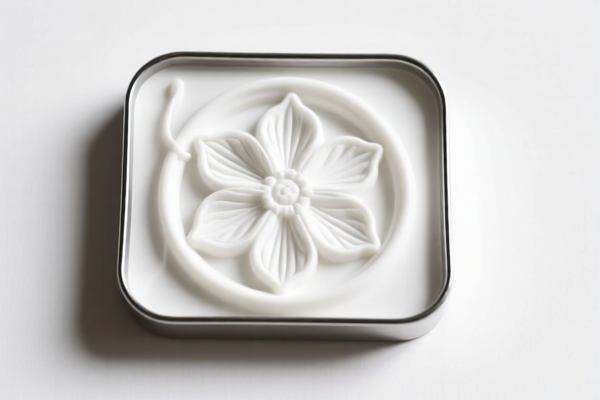
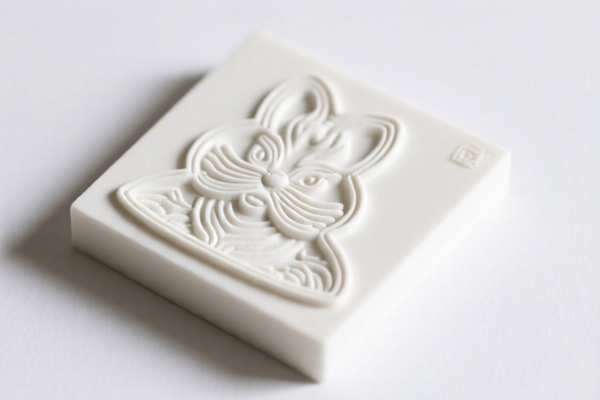

AI Analysis
🎴 Card Embossing & Die Cutting Mold (Metal Stamping Tools)
🌐 HS Code Reference & Customs Clearance Guide | 2026 Latest Tariff Analysis | Professional Strategy for Precision Tools
📌 I. Product Definition & Classification: What Exactly is a "Card Embossing Die Cutting Mold"?
Card Embossing and Die Cutting Molds are precision metal tools used in the printing, packaging, and manufacturing industries to create raised designs (embossing) or cut specific shapes (die cutting) on cards, business cards, plastic sheets, or thin metal foils.
In international trade, these tools are not classified as the cards themselves, nor as general machinery, but as specific industrial parts or hand-tools, depending on their composition and usage context. They are critical components for card-making machines or manual crimping tools.
⚠️ Key Distinction Points:
- If the mold is made of base metal (iron/steel) and used as a tool/component for mechanical processing → It may fall under Chapter 84 (Machinery Parts) or Chapter 82 (Hand Tools).
- If it is a complete mechanical part for a specific machine (e.g., an embossing press) → Chapter 84.
- If it is considered a hand-operated tool or accessory without its own power source → Chapter 82.
📦 II. HS Code Classification Details (2026 Latest Tariff Authority Match)
Based on the provided <DATA>, here are the exact HS Codes and their applications for Card Embossing/Die Cutting Molds. Note that classification depends heavily on whether the mold is for metal treatment or general mechanical use.
| HS Code | Product Description | Applicability for Card Molds | Tax Rate (China → US) |
|---|---|---|---|
8479.90.95.65 |
Parts of machines for treating metal (Other) | ✅ Applicable if: The mold is used in a machine that treats/presses metal cards or is classified under metal-treatment machinery. Note: "Treating metal" often includes stamping/cutting in industrial contexts. |
25.0% (Base: 0% + Added: 25%) |
8479.90.95.96 |
Parts of machines Other (Not specified elsewhere) | ✅ Applicable if: The mold is a part of a general mechanical appliance NOT classified under "treating metal." Note: This is a catch-all for mechanical parts. ⚠️ Higher Risk: Subject to additional steel/aluminum surtax if made of steel/aluminum. |
75.0% (Base: 0% + Added: 25% + Steel/Al Surtax: 50%) |
8205.59.55.60 |
Other handtools & parts thereof: Of iron or steel | ✅ Applicable if: The mold is considered a hand tool or part of a hand-operated embossing/crimping device (e.g., manual card embosser). Note: Manual tools are often classified here. |
0.0% (Base: 0% + Added: 0%) |
8205.59.80.00 |
Other handtools & parts thereof: Other | ✅ Applicable if: The mold is a hand tool but NOT made of iron/steel (e.g., made of other base metals or composite). | 28.7% (Base: 3.7% + Added: 25%) |
🔍 Critical Classification Logic:
- Is it a machine part or a hand tool?
- If it’s used in an electric/hydraulic machine → Likely HS 8479.xxxxx
- If it’s used in a manual crank/hand press → Likely HS 8205.59.xxxx
- Material Matters:
- Iron/Steel hand tools → 8205.59.55.60 (0% Tariff!)
- Steel machine parts → 8479.90.95.96 (75% Tariff if subject to steel surtax)
💰 III. 2026 Latest Tariff Rate Breakdown (Including Surtaxes & Policy Add-ons)
✅ Applicable Country: United States (US)
✅ Origin: China (CN)
✅ Effective Date: 2025-11-10 onwards (for subsequent imports)
🎯 1. 8479.90.95.65 – Parts for Metal-Treating Machines
| Item | Details |
|---|---|
| Base Tariff | 0.0% |
| Section 301 Tariff | +25.0% |
| Steel/Aluminum Surtax | ❌ Not applicable (unless specifically flagged as steel product under separate rule) |
| Total Tariff | 25.0% |
| Calculation | CIF Value × 25% |
| De Minimis Exemption | ❌ Not Eligible (Section 301 goods are exempt from de minimis) |
| Legal Basis | USITC:8479.90.95.65 → Section 301 Footnote |
📌 Interpretation:
- This is the lower-risk option if the mold is clearly for a machine that "treats metal" (e.g., metal card stamping).
- Avoids the 50% steel surtax that applies to8479.90.95.96.
🎯 2. 8479.90.95.96 – Other Mechanical Parts
| Item | Details |
|---|---|
| Base Tariff | 0.0% |
| Section 301 Tariff | +25.0% |
| Steel/Aluminum Surtax | +50.0% (If made of steel or aluminum) |
| Total Tariff | 75.0% |
| Calculation | CIF Value × 75% |
| De Minimis Exemption | ❌ Not Eligible |
| Legal Basis | USITC:8479.90.95.96 → Section 301 + Steel/Aluminum Surcharge |
📌 Warning:
- 75% tariff is extremely high!
- This code is a "catch-all" for mechanical parts. If your mold is made of steel and not clearly for "metal treatment," customs may assign this code.
- Recommendation: Avoid this code unless absolutely necessary. Try to classify under8479.90.95.65or8205.
🎯 3. 8205.59.55.60 – Hand Tools (Iron/Steel)
| Item | Details |
|---|---|
| Base Tariff | 0.0% |
| Section 301 Tariff | 0.0% |
| Steel/Aluminum Surtax | ❌ Not applicable (Hand tools often exempt or low risk) |
| Total Tariff | 0.0% |
| Calculation | CIF Value × 0% |
| De Minimis Exemption | ✅ Eligible (if value < $800, subject to current policy) |
| Legal Basis | USITC:8205.59.55.60 |
📌 Strategy:
- This is the BEST case scenario!
- If the mold is used in a manual card embosser (e.g., a hand-held crimping tool for name cards), classify as a hand tool.
- Provide evidence: Product photos showing manual operation, no electrical components.
🎯 4. 8205.59.80.00 – Hand Tools (Other Materials)
| Item | Details |
|---|---|
| Base Tariff | 3.7% |
| Section 301 Tariff | +25.0% |
| Steel/Aluminum Surtax | ❌ Not applicable (Non-steel) |
| Total Tariff | 28.7% |
| Calculation | CIF Value × 28.7% |
| De Minimis Exemption | ✅ Eligible (if value < $800) |
📌 Note:
- Use only if the mold is not made of iron/steel (e.g., bronze, brass, or composite).
- Less common for industrial card molds.
🛠️ IV. Customs Clearance Practical Advice (Avoiding Pitfalls)
✅ 1. Documentation Checklist (Essential for Clearance)
| Document | Required? | Purpose |
|---|---|---|
| ✅ Product Specifications | ✔️ | Must specify: "Card Embossing Die Cutting Mold," material, dimensions, usage (manual vs. machine). |
| ✅ Photos (Clear & Detailed) | ✔️ | Show the mold, any branding, and context (e.g., next to a manual tool). |
| ✅ Bill of Lading / Invoice | ✔️ | Must match HS Code description exactly. Avoid vague terms like "Metal Part." |
| ✅ Statement of Use | ✔️ | If claiming 8205 (Hand Tool), provide a statement: "This mold is exclusively used for manual card embossing." |
| ✅ Material Composition Certificate | ✔️ | Crucial if claiming 8205.59.55.60 (Iron/Steel) vs. 8205.59.80.00 (Other). |
✅ 2. Declaration Strategy (Key Phrases & Tips)
🔥 “Manual Tools Are Cheaper, Machine Parts Are Expensive!”
| Scenario | Recommended HS Code | Declaration Phrase | Avoid |
|---|---|---|---|
| Manual Card Embosser Mold | 8205.59.55.60 |
"Iron/Steel Hand Tool Part for Manual Card Embosser" | "Machine Part" |
| Electric Machine Mold | 8479.90.95.65 |
"Part of Machine for Treating Metal (Card Stamping)" | "Other Mechanical Part" |
| Ambiguous Machine Mold | Negotiate to 8479.90.95.65 |
Provide tech specs proving "metal treatment" function | Let customs decide → Risk 75% |
✅ 3. Special Cases & Exemptions
| Case | Handling Advice |
|---|---|
| Low-Value Shipments (<$800) | If classified under 8205, you may qualify for de minimis exemption (no duty). Huge advantage! |
| Steel Composition | If using 8479.90.95.96, ensure steel surtax is flagged. If you can prove it’s not a "steel product" under the surtax rule, you may pay only 25%. |
| Prototype Samples | Declare as "Sample for Testing" with low value to reduce risk, but ensure accurate HS Code. |
🌍 V. Global Market Comparison (2026)
| Market | Recommended HS Code | Tariff (China Origin) | Notes |
|---|---|---|---|
| 🇺🇸 USA | 8205.59.55.60 (if manual) |
0% | Best option. Avoid 8479.90.95.96 (75%). |
| 🇺🇸 USA | 8479.90.95.65 (if machine) |
25% | Standard Section 301 tariff. |
| 🇪🇺 EU | 8205.59.90 |
~3-4% | No Section 301 equivalent. Lower risk. |
| 🇨🇳 China | 8205.59.90 |
~3-4% | Import duty low. No surtax. |
📌 Conclusion:
- USA is the most challenging market due to Section 301 and Steel/Aluminum surcharges.
- Strategy: Classify as Hand Tool (8205.59.55.60) whenever possible to achieve 0% tariff.
- If machine parts are unavoidable, strive for8479.90.95.65to avoid the 50% steel surtax.
📌 VI. Common Mistakes & Pitfalls (Learn from Others' Errors)
❌ Mistake 1: Declaring as "Machine Part" without proof of "Metal Treatment"
👉 Result: Customs assigns 8479.90.95.96 → 75% Tariff!
✅ Fix: Provide technical documentation showing the mold is for stamping/cutting metal or card stock in a mechanical process.
❌ Mistake 2: Using "Steel Mold" in description for 8205 (Hand Tool)
👉 Result: Confusion between hand tool and machine part.
✅ Fix: Clearly state "For Manual Tool" in product title and invoice.
❌ Mistake 3: Ignoring Steel/Aluminum Surtax for 8479.90.95.96
👉 Result: Unexpected 50% charge on top of 25% Section 301.
✅ Fix: Always check if the product falls under the steel surtax list. If so, try to reclassify under 8479.90.95.65 or 8205.
🎯 VII. Conclusion: Professional Declaration, Cost Savings!
🎯 Remember This Rule:
🔹 Manual Tool = 0% Tariff (HS 8205.59.55.60)
🔹 Machine Part (Metal Treatment) = 25% Tariff (HS 8479.90.95.65)
🔹 Other Machine Part = 75% Tariff (HS 8479.90.95.96)
📌 Pro Tip:
- If your card molds are used in hand-cranked embossers, always use 8205.59.55.60.
- If used in electric stamping machines, use 8479.90.95.65 and provide technical proof.
- Never use 8479.90.95.96 unless you have no other choice, as it incurs the highest penalty.
📣 Immediate Action:
📞 Consult with your customs broker.
📸 Provide clear photos showing manual vs. machine usage.
📄 Ensure your invoice matches the HS Code description exactly.
✨ Accurate Classification Saves Thousands!
💼 Don’t Let 75% Tariffs Eat Your Margins!
Customer Reviews
About HS Code Classification
The Harmonized System (HS) is an internationally standardized nomenclature developed by the World Customs Organization (WCO) to classify traded products. Over 200 countries use the HS system as the basis for customs tariffs, trade statistics, and import/export regulations.
Each HS code follows a hierarchical structure:
- Chapter (2 digits) — Broad category of goods (e.g., Chapter 84: Machinery and Mechanical Appliances)
- Heading (4 digits) — More specific grouping within the chapter
- Subheading (6 digits) — Internationally standardized breakdown, used by all WCO member countries
- National subdivisions (8-10 digits) — Country-specific extensions for further classification, such as US HTSUS 10-digit codes
Correct HS code classification is essential for smooth customs clearance, accurate duty payment, and compliance with trade regulations. Misclassification can lead to customs delays, overpayment of duties, or penalties.
When importing from CN to US, the applicable tariff rates may include:
- Most-Favored-Nation (MFN) rate — The standard duty rate applied to WTO members
- General rate — Applied to countries without trade agreements
- Trade remedy duties — Additional tariffs such as Section 301 (anti-dumping), Section 232 (national security), or countervailing duties
The information provided on this page is for reference purposes only. For official classification, please consult with your local customs authority or a licensed customs broker.