Card Issuance
CN → US| HS Code | Tariff Rate | Origin | Destination | Doc |
|---|---|---|---|---|
| 3926909400 | 35.0% | CN | US | Official Doc |
| 4911100080 | 17.5% | CN | US | Official Doc |
| 4911998000 | 17.5% | CN | US | Official Doc |
Product Images
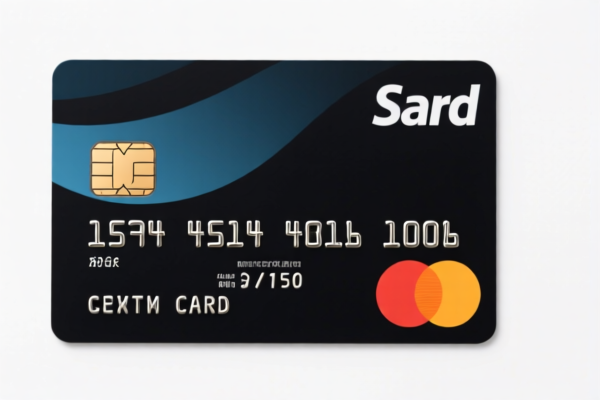
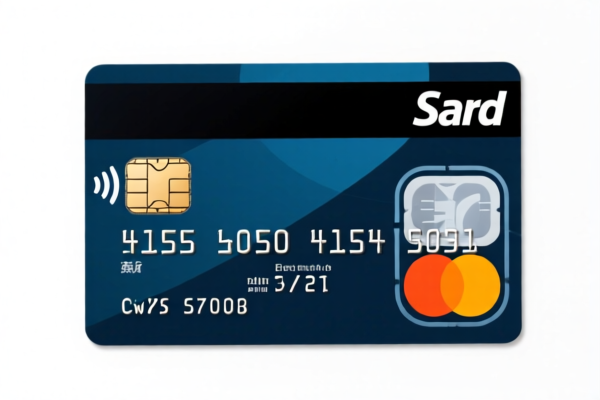
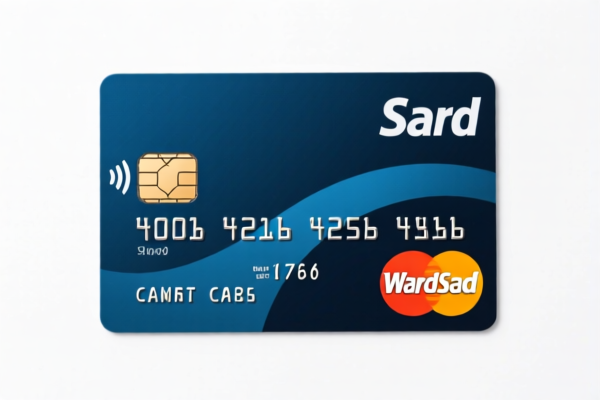

AI Analysis
🎴 Card Issuance System (Cards & Printing Services)
🌐 HS Code Reference & Customs Clearance Guide | 2026 Latest Tariff Analysis | Professional Clearance Strategy
📌 I. Product Definition & Classification: What is "Card Issuance"?
In international trade, "Card Issuance" generally refers to the physical production, personalization, and distribution of cards (such as ID cards, credit cards, membership cards, or gift cards). Depending on the material and the nature of the transaction (selling goods vs. providing services), the classification varies significantly.
The classification hinges on two main distinctions: 1. Material-Based Classification: If the primary value lies in the plastic/card substrate itself, it is classified as a plastic article. 2. Content-Based Classification: If the primary value lies in the printed information, branding, or promotional nature, it is classified as a printed matter.
⚠️ Key Distinction Point: - If the item is a plastic card (even with printing) where the material is the dominant feature → Chapter 39 (Plastics). - If the item is a printed sheet/card where the content/advertising is the dominant feature → Chapter 49 (Printed Matter).
📦 II. HS Code Classification Details (2026 Latest Tariff Authoritative Comparison)
Based on the specific logic of "Card Issuance," here are the three most relevant HS Codes derived from the data:
| HS Code | Product Description | Application Scenario | Classification Logic |
|---|---|---|---|
3926.90.94.00 |
Plastic Cards (e.g., ID, Access, Credit Cards) | Corporate ID badges, smart card substrates, membership cards | ✅ Plastic Material: Classified as "Other articles of plastics." Matches the "Jacquard Card" attribute in the classification explanation. |
4911.10.00.80 |
Trade Advertising Materials / Commercial Catalogs | Promotional cards, business cards, branded marketing materials | ✅ Advertising Function: Classified as "Trade advertising material, commercial catalogs, and similar articles." |
4911.99.80.00 |
Other Printed Matter | Custom printed cards, non-advertising informational cards, postcards | ✅ Printed Matter: Classified as "Other printed matter." Fits the material/form of paper/cardboard printing. |
🔍 Important Note: - Plastic vs. Paper: If your "Card" is made of PVC, PET, or other plastics, use
3926.90.94.00. - Content Focus: If the card is paper-based and used for marketing, use4911.10.00.80. - Generic Printing: If it's a printed card that doesn't fit advertising or specific plastic categories, use4911.99.80.00.
💰 III. 2026 Latest Tariff Rate Breakdown (Including Additional Duties & Policy Add-ons)
✅ Applicable Country: United States (US)
✅ Origin: China (CN)
✅ Effective Date: Post-November 10, 2025 Imports
🎯 1. 3926.90.94.00 — Plastic Cards (Material-Based)
| Item | Details |
|---|---|
| Base Duty Rate | 0.0% (Ad Valorem) |
| USITC Additional Duty | +25.0% (Section 301 Tariff) |
| Section 122 Duty | +10.0% (Specific provision for this category) |
| Total Tax Rate | 35.0% |
| Tax Calculation | CIF Value × 35% |
| De Minimis Eligibility | ❌ Not Eligible (deny_de_minimis) |
| Legal Basis Path | USITC:3926.90.94.00 → FOOTNOTE:122 → SECTION_301:25% |
📌 Explanation: - This classification is often used for plastic ID cards, key fobs, or blank plastic cards. - The 35% total rate is high due to the combination of Section 301 (25%) and Section 122 (10%). - Customs Tip: Ensure the product description clearly states "Plastic Card" or "PVC Card" to avoid being misclassified as printed matter, which might have different duty risks.
🎯 2. 4911.10.00.80 — Trade Advertising Materials (Advertising-Based)
| Item | Details |
|---|---|
| Base Duty Rate | 0.0% (Ad Valorem) |
| USITC Additional Duty | +7.5% (Section 301 Tariff) |
| Section 122 Duty | +10.0% (Specific provision for this category) |
| Total Tax Rate | 17.5% |
| Tax Calculation | CIF Value × 17.5% |
| De Minimis Eligibility | ❌ Not Eligible (deny_de_minimis) |
| Legal Basis Path | USITC:4911.10.00.80 → FOOTNOTE:122 → SECTION_301:7.5% |
📌 Explanation: - Use this for promotional cards, business cards with heavy branding, or marketing collateral. - The 17.5% total rate is significantly lower than plastic cards, but the product must clearly be "advertising material." - Customs Tip: Clearly describe the item as "Promotional Card" or "Advertising Material" in the invoice.
🎯 3. 4911.99.80.00 — Other Printed Matter (General Printing)
| Item | Details |
|---|---|
| Base Duty Rate | 0.0% (Ad Valorem) |
| USITC Additional Duty | +7.5% (Section 301 Tariff) |
| Section 122 Duty | +10.0% (Specific provision for this category) |
| Total Tax Rate | 17.5% |
| Tax Calculation | CIF Value × 17.5% |
| De Minimis Eligibility | ❌ Not Eligible (deny_de_minimis) |
| Legal Basis Path | USITC:4911.99.80.00 → FOOTNOTE:122 → SECTION_301:7.5% |
📌 Explanation: - Use this for generic printed cards (e.g., greeting cards, informational cards) that are not primarily for advertising. - Matches the 17.5% rate with
4911.10.00.80. - Customs Tip: Ensure the product is not plastic. If it’s paper/cardboard, this is the safest general classification.
🛠️ IV. Customs Clearance Practical Advice (Battle-Tested Pitfall Guide)
✅ 1. Required Documentation Checklist (Non-Negotiable)
| Document | Must Provide | Explanation |
|---|---|---|
| ✅ Product Specification | ✔️ | Material (Plastic/Paper), Dimensions, Function (ID, Credit, Promo) |
| ✅ Product Photos | ✔️ | Clear images of both sides, showing any chips (if smart cards) or logos |
| ✅ Commercial Invoice | ✔️ | Must clearly state "Card Issuance Service" or "Plastic Cards" |
| ✅ Packing List | ✔️ | Detail the quantity of cards per box |
| ✅ Proof of Advertising (if applicable) | ✔️ | If using 4911.10.00.80, provide a sample or design proof to prove it's advertising material |
✅ 2. Declaration Tips (Key Mantra)
🔥 “Material First, Content Second, Name Precise, Tax Lowered!”
| Scenario | Correct Declaration | Wrong Practice |
|---|---|---|
| Plastic ID/Credit Card | 3926.90.94.00 (Plastic Card) |
Misdeclare as "Printed Paper" → Risk of higher duty & audit |
| Promotional Business Card | 4911.10.00.80 (Advertising Material) |
Misdeclare as "General Printed Matter" → Acceptable, but 4911.10 is more precise |
| Generic Greeting Card | 4911.99.80.00 (Other Printed Matter) |
Misdeclare as "Plastic" → Major Error |
| Smart Card (with Chip) | 3926.90.94.00 (Plastic Article) |
Misdeclare as "Electronic Device" → Complex classification risk |
✅ 3. Special Cases Handling
| Case | Handling Advice |
|---|---|
| Smart Cards (RFID/NFC) | Still classified under 3926.90.94.00 if the plastic substrate is the main value. If the chip is extremely complex, consult for Chapter 85, but usually, simple access/ID cards stay in 39. |
| Bulk Blank Cards | Declare as "Blank Plastic Cards" under 3926.90.94.00. No personalization details needed. |
| Personalized Cards (Post-Order) | Declare as "Card Issuance Service" or "Printed Cards" depending on material. Ensure the invoice reflects the finished good value. |
| Samples | Clearly mark "Non-Commercial Sample" but still subject to duty if value exceeds de minimis limits (which is denied here). |
🌍 V. Global Market Clearance Comparison (2026 Latest)
| Country/Region | Recommended HS Code | Duty Rate (China Origin) | Certification Requirements | Notes |
|---|---|---|---|---|
| 🇺🇸 USA | 3926.90.94.00 (Plastic) 4911.10.00.80 (Print) |
35% (Plastic) 17.5% (Print) |
None specific for cards | Section 122 and Section 301 apply heavily. |
| 🇪🇺 EU | 3926.90 (Plastic) 4911 (Print) |
6.5% - 9.0% | CE (if electronic) | No Section 301/122 equivalent. Lower tariffs. |
| 🇨🇳 China | 3926.90 4911 |
6.5% - 10.0% | CCC (if electronic) | Standard import duties. |
📌 Conclusion: - USA is the most challenging market due to Section 122 and Section 301 tariffs. - Plastic cards face a 35% total duty, while printed cards face 17.5%. - Strategy: If possible, consider paper-based promotional cards to benefit from the lower 17.5% rate, or ensure the plastic card declaration is robust to avoid penalties.
📌 VI. Common Mistakes & Pitfall Guide (Lessons Learned)
❌ Mistake 1: Declaring plastic cards as "Paper Cards" to avoid higher plastic duties. 👉 Consequence: Customs inspection will reject the declaration. Fines + Back Taxes + Detention.
❌ Mistake 2: Using "Card Issuance" as the product name without specifying material.
👉 Consequence: Customs may classify as "Other Printed Matter" (4911.99.80.00) or ask for clarification, causing delay.
❌ Mistake 3: Ignoring Section 122 (10%) and Section 301 (25%/7.5%) in cost calculation. 👉 Consequence: Under-quoting CIF value. Unexpected high tax bill at customs.
❌ Mistake 4: Declaring smart chips as "Electronic Goods" (Chapter 85) for simple access cards. 👉 Consequence: Over-complication. Simple plastic cards with embedded chips are still Plastic Articles (3926) unless the chip is a complex standalone device.
✅ Correct Practice:
"PVC ID Card, Blank, Unmagnetized, 85.6mm x 54mm, For Corporate Access Control" OR "Printed Promotional Business Card, Paper, Glossy Finish, Company Logo Printed"
🎯 VII. Conclusion: Professional Declaration, Save Cost, Ensure Clearance!
🎯 Remember the Mantra:
🔹 "Plastic is 35%, Print is 17.5%. Name it Right, Tax is Light!" 🔹 "Don't Split the Card, Declare the Whole. Section 122 is No Joke!"
📌 Pro Tip:
If your business involves high-volume card issuance, consider applying for a Customs Ruling (Advance Ruling) for your specific product type. This provides legal certainty on whether your specific card falls under
3926or4911, avoiding surprises at the border.
📣 Immediate Action:
📞 Consult with a licensed Customs Broker + Provide Product Samples + Confirm Material Composition
🚀 Let your Card Issuance Business Clear Customs Smoothly, Reduce Tax Burden, and Boost Profit Margins!
✨ Professional Customs Clearance Starts with Accurate Classification!
💼 Every Percent of Tax Matters!
Customer Reviews
About HS Code Classification
The Harmonized System (HS) is an internationally standardized nomenclature developed by the World Customs Organization (WCO) to classify traded products. Over 200 countries use the HS system as the basis for customs tariffs, trade statistics, and import/export regulations.
Each HS code follows a hierarchical structure:
- Chapter (2 digits) — Broad category of goods (e.g., Chapter 84: Machinery and Mechanical Appliances)
- Heading (4 digits) — More specific grouping within the chapter
- Subheading (6 digits) — Internationally standardized breakdown, used by all WCO member countries
- National subdivisions (8-10 digits) — Country-specific extensions for further classification, such as US HTSUS 10-digit codes
Correct HS code classification is essential for smooth customs clearance, accurate duty payment, and compliance with trade regulations. Misclassification can lead to customs delays, overpayment of duties, or penalties.
When importing from CN to US, the applicable tariff rates may include:
- Most-Favored-Nation (MFN) rate — The standard duty rate applied to WTO members
- General rate — Applied to countries without trade agreements
- Trade remedy duties — Additional tariffs such as Section 301 (anti-dumping), Section 232 (national security), or countervailing duties
The information provided on this page is for reference purposes only. For official classification, please consult with your local customs authority or a licensed customs broker.