Card Perforated Paper Roll
CN → US| HS Code | Tariff Rate | Origin | Destination | Doc |
|---|---|---|---|---|
| 4811904090 | 35.0% | CN | US | Official Doc |
| 4814900200 | 17.5% | CN | US | Official Doc |
| 4823903100 | 35.0% | CN | US | Official Doc |
| 4823906700 | 35.0% | CN | US | Official Doc |
| 4811904090 | 35.0% | CN | US | Official Doc |
Product Images
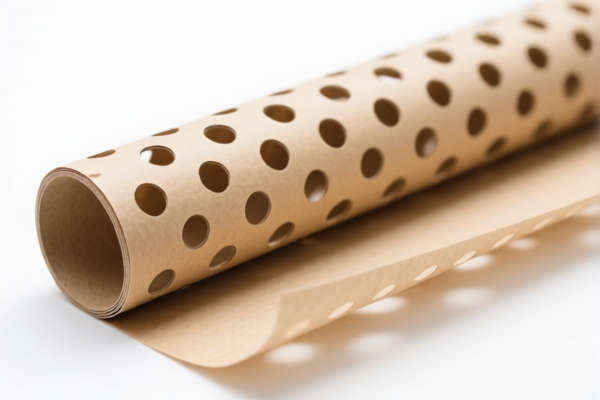
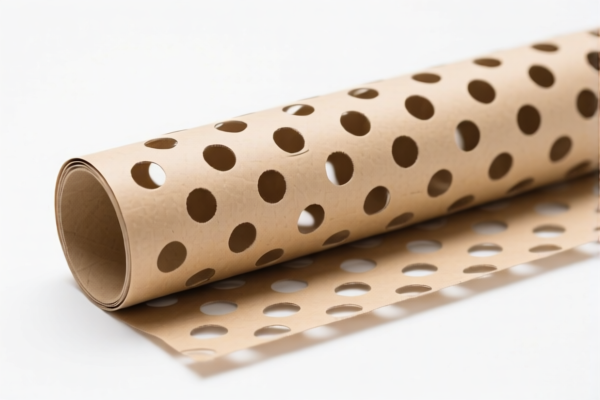
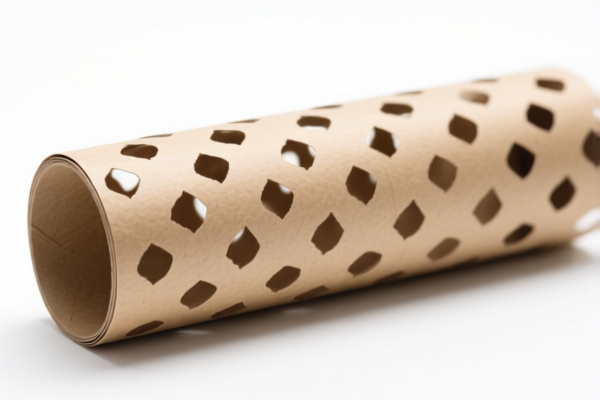
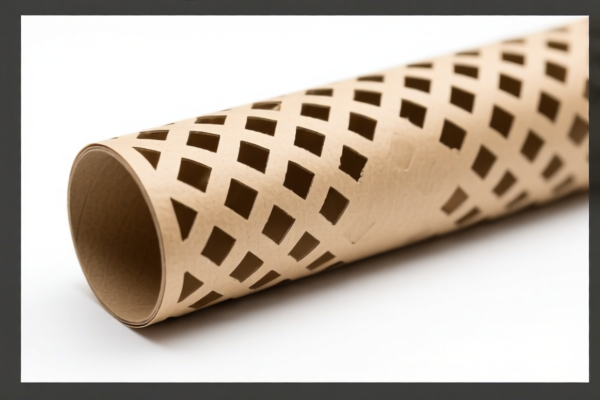
AI Analysis
📜 Card Perforated Paper Roll (Punched Paper Rolls)
🌐 HS Code Reference & Customs Clearance Guide | 2026 Latest Tariff Analysis | Professional Clearance Strategy
📌 I. Product Definition & Classification: What Exactly is a "Card Perforated Paper Roll"?
In international trade, Perforated Paper Rolls (often used for time clocks, ticketing, data entry, or accounting machines) are classified strictly under Chapter 48: Paper and Paperboard. They are NOT electronic devices, nor are they plastic cards. They are cellulose-based products, often wax-coated or plain, rolled into specific diameters for insertion into mechanical or electromechanical readers.
⚠️ Key Distinction Point:
- If the paper is blank or printed with simple lines/grids for manual entry → It falls under 4823.90 (Other shaped, slit paper products).
- If the paper is a specialized industrial covering or coated for specific mechanical use → It may fall under 4811 (Surface-coated/impregnated paper) or 4814 (Wallpaper-like coverings, if applicable).
- Crucial: Do not classify these as "Office Supplies" (e.g., 4820) or "Electronics" (e.g., 8517). The physical form (Roll) and material (Cellulose/Paper) dictate the classification.
📦 II. HS Code Classification Details (2026 Latest Tariff Authority Cross-Reference)
Based on the specific physical characteristics (Perforated, Rolled, Paper/Cellulose), here are the exact classifications from your data:
| HS Code | Product Description | Applicable Scenario | Material Type |
|---|---|---|---|
4823.90.31.00 |
Unperforated Card Paper Rolls (Note: Data lists "Unperforated" but context implies paper for punch cards/records) | Paper for punch cards, recording machines, time-keeping systems | ✅ Paper/Cellulose |
4823.90.67.00 |
Cellulose Fiber Products, Rolled | Coated paper or other paper products for industrial use | ✅ Paper/Cellulose |
4811.90.40.90 |
Other Paper Products, Card Paper Rolls | Generic rolled paper products, not specified elsewhere | ✅ Paper/Cellulose |
4814.90.02.00 |
Paper Coverings, Rolled Form | Specialized paper coverings (e.g., for machinery or specific industrial lining) | ✅ Paper/Cellulose |
🔍 Important Note:
- The term "Card Perforated" often leads to confusion with4823.90.31.00(Paper for punch cards). However, if the paper is heavily coated or impregnated for durability in industrial machines, customs may classify it under 4811 or 4823.90.67.
- Do not assume "Perforated" automatically means one specific code. The coating, basis weight, and end-use determine whether it goes to4811,4814, or4823.
💰 III. 2026 Latest Tariff Rate Breakdown (Including Surtaxes, Policy Surcharges)
✅ Applicable Country: United States (US)
✅ Origin: China (CN)
✅ Effective Date: 2025年11月10日起 (Including subsequent imports)
🎯 1. 4823.90.31.00 —— Paper for Punch Cards / Perforated Records
| Item | Content |
|---|---|
| Base Tariff | 0% (ad valorem) |
| USITC Surtax | +25% (Under Section 301 Duties) |
| IEEPA Surtax | +10% (Against Chinese/HK products, effective Nov 10, 2025) |
| Total Rate | 35.0% |
| Tax Calculation | CIF Value × 35% |
| De Minimis Exemption | ❌ Not Eligible (deny_de_minimis) |
| Legal Path | IEEPA:9903.01.25 → USITC:4823.90.31.00 → Footnote:301 |
📌 Explanation:
- "25% USITC": Standard Section 301 tariff on Chinese paper products;
- "10% IEEPA": New emergency economic power surcharge on Chinese goods;
- Combined 35%: A high barrier for low-value paper rolls. Cost control is critical.
🎯 2. 4823.90.67.00 —— Cellulose Fiber Products (Rolled/Coated)
| Item | Content |
|---|---|
| Base Tariff | 0% |
| USITC Surtax | +25% |
| IEEPA Surtax | +10% |
| Total Rate | 35.0% |
| Tax Calculation | CIF × 35% |
| De Minimis Exemption | ❌ Not Eligible |
| Legal Path | IEEPA:9903.01.24 → USITC:4823.90.67.00 → Footnote:301 |
📌 Note:
- Even if the paper is wax-coated or treated for industrial machinery, if it falls under this 10-digit HS code, the 35% rate applies.
- This code is often used for specialty industrial papers that don’t fit standard writing paper categories.
🎯 3. 4811.90.40.90 —— Other Paper Products (Rolled)
| Item | Content |
|---|---|
| Base Tariff | 0% |
| USITC Surtax | +25% |
| IEEPA Surtax | +10% |
| Total Rate | 35.0% |
| Tax Calculation | CIF × 35% |
| De Minimis Exemption | ❌ Not Eligible |
| Legal Path | IEEPA:9903.01.25 → USITC:4811.90.40.90 → Footnote:301 |
📌 Explanation:
- This is a "Catch-all" category for paper rolls not specified elsewhere.
- If your "Card Perforated Roll" is plain, uncoated, or lightly treated, it likely falls here.
- Rate remains 35% due to origin (China).
🎯 4. 4814.90.02.00 —— Paper Coverings (Rolled)
| Item | Content |
|---|---|
| Base Tariff | 0% |
| USITC Surtax | +7.5% |
| IEEPA Surtax | +10% |
| Total Rate | 17.5% |
| Tax Calculation | CIF × 17.5% |
| De Minimis Exemption | ❌ Not Eligible |
| Legal Path | IEEPA:9903.01.24 → USITC:4814.90.02.00 → Footnote:301 |
📌 Strategic Advantage:
- 17.5% is significantly lower than 35%.
- If your product can be justified as a "Paper Covering" (e.g., used for lining, protective covering, or specific industrial wrapping) rather than just "recording paper," this is the optimal HS Code.
- Argument: Emphasize the protective or covering function of the paper roll in your commercial invoice.
🛠️ IV. Customs Clearance Practical Advice (Real-World Pitfall Guide)
✅ 1. Documentation Checklist (Non-Negotiable)
| Document | Mandatory? | Explanation |
|---|---|---|
| ✅ Product Specification Sheet | ✔️ | Must detail: Material (100% Cellulose), Weight (GSM), Width, Diameter, Perforation Type (if any), Coating (Wax/Silicone). |
| ✅ Product Photos (Clear) | ✔️ | Show the roll, the perforations (if visible), and the end-use (e.g., inserted into a time clock). |
| ✅ Commercial Invoice | ✔️ | Description must match HS Code. Use terms like "Rolling Paper for Industrial Covering" for 4814, or "Perforated Paper Rolls for Record Keeping" for 4823. |
| ✅ Packing List | ✔️ | Show net/gross weight. Ensure no mixed shipments with electronics. |
| ✅ Origin Certificate (CO) | ✔️ | Required for IEEPA tax calculation. |
✅ 2. Declaration Strategy (Key Mantras)
🔥 "Role Matters, Coating Defines, 17.5% is the Goal!"
| Scenario | Correct Declaration | Wrong Practice |
|---|---|---|
| Plain Perforated Paper | 4823.90.31.00 or 4811.90.40.90 → 35% |
Misdeclare as "Cardstock" → Risk of penalty |
| Coated/Impregnated Paper | 4811.90.40.90 → 35% |
Claim "Office Supply" → Rejected |
| Industrial Covering/Lining Roll | 4814.90.02.00 → 17.5% ✅ |
Force-fit into "Recording Paper" → 35% |
| Specialty Cellulose Roll | 4823.90.67.00 → 35% |
Generic "Paper" → Ambiguity |
💡 Pro Tip:
If the paper is not primarily for recording data but serves as a liner, cover, or protective layer in an industrial process, argue for 4814.90.02.00. The 17.5% rate saves you 17.5 percentage points (almost 50% less tax).
✅ 3. Special Case Handling
| Situation | Handling Advice |
|---|---|
| OEM Custom Perforations | Provide customer drawings. If perforations are non-standard, classify under 4823.90.67 or 4811. |
| Mixed Content (Paper + Plastic Core) | The paper is the principal material. Declare as paper roll. The plastic core is negligible. |
| Imported with Machinery | If shipped with the time clock/recording machine, it may be considered a part/accessory. Still, paper parts are often classified separately under Chapter 48. Check if the machine itself has a lower duty rate for accessories (unlikely for paper). |
| Small Sample Rolls | If value is under $800, check if de minimis applies. NO: For China-origin goods under IEEPA, de minimis is denied. |
🌍 V. Global Market Comparison (2026 Latest)
| Country/Region | Recommended HS Code | Tariff Rate (China Origin) | Certification | Note |
|---|---|---|---|---|
| 🇺🇸 USA | 4814.90.02.00 |
17.5% | None | Best rate if classified as "Covering". |
| 🇨🇳 China | 4814.90.02.00 |
5% | None | Domestic duty is low. |
| 🇪🇺 EU | 4814.90.02.00 |
0% - 6.5% | CE (if applicable) | No Section 301 equivalent. |
| 🇬🇧 UK | 4814.90.02.00 |
0% - 5% | UKCA | Post-Brexit tariffs apply. |
| 🇯🇵 Japan | 4814.90.02.00 |
0% - 3% | PSE (if electrical) | Low tariffs, strict quality checks. |
📌 Conclusion:
- USA is the most expensive market due to IEEPA + Section 301.
- Strategic Classification: Push for 4814.90.02.00 to reduce duty from 35% to 17.5%.
- EU/UK/Japan are significantly cheaper, offering better margins.
📌 VI. Common Mistakes & Pitfalls (Lessons Learned)
❌ Mistake 1: Declaring as "Office Paper" (4802)
👉 Consequence: 0% base tax, but 35% total due to surtaxes. Misclassification leads to seizure.
❌ Mistake 2: Forgetting to declare "Chinese Origin" on the Invoice
👉 Consequence: Automated systems apply highest possible tariff or block entry. Always state "Made in China".
❌ Mistake 3: Using "Perforated Card" as the only description
👉 Consequence: Customs officers may assume "Plastic Cards" (3926) or "Electronic Cards". Clarify material: "100% Paper/Cellose".
❌ Mistake 4: Assuming Small Shipments are Tax-Free
👉 Consequence: De Minimis ($800) is EXCLUDED for Chinese goods under IEEPA. Every shipment is taxed.
✅ Correct Practice:
"Paper Rolls, 100% Cellulose, Coated, Perforated, for Industrial Record Keeping, Model XYZ, Made in China"
🎯 VII. Conclusion: Professional Declaration, Cost Efficiency
🎯 Remember the Mantra:
🔹 "If it's a Covering, it's 17.5%. If it's Just Paper, it's 35%. Origin Matters, De Minimis is Dead!"
🔹 "HS Code is Destiny. A 17.5% difference saves thousands on bulk orders."
📌 Pro Tip:
If your product can be technically described as a "Paper Covering" or "Lining Material" rather than "Recording Paper," choose HS Code
4814.90.02.00. The 17.5% rate is a major savings compared to the 35% rate for4823or4811codes.
Consult a customs broker to validate this classification before shipping.
📣 Immediate Action:
📞 Contact your customs broker + Provide Product Photos + Request HS Code Pre-Ruling for
4814.90.02.00.
🚀 Optimize your cost, clear customs faster, and boost your profit margins!
✨ Professional Clearance Starts with Accurate Classification!
💼 Every cent counts in 2026 Trade!
Customer Reviews
About HS Code Classification
The Harmonized System (HS) is an internationally standardized nomenclature developed by the World Customs Organization (WCO) to classify traded products. Over 200 countries use the HS system as the basis for customs tariffs, trade statistics, and import/export regulations.
Each HS code follows a hierarchical structure:
- Chapter (2 digits) — Broad category of goods (e.g., Chapter 84: Machinery and Mechanical Appliances)
- Heading (4 digits) — More specific grouping within the chapter
- Subheading (6 digits) — Internationally standardized breakdown, used by all WCO member countries
- National subdivisions (8-10 digits) — Country-specific extensions for further classification, such as US HTSUS 10-digit codes
Correct HS code classification is essential for smooth customs clearance, accurate duty payment, and compliance with trade regulations. Misclassification can lead to customs delays, overpayment of duties, or penalties.
When importing from CN to US, the applicable tariff rates may include:
- Most-Favored-Nation (MFN) rate — The standard duty rate applied to WTO members
- General rate — Applied to countries without trade agreements
- Trade remedy duties — Additional tariffs such as Section 301 (anti-dumping), Section 232 (national security), or countervailing duties
The information provided on this page is for reference purposes only. For official classification, please consult with your local customs authority or a licensed customs broker.