Card Protector Sleeve
CN → US| HS Code | Tariff Rate | Origin | Destination | Doc |
|---|---|---|---|---|
| 4205008000 | 35.0% | CN | US | Official Doc |
| 3926908700 | 40.3% | CN | US | Official Doc |
| 4202399000 | 55.0% | CN | US | Official Doc |
| 4205006000 | 39.9% | CN | US | Official Doc |
| 4202313000 | 38.7% | CN | US | Official Doc |
Product Images
AI Analysis
🎴 Card Protector Sleeves: HS Code Classification & Customs Clearance Guide (2026)
🌐 HS Code Reference & Customs Strategy | 2026 Updated Tariff Analysis | Professional Clearance Protocol
📌 I. Product Definition & Classification: What Exactly is a "Card Protector Sleeve"?
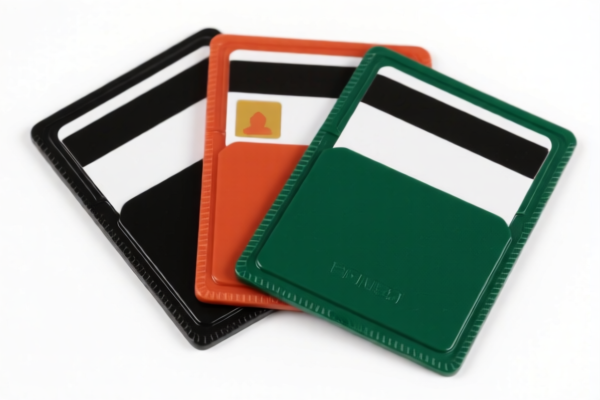
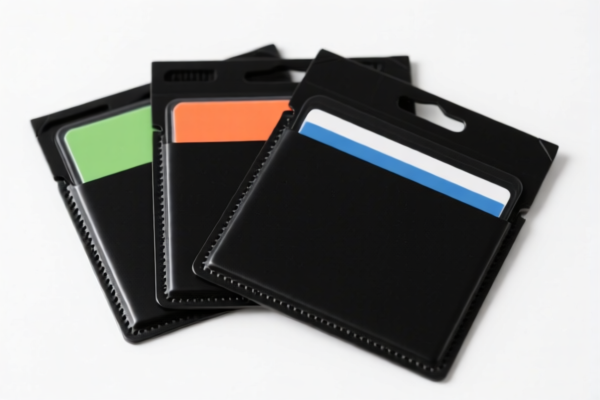
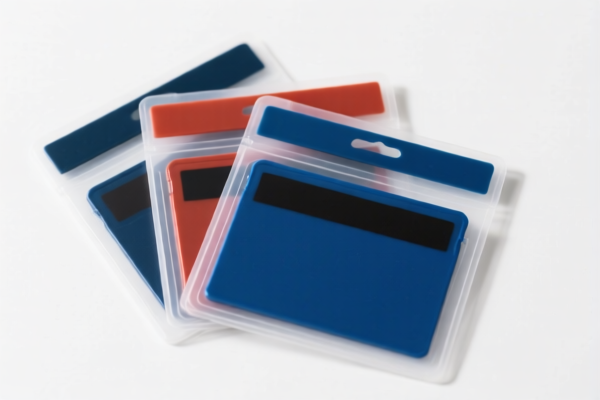
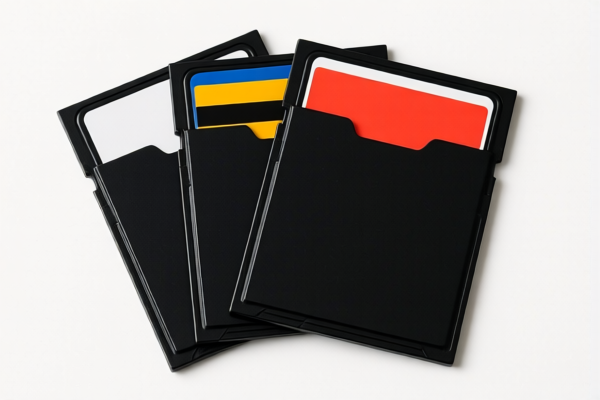
Card Protector Sleeves are small, protective containers used to hold credit cards, ID cards, membership cards, or collectible cards (like trading cards). In international trade, their classification depends heavily on material composition and intended use. They are not a single unified commodity but fall into different chapters based on whether they are made of leather/synthetic leather, plastic, or other materials.
Key Distinction Points: * Material: Is it Leather (Natural/Synthetic), Plastic, or "Other"? * Structure: Is it a simple flat sleeve, a bi-fold wallet style, or a rigid protective case? * Function: Is it primarily for storage (accessory) or protection (case)?
⚠️ Critical Classification Logic:
- If made of Leather or Synthetic Leather and shaped like a wallet or flat holder → Chapter 42 (Articles of Leather)
- If made of Plastic and simple/flat → Chapter 39 (Articles of Plastic)
- If made of Plastic/Leather but designed as a protective case (rigid or semi-rigid) → Chapter 42 (Articles of Leather/Travel Goods) with higher duties.
📦 II. HS Code Classification Details (2026 Latest Tariff Alignment)
Based on the provided data, here are the five specific HS Codes and their rationales:
| HS Code | Product Description | Classification Logic | Material/Type |
|---|---|---|---|
4205.00.80.00 |
Card Holders (Leather/Synthetic) | Classified under "Articles of leather... other." Simple card slots made of leather or synthetic leather. | Leather / Synthetic Leather |
3926.90.87.00 |
Card Holders (Plastic) | Classified under "Other articles of plastics." Simple plastic sleeves or pockets for cards. | Plastic |
4202.39.90.00 |
Protective Cases (Plastic/Leather) | Classified under "Other articles for the person... other." Rigid or semi-rigid cases providing enhanced protection. | Plastic / Leather |
4205.00.60.00 |
Card Holders (Other Leather) | Classified under "Articles of leather... other." Made from leather not specified in the first heading (e.g., reptile skin, other specific leather types). | Other Leather / Reptile Skin |
4202.31.30.00 |
Card Holders (Accessories/Components) | Classified based on a "parts/components logic." Often used for modular card holders or parts of larger bags/wallets. | Parts/Components Logic |
🔍 Key Reminder:
- Simple flat sleeves are usually easier to classify under4205or3926.
- Rigid cases or items labeled as "Protective Cases" often fall under4202, which carries higher tariffs.
- Material dictates the Chapter: Plastic goes to Ch. 39; Leather/Synthetic Leather goes to Ch. 42.
💰 III. 2026 Tariff Rate Breakdown (Including Additional Duties)
✅ Applicable Country: United States (US)
✅ Origin: China (CN)
✅ Effective Time: 2025+ (Including subsequent imports)
🎯 1. 4205.00.80.00 —— Card Holders (Leather/Synthetic Leather)
| Item | Detail |
|---|---|
| Base Duty | 0.0% |
| Section 301 Duty | +25.0% |
| Section 122 Duty | +10.0% |
| Total Duty Rate | 35.0% |
| Calculation | CIF Value × 35.0% |
| Legal Basis | USITC:4205.00.80.00 → Section 301 → Section 122 |
📌 Explanation:
- This is the most common classification for standard leather/synthetic card wallets.
- While the base duty is 0%, the 35% total rate is significant due to geopolitical tariffs.
- Note: "Synthetic Leather" is treated as Leather under this HS Code.
🎯 2. 3926.90.87.00 —— Card Holders (Plastic)
| Item | Detail |
|---|---|
| Base Duty | 5.3% |
| Section 301 Duty | +25.0% |
| Section 122 Duty | +10.0% |
| Total Duty Rate | 40.3% |
| Calculation | CIF Value × 40.3% |
| Legal Basis | USITC:3926.90.87.00 → Section 301 → Section 122 |
📌 Explanation:
- Plastic card sleeves incur a higher total rate than leather equivalents due to the 5.3% base duty.
- Common for PVC, PET, or TPU sleeves.
- Risk: High. Plastic items are frequently targeted for anti-dumping or quality inspections.
🎯 3. 4202.39.90.00 —— Protective Cases (Plastic/Leather)
| Item | Detail |
|---|---|
| Base Duty | 20.0% |
| Section 301 Duty | +25.0% |
| Section 122 Duty | +10.0% |
| Total Duty Rate | 55.0% |
| Calculation | CIF Value × 55.0% |
| Legal Basis | USITC:4202.39.90.00 → Section 301 → Section 122 |
📌 Explanation:
- Highest Tax Bracket!
- Applies to rigid cases, zippered pouches, or items described as "Protective Cases" rather than simple "Sleeves."
- The 20% base duty reflects the higher value-added nature of protective goods.
- Action: Avoid this classification if possible. If your product is a simple flat sleeve, do NOT describe it as a "Protective Case" in the invoice.
🎯 4. 4205.00.60.00 —— Card Holders (Other Leather/Reptile Skin)
| Item | Detail |
|---|---|
| Base Duty | 4.9% |
| Section 301 Duty | +25.0% |
| Section 122 Duty | +10.0% |
| Total Duty Rate | 39.9% |
| Calculation | CIF Value × 39.9% |
| Legal Basis | USITC:4205.00.60.00 → Section 301 → Section 122 |
📌 Explanation:
- Applies to speciality leathers (e.g., crocodile, snake, or non-standard hides).
- Slightly higher than standard synthetic leather due to the 4.9% base duty.
🎯 5. 4202.31.30.00 —— Card Holders (Parts/Components Logic)
| Item | Detail |
|---|---|
| Base Duty | 3.7% |
| Section 301 Duty | +25.0% |
| Section 122 Duty | +10.0% |
| Total Duty Rate | 38.7% |
| Calculation | CIF Value × 38.7% |
| Legal Basis | USITC:4202.31.30.00 → Section 301 → Section 122 |
📌 Explanation:
- Used when the card holder is sold as a component of a larger accessory or bag.
- Risk: If imported as a standalone retail product, this classification may be challenged by customs. Ensure the commercial invoice reflects its role as a component if using this code.
🛠️ IV. Customs Clearance Practical Advice (Pitfall Avoidance)
✅ 1. Documentation Checklist (Mandatory)
| Document | Required | Notes |
|---|---|---|
| Commercial Invoice | ✅ | Must specify Material (e.g., "PVC," "PU Leather") and Form (e.g., "Flat Sleeve," "Bi-fold"). |
| Product Photos | ✅ | Clear images showing the item is a sleeve (flexible) vs. a case (rigid). |
| Material Composition Statement | ✅ | E.g., "100% Polyvinyl Chloride (PVC)" or "100% Synthetic Leather." |
| Packing List | ✅ | Weight and dimensions must match. |
| Origin Certificate | ✅ | To verify Chinese origin for Section 301/122 application. |
✅ 2. Declaration Strategy (Key Mantras)
🔥 "Material First, Form Second, Avoid 'Case' if Simple!"
| Scenario | Correct Declaration | Incorrect Declaration | Consequence |
|---|---|---|---|
| Plastic Sleeve | "Plastic Card Sleeve, PVC Material" | "Plastic Card Case" | 40.3% vs 55% (Save 14.7%) |
| Leather Sleeve | "Synthetic Leather Card Holder" | "Leather Wallet" (if no buttons/zippers) | 35.0% (Lower risk of scrutiny) |
| Special Leather | "Reptile Skin Card Holder" | "General Leather Holder" | 39.9% (Accurate classification) |
| Component Part | "Card Holder Component for Bag" | "Card Holder" (if sold separately) | 38.7% (Risky if sold retail) |
📌 Crucial Tip:
- Avoid the word "Case" in your English description if the item is a soft, flexible sleeve. Use "Sleeve," "Holder," or "Pouch."
- "Case" implies rigidity and protection, triggering4202(55% duty).
- "Sleeve/Holder" implies a simple container, allowing4205or3926(35%-40.3% duty).
✅ 3. Special Cases
| Situation | Handling Advice |
|---|---|
| Hybrid Materials | If >50% by weight is leather, classify under Ch. 42. If >50% is plastic, classify under Ch. 39. |
| Gift Sets | If sold with a card + sleeve, the sleeve's material usually dictates the classification of the set. |
| Packaging | Do not include rigid display boxes in the primary product description. Keep the product as a "loose sleeve" for classification purposes. |
🌍 V. Global Market Comparison (2026)
| Country/Region | Recommended HS Code | Duty (China Origin) | Certification | Notes |
|---|---|---|---|---|
| 🇺🇸 USA | 4205.00.80.00 (Leather) |
35.0% | None specific | High Section 301/122 impact. |
| 🇺🇸 USA | 3926.90.87.00 (Plastic) |
40.3% | None specific | Higher base duty than leather. |
| 🇪🇺 EU | 4205.00 / 3926.90 |
4.0% - 6.0% | CE (if plastic additives regulated) | No Section 301/122 equivalent. |
| 🇨🇳 China | 4205.00 / 3926.90 |
0% - 5.0% | CCC (if applicable) | No additional tariffs for imports into China. |
| 🇦🇺 Australia | 4205.00 / 3926.90 |
5.0% | ARRC (if electronic, not applicable here) | Low barrier. |
📌 Conclusion:
- The US market is the most costly due to the 35-55% total duty rates.
- Plastic sleeves are taxed higher than leather sleeves in the US due to the base duty difference.
- Europe and Asia are far more favorable for these goods.
📌 VI. Common Errors & Pitfall Guide (Lessons Learned)
❌ Error 1: Describing a flexible plastic sleeve as a "Protective Case"
👉 Result: Customs classifies it as 4202.39.90.00 → 55% Duty.
👉 Fix: Use "Plastic Card Sleeve" in the invoice.
❌ Error 2: Misidentifying Synthetic Leather as Plastic
👉 Result: Customs may reclassify from 4205 (35%) to 3926 (40.3%) or vice versa based on material tests, causing delays.
👉 Fix: Provide material test reports confirming "Polyurethane (PU) Leather."
❌ Error 3: Ignoring Section 122 & 301 Duties
👉 Result: Underpaying taxes → Penalties + Seizure.
👉 Fix: Always calculate Base + 301 (25%) + 122 (10%).
✅ Correct Declaration Example:
"Flexible PVC Card Sleeves, Non-Rigid, for Credit Card Storage, Model: X-100"
(Triggers3926.90.87.00@ 40.3%)"Synthetic Leather Card Holder, Bi-fold Style, No Metal Hardware"
(Triggers4205.00.80.00@ 35.0%)
🎯 VII. Conclusion: Smart Classification, Maximize Profit!
🎯 Remember the Mantra:
🔹 "Soft Sleeve = Lower Duty. Hard Case = Higher Duty."
🔹 "Plastic has a base tax. Leather starts at 0%."
🔹 "Avoid 'Case' for flexible items. Use 'Sleeve' or 'Holder.'"
📌 Pro Tip:
If your product is not made in China (e.g., made in Vietnam, Thailand, or India), you may be exempt from Section 301 (25%) and Section 122 (10%) duties.
👉 Check Rules of Origin! This can reduce your duty from 40-55% down to 0-5.3%.
📣 Immediate Action:
📞 Contact a licensed customs broker.
📸 Provide clear photos showing the material and flexibility.
📝 Review your Invoice Description to ensure it matches the lowest possible duty classification.
✨ Professional Clearance Starts with Precise Classification!
💼 Every percentage point saved is pure profit!
Customer Reviews
About HS Code Classification
The Harmonized System (HS) is an internationally standardized nomenclature developed by the World Customs Organization (WCO) to classify traded products. Over 200 countries use the HS system as the basis for customs tariffs, trade statistics, and import/export regulations.
Each HS code follows a hierarchical structure:
- Chapter (2 digits) — Broad category of goods (e.g., Chapter 84: Machinery and Mechanical Appliances)
- Heading (4 digits) — More specific grouping within the chapter
- Subheading (6 digits) — Internationally standardized breakdown, used by all WCO member countries
- National subdivisions (8-10 digits) — Country-specific extensions for further classification, such as US HTSUS 10-digit codes
Correct HS code classification is essential for smooth customs clearance, accurate duty payment, and compliance with trade regulations. Misclassification can lead to customs delays, overpayment of duties, or penalties.
When importing from CN to US, the applicable tariff rates may include:
- Most-Favored-Nation (MFN) rate — The standard duty rate applied to WTO members
- General rate — Applied to countries without trade agreements
- Trade remedy duties — Additional tariffs such as Section 301 (anti-dumping), Section 232 (national security), or countervailing duties
The information provided on this page is for reference purposes only. For official classification, please consult with your local customs authority or a licensed customs broker.