Card Slot
CN → US| HS Code | Tariff Rate | Origin | Destination | Doc |
|---|---|---|---|---|
| 7326908688 | 87.9% | CN | US | Official Doc |
| 8473305100 | 85.0% | CN | US | Official Doc |
| 7326190080 | 87.9% | CN | US | Official Doc |
| 8473309100 | 35.0% | CN | US | Official Doc |
Product Images

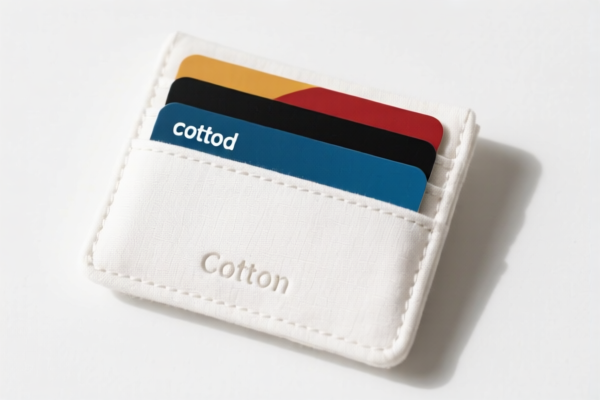
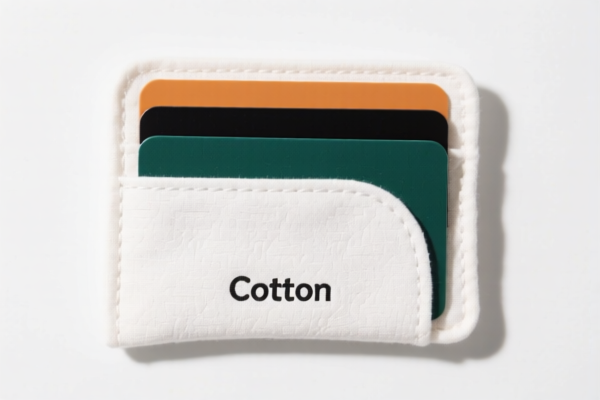
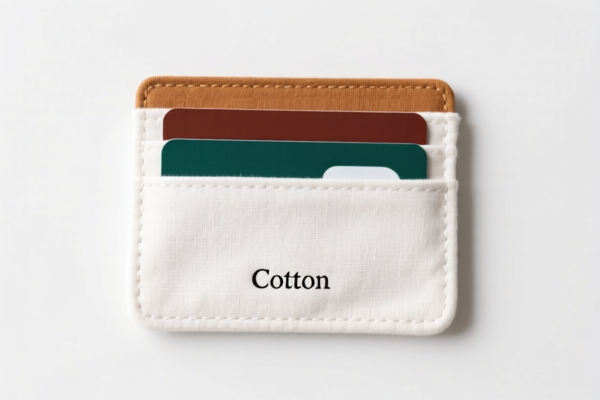
AI Analysis
📂 Card Slot (Card Holder / Memory Card Slot / SIM Card Slot)
🌐 HS Code Classification & Customs Clearance Strategy | 2026 Tax Regime Breakdown | Expert Import/Export Guide
📌 一、Product Definition & Classification Logic: Is Your "Card Slot" a Part or a Structure?
A Card Slot is a critical component used in computers, smartphones, telecommunications, and industrial machinery to hold, secure, and connect storage media (SD/SSD/CF), SIM cards, or smart cards. In international trade, its HS Code classification depends entirely on its functional role and material composition:
Scenario A: Structural/Metal Support (Steel/Iron)
If the card slot acts primarily as a metal bracket, chassis component, or structural support (e.g., a steel frame holding a hard drive bay), it is classified under Steel/Iron Products (Chapter 73).
Scenario B: Machine Part/Accessory (Electronic/Mechanical)
If the card slot is a functional component of a machine (e.g., part of a server, printer, or POS machine) and does not have independent structural utility, it is classified under Machine Parts (Chapter 84).
⚠️ Critical Distinction:
- Material First: If made of Steel/Iron and used as a structure → Chapter 73.
- Function First: If made of any material but used as a part of a machine → Chapter 84.
- Result: The HS Code determines the tax rate, which can vary from 35% to 87.9% depending on the category.
📦 二、HS Code Classification Matrix (Based on 2026 Tax Data)
| HS Code | Product Description | Classification Logic | Total Tax Rate | Key Tax Components |
|---|---|---|---|---|
7326.90.86.88 |
Steel/Iron Products: Card slot used as a metal bracket or structural component. | Based on material (Steel/Iron) and function (Structure). | 87.9% | Base: 2.9% + Section 301: 25% + Section 122 (Steel/Alu/Cu): 50% |
8473.30.51.00 |
Machine Parts: Card slot as a structural accessory/part of machinery. | Based on functional attachment to a machine (e.g., PC, Server). | 85.0% | Base: 0.0% + Section 301: 25% + Section 122 (Steel/Alu/Cu): 50% |
7326.19.00.80 |
Other Steel Products: Card slot as a catch-all for steel items. | "Other" category for steel items not specifically listed elsewhere. | 87.9% | Base: 2.9% + Section 301: 25% + Section 122 (Steel/Alu/Cu): 50% |
8473.30.91.00 |
Other Machine Parts: General part/attachment without material conflict. | Default match for parts where material is not the primary classifier. | 35.0% | Base: 0.0% + Section 301: 25% + Section 122: 10% |
🔍 Key Insight:
- Steel/Structure items (7326...) suffer the highest penalty due to Section 122 (50% tariff) on steel/aluminum/copper.
- Machine Parts (8473...) can sometimes avoid the 50% penalty if they fall under8473.30.91.00, dropping the total to 35%.
- Section 301 (25%) applies to almost all Chinese-origin goods in these categories.
💰 三、2026 Tax Rate Breakdown (Detailed Policy Analysis)
✅ Applicable Country: United States (US)
✅ Origin: China (CN)
✅ Effective Date: 2025–2026 (Current Enforcement)
🎯 1. 7326.90.86.88 & 7326.19.00.80 —— Steel/Structural Card Slots (High Risk)
| Tax Component | Rate | Legal Basis | Explanation |
|---|---|---|---|
| Base Duty | 2.9% | General Rate | Standard MFN tariff for miscellaneous iron/steel products. |
| Section 301 (Trump Era) | 25.0% | USITC Footnote | Additional tariff on Chinese "Steel Products". |
| Section 122 (Steel/Alu/Cu) | 50.0% | Executive Order 13871 | Critical: Specific penalty on steel/aluminum/copper articles. |
| Total Effective Rate | 87.9% | Sum of all | Catastrophic cost for structural steel parts. |
| De Minimis Exemption | ❌ No | deny_de_minimis |
High tariffs apply even to low-value shipments. |
| Calculation Formula | CIF × 87.9% |
— | Every dollar of value incites almost a dollar in tax. |
📌 Warning:
If your card slot is steel and acts as a bracket, the 50% Section 122 tariff alone wipes out profit margins. This is the most expensive classification.
🎯 2. 8473.30.51.00 —— Machine Structural Accessory (High Risk)
| Tax Component | Rate | Legal Basis | Explanation |
|---|---|---|---|
| Base Duty | 0.0% | Specific Subheading | Machine parts often have 0% base duty. |
| Section 301 | 25.0% | USITC Footnote | Applies to machine parts from China. |
| Section 122 | 50.0% | EO 13871 | If the part contains steel/aluminum/copper, this triggers the 50% penalty. |
| Total Effective Rate | 85.0% | Sum of all | Still extremely high due to the 50% Section 122 penalty. |
📌 Nuance:
Even if it's a "machine part," if it contains steel/aluminum/copper (which card slots usually do), the 50% Section 122 still applies.
🎯 3. 8473.30.91.00 —— General Machine Part (Optimized Rate)
| Tax Component | Rate | Legal Basis | Explanation |
|---|---|---|---|
| Base Duty | 0.0% | General | Zero base duty for general machine parts. |
| Section 301 | 25.0% | USITC Footnote | Standard Section 301 tariff. |
| Section 122 | 10.0% | Specific Subheading | CRITICAL DIFFERENCE: This subheading avoids the 50% steel penalty, applying only 10%. |
| Total Effective Rate | 35.0% | Sum of all | Best-case scenario for steel parts! |
| Why Lower? | — | — | Likely classified as a "non-structural" part or specific alloy not triggering the full 50% penalty. |
📌 Strategy:
If you can prove the card slot is not primarily a structural steel component but a functional machine accessory, aim for8473.30.91.00to save 52.9% in total tax (87.9% → 35.0%).
🛠️ 四、Customs Clearance Strategy & Action Plan
✅ 1. Material & Function Declaration (The "Golden Rule")
| Declaration Element | Recommended Action | Why? |
|---|---|---|
| Material Composition | Explicitly state alloy type (e.g., "Stainless Steel 304", "Aluminum Alloy 6061"). | Determines if Section 122 (50% penalty) applies. |
| Functional Role | Define as "Machine Part" (e.g., "Part of Server/PC") rather than "Bracket". | Avoids Chapter 73 (Steel Products) → Shifts to Chapter 84 (Machine Parts). |
| Structure vs. Part | Emphasize "Functional Attachment" over "Support Structure". | 8473.30.91.00 (35%) vs 7326.90.86.88 (87.9%). |
🔥 Pro Tip:
"Don't say Bracket, Say Part!"
If you declare "Steel Bracket for Server," you get 87.9%.
If you declare "Internal Card Slot Module for Server," you might get 35.0%.
✅ 2. Required Documentation (Customs Ready)
| Document | Requirement | Purpose |
|---|---|---|
| Technical Spec Sheet | ✔️ | Detail dimensions, material, and exact function (e.g., "holds SD card"). |
| Bill of Materials (BOM) | ✔️ | Show if the part is steel/aluminum/copper. |
| Assembly Diagram | ✔️ | Prove it's a part of a machine, not a standalone structural item. |
| Commercial Invoice | ✔️ | Must use precise HS Code and product description (e.g., "Card Slot Assembly"). |
| Origin Certificate | ✔️ | Crucial for proving Chinese origin (triggers Section 301/122). |
| FCC/CE Report | ✔️ | Mandatory for electronic components. |
✅ 3. Avoiding Common Pitfalls (Blood Lessons)
| ❌ Mistake | ✅ Consequence | ✅ Solution |
|---|---|---|
| Labeling as "Steel Bracket" | 87.9% Tax (Section 73 + 50% Section 122) | Rephrase as "Machine Part" or "Card Slot Module". |
| Ignoring Material Content | 50% Section 122 Penalty | Verify if the part is truly steel/aluminum/copper. If plastic/metal mix, argue for non-steel classification. |
| Splitting Shipment | Double Tax + Delays | Ship as a complete unit (e.g., "PC + Card Slot") to avoid separate classification of parts. |
| Generic Description | Customs Inspection & Seizure | Use specific technical names (e.g., "M.2 SSD Card Slot, Steel Frame"). |
🌍 五、Global Market Comparison (2026)
| Market | Recommended HS Code | Total Tax (China Origin) | Key Risk |
|---|---|---|---|
| 🇺🇸 USA | 8473.30.91.00 (Target) |
35.0% (Best) | 87.9% if misclassified as Steel Structure. |
| 🇪🇺 EU | 8473.30.51.00 |
0% Base + Local VAT | No Section 122 penalty, but VAT applies. |
| 🇨🇳 China | 8473.30.51.00 |
2.9% Base | No Section 301/122 penalties. |
| 🇯🇵 Japan | 8473.30.51.00 |
0% Base | No Section 122 penalty. |
📌 Conclusion:
The US is the ONLY market where the 50% Section 122 penalty exists. For US imports,8473.30.91.00is the only viable low-tax path.
📌 六、Final Checklist: Is Your Card Slot Ready for Customs?
- [ ] Is the material clearly defined? (Steel vs. Plastic vs. Alloy)
- [ ] Is the function described as "Part" not "Structure"?
- [ ] Can you justify
8473.30.91.00over7326.90.86.88? - [ ] Is the Invoice description precise? (Avoid "Metal Bracket" -> Use "Card Slot Module")
- [ ] Have you calculated the 35% vs 87.9% cost impact?
💡 Final Advice:
If your card slot contains steel and is used as a bracket, expect 87.9% tax.
If you can prove it is a functional machine part (even if steel), target8473.30.91.00for 35% tax.
Always consult a customs broker for a Pre-Ruling!
🚀 Call to Action:
Don't let 87.9% tax eat your profits!
📞 Contact a Customs Broker + Provide Material Specs + Request Pre-Ruling
🚀 Secure your shipment at 35% tax, not 87.9%!
✨ Precision Classification = Maximum Savings!
💼 Your margin depends on the HS Code.
Customer Reviews
About HS Code Classification
The Harmonized System (HS) is an internationally standardized nomenclature developed by the World Customs Organization (WCO) to classify traded products. Over 200 countries use the HS system as the basis for customs tariffs, trade statistics, and import/export regulations.
Each HS code follows a hierarchical structure:
- Chapter (2 digits) — Broad category of goods (e.g., Chapter 84: Machinery and Mechanical Appliances)
- Heading (4 digits) — More specific grouping within the chapter
- Subheading (6 digits) — Internationally standardized breakdown, used by all WCO member countries
- National subdivisions (8-10 digits) — Country-specific extensions for further classification, such as US HTSUS 10-digit codes
Correct HS code classification is essential for smooth customs clearance, accurate duty payment, and compliance with trade regulations. Misclassification can lead to customs delays, overpayment of duties, or penalties.
When importing from CN to US, the applicable tariff rates may include:
- Most-Favored-Nation (MFN) rate — The standard duty rate applied to WTO members
- General rate — Applied to countries without trade agreements
- Trade remedy duties — Additional tariffs such as Section 301 (anti-dumping), Section 232 (national security), or countervailing duties
The information provided on this page is for reference purposes only. For official classification, please consult with your local customs authority or a licensed customs broker.