Card Storage
CN → US| HS Code | Tariff Rate | Origin | Destination | Doc |
|---|---|---|---|---|
| 4421919880 | 38.3% | CN | US | Official Doc |
| 3926909989 | 22.8% | CN | US | Official Doc |
| 3926908700 | 40.3% | CN | US | Official Doc |
| 4421999880 | 38.3% | CN | US | Official Doc |
| 4823908680 | 35.0% | CN | US | Official Doc |
Product Images
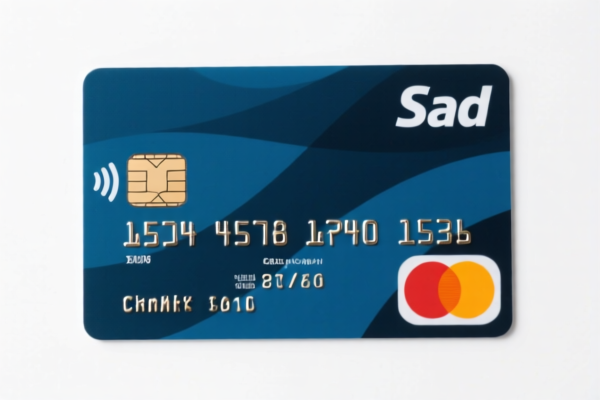
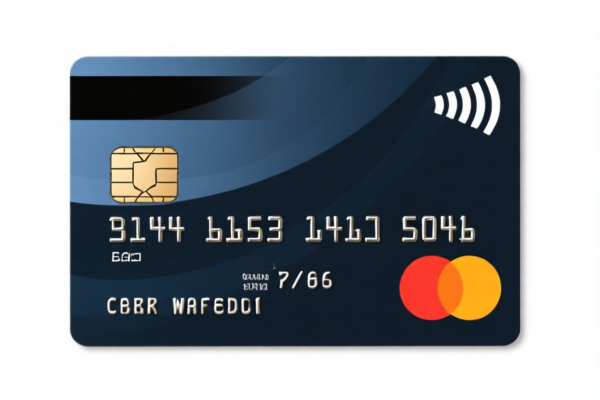
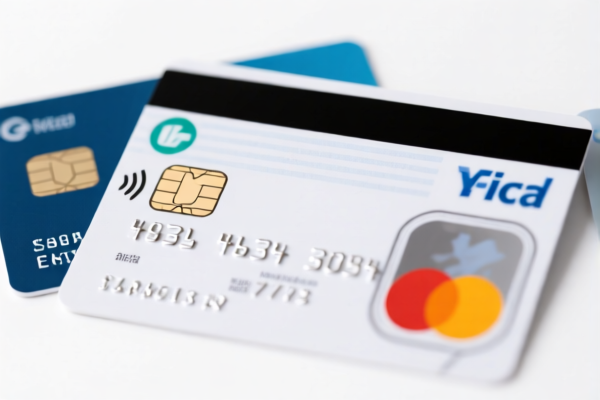
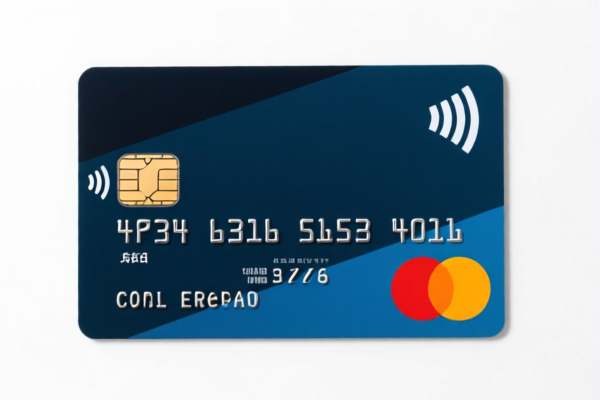
AI Analysis
🃏 Card Storage (Business & Photo Card Holders)
🌐 HS Code Reference & Customs Clearance Guide | 2026 Updated Tax Analysis | Professional Entry Strategy
📌 I. Product Definition & Classification: What Exactly is "Card Storage"?
Card Storage refers to containers, cases, or folders designed specifically for organizing, protecting, and transporting business cards, credit cards, identification cards, or photographic cards. In international trade, the classification heavily depends on the primary material and the specific function of the item.
There are three main categories commonly encountered in customs declarations:
- Wooden/Bamboo Card Holders: Often high-end, engraved, or crafted wooden/bamboo boxes for business cards.
- Plastic Card Cases/Rollers: PVC, Acrylic, or PP plastic wallets, roll-up cases, or rigid protectors.
- Paper/Cardboard Containers: Folding paper wallets, cardboard display stands, or paper-based organizational pockets.
⚠️ Key Distinction Point:
- If the item is rigid, durable, and primarily made of wood/bamboo → Classify under Chapter 44 (Wood).
- If the item is flexible, synthetic, and primarily made of plastic → Classify under Chapter 39 (Plastics).
- If the item is thin, foldable, and primarily made of paper/cardboard → Classify under Chapter 48 (Paper).
📦 II. HS Code Classification Details (2026 Latest Tariff Authority Comparison)
| HS Code | Product Description | Applicable Scenario | Material Inference |
|---|---|---|---|
4421.91.98.80 |
Other wooden articles, specifically bamboo or wooden card holders/boxes | High-end business card cases, engraved wooden storage | 🪵 Wood/Bamboo |
3926.90.99.89 |
Other plastic articles, general plastic card cases/wallets | Standard plastic card wallets, clear PVC sleeves | 🧪 Plastic (General) |
3926.90.87.00 |
Plastic articles for stationery/office use (e.g., file binding/storage) | Plastic card organizers, plastic file folders, plastic binders | 🧪 Plastic (Office/Stationery) |
4421.99.98.80 |
Other wooden articles, non-specific use (兜底 category) | Wooden items not specified elsewhere, mixed-material wooden cases | 🪵 Wood/Mixed |
4823.90.86.80 |
Other articles of paper pulp, paper, or paperboard | Folding paper card wallets, cardboard card displays, paper-based holders | 📄 Paper/Cardboard |
🔍 Key Reminder:
- Plastic vs. Wood: If a card holder has a wooden exterior but a plastic interior lining, customs often classifies based on the dominant material or the essential character. A primarily wooden box goes to 4421. A primarily plastic wallet goes to 3926. - Office Use: Plastic items specifically designed for organizing documents or cards (like file folders) may fall under 3926.90.87.00 rather than the general "other plastic articles" category.
💰 III. 2026 Latest Tariff Rate Breakdown (Including Additional Taxes & Policy Surcharges)
✅ Applicable Country: United States (US)
✅ Country of Origin: China (CN)
✅ Effective Date: November 10, 2025 onwards (including subsequent imports)
🎯 1. 4421.91.98.80 —— Wooden/Bamboo Card Storage (Inferred Material: Bamboo/Wood)
| Item | Details |
|---|---|
| Base Tariff | 3.3% (Ad Valorem) |
| Section 301 Additional Tariff | +25.0% |
| IEEPA Additional Tariff (Section 122) | +10.0% |
| Total Tax Rate | 38.3% |
| Tax Calculation | CIF Value × 38.3% |
| De Minimis Exemption Eligible? | ❌ No (deny_de_minimis applies to Section 301 goods) |
| Legal Basis Path | IEEPA:9903.01.25 → USITC:4421.91.98.80 → FOOTNOTE:301 |
📌 Explanation:
- Wooden articles from China are subject to the full 301 tariff (25%) and IEEPA surcharge (10%). - The base rate is low (3.3%), but the additional taxes push the total to 38.3%. - De Minimis (Section 321): Items subject to Section 301 tariffs cannot use the $800 de minimis exemption. Must declare formally.
🎯 2. 3926.90.99.89 —— Plastic Card Storage (General Plastic Articles)
| Item | Details |
|---|---|
| Base Tariff | 5.3% (Ad Valorem) |
| Section 301 Additional Tariff | +7.5% |
| IEEPA Additional Tariff (Section 122) | +10.0% |
| Total Tax Rate | 22.8% |
| Tax Calculation | CIF Value × 22.8% |
| De Minimis Exemption Eligible? | ❌ No (Partially exemptible if below threshold, but Section 301 still applies if declared) |
| Legal Basis Path | IEEPA:9901.25 → USITC:3926.90.99.89 → FOOTNOTE:301 |
📌 Note:
- This code applies to general plastic card wallets or cases not specifically listed as "stationery/file storage." - The Section 301 rate is lower (7.5%) compared to wooden items or specific office plastic items. - Total tax is 22.8%, significantly lower than wood or specific office plastics.
🎯 3. 3926.90.87.00 —— Plastic Card Storage (Office/Stationery Use)
| Item | Details |
|---|---|
| Base Tariff | 5.3% (Ad Valorem) |
| Section 301 Additional Tariff | +25.0% |
| IEEPA Additional Tariff (Section 122) | +10.0% |
| Total Tax Rate | 40.3% |
| Tax Calculation | CIF Value × 40.3% |
| De Minimis Exemption Eligible? | ❌ No |
| Legal Basis Path | IEEPA:9903.01.25 → USITC:3926.90.87.00 → FOOTNOTE:301 |
📌 Warning:
- If your plastic card storage is considered "stationery" or "file binding" (e.g., plastic card folders, binders), it falls under 87.00, not 99.89. - This category is subject to the full 301 rate (25%), making the total tax 40.3%—the highest among plastic options. - Common Mistake: Declaring plastic card folders as general plastic wallets to get 7.5% vs. 25%. Customs may reclassify if the primary use is document/card organization.
🎯 4. 4421.99.98.80 —— Wooden/Mixed Card Storage (Non-Specific Use)
| Item | Details |
|---|---|
| Base Tariff | 3.3% (Ad Valorem) |
| Section 301 Additional Tariff | +25.0% |
| IEEPA Additional Tariff (Section 122) | +10.0% |
| Total Tax Rate | 38.3% |
| Tax Calculation | CIF Value × 38.3% |
| De Minimis Exemption Eligible? | ❌ No |
| Legal Basis Path | IEEPA:9903.01.25 → USITC:4421.99.98.80 → FOOTNOTE:301 |
📌 Note:
- This is a "catch-all" for wooden articles not specifically listed elsewhere (e.g., unique wooden card boxes with complex mechanisms). - Same tax burden as specific wooden card holders (38.3%).
🎯 5. 4823.90.86.80 —— Paper/Cardboard Card Storage
| Item | Details |
|---|---|
| Base Tariff | 0.0% (Ad Valorem) |
| Section 301 Additional Tariff | +25.0% |
| IEEPA Additional Tariff (Section 122) | +10.0% |
| Total Tax Rate | 35.0% |
| Tax Calculation | CIF Value × 35.0% |
| De Minimis Exemption Eligible? | ❌ No |
| Legal Basis Path | IEEPA:9903.01.25 → USITC:4823.90.86.80 → FOOTNOTE:301 |
📌 Note:
- Paper-based card holders (e.g., folding business card wallets, cardboard displays) have 0% base tariff, but still face full Section 301 and IEEPA surcharges. - Total tax is 35.0%, lower than wooden items but higher than general plastic items.
🛠️ IV. Customs Clearance Practical Advice (Real-World Pitfall Avoidance)
✅ 1. Required Documentation Checklist (Mandatory)
| Document | Mandatory? | Description |
|---|---|---|
| ✅ Product Specification Sheet | ✔️ | Material composition (e.g., "100% Bamboo," "PVC Plastic"), dimensions, capacity. |
| ✅ Product Photos | ✔️ | Clear images showing material texture, branding, and interior structure. |
| ✅ Commercial Invoice | ✔️ | Must clearly state "Card Holder/Case" and material. Avoid vague terms like "Gift Item." |
| ✅ Packing List | ✔️ | Detail packaging to avoid拆分申报 (split declaration) issues. |
| ✅ Material Declaration | ✔️ | Explicitly state if mixed materials (e.g., "Wooden exterior, plastic interior") for correct classification. |
✅ 2. Declaration Tips (Key Mantra)
🔥 "Material Defines Code, Function Defines Subcategory, Avoid Vague Names!"
| Scenario | Correct Declaration | Wrong Practice |
|---|---|---|
| Bamboo Card Box | 4421.91.98.80 - "Bamboo Business Card Holder" |
"Wooden Gift Box" → Risk of misclassification to general wood items. |
| PVC Card Wallet | 3926.90.99.89 - "Plastic Card Case" |
"Stationery" → Could be reclassified to 3926.90.87.00 (40.3% tax). |
| Plastic Card Folder | 3926.90.87.00 - "Plastic File/Card Folder" |
"Plastic Case" → Risk of penalty for incorrect general classification. |
| Paper Card Holder | 4823.90.86.80 - "Paper Card Wallet" |
"Card Storage" → Too vague; customs may choose a higher-rate code. |
✅ 3. Special Cases Handling
| Situation | Handling Advice |
|---|---|
| Mixed Material (Wood + Plastic) | Declare based on essential character. If plastic interior is minimal, classify as Wood (4421). If plastic dominates, classify as Plastic (3926). |
| Sample Shipments | Even for samples, if value exceeds $800, formal declaration is required due to Section 301. No de minimis exemption for Chinese-origin 301 goods. |
| OEM Custom Card Holders | Provide client order + design specs. If customized for a specific brand (e.g., bank logo), still subject to same HS code and tariffs. |
| Electronics in Card Holder? | If the card holder contains a charger, USB drive, or LED light, it may be classified as an electronic accessory (e.g., 8543 or 8517), not card storage! Check internal components. |
🌍 V. Global Market Clearance Comparison (2026 Latest)
| Country/Region | Recommended HS Code | Tariff (CN Origin) | Certification | Notes |
|---|---|---|---|---|
| 🇺🇸 USA | Varies by Material | 22.8% – 40.3% | None specific | Section 301 + IEEPA applies to all. |
| 🇨🇳 China | Varies by Material | 3.3% – 5.3% | CCC (if electronic) | No additional surcharges. |
| 🇪🇺 EU | 4421 / 3926 / 4823 | 0% – 6.5% | CE (if electronic) | No Section 301 equivalent. |
| 🇬🇧 UK | 4421 / 3926 / 4823 | 0% – 6.0% | UKCA (if electronic) | Post-Brexit tariffs. |
| 🇦🇺 Australia | 4421 / 3926 / 4823 | 5% – 10% | RCM (if electronic) | No special US-style surcharges. |
📌 Conclusion:
- USA is the most expensive market for Card Storage due to Section 301 and IEEPA tariffs. - Plastic General Category (3926.90.99.89) offers the lowest tax burden (22.8%) among all options. - Wood and Paper are taxed higher (35%–38.3%). - Avoid classifying plastic card storage as "Office/Stationery" (3926.90.87.00) unless explicitly designed as file folders, as it incurs a 25% additional tariff.
📌 VI. Common Errors & Pitfalls (Blood & Tears Lessons)
❌ Error 1: Declaring a Plastic Card Folder as a General Plastic Wallet
👉 Consequence: Customs may reclassify to 3926.90.87.00 → Tax jumps from 22.8% to 40.3% → Back taxes + fines!
❌ Error 2: Declaring a Bamboo Card Holder as a Wooden Box
👉 Consequence: May be accepted, but if not specific enough, could be flagged for audit. Ensure "Bamboo" is stated if it’s the primary material for potential preferential treatment in other markets.
❌ Error 3: Not disclosing Electronic Components
👉 Consequence: If the card holder has an LED light or USB drive inside, it’s not card storage. It’s an electronic product with different HS codes and tariffs. Misclassification leads to detention and seizure.
❌ Error 4: Using "De Minimis" for Section 301 Goods
👉 Consequence: Illegal. Section 301 goods from China are not eligible for the $800 exemption. Attempting to bypass this can lead to penalties and blacklisting.
✅ Correct Practice:
"Bamboo Business Card Holder, 100% Natural Bamboo, No Electronics, Model BCH-001"
"PVC Credit Card Case, Clear Plastic, Flexible, Model CCC-002"
🎯 VII. Conclusion: Professional Declaration, Cost Optimization
🎯 Key Takeaways:
🔹 "Plastic General is Cheapest (22.8%), Office Plastic is Expensive (40.3%)."
🔹 "Wood and Paper are Middle Ground (35%-38.3%)."
🔹 "No De Minimis for Section 301 Goods from China."
🔹 "Electronic Components Change Everything!"
📌 Pro Tip:
If your product is mixed material (e.g., Wood + Plastic), consider separating components if feasible, or declare the dominant material clearly with supporting photos to avoid customs scrutiny.
For high-value wooden/card items, consider pre-classification rulings from CBP to avoid post-import audits.
📣 Immediate Action:
📞 Consult with a licensed customs broker.
📸 Provide high-resolution photos of materials.
📄 Ensure HS Codes match material and function precisely.
🚀 Optimize your supply chain by choosing the lowest-tax HS Code compliant with regulations!
✨ Precision in Classification Saves Money!
💼 Every Percent of Tariff Counts in 2026!
Customer Reviews
About HS Code Classification
The Harmonized System (HS) is an internationally standardized nomenclature developed by the World Customs Organization (WCO) to classify traded products. Over 200 countries use the HS system as the basis for customs tariffs, trade statistics, and import/export regulations.
Each HS code follows a hierarchical structure:
- Chapter (2 digits) — Broad category of goods (e.g., Chapter 84: Machinery and Mechanical Appliances)
- Heading (4 digits) — More specific grouping within the chapter
- Subheading (6 digits) — Internationally standardized breakdown, used by all WCO member countries
- National subdivisions (8-10 digits) — Country-specific extensions for further classification, such as US HTSUS 10-digit codes
Correct HS code classification is essential for smooth customs clearance, accurate duty payment, and compliance with trade regulations. Misclassification can lead to customs delays, overpayment of duties, or penalties.
When importing from CN to US, the applicable tariff rates may include:
- Most-Favored-Nation (MFN) rate — The standard duty rate applied to WTO members
- General rate — Applied to countries without trade agreements
- Trade remedy duties — Additional tariffs such as Section 301 (anti-dumping), Section 232 (national security), or countervailing duties
The information provided on this page is for reference purposes only. For official classification, please consult with your local customs authority or a licensed customs broker.