Cardboard Briefcase
CN → US| HS Code | Tariff Rate | Origin | Destination | Doc |
|---|---|---|---|---|
| 4805911010 | 35.0% | CN | US | Official Doc |
| 4805934010 | 35.0% | CN | US | Official Doc |
| 4819100040 | 35.0% | CN | US | Official Doc |
| 4810991060 | 35.0% | CN | US | Official Doc |
| 4810396500 | 35.0% | CN | US | Official Doc |
| 4819100020 | 35.0% | CN | US | Official Doc |
Product Images
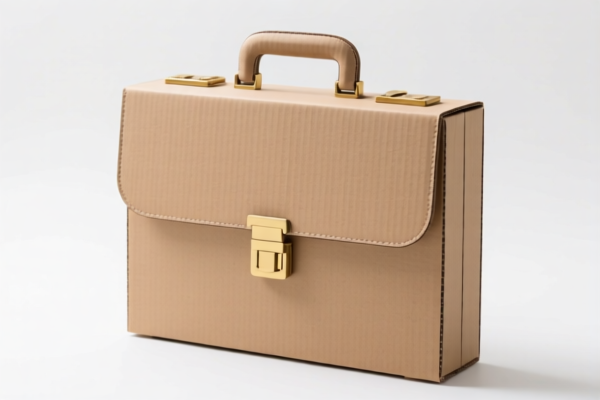
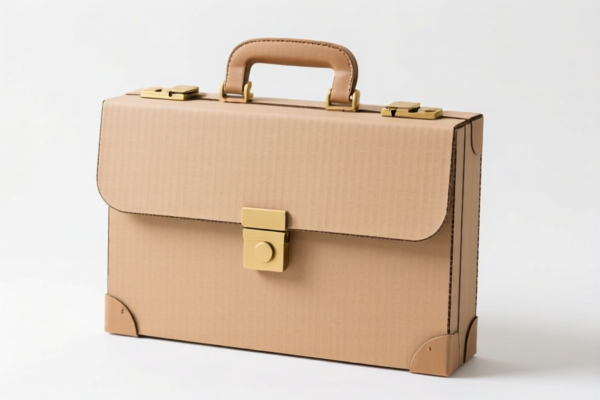

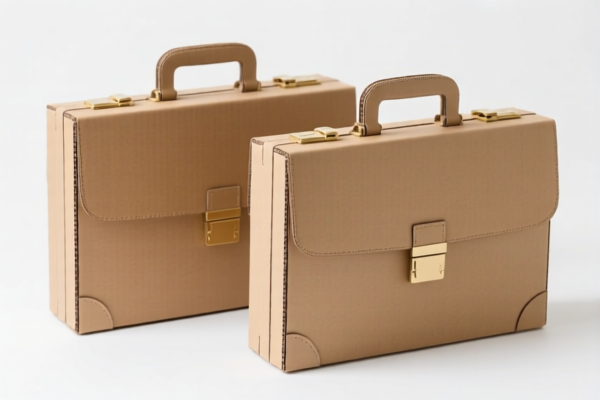
AI Analysis
📦 Cardboard Briefcase Classification & Duty Analysis | 2026 US Customs Guide
🌐 HS Code Reference & Clearance Strategy | Full Breakdown of 6 Potential Codes
📌 Product: Cardboard Briefcase
📍 Origin: China (Assumed based on data context)
🇺🇸 Destination: United States
⚠️ Total Duty Rate: 35.0% (Uniform across all potential classifications in this dataset)
🧐 Executive Summary: Why So Many Codes?
A "Cardboard Briefcase" is a transitional item. It is structurally a box (Paper/Cardboard, Chapter 48) but functionally a container (Packaging, Heading 4819). Because HS codes are hierarchical and specific, customs brokers often face ambiguity when the end-use (briefcase) conflicts slightly with the primary material definition (corrugated board).
Below, we analyze the 6 specific HS Codes provided in your dataset. All carry the same total duty of 35% due to the combination of US trade policies (Section 301 & IEEPA).
📋 I. Detailed HS Code Breakdown & Rationale
| HS Code | Description & Rationale | Tax Breakdown |
|---|---|---|
| 4805.91.10.10 | Rationale: Matches the material ("Paper") and form ("Board/SHEET") requirements. The classification explanation emphasizes that the product meets the material and form criteria for paperboard, regardless of its final use as a case. | Total: 35% • Base: 0% • Section 301: 25% • IEEPA (122): 10% |
| 4805.93.40.10 | Rationale: Exact match for "Paper or Paperboard" material. It fits the scope of uncoated paperboard. Since a cardboard briefcase is typically made of uncoated brown kraft paperboard, this is a strong technical fit for the raw material state. | Total: 35% • Base: 0% • Section 301: 25% • IEEPA (122): 10% |
| 4819.10.00.40 | Rationale: Focuses on "Paperboard" material and classifies it as a packaging container raw material. It notes no material conflict. This code is often used for boxes/cases that are essentially packaging solutions. | Total: 35% • Base: 0% • Section 301: 25% • IEEPA (122): 10% |
| 4810.99.10.60 | Rationale: Applies the "Other" catch-all principle. It matches the material (paperboard) and form (paper-like characteristics). If the briefcase doesn't fit neatly into corrugated or coated categories, it falls here via the "other" residual rule. | Total: 35% • Base: 0% • Section 301: 25% • IEEPA (122): 10% |
| 4810.39.65.00 | Rationale: Uses the "Missing Description" and "Residual Category" rules. Since "briefcase" isn't a standard paper category, this code is selected based on the absence of material conflict, defaulting to the "other paper" bucket. | Total: 35% • Base: 0% • Section 301: 25% • IEEPA (122): 10% |
| 4819.10.00.20 | Rationale: Specifically matches Corrugated Board or Paperboard material. Although the "use" (briefcase) isn't explicitly defined in the code text, it is accepted due to no material conflict. This is the most common code for cardboard boxes/cases. | Total: 35% • Base: 0% • Section 301: 25% • IEEPA (122): 10% |
🔍 Key Insight:
All 6 codes result in the same total duty (35%). Therefore, the choice between them may depend on customs officer discretion, specific product construction (corrugated vs. solid board), or pre-ruling agreements.
- 4819.10.xxxx is generally preferred for packaging-like cardboard items.
- 4805.xxxx is preferred if emphasizing the sheet/board material nature.
💰 II. 2026 Tariff Structure Explained
✅ Applicable Country: USA
✅ Origin: China
✅ Effective Date: Post-2025 Trade Policy Enforcement
| Component | Rate | Legal Basis | Explanation |
|---|---|---|---|
| Base Duty | 0.0% | HTSUS General Rate | Most paper/cardboard products have a low base duty. |
| Section 301 Tariff | +25.0% | USITC Footnote 9903.88.01 | Additional duty on Chinese goods under Trump/Biden trade policies. |
| IEEPA (122) Tariff | +10.0% | IEEPA Section 122 | Additional duty targeting specific Chinese materials/goods. |
| TOTAL EFFECTIVE RATE | 35.0% | Sum of Above | This is the rate you MUST pay. |
📌 Important Note:
- No De Minimis Exemption: These goods DO NOT qualify for the $800 de minimis exemption (Section 321).
- Formal Entry Required: All shipments must go through Formal Entry with a customs broker.
- Consistency: Regardless of which HS code you use from this list, your duty cost remains $0.35 per $1.00 CIF value.
🛠️ III. Customs Clearance Recommendations
✅ 1. Documentation Checklist
| Document | Required? | Purpose |
|---|---|---|
| Commercial Invoice | ✅ Mandatory | Must clearly state "Cardboard Briefcase" and HS Code. |
| Packing List | ✅ Mandatory | Weight and dimensions are critical for verifying "packaging" vs. "product." |
| Product Photos | ✅ Highly Recommended | Show the briefcase open and closed to prove it is made of cardboard/paperboard. |
| Material Spec Sheet | ✅ Recommended | Specify if it is Corrugated, Solid Board, or Laminated. Helps distinguish between 4805 and 4819. |
| Origin Certificate | ✅ If Applicable | To confirm Country of Origin is China (triggers the 35% duty). |
✅ 2. Declaration Strategy (Best Practices)
📢 Tip: Be transparent about the material.
- Do NOT declare as "Leather Bag" or "Plastic Case" to avoid higher duties or fraud penalties.
- Do declare as "Cardboard Briefcase, Made of Corrugated Paperboard."
| Scenario | Recommended HS Code | Why? |
|---|---|---|
| Standard Cardboard Box-style Briefcase | 4819.10.00.20 | Most common for corrugated packaging-like items. |
| High-End Rigid Paperboard Briefcase | 4805.93.40.10 | Emphasizes the "uncoated paperboard" material quality. |
| Unspecified/Low-Quality Cardboard | 4810.39.65.00 | Falls back to "other paper" if unsure. |
✅ 3. Cost Calculation Example
| Item | Value |
|---|---|
| Product Cost | $1,000 |
| Shipping (Freight) | $200 |
| Insurance | $50 |
| CIF Value | $1,250 |
| Duty (35%) | $437.50 |
| Total Landed Cost | $1,687.50 |
⚠️ IV. Common Pitfalls & Avoidance Tips
❌ Mistake 1: Classifying as "Other Bags" (Chapter 42)
👉 Risk: If classified as leather/plastic bags, duty might be higher (e.g., 10-15% base + 25% = 40%+), and material misdeclaration penalties apply.
✅ Fix: Always classify based on primary material (Paper/Cardboard → Chapter 48).
❌ Mistake 2: Ignoring the 122 IEEPA Tariff
👉 Risk: Assuming only 25% Section 301 applies.
✅ Fix: Budget for 35% total. The 10% IEEPA tariff is additional and mandatory for Chinese goods.
❌ Mistake 3: Vague Description "Paper Case"
👉 Risk: CBP may request additional info, causing delays.
✅ Fix: Use precise language: "Cardboard Briefcase, Corrugated Paperboard, Uncoated, with Handle."
🌍 V. Global Comparison (For Reference)
| Market | HS Code | Total Duty | Notes |
|---|---|---|---|
| 🇺🇸 USA | 4819.10.00.20 (or similar) | 35% | High due to Section 301 + IEEPA. |
| 🇨🇳 China | 4819.10.00.00 | ~5-10% | Low duty for domestic import of foreign cardboard goods. |
| 🇪🇺 EU | 4819.10.00 | ~5% | No major trade wars on cardboard; standard WTO rates. |
| 🇨🇦 Canada | 4819.10.00 | 0% | CUSMA allows duty-free if originating from US/Mexico. |
💡 Strategic Advice:
If you are exporting to the US, consider value-added processing in a third country (e.g., assembly or packaging in Mexico) to potentially change origin status under CUSMA, though this is complex for simple cardboard items.
🎯 Final Recommendation
For a Cardboard Briefcase from China to the US:
- Use HS Code: 4819.10.00.20 (most standard for corrugated/paperboard containers).
- Duty Rate: 35% (0% Base + 25% Sec 301 + 10% IEEPA).
- Documentation: Clear photos and material specs are essential to avoid CBP questioning.
- Budget: Plan for a 35% tax burden on CIF value. No de minimis exemption.
📌 Pro Tip:
"When in doubt, material governs. Cardboard = Chapter 48. Even if it's a 'briefcase,' it's not a leather bag. Stick to Chapter 48 to avoid fraud allegations."
✨ Clearance Success = Accurate Material Description + Correct Chapter 48 Classification.
💼 Your profit margin depends on this 35% number. Know it. Plan for it. Declare it correctly.
Customer Reviews
About HS Code Classification
The Harmonized System (HS) is an internationally standardized nomenclature developed by the World Customs Organization (WCO) to classify traded products. Over 200 countries use the HS system as the basis for customs tariffs, trade statistics, and import/export regulations.
Each HS code follows a hierarchical structure:
- Chapter (2 digits) — Broad category of goods (e.g., Chapter 84: Machinery and Mechanical Appliances)
- Heading (4 digits) — More specific grouping within the chapter
- Subheading (6 digits) — Internationally standardized breakdown, used by all WCO member countries
- National subdivisions (8-10 digits) — Country-specific extensions for further classification, such as US HTSUS 10-digit codes
Correct HS code classification is essential for smooth customs clearance, accurate duty payment, and compliance with trade regulations. Misclassification can lead to customs delays, overpayment of duties, or penalties.
When importing from CN to US, the applicable tariff rates may include:
- Most-Favored-Nation (MFN) rate — The standard duty rate applied to WTO members
- General rate — Applied to countries without trade agreements
- Trade remedy duties — Additional tariffs such as Section 301 (anti-dumping), Section 232 (national security), or countervailing duties
The information provided on this page is for reference purposes only. For official classification, please consult with your local customs authority or a licensed customs broker.