Cardboard Photo Backboard
CN → US| HS Code | Tariff Rate | Origin | Destination | Doc |
|---|---|---|---|---|
| 3703903090 | 38.7% | CN | US | Official Doc |
| 4810141140 | 35.0% | CN | US | Official Doc |
| 3703103090 | 38.7% | CN | US | Official Doc |
| 4819100040 | 35.0% | CN | US | Official Doc |
| 4810991060 | 35.0% | CN | US | Official Doc |
Product Images
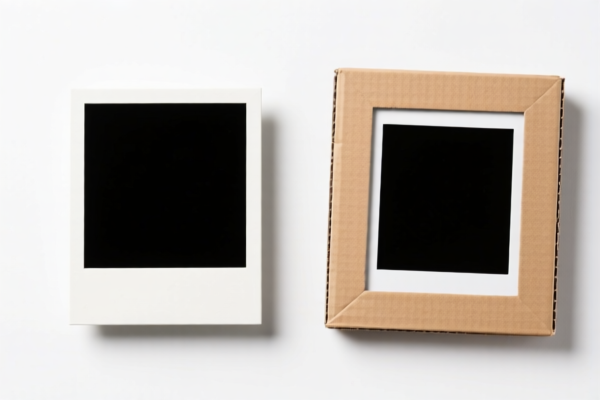
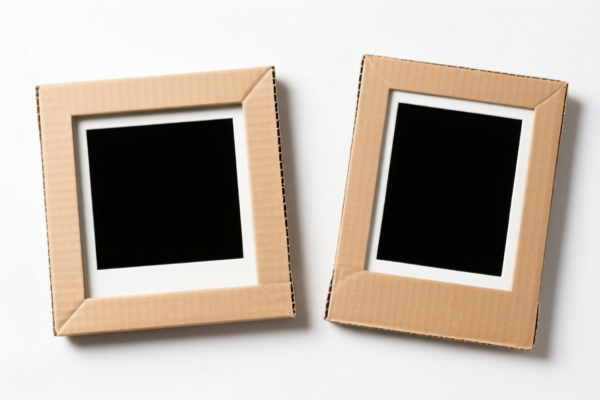
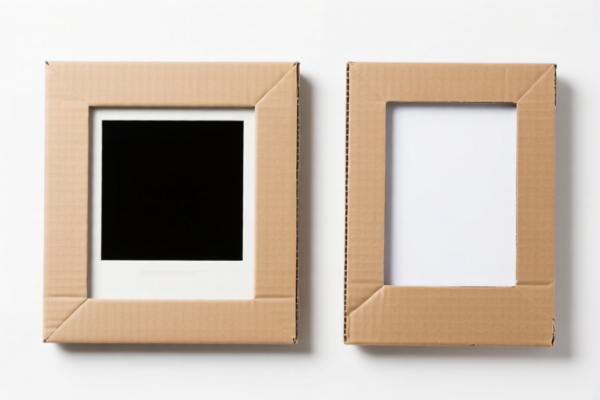
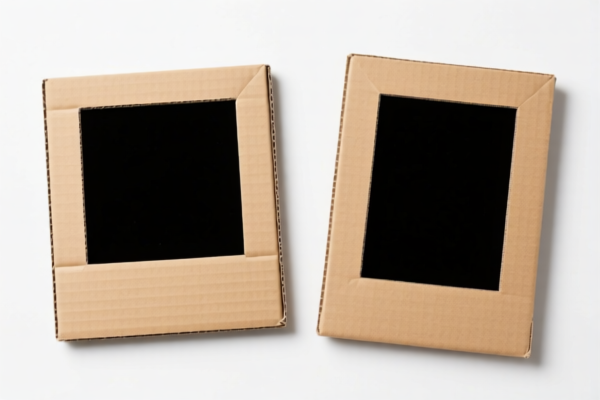
AI Analysis
📸 Cardboard Photo Backboard (Photographic Paper/Cardboard)
🌐 HS Code Reference & Customs Clearance Guide | 2026 Latest Tariff Analysis | Professional Compliance Strategy
📌 I. Product Definition & Classification: What Exactly Is a "Cardboard Photo Backboard"?
The term "Cardboard Photo Backboard" typically refers to a substrate used in photographic printing or mounting processes. It is characterized by two main attributes: 1. Material: Cardboard/Paper (Chapter 48). 2. Function/State: Related to photography (Chapter 37) or general paper packaging (Chapter 48).
In international trade, this item sits at the intersection of photographic chemicals and paper products. The critical distinction for classification lies in: * Is it sensitized? (Has it been coated with silver halides?) * Is it exposed? (Has light hit it to create an image?) * What is its primary commercial use? (Photographic printing vs. packaging/ mounting)
⚠️ Key Classification Point:
- If it is silver-halide coated paper (unexposed) → Falls under Chapter 37 (Photographic Goods).
- If it is plain cardboard used for mounting or packaging photographic prints → Falls under Chapter 48 (Paper & Paperboard).
- Current Market Reality: Many "photo backboards" are simply thick paper/cardboard with a white or coated surface, often falling into Chapter 48 unless explicitly marketed as "sensitized photographic paper."
📦 II. HS Code Classification Details (2026 Latest Tariff Authority Comparison)
Based on the data provided, here are the five potential HS Codes with their specific justifications and tax implications.
| HS Code | Product Description & Justification | Total Tax Rate | Tax Composition |
|---|---|---|---|
| 3703.90.30.90 | Silver-halide Photo Paper (Intermediate State) Matches material (cardboard-like) and form (photo-related). Classified as an intermediate form of silver-halide paper, consistent with sensitized but unexposed photo paper. |
38.7% | Base: 3.7% + Section 301: 25.0% + 122 Clause: 10% |
| 4810.14.11.40 | Photo-sensitive Base Paper Inferred material is cardboard (Ch 48). Use is for photographic sensitization. Classified as "other" base paper for photo sensitization. |
35.0% | Base: 0.0% + Section 301: 25.0% + 122 Clause: 10% |
| 3703.10.30.90 | Silver-halide Sensitized Paper "Cardboard" corresponds to paper material; "Photo" corresponds to sensitized use. Matches the attribute characteristics of silver-halide sensitized paper. |
38.7% | Base: 3.7% + Section 301: 25.0% + 122 Clause: 10% |
| 4819.10.00.40 | Cardboard Packaging Material Material is cardboard, meeting classification requirements. Falls under raw materials for packaging containers, no material conflict. |
35.0% | Base: 0.0% + Section 301: 25.0% + 122 Clause: 10% |
| 4810.99.10.60 | Other Paper/Cardboard Products Matches material (cardboard) and form (paper characteristics). Lacks specific coating description, so falls under the "catch-all" principle for other paper. |
35.0% | Base: 0.0% + Section 301: 25.0% + 122 Clause: 10% |
🔍 Critical Insight:
- The Chapter 37 codes (3703.xxxxx) imply the product is chemically treated for photography (silver halides). These carry a higher base duty (3.7%). - The Chapter 48 codes (4810, 4819) imply the product is plain or minimally processed cardboard/paper. These have a 0% base duty. - All codes listed above are subject to the 25% Section 301 tariff and 10% 122 Clause tariff (likely referring to specific US trade remedies or additional duties on Chinese-origin goods).
💰 III. 2026 Latest Tariff Rate Breakdown (Detailed Policy Analysis)
✅ Applicable Country: United States (US)
✅ Origin: China (CN) (Implied by the 122 Clause and Section 301 structure)
✅ Effective Time: Current policies as of 2025-2026
🎯 1. 3703.90.30.90 & 3703.10.30.90 — Silver-Halide Photo Paper
These classifications assume the "backboard" is actually sensitized photographic paper or a similar photochemical product.
| Item | Content |
|---|---|
| Base Duty | 3.7% (Ad valorem) |
| Section 301 Duty | +25.0% (List 3/4 exclusions may apply, but generally applicable) |
| 122 Clause Duty | +10.0% (Specific US trade remedy) |
| Total Effective Rate | 38.7% |
| Tax Calculation | CIF Value × 38.7% |
| De Minimis Exemption | ❌ Not Eligible |
| Legal Basis | HTSUS 3703.90.30 / 3703.10.30 + USITC Footnotes + IEEPA 9903 |
📌 Explanation:
- If CBP determines the item is photographic paper, the higher base duty applies. - This is a high-cost classification. Misclassifying plain cardboard as photo paper increases costs unnecessarily if it’s not sensitized. - However, if it is sensitized paper, this is the correct classification to avoid penalties for undervaluation of duties.
🎯 2. 4810.14.11.40, 4819.10.00.40, 4810.99.10.60 — Paper/Cardboard Products
These classifications assume the item is plain cardboard or paper used for mounting/packaging, not chemically sensitized for photography.
| Item | Content |
|---|---|
| Base Duty | 0.0% |
| Section 301 Duty | +25.0% |
| 122 Clause Duty | +10.0% |
| Total Effective Rate | 35.0% |
| Tax Calculation | CIF Value × 35.0% |
| De Minimis Exemption | ❌ Not Eligible |
| Legal Basis | HTSUS 4810/4819 + USITC Footnotes + IEEPA 9903 |
📌 Explanation:
- This is the preferred classification if the product is indeed just cardboard/paper without silver halide coating. - It saves 3.7% in base duties compared to the Chapter 37 codes. - Crucial: You must prove the product is NOT sensitized. If it is sensitized, this classification could be challenged as false, leading to back-taxes and fines.
🛠️ IV. Customs Clearance Practical Advice (Real-World Pitfall Avoidance)
✅ 1. Documentation Checklist (Non-Negotiable)
| Document | Required? | Notes |
|---|---|---|
| ✅ Product Specification Sheet | ✔️ | Must clearly state: Material composition (e.g., 100% virgin pulp), Coating type (if any), and Chemical treatment status (e.g., "Uncoated," "White Clay Coated," or "Silver Halide Coated"). |
| ✅ Product Photos | ✔️ | Show texture, thickness, and any labels indicating "Photo Paper" vs. "Cardstock." |
| ✅ Commercial Invoice | ✔️ | Description should be precise: "White Cardboard Sheet for Photo Mounting" (if 4810) vs. "Silver Halide Photographic Paper" (if 3703). |
| ✅ Certificate of Origin | ✔️ | Required to determine origin-based duties. |
| ✅ Material Safety Data Sheet (MSDS) | ✔️ | If claiming 4810, MSDS can prove no hazardous photochemicals are present. |
✅ 2. Declaration Strategy (Key Mnemonic)
🔥 "Sensitized = Ch 37 (Higher Base); Plain = Ch 48 (Zero Base); Always Pay 35-39% Total!"
| Scenario | Correct Classification | Risk of Error |
|---|---|---|
| Plain Cardboard used to mount photos | 4810.99.10.60 or 4819.10.00.40 |
If misdeclared as 3703, you overpay 3.7%. If misdeclared as plain but it's sensitized, you underpay and face fraud penalties. |
| Sensitized Photo Paper (Unexposed) | 3703.90.30.90 or 3703.10.30.90 |
Under-declaring base duty here is a serious violation. |
| Pre-printed Photo Backing | 4819.10.00.40 |
If the printing is part of the packaging, not the photo itself. |
| Cardboard with Silver Halide Coating | 3703.90.30.90 |
Must declare as photo product. |
✅ 3. Special Handling Tips
| Situation | Advice |
|---|---|
| OEM Custom Orders | Provide the end-user's specification. If the client says "photo paper," declare as 3703. If they say "cardstock," declare as 4810. |
| Ambiguous "Photo Backboard" | If unsure, provide lab test results or manufacturer's technical data confirming the absence of silver halides. This supports the 4810 classification. |
| Mixed Shipments | If shipping both sensitized paper and plain cardboard, separate them. Do not mix Chapter 37 and Chapter 48 goods in one line item. |
| 122 Clause Applicability | Ensure your supplier confirms the product is not excluded from the 122 Clause. Most paper/photo goods from China are subject to it. |
🌍 V. Global Market Comparison (2026 Snapshot)
| Country/Region | Recommended HS Code | Est. Duty Rate | Key Certification | Notes |
|---|---|---|---|---|
| 🇺🇸 USA | 4810.99.10.60 or 3703.90.30.90 |
35.0% - 38.7% | No specific FDA/CE | High impact from Section 301 & 122 Clause. |
| 🇨🇳 China | 4810.99.10.60 or 3703.90.30.90 |
Low (0-10%) | No specific | Domestic trade benefits from lower base duties. |
| 🇪🇺 EU | 4810.99.10.60 or 3703.90.30.90 |
0-6.5% | REACH | No Section 301 equivalent; lower overall burden. |
| 🇬🇧 UK | 4810.99.10.60 or 3703.90.30.90 |
0-6.5% | UKCA | Post-Brexit rules mirror EU but require UK-specific certs. |
📌 Conclusion:
- USA is the most expensive market due to the 35-39% total duty rate. - Classification Choice Matters: Choosing Chapter 48 over Chapter 37 saves 3.7% base duty, but must be substantiated.
📌 VI. Common Mistakes & Pitfalls (Blood Lessons)
❌ Mistake 1: Declaring sensitized photo paper as "cardboard" (4810) to avoid higher base duties.
👉 Consequence: Customs audits, back-taxes of 3.7%, plus penalties for misdeclaration.
❌ Mistake 2: Using "Photo Paper" description for plain cardboard (4819).
👉 Consequence: Delays while CBP requests clarification or lab tests. May result in demurrage fees.
❌ Mistake 3: Ignoring the 122 Clause.
👉 Consequence: Even if base duty is 0%, missing the 10% 122 Clause leads to underpayment and audits.
❌ Mistake 4: Not distinguishing between "Sensitized" and "Unsensitized."
👉 Consequence: The entire duty structure shifts. This is the single most important factor.
✅ Correct Approach:
"Plain Cardboard for Photo Mounting: White Clay-Coated Cardboard, Unsensitized, HS 4810.99.10.60."
vs.
"Silver Halide Photographic Paper, Unexposed, HS 3703.90.30.90."
🎯 VII. Conclusion: Professional Declaration Saves Money
🎯 Remember the Mnemonic:
🔹 "No Silver Halide? Go 4810 (35%). Has Silver? Go 3703 (38.7%). Both Pay 35%+!"
🔹 "Base Duty is Key. Chapter 48 is 0% Base. Chapter 37 is 3.7% Base. Section 301 is 25% Flat."
📌 Pro Tip:
If you are importing large volumes, consider applying for an HTSUS Exclusion under Section 301 if your product qualifies (check USTR lists). However, for general cardboard/photo paper, exclusions are rare.
📣 Immediate Action:
📞 Verify with Manufacturer: "Is this product coated with silver halides?"
📄 Label Clearly: "Unsensitized Cardboard" or "Sensitized Photo Paper."
🚀 Get Pre-Ruling: If ambiguous, file a Binding Ruling Request with CBP to lock in the 4810 classification.
✨ Professional Customs Clearance Starts with Precise Classification!
💼 Your Every Penny Should Be Accounted For!
Customer Reviews
About HS Code Classification
The Harmonized System (HS) is an internationally standardized nomenclature developed by the World Customs Organization (WCO) to classify traded products. Over 200 countries use the HS system as the basis for customs tariffs, trade statistics, and import/export regulations.
Each HS code follows a hierarchical structure:
- Chapter (2 digits) — Broad category of goods (e.g., Chapter 84: Machinery and Mechanical Appliances)
- Heading (4 digits) — More specific grouping within the chapter
- Subheading (6 digits) — Internationally standardized breakdown, used by all WCO member countries
- National subdivisions (8-10 digits) — Country-specific extensions for further classification, such as US HTSUS 10-digit codes
Correct HS code classification is essential for smooth customs clearance, accurate duty payment, and compliance with trade regulations. Misclassification can lead to customs delays, overpayment of duties, or penalties.
When importing from CN to US, the applicable tariff rates may include:
- Most-Favored-Nation (MFN) rate — The standard duty rate applied to WTO members
- General rate — Applied to countries without trade agreements
- Trade remedy duties — Additional tariffs such as Section 301 (anti-dumping), Section 232 (national security), or countervailing duties
The information provided on this page is for reference purposes only. For official classification, please consult with your local customs authority or a licensed customs broker.