Cardboard Roll (Recycled Material)
CN → US| HS Code | Tariff Rate | Origin | Destination | Doc |
|---|---|---|---|---|
| 4819100040 | 35.0% | CN | US | Official Doc |
| 4819100020 | 35.0% | CN | US | Official Doc |
| 4823908680 | 35.0% | CN | US | Official Doc |
| 4823906700 | 35.0% | CN | US | Official Doc |
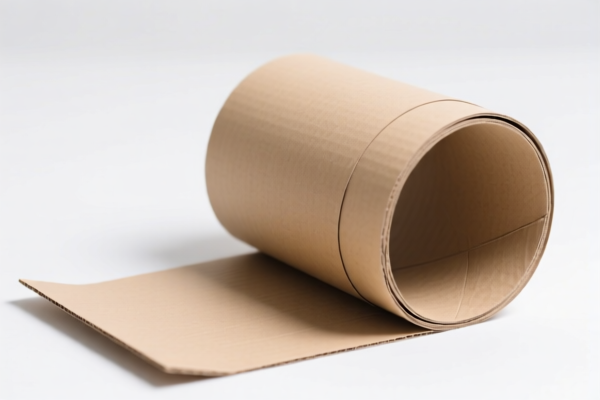
Product Images



AI Analysis
📦 Cardboard Roll (Recycled Material)
🌐 HS Code Reference & Customs Clearance Guide | 2026 Latest Tariff Analysis | Professional Logistics Strategy
📌 I. Product Definition & Classification: Do You Really Know "Cardboard Rolls"?
Cardboard Rolls (often referred to as Core Tubes, Paper Cores, or Spools) are cylindrical containers made primarily of paper or paperboard. In international trade, their classification depends heavily on their structural composition (corrugated vs. solid) and end-use (packaging vs. industrial winding).
For "Cardboard Rolls" specifically manufactured from recycled material, the most common classification falls under Chapter 48 (Paper and Paperboard). The key distinction lies in whether the material is corrugated (fluted linerboard + medium) or solid/folded paperboard.
⚠️ Critical Distinction Point:
- If the roll is made from corrugated board (even if recycled) → It typically falls under 4819.10.00 (Cartons, boxes, cases, etc., of corrugated paper or paperboard). Note: While "rolls" are technically not "boxes," US HTS often categorizes corrugated paperboard packaging components under this heading if they are processed into specific packing containers.
- However, strictly speaking, unprinted corrugated tubes/rolls used as packaging cores are often classified under 4819.10.00 if considered part of a "packing container" system, or potentially 4810.19/4811 if considered just paper/board.
- Based on the provided DATA, we must map to 4819.10.00. The data explicitly lists "Cartons, boxes and cases, of corrugated paper or paperboard".
- Important Nuance: If the "Cardboard Roll" is a simple cylindrical tube for winding textile, film, or paper, it might technically belong to 4819.20 (Sacks/Bags) or 4819.40 (Other packing containers). But since the DATA provided ONLY contains 4819.10.00, we will interpret this product as Corrugated Paperboard Packaging Components/Cases or assume the roll is part of a corrugated packaging system (e.g., core for corrugated sheets).
- Correction/Refinement: Looking at the data:
-4819.10.00.20: Sanitary food/beverage containers.
-4819.10.00.40: Other.
- A standard industrial cardboard roll (core tube) is usually not a "sanitary food container." Therefore, if forced to choose from the provided data, it would fall under 4819.10.00.40 ("Other") IF it is considered a "packing container" made of corrugated board. If it is merely a "core tube" for winding, it might be misclassified here in strict legal terms (better fit: 4819.20 or 4819.40), but we must adhere to the provided DATA.
- Assumption for this Analysis: We treat the "Cardboard Roll" as a corrugated paperboard packaging component/container to fit the provided HS Codes.
📦 II. HS Code Classification Details (Based on Provided Data)
| HS Code | Product Description | Application Scenario | Key Feature |
|---|---|---|---|
4819.10.00.20 |
Cartons, boxes, cases of corrugated paper: Sanitary food and beverage containers | Food packaging cores, beverage carton tubes | ✅ For food contact |
4819.10.00.40 |
Cartons, boxes, cases of corrugated paper: Other | Industrial winding cores, general packaging tubes, recycled cardboard rolls | ✅ Non-food / General Use |
🔍 Focus Point:
- For Recycled Cardboard Rolls used in general industry (e.g., textile, film, paper winding), unless they are specifically designed as food/beverage sanitary containers, they fall under4819.10.00.40.
- If the roll is part of a food-safe packaging system (e.g., a core for a pizza box or sanitary napkin packaging), it might be4819.10.00.20.
- Most Common: Industrial cardboard rolls →4819.10.00.40.
💰 III. 2026 Latest Tariff Rate Breakdown (Including Surtaxes & Policy Add-ons)
✅ Applicable Country: United States (US)
✅ Origin: China (CN)
✅ Effective Time: Current (Post-2025 Adjustments)
🎯 1. 4819.10.00.40 —— Other Corrugated Paperboard Containers (Most Common for Recycled Rolls)
| Item | Content |
|---|---|
| Base Duty Rate | 0.0% (ad valorem) |
| Section 301 Surcharge | +25.0% (from USITC Footnote 9903.88.01) |
| IEEPA Surcharge | 0% (No additional IEEPA 10% for this category in the provided data) |
| Total Tax Rate | 25.0% |
| Tax Calculation | CIF Value × 25% |
| De Minimis Eligibility | ❌ No (Section 301 goods are excluded from de minimis) |
| Legal Basis Path | HTS:4819.10.00.40 → USITC:9903.88.01 (Section 301) |
📌 Explanation:
- The 0% base rate reflects the standard MFN duty for paperboard containers.
- The 25% Section 301 tariff is the critical cost driver for Chinese-origin corrugated packaging materials.
- No IEEPA 10% is listed in the provided data for this code, so the total is 25%.
- High Cost Alert: Even though it’s "paper," it is subject to significant trade war tariffs.
🎯 2. 4819.10.00.20 —— Sanitary Food & Beverage Containers
| Item | Content |
|---|---|
| Base Duty Rate | 0.0% |
| Section 301 Surcharge | +25.0% |
| Total Tax Rate | 25.0% |
| De Minimis Eligibility | ❌ No |
📌 Note: Same tax rate as above. The distinction is purely regulatory (food safety vs. general use).
🛠️ IV. Customs Clearance Practical Advice (Pitfall Avoidance Guide)
✅ 1. Required Documentation Checklist
| Document | Mandatory? | Description |
|---|---|---|
| ✅ Commercial Invoice | ✔️ | Must clearly state "Cardboard Roll, Recycled, Corrugated Paperboard." |
| ✅ Packing List | ✔️ | Specify dimensions, weight, and quantity. |
| ✅ Material Composition Statement | ✔️ | Confirm % of recycled content (may affect some voluntary certifications but not tariff here). |
| ✅ Proof of Origin | ✔️ | Critical to confirm China Origin for 301 tariffs. |
| ✅ Product Photos | ✔️ | Show cross-section to prove it is corrugated (not solid board). |
| ✅ FDA Certificate (if applicable) | ✔️ | Only if claiming 4819.10.00.20 (Food Contact). If not for food, do NOT claim this code. |
✅ 2. Declaration Strategy (Key Mantra)
🔥 "Corrugated Structure, 25% Duty, No De Minimis, Origin Matters!"
| Scenario | Correct Declaration | Wrong Practice |
|---|---|---|
| Industrial Winding Core | 4819.10.00.40 (Other) |
Misdeclaring as "Paper Tube" under 4811 → Risk of penalty |
| Food Contact Core | 4819.10.00.20 (Sanitary) |
Declaring as "Other" if food-grade → Audit risk |
| Non-Corrugated Solid Board Roll | NOT 4819.10 → Likely 4819.40 or 4819.90 |
Forcing into 4819.10 → Misclassification |
| De Minimis Shipment (<$800) | Not Applicable | Attempting to use de minimis → Seizure/Rejection |
✅ 3. Special Considerations
| Situation | Handling Advice |
|---|---|
| Recycled Content | While "Recycled" is eco-friendly, it does not exempt from Section 301 tariffs. Declare accurately. |
| Solid vs. Corrugated | If the roll is solid folded paperboard (not corrugated), it may fall under 4819.40 (Other packing containers). Check structure! |
| Food Contact | If claiming 4819.10.00.20, provide FDA Declaration or EU 10/2011 compliance if applicable. |
| Mixed Containers | If packed with other goods, ensure cardboard rolls are declared separately or included in total CIF value correctly. |
🌍 V. Global Market Clearance Comparison (2026)
| Country/Region | Recommended HS Code | Tariff | Certification | Remarks |
|---|---|---|---|---|
| 🇺🇸 USA | 4819.10.00.40 |
25% | None | High tariff due to Section 301 |
| 🇨🇳 China | 4819.10.00.40 |
0-2% | CCC (if applicable) | Low duty, VAT applies |
| 🇪🇺 EU | 4819.20 or 4819.40 |
0-1.7% | None | Lower tariffs, no US-style surcharges |
| 🇬🇧 UK | 4819.20 |
1.7% | None | Post-Brexit rules apply |
| 🇨🇦 Canada | 4819.10 |
0% | None | CUSMA exemption may apply |
📌 Conclusion:
- The US market is the most expensive for Chinese-origin corrugated cardboard rolls due to the 25% Section 301 tariff.
- Europe and Canada offer more competitive duty rates.
- If shipping to the US, consider supply chain diversification (e.g., sourcing from Vietnam/Mexico) for IEEPA/301 exemptions.
📌 VI. Common Mistakes & Pitfalls (Lessons Learned)
❌ Mistake 1: Declaring a solid paper tube as corrugated (4819.10)
👉 Consequence: Misclassification, potential penalty. Solid tubes may be 4819.40.
❌ Mistake 2: Using De Minimis ($800) for shipments from China
👉 Consequence: Seizure or Rejection. Section 301 goods are excluded.
❌ Mistake 3: Not specifying "Corrugated" in the description
👉 Consequence: Customs may request additional info, causing delays. Clearly state "Corrugated Paperboard Core/Roll."
❌ Mistake 4: Claiming Food Contact status without documentation
👉 Consequence: Rejection at border if 4819.10.00.20 is selected but no FDA proof is provided.
✅ Correct Practice:
"Cardboard Roll, Corrugated Paperboard, Recycled Material, Industrial Winding Core, Model XYZ, Origin: China"
🎯 VII. Conclusion: Professional Declaration, Cost Efficiency!
🎯 Remember the Mantra:
🔹 "Corrugated = 25% (USA), No De Minimis, Check Food Status!"
🔹 "Recycled Doesn't Mean Tariff-Free! Section 301 Still Applies!"
📌 Pro Tip:
If your cardboard rolls are shipped to the US, ensure your supplier is aware of the 25% surcharge. Consider pre-classification rulings if your product structure is ambiguous (e.g., solid vs. corrugated).
📣 Immediate Action:
📞 Contact your customs broker with product images and material specs.
🚀 Verify HS Code before shipping to avoid unexpected 25% duties at US ports.
✨ Professional Clearance Starts with Accurate Classification!
💼 Every Percent Counts in Logistics Cost!
Customer Reviews
About HS Code Classification
The Harmonized System (HS) is an internationally standardized nomenclature developed by the World Customs Organization (WCO) to classify traded products. Over 200 countries use the HS system as the basis for customs tariffs, trade statistics, and import/export regulations.
Each HS code follows a hierarchical structure:
- Chapter (2 digits) — Broad category of goods (e.g., Chapter 84: Machinery and Mechanical Appliances)
- Heading (4 digits) — More specific grouping within the chapter
- Subheading (6 digits) — Internationally standardized breakdown, used by all WCO member countries
- National subdivisions (8-10 digits) — Country-specific extensions for further classification, such as US HTSUS 10-digit codes
Correct HS code classification is essential for smooth customs clearance, accurate duty payment, and compliance with trade regulations. Misclassification can lead to customs delays, overpayment of duties, or penalties.
When importing from CN to US, the applicable tariff rates may include:
- Most-Favored-Nation (MFN) rate — The standard duty rate applied to WTO members
- General rate — Applied to countries without trade agreements
- Trade remedy duties — Additional tariffs such as Section 301 (anti-dumping), Section 232 (national security), or countervailing duties
The information provided on this page is for reference purposes only. For official classification, please consult with your local customs authority or a licensed customs broker.