Cardboard Roll Recycled Material
CN → US| HS Code | Tariff Rate | Origin | Destination | Doc |
|---|---|---|---|---|
| 4823901000 | 35.0% | CN | US | Official Doc |
| 4822900000 | 35.0% | CN | US | Official Doc |
| 4822100000 | 35.0% | CN | US | Official Doc |
| 4823400000 | 35.0% | CN | US | Official Doc |
| 4823690040 | 35.0% | CN | US | Official Doc |
Product Images
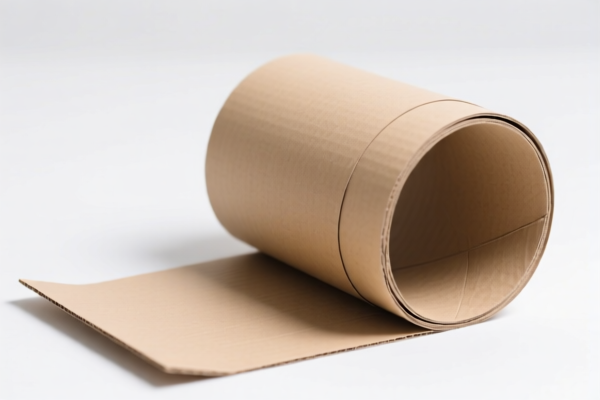



AI Analysis
📦 Cardboard Rolls (Recycled Material)
🌐 HS Code Reference & Customs Clearance Guide | 2026 Latest Tariff Analysis | Professional Clearance Strategy
📌 I. Product Definition & Classification: Understanding "Cardboard Rolls"
Cardboard rolls, particularly those made from recycled materials, are essential industrial components used in packaging, textile manufacturing, and printing. In international trade, they are classified based on their specific physical structure, intended use, and material composition. Unlike flat cardboard, rolls imply a specific form factor that triggers specific subheadings under Chapter 48 (Paper and Paperboard).
The core distinction lies in whether the roll is treated as a generic paper product, a specific support core (like for textiles), or a packaging item.
⚠️ Key Distinction Points:
- If the roll is a simple support for paper or other materials without specific industrial function → 4823 series.
- If the roll is specifically a core for textile fabrics or similar supports → 4822 series.
- If the roll is used for automatic recording devices (like graph paper) → 4823.40.
- If it is generic packaging waste or formed paperboard → 4823.69 or 4823.90.
📦 II. HS Code Classification Details (2026 Latest Tariff Authority Comparison)
| HS Code | Product Description | Application Scenario | Tax Rate Summary |
|---|---|---|---|
4823.90.10.00 |
Cardboard rolls (recycled material), material: paperboard, form: roll, fits pulp product attributes. | Generic recycled paperboard rolls, industrial backing | 35.0% |
4822.90.00.00 |
Cardboard rolls (recycled material), material: paperboard, form: roll, similar supporting items/category. | Generic support cores, similar to textile tubes | 35.0% |
4822.10.00.00 |
Cardboard rolls (recycled material), material: paper/cardboard, form: tube/roll, inferred use: textile support. | Textile fabric cores, wrapping for cloth rolls | 35.0% |
4823.40.00.00 |
Cardboard rolls (recycled material), material: paperboard, form: roll, fits physical characteristics of automatic recorder printing rolls. | Graph paper rolls, medical chart rolls, industrial recorder paper | 35.0% |
4823.69.00.40 |
Recycled paper packaging material, material: paper, falls under paper packaging products category, fit-for-all logic. | Generic recycled paper packaging components | 35.0% |
🔍 Important Reminder:
- All listed HS Codes carry a uniform total tax rate of 35.0% for US imports from China.
- The distinction between 4822 (Textile/Support cores) and 4823 (Other paper articles) depends heavily on the end-use and market perception.
- Misclassification between "Textile Core" (4822.10) and "Generic Paperroll" (4823.90) can lead to customs queries, even if the tax rate is currently identical.
💰 III. 2026 Latest Tariff Rate Breakdown (Including Surcharges & Policy Add-ons)
✅ Applicable Country: United States (US)
✅ Country of Origin: China (CN)
✅ Effective Date: From November 10, 2025 (including subsequent imports)
🎯 1. Universal Tax Structure for Cardboard Rolls
All HS Codes listed in the <DATA> section share the same tax structure:
| Item | Content |
|---|---|
| Basic Tariff | 0.0% (ad valorem) |
| Section 301 Surcharge | +25.0% (USITC Footnote, China-specific) |
| 122 Clause Surcharge | +10.0% (Specific regulatory provision) |
| Total Tax Rate | 35.0% |
| Tax Calculation | CIF Value × 35% |
| De Minimis Exemption | ❌ Not Applicable |
| Legal Basis Path | USITC:4822/4823 Series → Section 301: 25% → Clause 122: 10% |
📌 Explanation:
- The 0% Basic Tariff reflects the standard MFN (Most Favored Nation) rate for many paper products.
- The 25% Section 301 Tariff is the primary penalty for Chinese-origin goods under the trade war provisions.
- The 10% Clause 122 Tariff is an additional layer specific to certain paper and paperboard categories, further increasing the cost.
- Total Impact: A 35% tariff significantly impacts margin-sensitive recycled paper products. Importers must calculate landed costs carefully.
🛠️ IV. Customs Clearance Practical Advice (Real-World Pitfall Guide)
✅ 1. Required Documentation Checklist (All or Nothing)
| Document | Mandatory | Description |
|---|---|---|
| ✅ Product Specification Sheet | ✔️ | Must specify: Material (Recycled Paperboard), Diameter, Length, Thickness. |
| ✅ Photo of Product (with Label) | ✔️ | Clear view of the roll, showing any recycling symbols or origin labels. |
| ✅ Commercial Invoice | ✔️ | Must clearly state "Recycled Cardboard Rolls" and HS Code. |
| ✅ Packing List | ✔️ | Details weight, dimensions, and number of rolls per pallet. |
| ✅ Material Composition Statement | ✔️ | Confirm percentage of recycled content if claiming any eco-benefits (though tax remains same). |
| ✅ Certificate of Origin | ✔️ | Proof of Chinese origin (triggers the 35% tax). |
✅ 2. Declaration Tips (Key Mnemonics)
🔥 "Be Specific on Use, Specify Recycled, Avoid Ambiguity!"
| Scenario | Correct Declaration Approach | Wrong Approach |
|---|---|---|
| Textile Cores | Declare as "Cardboard Tubes for Textile Support" → 4822.10.00.00 | Just "Cardboard Roll" → May be flagged for misclassification |
| Generic Packaging | Declare as "Recycled Paperboard Rolls for Packaging" → 4823.90.10.00 | "Waste Paper" → Incorrect, must be processed product |
| Graph/Recorder Paper | Declare as "Rolls for Automatic Recording Devices" → 4823.40.00.00 | "Paper Rolls" → Too vague, invites audit |
| Mixed Uses | If multiple uses, choose the primary commercial use at time of import. | Splitting one shipment into multiple HS codes arbitrarily |
✅ 3. Special Handling Cases
| Situation | Handling Advice |
|---|---|
| OEM Custom Sizes | Provide design specs. If non-standard, 4823.90.10.00 is safest "catch-all". |
| Recycled Content Labeling | Ensure invoices mention "Recycled Material" to align with 4823.90.10.00 description, though tax is same. |
| Damaged Rolls | If damaged, declare as "Used/Recycled" but ensure they are fit for use. Customs may inspect for contamination. |
| Transshipment via Vietnam/Mexico | Warning: If origin is changed improperly, it violates trade rules. Original CN origin still triggers 35%. |
🌍 V. Global Market Clearance Comparison (2026 Latest)
| Country/Region | Recommended HS Code | Tariff Rate | Certification Requirements | Notes |
|---|---|---|---|---|
| 🇺🇸 USA | 4823.90.10.00 / 4822.10.00.00 |
35% | None specific for paper | High tax burden due to 301 & Clause 122 |
| 🇨🇳 China | 4823.90.10.00 |
0-5% (Variable) | CCC (if applicable) | Domestic trade favorable |
| 🇪🇺 EU | 4823.90.10.00 |
6.5% (Standard) | CE (if applicable) | No Section 301 equivalent |
| 🇬🇧 UK | 4823.90.10.00 |
6.5% (Standard) | UKCA (if applicable) | Post-Brexit tariffs |
| 🇦🇺 Australia | 4823.90.10.00 |
5% | RCM (if applicable) | Favorable compared to US |
📌 Conclusion:
- The USA is the most expensive market for recycled cardboard rolls due to the 35% combined tariff.
- EU and UK tariffs are significantly lower (~6.5%), making them more competitive for Chinese exporters.
- Strategy: Consider diversifying supply chains or focusing on markets with lower trade barriers.
📌 VI. Common Errors & Pitfall Guide (Lessons Learned)
❌ Error 1: Declaring "Cardboard Rolls" as "Plastic Tubes"
👉 Consequence: HS Code mismatch, potential fraud allegations, fines.
❌ Error 2: Ignoring the "Recycled" aspect in documentation
👉 Consequence: Customs may require additional proof of material composition, causing delays.
❌ Error 3: Using the same HS Code for all paper products
👉 Consequence: If goods are for "Automatic Recording," using 4823.90 instead of 4823.40 may seem incorrect, even if tax is same. Precision matters.
❌ Error 4: Assuming "De Minimis" applies
👉 Consequence: False. Section 301 and Clause 122 apply regardless of value. No $800 exemption for China-origin goods.
✅ Correct Practice:
"Recycled Cardboard Rolls, Paperboard Core, Diameter 30cm, Length 100m, for Textile Fabric Support, Model: REC-30100, Origin: China"
🎯 VII. Conclusion: Precise Classification Saves Money
🎯 Remember the Mnemonic:
🔹 "Recycled Cardboard, 35% is the cost, 301 plus 122, never forget the rest!"
🔹 "Textile core is 4822, Generic roll is 4823, Recorder roll is 4823.40, Tax is always 35%."
📌 Pro Tip:
If you are importing into the US, pre-ruling (Advance Ruling) is highly recommended. Provide samples and photos to CBP to confirm the correct HS Code (4822 vs. 4823) to avoid post-import audits. Although the tax rate is the same, correct classification ensures compliance and smoother clearance.
📣 Immediate Action:
📞 Consult a licensed customs broker + Provide Product Photos + Apply for Advance Ruling
🚀 Ensure your recycled cardboard rolls clear customs smoothly, legally, and cost-effectively!
✨ Professional Clearance Starts with Accurate Classification!
💼 Every 35% tax point counts—know your HS Code!
Customer Reviews
About HS Code Classification
The Harmonized System (HS) is an internationally standardized nomenclature developed by the World Customs Organization (WCO) to classify traded products. Over 200 countries use the HS system as the basis for customs tariffs, trade statistics, and import/export regulations.
Each HS code follows a hierarchical structure:
- Chapter (2 digits) — Broad category of goods (e.g., Chapter 84: Machinery and Mechanical Appliances)
- Heading (4 digits) — More specific grouping within the chapter
- Subheading (6 digits) — Internationally standardized breakdown, used by all WCO member countries
- National subdivisions (8-10 digits) — Country-specific extensions for further classification, such as US HTSUS 10-digit codes
Correct HS code classification is essential for smooth customs clearance, accurate duty payment, and compliance with trade regulations. Misclassification can lead to customs delays, overpayment of duties, or penalties.
When importing from CN to US, the applicable tariff rates may include:
- Most-Favored-Nation (MFN) rate — The standard duty rate applied to WTO members
- General rate — Applied to countries without trade agreements
- Trade remedy duties — Additional tariffs such as Section 301 (anti-dumping), Section 232 (national security), or countervailing duties
The information provided on this page is for reference purposes only. For official classification, please consult with your local customs authority or a licensed customs broker.