Cardboard Support Anti Static
CN → US| HS Code | Tariff Rate | Origin | Destination | Doc |
|---|---|---|---|---|
| 4819600000 | 35.0% | CN | US | Official Doc |
| 4823908680 | 35.0% | CN | US | Official Doc |
| 4819504040 | 35.0% | CN | US | Official Doc |
Product Images
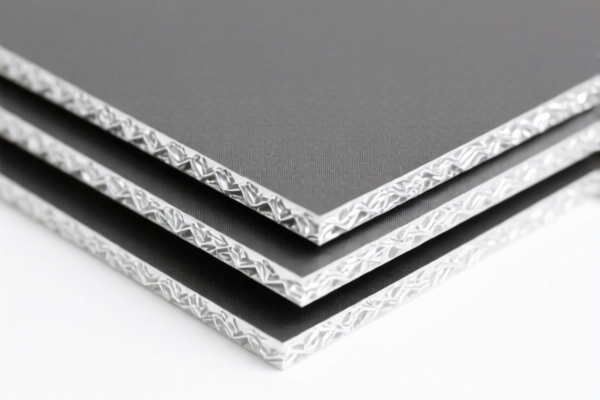
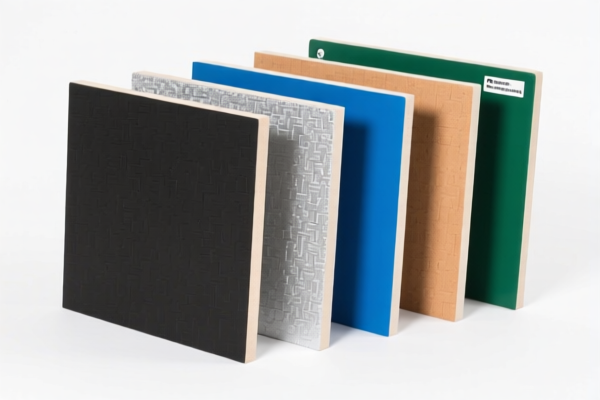
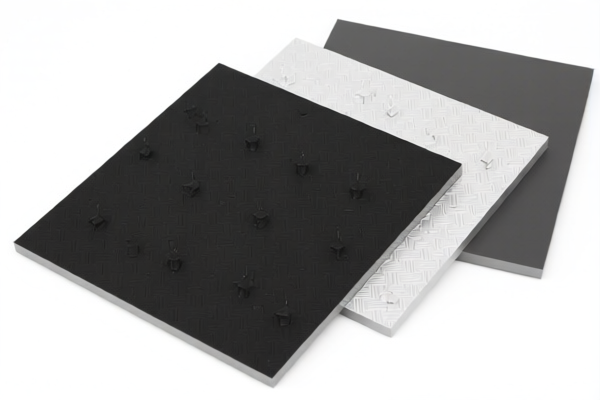
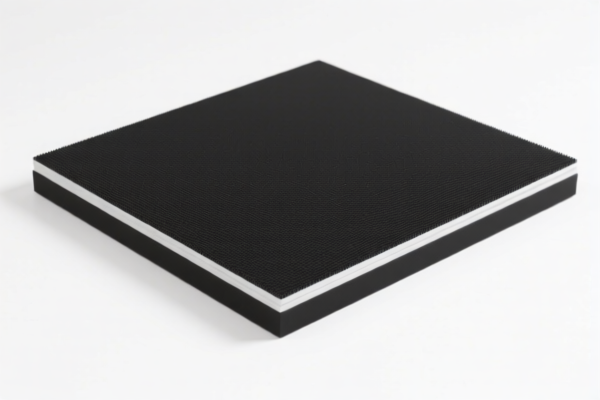
AI Analysis
📦 Cardboard Support (Anti-Static) | HS Code Classification & Customs Clearance Guide
🌐 HS Code Reference & Customs Clearance Guide | 2026 Latest Tariff Analysis | Professional Clearance Strategy
📌 I. Product Definition & Classification: What is an "Anti-Static Cardboard Support"?
Cardboard supports, specifically treated for anti-static properties, are specialized packaging components or archival materials. They are distinct from standard cardboard due to the addition of conductive or dissipative agents to prevent electrostatic discharge (ESD), which is critical for protecting sensitive electronics, archival documents, or precision instruments during storage and transport.
⚠️ Key Distinction:
- If the product is primarily a container or accessory for storage/archiving → It falls under Chapter 48 (Paper and Paperboard), specifically heading 4819.
- If the product is considered a generic paper processing item without specific container function → It may fall under 4823 (Other articles of paper pulp, paper...).
- Anti-static treatment does not change the fundamental material nature (still paper/cardboard), so it remains in Chapter 48, not Chapter 85 (Electrical machinery).
📦 II. HS Code Classification Details (2026 Latest Tariff Authority Comparison)
Based on the provided data, the product is classified into three primary HS Codes depending on the specific functional interpretation by customs officers. All three share the same tax rate structure.
| HS Code | Product Description | Applicability Scenario | Classification Logic |
|---|---|---|---|
| 4819.60.00.00 | Cardboard storage supports (Anti-static) | Classified as Archival Boxes/Folders | Material: Cardboard; Form: Support; Function: Archival/Storage accessory. |
| 4823.90.86.80 | Other paper/cardboard supports (Anti-static) | Classified as Other Paper Products | Material: Paper/Cardboard; Form: Support; Default match for parts/accessories. |
| 4819.50.40.40 | Other packaging container components (Anti-static) | Classified as Packaging Accessories | Material: Cardboard; Form: Support; Fallback logic for "Other" categories. |
🔍 Key Insight:
- Despite different functional descriptions (Archival vs. Other Paper vs. Packaging), all three codes result in the exact same total tax rate for imports from China to the US.
- The anti-static property is a treatment and does not create a new HS Code; it remains a paper product.
- Customs may debate whether the item is a "container part" (4819.50) or a "distinct paper article" (4823). However, for cost planning, the outcome is identical.
💰 III. 2026 Latest Tariff Rate Breakdown (Including Additional Taxes & Policy Surcharges)
✅ Applicable Country: United States (US)
✅ Origin: China (CN)
✅ Effective Date: November 10, 2025 (and subsequent imports)
🎯 1. HS Code: 4819.60.00.00 | Cardboard Storage Supports
| Item | Details |
|---|---|
| Base Tariff | 0.0% (Ad Valorem) |
| Section 301 Surcharge | +25.0% (USITC Footnote 9903.88.01) |
| IEEPA Surcharge | +10.0% (Targeting Chinese/HK products) |
| Total Effective Rate | 35.0% |
| Tax Calculation | CIF Value × 35% |
| De Minimis Exemption | ❌ Not Applicable (Deny De Minimis) |
| Legal Basis Path | IEEPA:9903.01.25 → USITC:4819.60.00.00 → FOOTNOTE:9903.88.01 |
📌 Explanation:
- The 0% base rate is standard for most paper packaging items.
- The 25% Section 301 tariff applies to nearly all Chinese-origin goods in this category.
- The 10% IEEPA tariff is an additional layer for specific Chinese-origin goods, bringing the total to 35%.
- Critical: This is a high-cost item for importers. No de minimis (de minimis value usually $800) exemption applies, meaning even small shipments are fully taxed.
🎯 2. HS Code: 4823.90.86.80 | Other Paper Supports
| Item | Details |
|---|---|
| Base Tariff | 0.0% |
| Section 301 Surcharge | +25.0% |
| IEEPA Surcharge | +10.0% |
| Total Effective Rate | 35.0% |
| Tax Calculation | CIF Value × 35% |
| De Minimis Exemption | ❌ Not Applicable |
| Legal Basis Path | IEEPA:9903.01.25 → USITC:4823.90.86.80 → FOOTNOTE:9903.88.01 |
📌 Note:
- Identical tax structure to 4819.60.00.00.
- This code is often used if the item is not clearly a "storage container" but rather a "support component" for other goods.
🎯 3. HS Code: 4819.50.40.40 | Other Packaging Components
| Item | Details |
|---|---|
| Base Tariff | 0.0% |
| Section 301 Surcharge | +25.0% |
| IEEPA Surcharge | +10.0% |
| Total Effective Rate | 35.0% |
| Tax Calculation | CIF Value × 35% |
| De Minimis Exemption | ❌ Not Applicable |
| Legal Basis Path | IEEPA:9903.01.25 → USITC:4819.50.40.40 → FOOTNOTE:9903.88.01 |
📌 Note:
- This code serves as a "catch-all" for packaging parts that don't fit neatly into primary boxes/bags.
- Again, the 35% total rate applies regardless of which of the three codes is chosen.
🛠️ IV. Customs Clearance Operational Advice (Practical Pitfall Avoidance Guide)
✅ 1. Documentation Checklist (Mandatory)
| Document | Required | Purpose |
|---|---|---|
| ✅ Product Specification Sheet | ✔️ | Must explicitly state "Anti-Static" properties and material composition (Cardboard). |
| ✅ Anti-Static Test Report | ✔️ | Critical to prove the product meets ESD standards (e.g., surface resistance <10^9 ohms). Without this, it may be treated as ordinary cardboard (though tax remains same, description accuracy matters). |
| ✅ Commercial Invoice | ✔️ | Clearly describe as "Anti-Static Cardboard Support" or "ESD Cardboard Archival Support". Do not just write "Cardboard". |
| ✅ Packing List | ✔️ | List quantities and weights. Ensure no loose parts are missing. |
| ✅ Certificate of Origin (CO) | ✔️ | To confirm Chinese origin for accurate tariff application. |
| ✅ Structure/Dimension Diagram | ✔️ | Helps customs determine if it's a "container" (4819) or "other paper product" (4823). |
✅ 2. Declaration Strategy (Key Mnemonics)
🔥 "Material is Paper, Function is Support, Anti-Static is Feature, Tax is 35%!"
| Scenario | Correct Declaration | Error to Avoid |
|---|---|---|
| Item is used for storing documents | 4819.60.00.00 (Archival/Storage) |
Misdeclaring as "Plastic Support" → Wrong Chapter, Higher Tax. |
| Item is a loose component for packaging | 4819.50.40.40 (Packaging Part) |
Declaring as "Cardboard Box" → If not a box, it's inaccurate. |
| Item is a generic spacer | 4823.90.86.80 (Other Paper) |
Over-complicating description → Keep it simple and accurate. |
| Mixing Anti-Static with Non-Static | Split申报 (Separate Declarations) | Mixed HS Codes in one line → Customs rejection or delay. |
✅ 3. Special Case Handling
| Case | Handling Advice |
|---|---|
| OEM Custom Cardboard Supports | Provide design drawings showing the ESD treatment (e.g., coating or additive). |
| Anti-Static Claim Dispute | If customs doubts the "Anti-Static" claim, they may reclassify as ordinary cardboard. However, note that ordinary cardboard supports also face 35% tax in most cases due to Section 301. The main risk is duty evasion penalties if falsely claimed. |
| Small Sample Shipments | Even for samples, the 35% tax applies. No de minimis exemption. Budget for tax in sample costs. |
🌍 V. Global Market Comparison (2026 Latest)
| Country/Region | Recommended HS Code | Tariff (China Origin) | Certification/Notes |
|---|---|---|---|
| 🇺🇸 USA | 4819.60.00.00 / 4819.50.40.40 / 4823.90.86.80 |
35% | Heavy Section 301 + IEEPA taxes. |
| 🇨🇳 China | 4819.60.00.00 |
~6-10% (Import Duty) | Domestic production may have lower costs. |
| 🇪🇺 EU | 4819.60.00 |
6.5% | Standard EU tariff. No Section 301 equivalent. |
| 🇬🇧 UK | 4819.60.00 |
6.5% | Post-Brexit tariff regime. |
| 🇯🇵 Japan | 4819.60.00 |
8% | No significant anti-dumping duties on cardboard. |
📌 Conclusion:
- The US market is significantly more expensive (35%) due to geopolitical tariffs.
- For US importers, cost optimization strategies (e.g., third-party manufacturing in non-tariff countries like Vietnam or Mexico) should be considered, if feasible.
- Note: Even if reclassified under different 4819/4823 codes, the 35% total rate remains constant in the provided data. Therefore, the focus should be on accurate description rather than code shopping for tax savings.
📌 VI. Common Mistakes & Pitfalls (Lessons Learned)
❌ Mistake 1: Ignoring the "Anti-Static" specification
👉 Consequence: Customs may inspect the goods, request lab tests, and delay clearance.
❌ Mistake 2: Assuming "Small Package" = Tax-Free
👉 Consequence: De Minimis ($800) does not apply. Every shipment is taxed at 35%.
❌ Mistake 3: Using generic terms like "Paper Stuff"
👉 Consequence: Customs may assign a higher-risk code or demand additional documentation, leading to demurrage fees.
❌ Mistake 4: Confusing with Plastic ESD Components (Chapter 39 or 85)
👉 Consequence: Wrong HS Code. While plastic ESD parts might have different rates, misdeclaring cardboard as plastic is fraud. Stick to Chapter 48.
✅ Correct Practice:
"Anti-Static Cardboard Support, ESD-Safe, for Electronic Component Storage, Model XYZ, Certified Surface Resistance <10^9 Ohms"
🎯 VII. Conclusion: Professional Declaration, Cost Control, Compliance
🎯 Remember the Mantra:
🔹 "Cardboard is Paper, Anti-Static is Treatment, Tariff is 35%, No Exemption!"
🔹 "Code Choice (4819 vs 4823) Doesn't Change Tax Rate, But Accuracy Avoids Delays!"
📌 Tips:
- If you are importing large volumes, consider Advance Ruling from US Customs to lock in the classification.
- Explore Supply Chain Diversification: If possible, source from countries not subject to Section 301 tariffs (e.g., Southeast Asia) to avoid the 35% burden.
- Always include ESD Certification in your product data sheet to streamline customs inspection.
📣 Immediate Action:
📞 Consult a licensed customs broker.
📄 Prepare ESD test reports and precise product descriptions.
💡 Calculate landed cost including the full 35% tax in your pricing model.
✨ Professional Clearance Starts with Accurate Classification!
💼 Your Every Penny, Worth Precise Calculation!
Customer Reviews
About HS Code Classification
The Harmonized System (HS) is an internationally standardized nomenclature developed by the World Customs Organization (WCO) to classify traded products. Over 200 countries use the HS system as the basis for customs tariffs, trade statistics, and import/export regulations.
Each HS code follows a hierarchical structure:
- Chapter (2 digits) — Broad category of goods (e.g., Chapter 84: Machinery and Mechanical Appliances)
- Heading (4 digits) — More specific grouping within the chapter
- Subheading (6 digits) — Internationally standardized breakdown, used by all WCO member countries
- National subdivisions (8-10 digits) — Country-specific extensions for further classification, such as US HTSUS 10-digit codes
Correct HS code classification is essential for smooth customs clearance, accurate duty payment, and compliance with trade regulations. Misclassification can lead to customs delays, overpayment of duties, or penalties.
When importing from CN to US, the applicable tariff rates may include:
- Most-Favored-Nation (MFN) rate — The standard duty rate applied to WTO members
- General rate — Applied to countries without trade agreements
- Trade remedy duties — Additional tariffs such as Section 301 (anti-dumping), Section 232 (national security), or countervailing duties
The information provided on this page is for reference purposes only. For official classification, please consult with your local customs authority or a licensed customs broker.