Cardboard and Paper Box Cutter
CN → US| HS Code | Tariff Rate | Origin | Destination | Doc |
|---|---|---|---|---|
| 4823908000 | 35.0% | CN | US | Official Doc |
| 4823908680 | 35.0% | CN | US | Official Doc |
| 8205595510 | 40.3% | CN | US | Official Doc |
| 8441100000 | 35.0% | CN | US | Official Doc |
Product Images
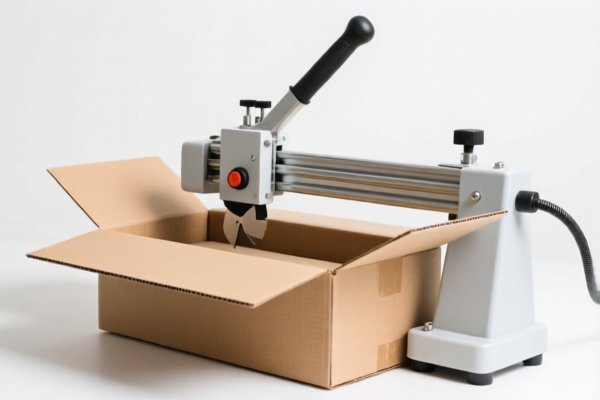
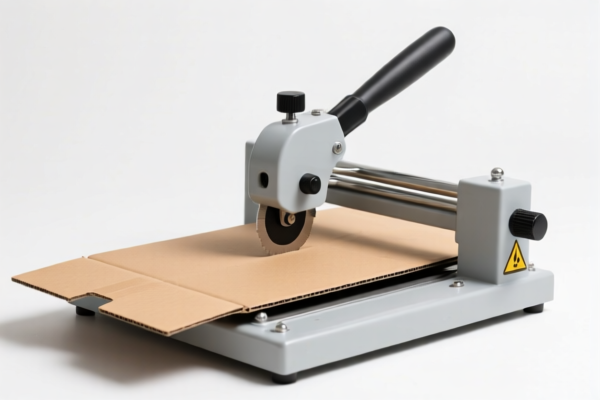
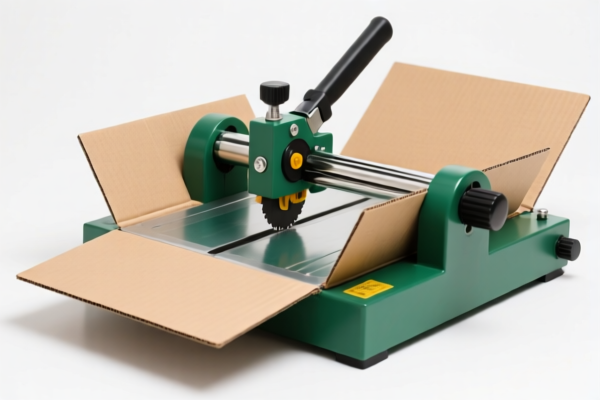
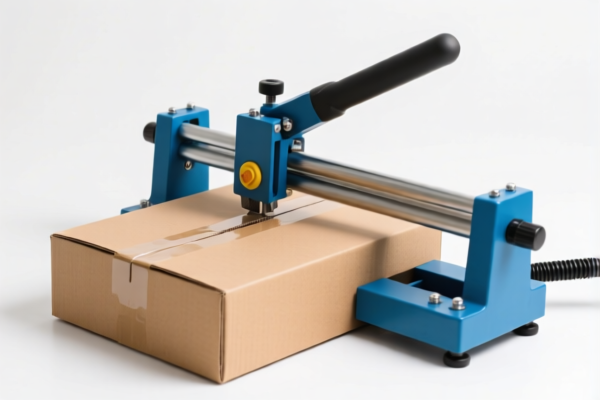
AI Analysis
📦🔪 Cardboard and Paper Box Cutter
🌐 HS Code Reference & Customs Clearance Guide | 2026 Latest Tariff Analysis | Professional Clearance Strategy
📌 I. Product Definition & Classification: Is it Paper, Tool, or Machine?
A "Cardboard and Paper Box Cutter" is a broad term that can refer to three distinct types of goods in international trade. The HS Code depends entirely on the material, mechanism, and function:
- Cut Paper/Product: Pre-cut shapes/sizes of paperboard (e.g., die-cut liners, packaging inserts). → Chapter 48
- Hand Tool: Manual metal blades used to cut paper/cardboard (e.g., box cutters, rotary cutters). → Chapter 82
- Machine: Powered or mechanical devices designed to cut paper/cardboard (e.g., guillotine cutters, slitters). → Chapter 84
⚠️ Key Distinction Point:
- If the item is paper/cardboard itself, shaped for use → HS 4823
- If the item is a manual metal blade held in hand → HS 8205
- If the item is a mechanical/electric device for cutting → HS 8441
📦 II. HS Code Classification Details (2026 Latest Tariff Authority)
| HS Code | Product Description | Applicability | Tax Rate (US/CN Origin) |
|---|---|---|---|
4823.90.80.00 |
Cut paper & paperboard, other than goods of 48.09, 48.10, 48.11, 48.13-48.18; including dies, gaskets, washers | Pre-cut cardboard shapes, packaging inserts, liners | 35.0% |
4823.90.86.80 |
Cut to size or shape; made of paper or paperboard | Specific cut paper/cardboard products not elsewhere specified | 35.0% |
8205.59.55.10 |
Other hand tools, edged, for cutting paper or paperboard (metal) | Manual box cutters, utility knives, rotary blades | 40.3% |
8441.10.00.00 |
Paper or paperboard cutting machines (e.g., shears, slitters, perfers) | Electric/Mechanical box cutting machines, guillotine cutters | 35.0% |
🔍 Critical Reminder:
- Do not misclassify a mechanical cutting machine as a "hand tool" (HS 8205) or "paper product" (HS 4823). This leads to severe penalties.
- Manual vs. Mechanical: If it requires no power (hand-held), it is 8205. If it is a standalone device (electric/pneumatic), it is 8441.
- Paper Product: If you are shipping pre-cut cardboard boxes or liners, it is 4823, not a tool.
💰 III. 2026 Latest Tariff Rate Details (Including Surtaxes & Policy Add-ons)
✅ Applicable Country: United States (US)
✅ Origin: China (CN)
✅ Effective Time: 2025 November 10 onwards (for subsequent imports)
🎯 1. 4823.90.80.00 & 4823.90.86.80 —— Cut Paper/Cardboard Products
| Item | Detail |
|---|---|
| Base Tariff | 0.0% (ad valorem) |
| Section 301 Surtax (USITC) | +25.0% (Under USITC Footnote 9903.88.01) |
| IEEPA Surtax | +10.0% (Targeting China/HK products, effective from 2025-11-10) |
| Total Rate | 35.0% |
| Calculation | CIF Value × 35% |
| De Minimis Exemption | ❌ NOT ALLOWED (deny_de_minimis) |
| Legal Path | IEEPA:9903.01.25 → IEEPA:9903.01.24 → USITC:4823.90.80.00/86.80 → FOOTNOTE:9903.88.01 |
📌 Explanation:
- Although the base tariff for paper products is 0%, Section 301 adds 25% and IEEPA adds 10%.
- Total 35% is unavoidable for Chinese-origin paper/cardboard cuts.
- No de minimis exemption applies, meaning even small shipments are taxed.
🎯 2. 8441.10.00.00 —— Paper/Cardboard Cutting Machines
| Item | Detail |
|---|---|
| Base Tariff | 0.0% |
| Section 301 Surtax (USITC) | +25.0% |
| IEEPA Surtax | +10.0% |
| Total Rate | 35.0% |
| Calculation | CIF Value × 35% |
| De Minimis Exemption | ❌ NOT ALLOWED |
| Legal Path | IEEPA:9903.01.25 → IEEPA:9903.01.24 → USITC:8441.10.00.00 → FOOTNOTE:9903.88.01 |
📌 Note:
- Mechanical cutting machines face the same 35% total duty as paper products.
- Ensure the description clearly states "Machine" or "Equipment" to avoid confusion with hand tools.
🎯 3. 8205.59.55.10 —— Manual Hand Tools (Edged Blades)
| Item | Detail |
|---|---|
| Base Tariff | 5.3% |
| Section 301 Surtax (USITC) | +25.0% |
| IEEPA Surtax | +10.0% |
| Total Rate | 40.3% |
| Calculation | CIF Value × 40.3% |
| De Minimis Exemption | ❌ NOT ALLOWED |
| Legal Path | IEEPA:9903.01.25 → IEEPA:9903.01.24 → USITC:8205.59.55.10 → FOOTNOTE:9903.88.01 |
📌 Caution:
- This is the highest tax rate (40.3%) among the options.
- Applies only to metal hand tools (box cutters, utility knives, scissors).
- Plastic-handled cutters with metal blades still fall here if the cutting edge is metal.
- Do not misclassify as "plastic tools" or "paper products" to avoid fraud allegations.
🛠️ IV. Customs Clearance Practical Advice (Real-World Pitfall Guide)
✅ 1. Required Documentation Checklist (Missing Items = Delays)
| Document | Required | Notes |
|---|---|---|
| ✅ Product Specification Sheet | ✔️ | Must clarify: Is it a product (paper), tool (blade), or machine? |
| ✅ Material Composition | ✔️ | E.g., "Stainless Steel Blade, Plastic Handle" for HS 8205 |
| ✅ Power Source Info | ✔️ | For HS 8441: "Electric, 110V" or "Manual/Pneumatic" |
| ✅ Product Photos (Clear) | ✔️ | Must show edges, blades, or cut shapes clearly |
| ✅ Commercial Invoice | ✔️ | Accurate description: "Cardboard Cutting Machine" vs "Box Cutter Tool" |
| ✅ Packing List | ✔️ | Ensure no mixed HS Codes in one shipment without proper breakdown |
✅ 2. Declaration Tips (Critical Keywords)
🔥 "Classify by Function: Machine=84, Tool=82, Paper=48!"
| Scenario | Correct HS Code | Wrong Declaration | Consequence |
|---|---|---|---|
| Electric box cutting machine | 8441.10.00.00 |
"Box Cutter" (vague) | 35% + possible audit |
| Manual utility knife | 8205.59.55.10 |
"Plastic Cutter" | 40.3% + fine |
| Pre-cut cardboard liner | 4823.90.80.00 |
"Tool for cutting" | 35% + delay |
| Set of blades + plastic handle | 8205.59.55.10 |
"Plastic Tool" | 40.3% (metal edge dominates) |
✅ 3. Special Cases Handling
| Case | Recommendation |
|---|---|
| OEM Custom Blades | Provide design specs; confirm if "hand tool" status applies |
| Combo Kit (Handle + Blades) | Declared as hand tool (8205) if handle is reusable |
| Disposable Plastic Cutters | If blade is plastic, may be HS 39 (plastics), but if metal edge, still 8205 |
| Industrial Paper Slitter | Must declare as Machine (8441), not "tool" |
🌍 V. Global Market Comparison (2026 Latest)
| Country/Region | Recommended HS Code | Tariff (China Origin) | Certification | Notes |
|---|---|---|---|---|
| 🇺🇸 USA | 8441.10.00.00 / 8205.59.55.10 |
35% / 40.3% | None (but may need UL/CE for machines) | High surtaxes apply |
| 🇨🇳 China | 8441.10.00.00 / 8205.59.55.10 |
5-10% | CCC (if electric) | No US-style surtaxes |
| 🇪🇺 EU | 8441.10.00.00 / 8205.59.55.10 |
0-4.5% | CE Marking | No extra tariffs |
| 🇬🇧 UK | 8441.10.00.00 / 8205.59.55.10 |
0-4.5% | UKCA Marking | Post-Brexit rules apply |
📌 Conclusion:
- USA is the most expensive market due to Section 301 + IEEPA surtaxes.
- EU/UK/China have significantly lower tariffs for the same goods.
- Consider supply chain diversification (e.g., Vietnam/Mexico) if shipping to the US to avoid 35-40% duties.
📌 VI. Common Errors & Pitfall Guide (Lessons Learned)
❌ Error 1: Declaring a mechanical cutter as a hand tool
👉 Consequence: Incorrect HS Code → Audit + Back Taxes + Penalties
❌ Error 2: Declaring pre-cut cardboard as a machine part
👉 Consequence: Wrong classification → 35% duty instead of 0% base (though surtax still applies)
❌ Error 3: Ignoring IEEPA 10% Surtax for China-origin goods
👉 Consequence: Underpayment → Seizure or Late Fees
❌ Error 4: Mixing hand tools and machines in one box without separate HS Codes
👉 Consequence: Customs will split the shipment → Delays + Extra Handling Fees
✅ Correct Approach:
"Electric Cardboard Cutting Machine, 220V, Model XYZ, Origin China"
vs.
"Stainless Steel Box Cutter Blade, Manual Tool, Origin China"
🎯 VII. Conclusion: Precision Classification Saves Money!
🎯 Remember the Mantra:
🔹 "Machine=84, Tool=82, Paper=48!"
🔹 "35% for Paper/Machine, 40.3% for Hand Tools!"
🔹 "No De Minimis for China Origins!"
📌 Pro Tip:
If your products are originating from Vietnam, Thailand, or Mexico, you may qualify for IEEPA Exemptions, reducing the total tariff to 0-5%.
👉 Recommendation: Apply for Advance Ruling or consult a customs broker to confirm origin benefits.
📣 Immediate Action:
📞 Contact a Licensed Customs Broker
📄 Provide Clear Product Photos & Specs
🚀 Avoid Misclassification Penalties – Clear Customs Smoothly!
✨ Professional Clearance Starts with Accurate HS Codes!
💼 Every Cent Counts – Optimize Your Tax Strategy Today!
Customer Reviews
About HS Code Classification
The Harmonized System (HS) is an internationally standardized nomenclature developed by the World Customs Organization (WCO) to classify traded products. Over 200 countries use the HS system as the basis for customs tariffs, trade statistics, and import/export regulations.
Each HS code follows a hierarchical structure:
- Chapter (2 digits) — Broad category of goods (e.g., Chapter 84: Machinery and Mechanical Appliances)
- Heading (4 digits) — More specific grouping within the chapter
- Subheading (6 digits) — Internationally standardized breakdown, used by all WCO member countries
- National subdivisions (8-10 digits) — Country-specific extensions for further classification, such as US HTSUS 10-digit codes
Correct HS code classification is essential for smooth customs clearance, accurate duty payment, and compliance with trade regulations. Misclassification can lead to customs delays, overpayment of duties, or penalties.
When importing from CN to US, the applicable tariff rates may include:
- Most-Favored-Nation (MFN) rate — The standard duty rate applied to WTO members
- General rate — Applied to countries without trade agreements
- Trade remedy duties — Additional tariffs such as Section 301 (anti-dumping), Section 232 (national security), or countervailing duties
The information provided on this page is for reference purposes only. For official classification, please consult with your local customs authority or a licensed customs broker.