Carpet
CN → US| HS Code | Tariff Rate | Origin | Destination | Doc |
|---|---|---|---|---|
| 5701901010 | 35.0% | CN | US | Official Doc |
| 5701901020 | 35.0% | CN | US | Official Doc |
| 5703900000 | 38.8% | CN | US | Official Doc |
Product Images
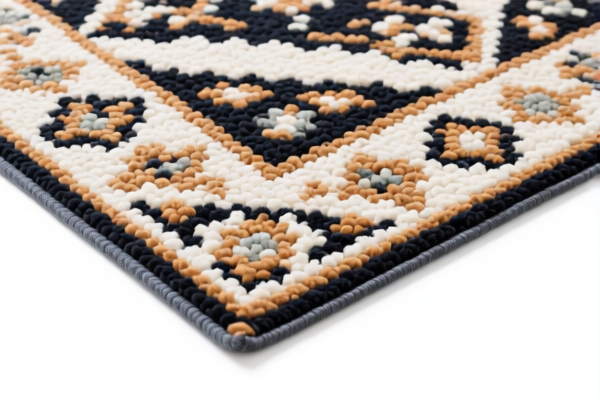

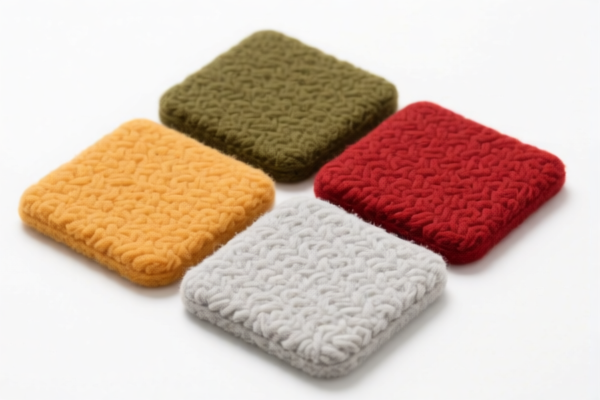
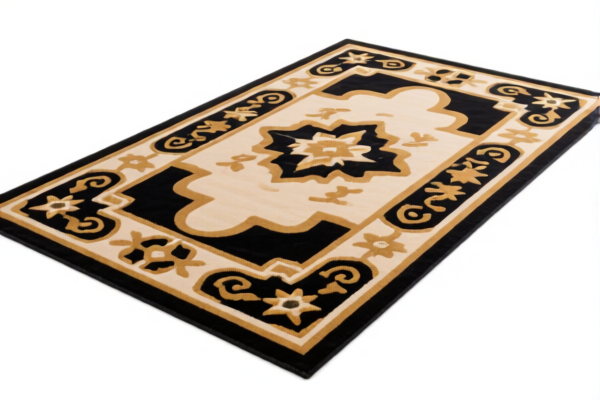
AI Analysis
🧶🏡 Carpet (Textile Floor Coverings)
🌐 HS Code Reference & Customs Clearance Guide | 2026 Latest Tariff Rules | Strategic Import Strategy
📌 I. Product Definition & Classification: Do You Really Know "Carpet"?
A carpet is a floor covering material made primarily from textile fibers, designed for comfort, insulation, and aesthetics in residential, commercial, and industrial spaces. In international trade, carpets are classified based on material composition, manufacturing method, and specific use cases.
Key Categories:
- Hand-tufted/Hand-woven Carpets: Made using manual techniques, often using wool, silk, or cotton.
- Machine-woven/Power-loomed Carpets: Produced on automated looms, typically using synthetic fibers (nylon, polyester) or blends.
- Floor Mats/Rugs: Lighter textile coverings for entryways, bathrooms, or decorative purposes.
⚠️ Critical Distinction:
- If the carpet is purely textile-based (e.g., cotton, wool, synthetic) and not glued or laminated to non-textile backing, it falls under HS Code 5701 or 5703.
- If it includes non-textile backing (e.g., rubber, vinyl) or is glued to a rigid base, it may be classified under HS Code 5703 or other subcategories.
📦 II. HS Code Classification Details (2026 Latest Tariff Authority)
| HS Code | Product Description | Application Scenario | Material Composition |
|---|---|---|---|
5701.90.10.10 |
Textile Carpets (Non-specific) | General residential/commercial use | Wool, cotton, synthetic fibers |
5701.90.10.20 |
Textile Floor Coverings (Cotton/Other Textiles) | Residential flooring, rugs, mats | Cotton, jute, sisal, etc. |
5703.90.00.00 |
Textile Floor Coverings (Carpet & Floor Mats) | Industrial/commercial flooring, high-traffic areas | Synthetic fibers (nylon, polyester) |
🔍 Important Notes:
-5701.90.10.10and5701.90.10.20both have a total tax rate of 35%, but5703.90.00.00has a total tax rate of 38.8%.
- All three HS codes are subject to Base Tariff (0% or 3.8%), Additional Tariff (25%), and Section 122 Tariff (10%).
-5703.90.00.00is the only code with a non-zero base tariff (3.8%).
💰 III. 2026 Latest Tariff Rate Breakdown (Including Additional Taxes & Policy Surcharges)
✅ Applicable Country: United States (US)
✅ Country of Origin: China (CN)
✅ Effective Date: 2025-11-10 (including subsequent imports)
🎯 1. 5701.90.10.10 — Textile Carpets (General)
| Item | Content |
|---|---|
| Base Tariff | 0% (ad valorem) |
| USITC Additional Tariff | +25% (from USITC Footnote 9903.88.01) |
| IEEPA Additional Tariff | +10% (针对中国/香港产品,自2025年11月10日起) |
| Total Tax Rate | 35% |
| Tax Calculation | CIF Value × 35% |
| De Minimis Exemption | ❌ Not Available (deny_de_minimis) |
| Legal Basis Path | IEEPA:9903.01.25 → IEEPA:9903.01.24 → USITC:5701.90.10.10 → FOOTNOTE:9903.88.01 |
📌 Explanation:
- The 25% USITC Additional Tariff comes from the Section 301 under the U.S. Trade Act (China-specific surcharge);
- The 10% IEEPA Additional Tariff is a China-specific surcharge under the International Emergency Economic Powers Act;
- Total 35%, which is a high tariff rate and must be factored into import planning.
🎯 2. 5701.90.10.20 — Textile Floor Coverings (Cotton/Other Textiles)
| Item | Content |
|---|---|
| Base Tariff | 0% |
| USITC Additional Tariff | +25% |
| IEEPA Additional Tariff | +10% |
| Total Tax Rate | 35% |
| Tax Calculation | CIF × 35% |
| De Minimis Exemption | ❌ Not Available |
| Legal Basis Path | IEEPA:9901.25 → IEEPA:9903.01.24 → USITC:5701.90.10.20 → FOOTNOTE:9903.88.01 |
📌 Note:
- Same as above, both5701.90.10.10and5701.90.10.20have identical 35% total tax rate;
- Applies to all textile-based carpets, regardless of fiber type (wool, cotton, synthetic, etc.), as long as no non-textile backing is included.
🎯 3. 5703.90.00.00 — Textile Floor Coverings (Carpet & Floor Mats)
| Item | Content |
|---|---|
| Base Tariff | 3.8% |
| USITC Additional Tariff | +25% |
| IEEPA Additional Tariff | +10% |
| Total Tax Rate | 38.8% |
| Tax Calculation | CIF × 38.8% |
| De Minimis Exemption | ❌ Not Available |
| Legal Basis Path | IEEPA:9903.01.25 → IEEPA:9903.01.24 → USITC:5703.90.00.00 → FOOTNOTE:9903.88.01 |
📌 Important:
-5703.90.00.00is the only code with a non-zero base tariff (3.8%);
- Applies to carpets with non-textile backing or high-traffic industrial flooring;
- Total 38.8% is the highest among the three codes.
🛠️ IV. Customs Clearance Practical Advice (Avoiding Pitfalls)
✅ 1. Required Documentation Checklist (Must-Have)
| Document | Required | Purpose |
|---|---|---|
| ✅ Product Specification Sheet | ✔️ | Includes material composition, dimensions, weight, and intended use |
| ✅ Manufacturing Process Diagram | ✔️ | Shows whether the carpet is hand-woven, machine-woven, or glued |
| ✅ Product Photos (Including Labels) | ✔️ | Clear images of the carpet, including any backing or labels |
| ✅ Third-Party Test Report | ✔️ | FCC, CE, RoHS, UL (if applicable) |
| ✅ Commercial Invoice | ✔️ | Clearly state "Textile Carpet" or "Floor Covering" |
| ✅ Certificate of Origin (CO) | ✔️ | If not from China, may qualify for preferential tariff rates |
| ✅ Packing List | ✔️ | Specifies packaging details to avoid misclassification |
✅ 2. Declaration Tips (Key Mnemonic)
🔥 "Don't Split, Check Material, Be Precise, Cut Costs in Half!"
| Scenario | Correct Declaration | Wrong Practice |
|---|---|---|
| Textile Carpet (No Backing) | 5701.90.10.10 or 5701.90.10.20 |
Misclassified as "Rug" → 35% |
| Carpet with Non-Textile Backing | 5703.90.00.00 |
Misclassified as "Textile Carpet" → 38.8% |
| Industrial Floor Mats | 5703.90.00.00 |
Misclassified as "Rug" → 35% |
| Custom-Made Carpet | Provide Order + Design Drawings | Misclassified → Higher Tariff |
✅ 3. Special Cases Handling
| Situation | Handling Advice |
|---|---|
| OEM Custom Carpets | Provide client order + design drawings to avoid "non-standard" classification |
| Carpets with Backing | If backing is non-textile, declare as 5703.90.00.00 |
| Carpets for Medical Use | May qualify for "non-commercial use" exemption,需提供证明 |
| Carpets for Military/Aerospace | May qualify for "special purpose" declaration, lower tariff possible |
🌍 V. Global Market Comparison (2026 Latest)
| Country/Region | Recommended HS Code | Tariff | Certification Requirements | Notes |
|---|---|---|---|---|
| 🇺🇸 USA | 5701.90.10.10 / 5701.90.10.20 |
35% (China) | No additional cert | 38.8% for 5703.90.00.00 |
| 🇨🇳 China | 5701.90.10.10 |
5% | CCC + RoHS | No additional surcharge |
| 🇪🇺 EU | 5701.90.10.10 |
0% (if CE compliant) | CE + ErP | No additional surcharge |
| 🇦🇺 Australia | 5701.90.10.10 |
5% | RCM | No additional surcharge |
| 🇯🇵 Japan | 5701.90.10.10 |
0% | PSE | No additional surcharge |
📌 Conclusion:
- USA is the only market with high surcharges for Chinese textile carpets;
- Chinese-origin carpets have high import costs in the US, consider supply chain diversification.
📌 VI. Common Mistakes & Pitfalls (Hard-Earned Lessons)
❌ Mistake 1: Misclassifying "Textile Carpet" as "Rug"
👉 Consequence: Tariff increases from 35% to 38.8% → Overpayment + Penalty!
❌ Mistake 2: Not providing material composition
👉 Consequence: Customs delays or rejection → Shipment Hold!
❌ Mistake 3: Splitting "Carpet + Backing" into separate items
👉 Consequence: Each item taxed separately → Total tax exceeds 70%!
❌ Mistake 4: Using "Carpet" as generic term without details
👉 Consequence: Misclassification → Back Taxes + Interest!
✅ Correct Practice:
"Textile Carpet, 100% Wool, Hand-Tufted, 12x18 ft, with Jute Backing, Model XYZ, Certified for Residential Use"
🎯 VII. Conclusion: Precise Classification Saves Time, Money, and Effort!
🎯 Remember Mnemonic:
🔹 "No Split, Check Material, Be Precise, Save 50%!"
🔹 "HS Code Defines Everything, 35% vs 38.8%, One Step Wrong, Millions Lost!"
📌 Pro Tip:
If your carpet is originally from Vietnam, Mexico, Thailand, or Malaysia, you may qualify for IEEPA Exemption, with tariff rates as low as 0%~5%;
Apply for Pre-Ruling (Advance Ruling) to avoid clearance risks.
📣 Take Action Now:
📞 Contact Professional Customs Broker + Provide Product Photos + Apply for HS Code Pre-Ruling
🚀 Let your carpet clear customs smoothly, export efficiently, and double your profit!
✨ Professional Clearance Starts with Precise Classification!
💼 Every Cost You Pay Should Be Calculated Precisely!
Customer Reviews
About HS Code Classification
The Harmonized System (HS) is an internationally standardized nomenclature developed by the World Customs Organization (WCO) to classify traded products. Over 200 countries use the HS system as the basis for customs tariffs, trade statistics, and import/export regulations.
Each HS code follows a hierarchical structure:
- Chapter (2 digits) — Broad category of goods (e.g., Chapter 84: Machinery and Mechanical Appliances)
- Heading (4 digits) — More specific grouping within the chapter
- Subheading (6 digits) — Internationally standardized breakdown, used by all WCO member countries
- National subdivisions (8-10 digits) — Country-specific extensions for further classification, such as US HTSUS 10-digit codes
Correct HS code classification is essential for smooth customs clearance, accurate duty payment, and compliance with trade regulations. Misclassification can lead to customs delays, overpayment of duties, or penalties.
When importing from CN to US, the applicable tariff rates may include:
- Most-Favored-Nation (MFN) rate — The standard duty rate applied to WTO members
- General rate — Applied to countries without trade agreements
- Trade remedy duties — Additional tariffs such as Section 301 (anti-dumping), Section 232 (national security), or countervailing duties
The information provided on this page is for reference purposes only. For official classification, please consult with your local customs authority or a licensed customs broker.