Carpet Backing Fabric
CN → US| HS Code | Tariff Rate | Origin | Destination | Doc |
|---|---|---|---|---|
| 5703900000 | 38.8% | CN | US | Official Doc |
| 5703310030 | 41.0% | CN | US | Official Doc |
| 3921901100 | 39.2% | CN | US | Official Doc |
| 3921902510 | 41.5% | CN | US | Official Doc |
| 5903102010 | 35.0% | CN | US | Official Doc |
| 5903102090 | 35.0% | CN | US | Official Doc |
Product Images
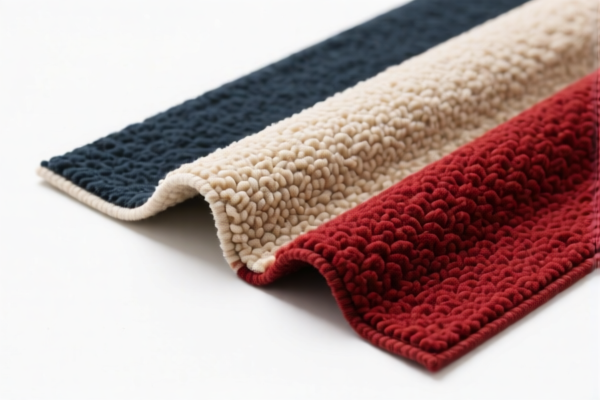
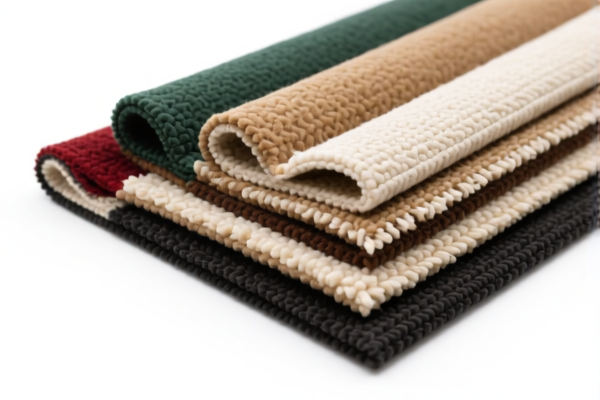
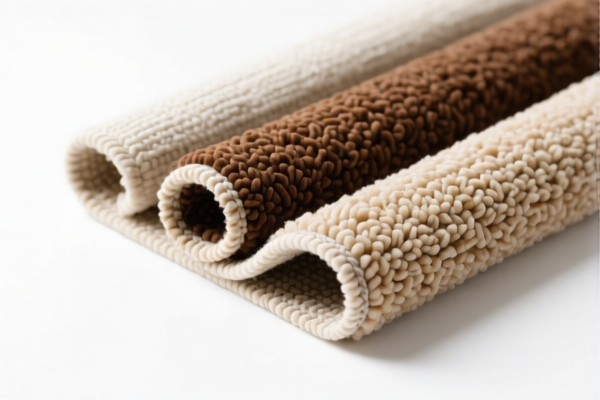
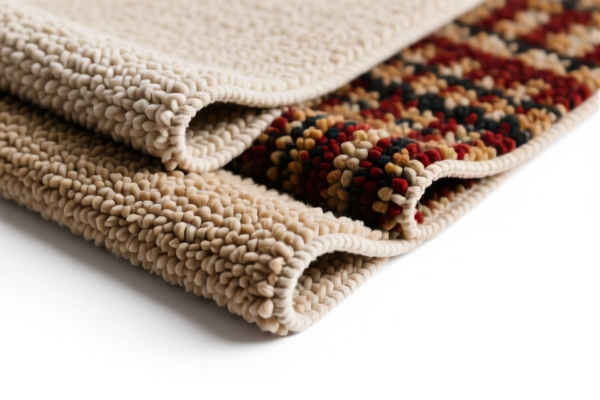
AI Analysis
🧵 Carpet Backing Fabric: The Hidden Hero of Flooring
🌐 HS Code Reference & Customs Clearance Guide | 2026 Latest Tariff Analysis | Professional Clearance Strategy
📌 I. Product Definition & Classification: Do You Really Know "Carpet Backing"?
Carpet Backing Fabric is not just a simple cloth; it is the structural foundation of textile flooring. In international trade, it is categorized not by its final use alone, but by its composition, structure, and degree of processing.
It generally falls into two main buckets in this context: 1. Tufted Carpet Backing (Textile Floor Coverings): If the fabric is already made up as a finished or semi-finished carpet/turf. 2. Plastic-Textile Composite Fabrics: If the fabric is impregnated, coated, or laminated with plastics (PVC/PU) to provide stability and durability.
⚠️ Key Distinction Point: - If it is a raw textile fabric without significant plastic coating → It might fall under Chapter 57 (Carpets) or Chapter 59 depending on weight and finish. - If it is heavily coated with PVC (>70% plastic/rubber by weight) → It shifts to Chapter 39 or Chapter 59 with specific PVC subheadings. - Critical Factor: The weight per square meter ($kg/m^2$) and the percentage of plastic by weight determine the exact HS Code.
📦 II. HS Code Classification Details (2026 Latest Tariff Authority Match)
Based on the provided <DATA>, the following HS Codes are relevant for Carpet Backing Fabrics. Note that the specific code depends on whether it is classified as a "finished carpet product" or a "composite material."
| HS Code | Product Description | Application Scenario | Key Classification Criteria |
|---|---|---|---|
5703.90.00.00 |
Carpets and other textile floor coverings (including turf), tufted, whether or not made up: Of other textile materials | Finished tufted carpets made of non-synthetic fibers (e.g., wool, cotton) or mixed fibers not specified elsewhere. | ✅ Finished/Semi-finished: Tufted construction, made up. ❌ Not primarily plastic-coated composite. |
5703.31.00.30 |
Carpets and other textile floor coverings (including turf), tufted, whether or not made up: Of other man-made textile materials: Turf Measuring not more than 5.25 m² in area (665) | Small-area synthetic turf, artificial grass mats, or small rug components made from man-made fibers (polypropylene, nylon, etc.). | ✅ Synthetic/Turf: Man-made fibers. ✅ Size Limit: Area ≤ 5.25 m². |
5903.10.20.10 |
Textile fabrics impregnated, coated, covered or laminated with plastics... With poly(vinyl chloride)... Of man-made fibers... Over 70 percent by weight of rubber or plastics: Fabrics, of yarns sheathed with poly(vinyl chloride)... | Heavy-duty backing fabrics where yarns are sheathed in PVC, or fabric is heavily coated with PVC, weighing >70% plastic. Used for waterproof carpet backs. | ✅ Composite: Textile + PVC. ✅ Weight: >70% plastic/rubber. ✅ Material: Man-made fibers. |
5903.10.20.90 |
Textile fabrics impregnated, coated, covered or laminated with plastics... With poly(vinyl chloride)... Of man-made fibers: Other: Over 70 percent by weight of rubber or plastics Other | Similar to above, but for general PVC-coated textile backing not covered by the specific "yarn sheathed" category. | ✅ Composite: Textile + PVC. ✅ Weight: >70% plastic. ✅ General Category: "Other" PVC-coated fabrics. |
3921.90.11.00 |
Other plates, sheets, film, foil and strip, of plastics: Other: Combined with textile materials and weighing not more than 1.492 kg/m²: ... Over 70 percent by weight of plastics | Lightweight plastic-textile composites (<1.492 kg/m²) where plastic predominates. Used for very light backing films. | ✅ Lightweight: Weight ≤ 1.492 kg/m². ✅ Plastic Content: >70%. ✅ Structure: Combined with textile. |
3921.90.25.10 |
Other plates, sheets, film, foil and strip, of plastics: Other: Combined with textile materials and weighing more than 1.492 kg/m²: ... Over 70 percent by weight of plastics | Heavyweight plastic-textile composites (>1.492 kg/m²) where plastic predominates. Used for durable, rigid backing sheets. | ✅ Heavyweight: Weight > 1.492 kg/m². ✅ Plastic Content: >70%. ✅ Structure: Combined with textile. |
🔍 重点提醒 (Key Takeaway): - If the backing is pure textile (tufted), use Chapter 57 (
5703...). - If the backing is heavily PVC-coated (>70% plastic), it often shifts to Chapter 59 (5903...) or Chapter 39 (3921...) depending on weight per square meter. - Misclassification Risk: Declaring a heavily PVC-coated backing as a simple textile floor covering (5703) will lead to rejection and high penalties because it fails to account for the significant plastic content.
💰 III. 2026 Latest Tariff Rate Details (Including Surcharges & Policy Add-ons)
✅ Applicable Country: United States (US)
✅ Country of Origin: China (CN)
✅ Effective Date: From November 10, 2025 (including subsequent imports)
🎯 1. 5703.90.00.00 & 5703.31.00.30 —— Textile Carpets & Tufted Floor Coverings
| Item | Content |
|---|---|
| Base Tariff Rate | 0% (ad valorem) |
| USITC Surtax (Section 301) | 0% (No additional 25% surcharge for these specific textile carpet codes in the provided data) |
| IEEPA Surtax | 0% (No additional 10% IEEPA surcharge for these specific codes in the provided data) |
| Total Tariff Rate | 0% |
| De Minimis Eligibility | ✅ Yes (Low tariff risk, but subject to de minimis rules for small shipments) |
| Legal Basis Path | USITC:5703.90.00.00 / USITC:5703.31.00.30 |
📌 Explanation: - Pure textile carpets and tufted floor coverings generally enjoy 0% base tariffs. - According to the provided data, these specific codes do not carry the 25% Section 301 or 10% IEEPA surcharges. - Cost Advantage: This is a low-tariff category compared to plastic composites.
🎯 2. 5903.10.20.10 & 5903.10.20.90 —— PVC-Coated Textile Fabrics (>70% Plastic)
| Item | Content |
|---|---|
| Base Tariff Rate | 0% (ad valorem) |
| USITC Surtax (Section 301) | +25% |
| IEEPA Surtax | 0% (No additional 10% IEEPA surcharge for these specific codes in the provided data) |
| Total Tariff Rate | 25% |
| Tax Calculation | CIF Value × 25% |
| De Minimis Eligibility | ❌ No (High tariff risk, de minimis may not apply due to surcharges) |
| Legal Basis Path | USITC:5903.10.20.10 / USITC:5903.10.20.90 → FOOTNOTE:301 (implied by 25% surtax) |
📌 Warning: - Although the base rate is 0%, the 25% Section 301 surtax applies. - This makes PVC-coated backing fabrics significantly more expensive to import than pure textile backing. - Total Cost Impact: A $10,000 shipment incurs $2,500 in duties alone.
🎯 3. 3921.90.11.00 & 3921.90.25.10 —— Plastic-Textile Composites (>70% Plastic)
| Item | Content |
|---|---|
| Base Tariff Rate | 0% (ad valorem) |
| USITC Surtax (Section 301) | 0% (No additional 25% surtax for these specific codes in the provided data) |
| IEEPA Surtax | 0% |
| Total Tariff Rate | 0% |
| Tax Calculation | CIF Value × 0% |
| De Minimis Eligibility | ✅ Yes |
| Legal Basis Path | USITC:3921.90.11.00 / USITC:3921.90.25.10 |
📌 Explanation: - Surprisingly, under the provided data, these plastic-textile composites have 0% total tariff. - Strategic Advantage: If your carpet backing is primarily plastic (>70%) and falls under Chapter 39, it may be more tax-efficient than Chapter 59 PVC-coated textiles, despite being a "plastic" product. - Condition: Must strictly meet the weight criteria (≤1.492 kg/m² or >1.492 kg/m²) and plastic content (>70%).
🛠️ IV. Customs Clearance Practical Advice (Real-World Pitfall Avoidance Guide)
✅ 1. Document Checklist (Missing One, Delayed by Weeks)
| Document | Mandatory? | Description |
|---|---|---|
| ✅ Product Specification Sheet | ✔️ | Must detail: Fabric composition, PVC content %, weight ($kg/m^2$), width, thickness. |
| ✅ Third-Party Test Report | ✔️ | Critical: Lab report proving PVC content is >70% (if claiming Chapter 39/59) or confirming it is tufted (if claiming Chapter 57). |
| ✅ Product Photos (Including Labels) | ✔️ | Show the cross-section of the fabric to prove coating structure. |
| ✅ Commercial Invoice | ✔️ | Clearly state: "Carpet Backing Fabric, PVC-Coated, 80% PVC by Weight, Man-Made Fibers." |
| ✅ Packing List | ✔️ | Include weight per square meter if available to support Chapter 39 classification. |
| ✅ Certificate of Origin (CO) | ✔️ | Required for US import to confirm origin. |
✅ 2. Declaration Tips (Key Mnemonics)
🔥 "Weight Determines Chapter, Plastic % Defines Duty, Structure Decodes HS!"
| Scenario | Correct Declaration | Wrong Practice |
|---|---|---|
| Tufted Carpet Backing (Pure Textile) | 5703.90.00.00 or 5703.31.00.30 |
Declaring as "Plastic Sheet" → Incorrect, high risk of rejection. |
| Light PVC-Backed Fabric (<1.492 kg/m², >70% PVC) | 3921.90.11.00 (0% Tariff!) |
Declaring as 5903.10.20.10 (25% Tariff!) → Overpay 25%! |
| Heavy PVC-Backed Fabric (>1.492 kg/m², >70% PVC) | 3921.90.25.10 (0% Tariff!) |
Declaring as 5903.10.20.90 (25% Tariff!) → Overpay 25%! |
| PVC-Sheathed Yarns | 5903.10.20.10 (25% Tariff) |
Declaring as standard fabric → Penalty for misclassification. |
📌 Strategic Insight: - If your product is a plastic-textile composite with >70% plastic, always check Chapter 39 first. - If Chapter 39 applies, you save 25% in duties compared to Chapter 59. - Crucial: Ensure your test report explicitly states the plastic by weight percentage and grammage ($kg/m^2$) to support the Chapter 39 classification.
✅ 3. Special Situation Handling
| Situation | Handling Advice |
|---|---|
| OEM Custom Backing | Provide customer design specs and material safety data sheets (MSDS) to prove composition. |
| Mixed Shipment (Tufted + Composite) | Declare separately. Do not lump under one HS Code. Tufted (5703) and Composite (3921) have different duties. |
| Weight Uncertainty | If weight is borderline (near 1.492 kg/m²), provide a certified lab test for grammage to avoid audit disputes. |
| Plastic Content Dispute | If CBP questions the >70% claim, have a third-party lab report ready. Misdeclaring <70% as >70% is fraud. |
🌍 V. Global Market Clearance Comparison (2026 Latest)
| Country/Region | Recommended HS Code | Tariff Rate | Certification | Notes |
|---|---|---|---|---|
| 🇺🇸 USA | 3921.90.11.00 / 3921.90.25.10 |
0% | ASTM, CPSIA (if for kids) | Lowest Tariff Option for heavy PVC backing. Avoid 5903 codes to save 25%. |
| 🇪🇺 EU | 5903.10 |
Varies (0-10%) | REACH, RoHS | EU often treats PVC textiles differently; check local duty rates. |
| 🇨🇳 China | 5903.10 |
~5-10% | CCC (if applicable) | Import duties for backing fabrics vary by specific subheading. |
| 🇬🇧 UK | 5903.10 |
0-5% | UKCA | Post-Brexit rules may differ from EU. |
📌 Conclusion: - For US Imports, classify PVC-heavy backing under Chapter 39 (
3921...) if possible to achieve 0% total duty. - Avoid Chapter 59 (5903...) for heavy PVC backing unless you are certain it doesn't meet Chapter 39 criteria, as it incurs a 25% surtax.
📌 VI. Common Errors & Pitfall Guide (Blood & Tears Lessons)
❌ Error 1: Declaring PVC-coated backing as "Textile Fabric" (5703) to avoid plastic regulations.
👉 Consequence: Customs lab test shows >70% PVC → Rejection + Fine + 25% Duty Back-payment.
❌ Error 2: Mixing 5903 and 3921 codes incorrectly.
👉 Consequence: Paying 25% duty (5903) when 0% was available (3921) → Unnecessary Profit Loss.
❌ Error 3: Not providing weight ($kg/m^2$) on invoice. 👉 Consequence: Customs assigns default (often higher duty) or demands costly lab testing at importer's expense.
❌ Error 4: Using vague terms like "Carpet Backing" without composition details. 👉 Consequence: Customs exam delay (3-7 days) while they request additional documentation.
✅ Correct Declaration Example:
"PVC-Coated Man-Made Fiber Textile Fabric, Composite with >70% PVC by Weight, Grammage: 2.0 kg/m², for Carpet Backing, Model ABC, RoHS Compliant"
🎯 VII. Conclusion: Professional Classification, Cost Optimization!
🎯 Remember the Mnemonic:
🔹 "Weight >1.492? Plastic >70%? Chapter 39 is Free! (0% Duty)"
🔹 "PVC Coated? Check 5903 (25% Duty) vs 3921 (0% Duty). Choose Wisely!"
🔹 "Tufted Carpet? Use 5703. No Plastic Tax, No IEEPA. Pure Textile Wins."
📌 Pro Tip: If your backing fabric is imported from Vietnam, Thailand, or India instead of China, it may still face 0% or reduced tariffs under USMCA or GSP (if applicable), but Chapter 39 classification remains the most tax-efficient strategy for US-origin plastic-textile composites regardless of origin (provided no other sanctions apply).
🚀 Action Plan: 1. Get a Lab Report: Confirm PVC % and Weight ($kg/m^2$). 2. Select HS Code: Prefer
3921.90.11.00or3921.90.25.10for PVC-heavy backing. 3. Prepare Documents: Invoice, Packing List, Test Report, CO. 4. File Entry: Declare accurately to avoid 25% surcharges.
✨ Professional Customs Clearance Starts with Accurate Classification!
💼 Your Profit Margin Depends on Saving That 25%!
Customer Reviews
About HS Code Classification
The Harmonized System (HS) is an internationally standardized nomenclature developed by the World Customs Organization (WCO) to classify traded products. Over 200 countries use the HS system as the basis for customs tariffs, trade statistics, and import/export regulations.
Each HS code follows a hierarchical structure:
- Chapter (2 digits) — Broad category of goods (e.g., Chapter 84: Machinery and Mechanical Appliances)
- Heading (4 digits) — More specific grouping within the chapter
- Subheading (6 digits) — Internationally standardized breakdown, used by all WCO member countries
- National subdivisions (8-10 digits) — Country-specific extensions for further classification, such as US HTSUS 10-digit codes
Correct HS code classification is essential for smooth customs clearance, accurate duty payment, and compliance with trade regulations. Misclassification can lead to customs delays, overpayment of duties, or penalties.
When importing from CN to US, the applicable tariff rates may include:
- Most-Favored-Nation (MFN) rate — The standard duty rate applied to WTO members
- General rate — Applied to countries without trade agreements
- Trade remedy duties — Additional tariffs such as Section 301 (anti-dumping), Section 232 (national security), or countervailing duties
The information provided on this page is for reference purposes only. For official classification, please consult with your local customs authority or a licensed customs broker.