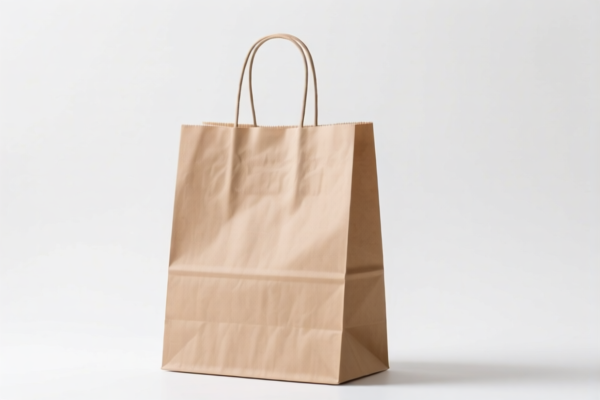
Carry Bag
CN → US| HS Code | Tariff Rate | Origin | Destination | Doc |
|---|---|---|---|---|
| 4202228980 | 52.6% | CN | US | Official Doc |
| 4202224020 | 42.4% | CN | US | Official Doc |
| 4602192920 | 40.3% | CN | US | Official Doc |
| 4602112100 | 41.2% | CN | US | Official Doc |
| 4202228980 | 52.6% | CN | US | Official Doc |
Product Images



AI Analysis
🧳 Carry Bags: The Ultimate HS Code Classification Guide & 2026 US Customs Clearance Strategy
🌐 HS Code Reference & Customs Clearance Guide | 2026 Latest Tariff Analysis | Professional-Level Compliance Strategy
📌 I. Product Definition & Classification: Do You Really Know "Carry Bags"?
In international trade, "Carry Bags" are not a single entity. They are categorized strictly by Material Composition and Usage Scenario. Misclassification is the #1 cause of customs delays and excessive tariffs, especially when importing from China to the US.
Two Main Categories: 1. Textile/Non-Specific Material Bags (Chapter 42): Bags made of woven textiles, plastics, or other materials not specified elsewhere. 2. Woven Plant Material Bags (Chapter 46): Bags made from bamboo, rattan, straw, or other plaiting materials.
⚠️ Key Distinction Point:
- If the bag is made of woven textile (e.g., nylon, polyester, canvas) →归类 to HS 4202.
- If the bag is made of natural plant materials (e.g., bamboo, rattan) →归类 to HS 4602.
📦 II. HS Code Classification Details (2026 Latest Tariff Authority Comparison)
Based on the provided data, here are the exact HS Codes for different carry bag materials:
| HS Code | Product Description | Material Match | Application Scenario |
|---|---|---|---|
4202.22.89.80 |
Women's Handbags / Weaving Handbags (Textile) | Textile Materials or Non-Specific Materials | Fashion handbags, shopping bags, textile-weave bags |
4202.22.40.20 |
Woven Handbags | Woven Materials (Non-plant) | Synthetic woven bags, plastic-woven bags |
4602.19.29.20 |
Woven Handbags | Plant Materials (General Woven) | Eco-friendly bags, general plant-fiber weaving |
4602.11.21.00 |
Woven Handbags | Bamboo, Rattan, etc. | Traditional bamboo baskets, rattan tote bags |
🔍 Key Reminder:
- Material is King: Customs officers will inspect the physical material. "Woven" alone is not enough; you must specify what is woven (Textile vs. Plant). - Function Matters: "Handbag" implies a specific form factor (handle, open/close). If it's a simple sack, it might fall under different headings.
💰 III. 2026 Latest Tariff Rate Details (Including Surtaxes & Policy Add-ons)
✅ Applicable Country: United States (US)
✅ Origin: China (CN)
✅ Effective Date: 2025/2026 (Current Trade War Status)
🎯 1. 4202.22.89.80 & 4202.22.40.20 — Textile/Synthetic Woven Bags
These codes fall under Chapter 42 (Articles of leather, travel goods, handbags).
| Item | Content |
|---|---|
| Base Tariff | 17.6% (for 4202.22.89.80) / 7.4% (for 4202.22.40.20) |
| Section 301 Surtax | +25.0% (Standard China Surcharge) |
| Section 122 Surtax | +10.0% (Specific additional duty for certain goods) |
| Total Tax Rate | 52.6% (for 4202.22.89.80) 42.4% (for 4202.22.40.20) |
| Calculation Method | CIF Value × Total Rate |
| De Minimis Exemption | ❌ Not Eligible (Section 301 and 122 duties generally exclude de minimis for China origin) |
| Legal Basis Path | Section 301: 9903.88.01 → Section 122: Specific Footnote → USITC: 4202.22.xxxx |
📌 Explanation:
- The Base Tariff varies by specific subheading (17.6% vs 7.4%). - The Section 301 Surtax is a flat +25% on most Chinese consumer goods. - The Section 122 Surtax adds another +10% for specific categories, bringing the total burden to 52.6% for the most common textile handbags. - Result: This is a High-Cost Category. Profit margins must account for this ~50% tax.
🎯 2. 4602.19.29.20 & 4602.11.21.00 — Plant Material Woven Bags
These codes fall under Chapter 46 (Plaiting materials and articles of plaiting materials).
| Item | Content |
|---|---|
| Base Tariff | 5.3% (for 4602.19.29.20) / 6.2% (for 4602.11.21.00) |
| Section 301 Surtax | +25.0% |
| Section 122 Surtax | +10.0% |
| Total Tax Rate | 40.3% (for 4602.19.29.20) 41.2% (for 4602.11.21.00) |
| Calculation Method | CIF Value × Total Rate |
| De Minimis Exemption | ❌ Not Eligible |
| Legal Basis Path | Section 301: 9903.88.01 → Section 122 → USITC: 4602.11/19 |
📌 Explanation:
- Plant-based bags have a lower base tariff (5-6%) compared to textile bags (7-17%). - However, the 301 and 122 surtaxes are the same, so the final rate is still high (~40%). - Advantage: If you can prove the material is purely plant-based (bamboo/rattan), you save ~10-12% in total tax compared to textile bags.
🛠️ IV. Customs Clearance Practical Advice (Real-World Pitfall Guide)
✅ 1. Preparation Checklist (Missing Items = Delay)
| Document | Required? | Notes |
|---|---|---|
| ✅ Product Specification Sheet | ✔️ | Must explicitly state: "Material: 100% Bamboo" or "Material: 100% Polyester Woven". |
| ✅ Material Composition Label | ✔️ | Photo of the bag's internal label showing material % |
| ✅ Product Photos | ✔️ | Show the bag empty, filled, and close-up of weaving texture |
| ✅ Commercial Invoice | ✔️ | Description must match HS Code (e.g., "Bamboo Woven Tote Bag") |
| ✅ Packing List | ✔️ | Net/Gross weight, dimensions |
| ✅ Origin Certificate | ✔️ | If claiming exemptions elsewhere, but for US, Origin is CN |
✅ 2. Declaration Tips (Key Mnemonics)
🔥 “Material Defines Code, Surtax Defines Cost!”
| Scenario | Correct HS Code | Incorrect Action | Consequence |
|---|---|---|---|
| Textile/Canvas Bag | 4202.22.89.80 |
Report as "Woven Bag" (vague) | Customs may upgrade to higher duty or detain for inspection |
| Bamboo/Rattan Bag | 4602.11.21.00 |
Report as "Textile Bag" (4202) |
Overpay tax by ~11% |
| Synthetic Woven (PP) | 4202.22.40.20 |
Report as "Plant Material" (4602) |
Incorrect classification → Penalty + Back Taxes |
| Mixed Material Bag | Depends on Main Component | Report as "Other" | High risk of reclassification by CBP |
✅ 3. Special Cases
| Situation | Handling Advice |
|---|---|
| OEM Custom Bags | Provide design specs. If the bag has a plastic lining but outer is bamboo, it may still be 4602 if bamboo is the essential character. |
| "Eco-Friendly" Claims | Do not use "Eco-Friendly" as the HS description. Use "Biodegradable Plant Fiber Bag". |
| Set Packs (Bag + Insert) | Declare the bag as the primary item. Inserts are accessories and may have different duties. |
🌍 V. Global Market Comparison (2026)
| Country/Region | Recommended HS Code | Total Tax Rate (China Origin) | Key Certifications | Notes |
|---|---|---|---|---|
| 🇺🇸 USA | 4202.22.89.80 / 4602.11.21.00 |
40.3% – 52.6% | None specific for bags | High Surtax! |
| 🇨🇳 China | 4202.22.89.80 / 4602.11.21.00 |
10% – 20% | GB Standards | No 301/122 |
| 🇪🇺 EU | 4202.22.99 / 4602.11.90 |
4% – 6% | CE (if applicable) | No Section 301 |
| 🇬🇧 UK | 4202.22.99 / 4602.11.90 |
4% – 6% | UKCA | Post-Brexit alignment |
| 🇦🇺 Australia | 4202.22.90 / 4602.11.90 |
5% – 10% | None | Competitive |
📌 Conclusion:
- The US is the most expensive market for carry bags due to Section 301 (+25%) and Section 122 (+10%).
- Textile bags face the highest total duty (52.6%).
- Plant-based bags are slightly cheaper (40.3-41.2%), offering a small cost advantage.
📌 VI. Common Errors & Pitfall Guide (Blood & Tears Lessons)
❌ Error 1: Labeling a Polypropylene (PP) Woven Bag as "Bamboo Bag"
👉 Consequence: Customs detects material mismatch → Seizure, Fine, and Back Taxes.
❌ Error 2: Declaring "Handbag" without specifying material
👉 Consequence: CBP assigns the highest default tariff → 52.6% instead of 40.3%.
❌ Error 3: Ignoring Section 122
👉 Consequence: Many importers only calculate Section 301 (25%). Adding the 10% Section 122 can increase total tax by 25% (relative to base).
❌ Error 4: Using De Minimis ($800) for small shipments
👉 Consequence: Section 301 and 122 duties are NOT exempted under de minimis for China. You will pay tax even on small packages.
✅ Correct Practice:
"Woven Bamboo Tote Bag, 100% Natural Bamboo Fiber, Handcrafted, Model XYZ"
🎯 VII. Conclusion: Professional Declaration, Save Costs, Ensure Compliance!
🎯 Remember the Mnemonic:
🔹 "Textile is 52.6%, Plant is 40.3%."
🔹 "No De Minimis for China Bags!"
🔹 "Material Definition Saves Money!"
📌 Pro Tip:
If your product contains mixed materials (e.g., Bamboo with Leather Trim), determine the Essential Character. If Bamboo is the main component, try to classify under 4602 for lower base duties, but be prepared for strict material proof.
📣 Immediate Action:
📞 Contact a Licensed Customs Broker
📸 Provide High-Res Photos of Material Texture
📝 Request an Advance Ruling if unsure about material classification
✨ Professional Clearance Starts with Accurate Classification!
💼 Every Percent of Tax Matters – Optimize Your Supply Chain Today!
Customer Reviews
About HS Code Classification
The Harmonized System (HS) is an internationally standardized nomenclature developed by the World Customs Organization (WCO) to classify traded products. Over 200 countries use the HS system as the basis for customs tariffs, trade statistics, and import/export regulations.
Each HS code follows a hierarchical structure:
- Chapter (2 digits) — Broad category of goods (e.g., Chapter 84: Machinery and Mechanical Appliances)
- Heading (4 digits) — More specific grouping within the chapter
- Subheading (6 digits) — Internationally standardized breakdown, used by all WCO member countries
- National subdivisions (8-10 digits) — Country-specific extensions for further classification, such as US HTSUS 10-digit codes
Correct HS code classification is essential for smooth customs clearance, accurate duty payment, and compliance with trade regulations. Misclassification can lead to customs delays, overpayment of duties, or penalties.
When importing from CN to US, the applicable tariff rates may include:
- Most-Favored-Nation (MFN) rate — The standard duty rate applied to WTO members
- General rate — Applied to countries without trade agreements
- Trade remedy duties — Additional tariffs such as Section 301 (anti-dumping), Section 232 (national security), or countervailing duties
The information provided on this page is for reference purposes only. For official classification, please consult with your local customs authority or a licensed customs broker.