Carton Paper
CN → US| HS Code | Tariff Rate | Origin | Destination | Doc |
|---|---|---|---|---|
| 4810991060 | 35.0% | CN | US | Official Doc |
| 4810396500 | 35.0% | CN | US | Official Doc |
| 4805911010 | 35.0% | CN | US | Official Doc |
| 4805934010 | 35.0% | CN | US | Official Doc |
| 4819100020 | 35.0% | CN | US | Official Doc |
| 4819100040 | 35.0% | CN | US | Official Doc |
| 4823901000 | 35.0% | CN | US | Official Doc |
Product Images
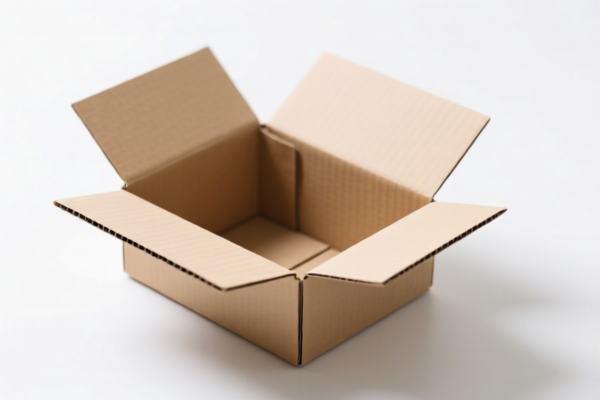
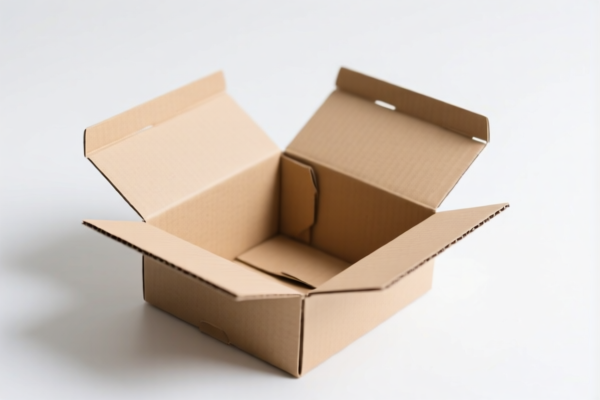
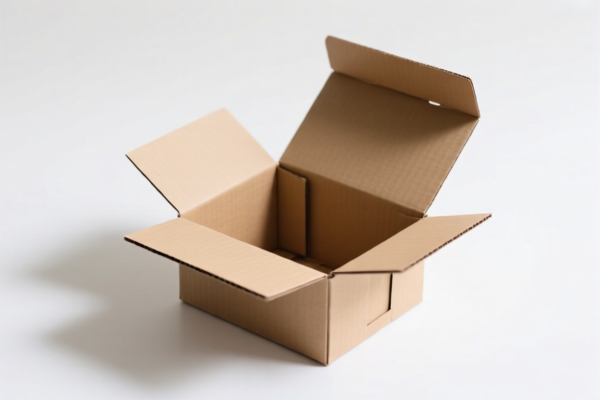
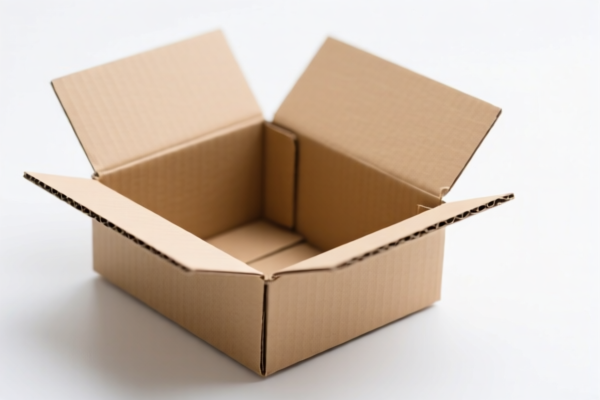
AI Analysis
📦 Carton Paper (Carton / Cardboard)
🌐 HS Code Reference & Customs Clearance Guide | 2026 Latest Tariff Full Analysis | Professional Strategy
📌 I. Product Definition & Classification: Do You Really Understand "Carton Paper"?
Carton Paper, commonly referred to as Cardboard or Paperboard, is a critical packaging material used in logistics, retail, and industrial applications. In international trade, it is broadly categorized based on its material composition (pulp-based), physical form (sheets/rolls/boxes), and treatment (coated/uncoated).
Key distinctions drive the HS Code selection: * Material: Must be primarily paper or paperboard (cellulose fibers). * Form: Sheets, flat or folded, suitable for conversion into boxes, cartons, or further processing. * Coating: Uncoated vs. Coated (kraft, white, etc.).
⚠️ Critical Distinction:
- If the product is raw paperboard (uncoated, basic form) → Often falls under Chapter 4805.
- If the product is processed packaging material (corrugated, specific box forms) → Often falls under Chapter 4819.
- If the product is specialty paperboard (cut, shaped, or specific pulp types) → May fall under Chapter 4823.
📦 II. HS Code Classification Details (2026 Latest Tariff Authority Match)
Based on the provided data, the following HS Codes are potential matches for "Carton Paper," depending on specific product attributes. All listed items carry a Total Tax Rate of 35.0% due to US import duties on Chinese goods.
| HS Code | Product Description & Logic Match | Tax Details (Total 35.0%) |
|---|---|---|
4810.99.10.60 |
Other Paper/Paperboard: Matches material (cardboard) and form. Uses the "Other" fallback principle. No material conflict. | Base: 0%, Addl: 25%, Section 122: 10% |
4810.39.65.00 |
Other Paper/Paperboard: Matches material (cardboard) and form. Based on "Missing Description" principle and "Fallback Category" rules. No material conflict. | Base: 0%, Addl: 25%, Section 122: 10% |
4805.91.10.10 |
Uncoated Paperboard: Product name includes material (paper) and form (board), matching the material and form requirements in classification notes. | Base: 0%, Addl: 25%, Section 122: 10% |
4805.93.40.10 |
Uncoated Paperboard: Product name matches material "Paper or Paperboard" exactly; form fits the scope of uncoated paperboard. | Base: 0%, Addl: 25%, Section 122: 10% |
4819.10.00.20 |
Fiberboard Boxes: Material is cardboard, matching corrugated paper or cardboard requirements. Use not specified, but no material conflict. | Base: 0%, Addl: 25%, Section 122: 10% |
4819.10.00.40 |
Fiberboard Boxes: Material is cardboard, matching classification requirements for cardboard; falls under raw materials for packaging containers. No material conflict. | Base: 0%, Addl: 25%, Section 122: 10% |
4823.90.10.00 |
Other Paper/Paperboard Cut to Size: Product name explicitly includes material "pulp" and form "paperboard," fully matching the definition of pulp-made paperboard for this code. | Base: 0%, Addl: 25%, Section 122: 10% |
🔍 Key Reminder:
- All listed HS Codes share the same total tax rate of 35.0% (0% Base + 25% Section 301 + 10% Section 122).
- The choice of HS Code depends on the specific physical form (e.g., raw sheets vs. pre-cut blanks vs. pulp-based sheets) and coating status.
- Section 122 (10%) applies specifically to certain paper products from China under recent trade measures.
💰 III. 2026 Latest Tariff Rate Breakdown (Including Surcharges)
✅ Applicable Country: United States (US)
✅ Origin: China (CN)
✅ Effective Date: Ongoing (as per latest trade directives)
🎯 1. Universal Tax Structure for All Listed HS Codes
| Item | Content |
|---|---|
| Base Tariff Rate | 0% (ad valorem) – Most paper/cardboard products have 0% base MFN rate. |
| USITC Additional Duty (Section 301) | +25% – Applied to most Chinese-origin goods, including paper products. |
| Section 122 Duty | +10% – Specific additional duty on certain paper/paperboard imports from China. |
| Total Effective Tax Rate | 35.0% |
| Tax Calculation | CIF Value × 35.0% |
| De Minimis Exemption | ❌ Not Applicable – Values above $800 may be subject to inspection, but high tariff rates still apply if declared. |
| Legal Basis Path | USITC: [HS Code] → Section 301: Footnote 9903.88.01 → Section 122: IEEPA Orders |
📌 Explanation:
- The 0% base rate reflects that paper/cardboard is not considered a strategic manufactured good with high protectionism by default.
- However, trade wars have layered 25% (Section 301) and 10% (Section 122) surcharges, resulting in a flat 35% tax burden.
- This rate is fixed for these HS codes and does not offer preferential treatment under standard FTAs for Chinese origin.
🛠️ IV. Customs Clearance Operational Advice (Practical Pitfall Avoidance Guide)
✅ 1. Documentation Checklist (Non-Negotiable)
| Document | Required | Description |
|---|---|---|
| ✅ Product Specification Sheet | ✔️ | Must detail material (pulp type), weight (GSM), thickness, and whether coated/uncoated. |
| ✅ Commercial Invoice | ✔️ | Clearly state "Carton Paper" or "Paperboard," not just "Cardboard" if ambiguity exists. |
| ✅ Packing List | ✔️ | Specify dimensions, weight, and packaging type (rolls/sheets/boxes). |
| ✅ Certificate of Origin (CO) | ✔️ | To prove Chinese origin and apply correct tariff rates. |
| ✅ Material Safety Data Sheet (MSDS) | ✔️ | If chemical coatings are used, even if minimal. |
| ✅ Photos of Product & Label | ✔️ | Show texture, edges, and any markings indicating treatment (e.g., "Uncoated," "Kraft"). |
✅ 2. Declaration Tips (Critical Mnemonic)
🔥 "Material First, Form Second, No Coating Lies, 35% is the Price!"
| Scenario | Correct Declaration | Wrong Practice |
|---|---|---|
| Raw uncoated paperboard | 4805.91.10.10 or 4805.93.40.10 |
Misdeclare as "packaging material" → Risk of reclassification |
| Corrugated board sheets | 4819.10.00.20 or 4819.10.00.40 |
Declare as "paper" → Higher scrutiny for misclassification |
| Pulp-based paperboard | 4823.90.10.00 |
Vague description "paper product" → Delays |
| Fallback/Unknown specifics | 4810.99.10.60 or 4810.39.65.00 |
Guessing without basis → Penalties |
📌 Note:
- If the product is coated (e.g., white-top, clay-coated), it may move to Chapter 4810 or 4805 subheadings differently.
- Uncoated products lean toward 4805.
- Cut-to-size or specialty pulp board leans toward 4823.
✅ 3. Special Circumstances Handling
| Situation | Handling Advice |
|---|---|
| Mixed Shipments | If carton paper is mixed with plastic films, the entire shipment may be reclassified under plastic rules → Higher taxes. Keep shipments segregated. |
| OEM/White Label | Provide manufacturer declaration confirming material composition (e.g., "100% Virgin Pulp," "Recycled Pulp"). |
| High-Volume Imports | Consider applying for Advance Ruling from CBP to lock in the HS Code and avoid retroactive tax adjustments. |
| Section 122 Eligibility | Confirm if your specific paper product type is explicitly listed under the Section 122 order. If excluded, tax may be lower (25% only). |
🌍 V. Global Market Customs Comparison (2026 Latest)
| Country/Region | Recommended HS Code | Tariff (China Origin) | Certification Requirements | Notes |
|---|---|---|---|---|
| 🇺🇸 USA | 4805.91.10.10 / 4819.10.00.20 etc. |
35.0% | No major certs, but strict origin proof | High tariff due to Section 301 + 122 |
| 🇨🇳 China | 4805.91.10.10 etc. |
0% (Import) | N/A | Domestic trade has no import duty |
| 🇪🇺 EU | 4805.91.10.10 etc. |
0% - 3.7% | FSC/PEFC (if sustainable) | No Section 301; standard MFN rates |
| 🇬🇧 UK | 4805.91.10.10 etc. |
0% - 3.7% | UKCA (if coated with chemicals) | Post-Brexit rules may vary slightly |
| 🇯🇵 Japan | 4805.91.10.10 etc. |
0% - 3.0% | FSC/JFS | Low tariffs, strict phytosanitary if wood pulp |
📌 Conclusion:
- USA is the most expensive market for Chinese carton paper due to layered tariffs (35%).
- EU, UK, and Japan offer significantly lower tariff burdens (0-4%).
- Supply Chain Strategy: Consider sourcing from non-Chinese origins (e.g., Vietnam, Indonesia) if entering the US market, as they may qualify for lower or zero Section 301 duties.
📌 VI. Common Errors & Pitfall Guide (Lessons Learned)
❌ Error 1: Declaring "Cardboard" without specifying coating status
👉 Consequence: CBP may reclassify under a higher-tax subheading or delay shipment for material verification.
❌ Error 2: Misidentifying pulp-based paperboard (4823) as uncoated paperboard (4805)
👉 Consequence: While tax is the same (35%), incorrect HS Code leads to statistical misreporting and potential fines.
❌ Error 3: Ignoring Section 122 applicability
👉 Consequence: Underpaying duty by 10%. CBP audits often catch this, leading to back taxes + interest.
❌ Error 4: Using vague terms like "Paper Product" on the invoice
👉 Consequence: CBP issues Port Hold for detailed description request → Storage fees + delays.
✅ Correct Practice:
"Uncoated Kraft Paperboard, Unbleached, 350 GSM, Roll Form, 100% Recycled Pulp, Made in China"
🎯 VII. Conclusion: Professional Declaration Saves Money!
🎯 Remember the Mantra:
🔹 "Material Matters, Form Defines, 35% is the Cost, Accuracy is the Key!"
🔹 "HS Code Precision Avoids Delays, Tax Clarity Protects Margins!"
📌 Pro Tip:
If your carton paper is shipped from Vietnam, Malaysia, or Indonesia, you may avoid the 25% Section 301 duty, reducing the total tax to 10% (Section 122 only) or 0% if exempt.
Recommendation:
📞 Consult a licensed customs broker for Advance Ruling before shipment.
📄 Keep detailed material test reports (pulp composition, coating type) ready for inspection.
📣 Immediate Action:
🚀 Verify your HS Code with a customs expert.
💡 Optimize your supply chain to mitigate 35% tax burden.
📦 Ensure your documentation is precise to avoid costly delays!
✨ Professional Customs Clearance Starts with Accurate Classification!
💼 Every Percent of Tariff Counts – Protect Your Profit Margin!
Customer Reviews
About HS Code Classification
The Harmonized System (HS) is an internationally standardized nomenclature developed by the World Customs Organization (WCO) to classify traded products. Over 200 countries use the HS system as the basis for customs tariffs, trade statistics, and import/export regulations.
Each HS code follows a hierarchical structure:
- Chapter (2 digits) — Broad category of goods (e.g., Chapter 84: Machinery and Mechanical Appliances)
- Heading (4 digits) — More specific grouping within the chapter
- Subheading (6 digits) — Internationally standardized breakdown, used by all WCO member countries
- National subdivisions (8-10 digits) — Country-specific extensions for further classification, such as US HTSUS 10-digit codes
Correct HS code classification is essential for smooth customs clearance, accurate duty payment, and compliance with trade regulations. Misclassification can lead to customs delays, overpayment of duties, or penalties.
When importing from CN to US, the applicable tariff rates may include:
- Most-Favored-Nation (MFN) rate — The standard duty rate applied to WTO members
- General rate — Applied to countries without trade agreements
- Trade remedy duties — Additional tariffs such as Section 301 (anti-dumping), Section 232 (national security), or countervailing duties
The information provided on this page is for reference purposes only. For official classification, please consult with your local customs authority or a licensed customs broker.