Cartoon Handbags
CN → US| HS Code | Tariff Rate | Origin | Destination | Doc |
|---|---|---|---|---|
| 4602192920 | 40.3% | CN | US | Official Doc |
| 4602112100 | 41.2% | CN | US | Official Doc |
| 4202224020 | 42.4% | CN | US | Official Doc |
| 4202228980 | 52.6% | CN | US | Official Doc |
Product Images
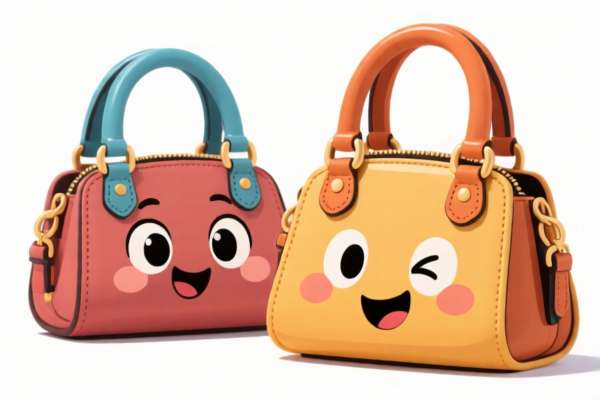
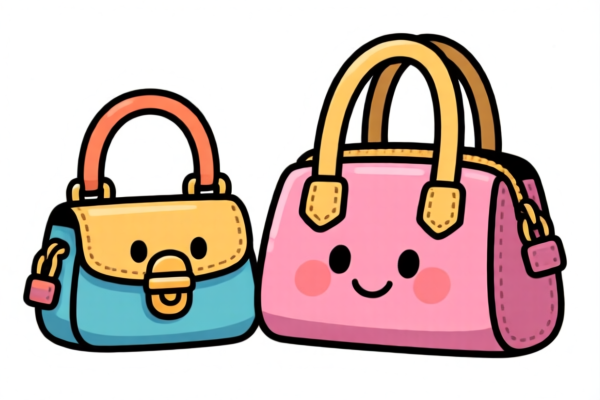
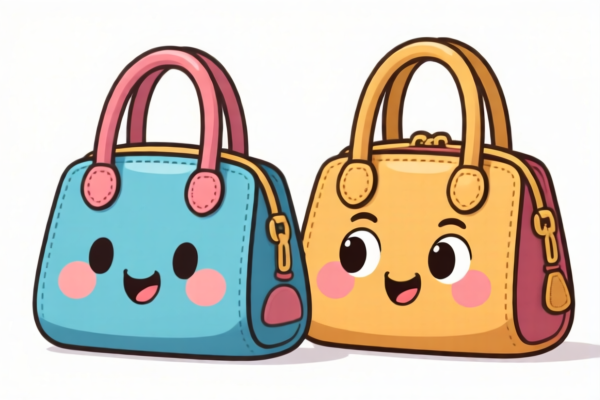
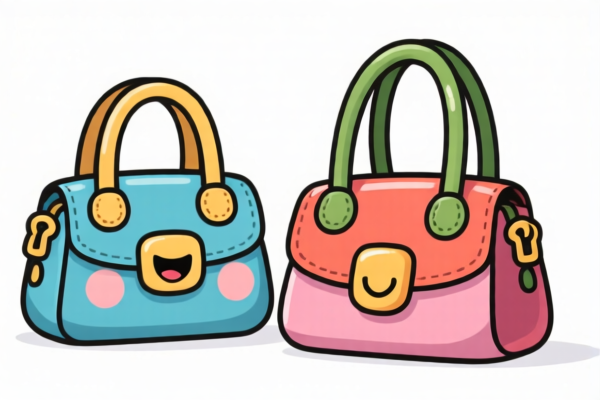
AI Analysis
🎒 Cartoon Handbags (The Ultimate Guide to US Customs Clearance & Tariff Classification)
🌐 HS Code Reference & Clearance Guide | 2026 Latest Tariff Analysis | Strategic Compliance Strategy
📌 One: Product Definition & Classification: What is a "Cartoon Handbag"?
In the world of international trade, "Cartoon Handbags" (handbags featuring cartoon characters, anime prints, or playful designs) are not a single HS Code category. They are classified based on their material composition. The presence of a "cartoon" design does not change the tariff code; the raw material (bamboo, textile, etc.) determines the duty rate.
In the context of US-China trade (2026), classification is critical because different materials trigger vastly different tax burdens, especially with Section 301 and IEEPA tariffs.
⚠️ Key Distinction Point:
- If the bag is made of Plant Materials (bamboo, rattan, straw) → Look to Chapter 46.
- If the bag is made of Textiles/Synthetics (cloth, nylon, leather-look) → Look to Chapter 42.
📦 Two: HS Code Classification Details (2026 Latest Tariff Authority)
Based on the provided data, here are the four primary HS Codes for Cartoon Handbags, ranging from 40.3% to 52.6% total tax.
| HS Code | Product Description | Material Composition | Visual Characteristic |
|---|---|---|---|
4602.19.29.20 |
Woven Handbag | Plant-based weaving materials (e.g., straw, reed, grass) | Natural, rustic, or dyed plant fiber look |
4602.11.21.00 |
Woven Handbag | Bamboo, Rattan, or similar stiff plant materials | Sturdy, structured, often rigid weave |
4202.22.40.20 |
Woven Handbag | General Woven Materials (non-textile, non-plant specific) | Generic woven texture, possibly synthetic blends |
4202.22.89.80 |
Woven Handbag | Textile Materials (Fabric, Canvas, Nylon, Cotton) | Soft, printed, typical "cloth" handbag |
🔍 Critical Reminder:
- Material Dictates Code: A canvas bag with a Mickey Mouse print (4202.22.89.80) pays 52.6%, while a straw bag with a similar print (4602.19.29.20) pays 40.3%.
- "Woven" vs. "Textile": Chapter 46 covers rigid plant weaves. Chapter 42 covers flexible textiles and other materials. Do not mix them up.
💰 Three: 2026 Latest Tariff Rate Breakdown (Including Add-Ons)
✅ Applicable Country: United States (US)
✅ Origin: China (CN)
✅ Effective Date: Post-November 2025 (Current Trade Regime)
🎯 1. 4602.19.29.20 —— Plant Material Woven Bag (Lowest Tax in List)
| Item | Content |
|---|---|
| Base Duty Rate | 5.3% (Ad Valorem) |
| Section 301 Add-On | +25.0% |
| Section 122 / IEEPA Add-On | +10.0% |
| Total Tax Rate | 40.3% |
| Tax Calculation | CIF Value × 40.3% |
| De Minimis Exemption | ❌ Not Eligible (High risk of seizure for low-value shipments) |
| Legal Basis Path | USITC:4602.19.29.20 → 301_FOOTNOTE → 122_SECTION |
📌 Explanation:
- This is the most cost-effective option among the listed codes.
- If your product is made of natural fibers (straw, palm leaf), ensure it is classified here to save ~12% compared to textile bags.
🎯 2. 4602.11.21.00 —— Bamboo/Rattan Woven Bag
| Item | Content |
|---|---|
| Base Duty Rate | 6.2% (Ad Valorem) |
| Section 301 Add-On | +25.0% |
| Section 122 / IEEPA Add-On | +10.0% |
| Total Tax Rate | 41.2% |
| Tax Calculation | CIF Value × 41.2% |
| De Minimis Exemption | ❌ Not Eligible |
| Legal Basis Path | USITC:4602.11.21.00 → 301_FOOTNOTE → 122_SECTION |
📌 Explanation:
- Slightly higher base rate than general plant weaves.
- Common for structured summer bags.
- Savings: Still cheaper than textile bags by ~11.4%.
🎯 3. 4202.22.40.20 —— General Woven Material Bag
| Item | Content |
|---|---|
| Base Duty Rate | 7.4% (Ad Valorem) |
| Section 301 Add-On | +25.0% |
| Section 122 / IEEPA Add-On | +10.0% |
| Total Tax Rate | 42.4% |
| Tax Calculation | CIF Value × 42.4% |
| De Minimis Exemption | ❌ Not Eligible |
| Legal Basis Path | USITC:4202.22.40.20 → 301_FOOTNOTE → 122_SECTION |
📌 Explanation:
- This code is a "catch-all" for woven bags that don't fit bamboo/rattan or standard textiles.
- Often used for synthetic woven straps or mixed-material bodies.
🎯 4. 4202.22.89.80 —— Textile Material Bag (Highest Tax in List)
| Item | Content |
|---|---|
| Base Duty Rate | 17.6% (Ad Valorem) |
| Section 301 Add-On | +25.0% |
| Section 122 / IEEPA Add-On | +10.0% |
| Total Tax Rate | 52.6% |
| Tax Calculation | CIF Value × 52.6% |
| De Minimis Exemption | ❌ Not Eligible |
| Legal Basis Path | USITC:4202.22.89.80 → 301_FOOTNOTE → 122_SECTION |
📌 Explanation:
- Pain Point: The base rate (17.6%) is nearly 3x higher than plant-based weaves (5.3%).
- This is the default code for canvas, cotton, nylon, or polyester cartoon bags.
- Warning: If you import cheap canvas tote bags, you will face a 52.6% tax burden. This kills margins for low-cost items.
🛠️ Four: Customs Clearance Practical Advice (Battle-Tested Pitfall Guide)
✅ 1. Preparation Checklist (Non-Negotiable)
| Document | Required? | Purpose |
|---|---|---|
| Product Specification Sheet | ✔️ | Must explicitly state material composition (e.g., "100% Cotton Canvas" vs. "Woven Palm Leaf"). |
| High-Resolution Photos | ✔️ | Show the texture close-up. Is it stiff (plant) or soft (textile)? |
| Commercial Invoice | ✔️ | Description must match HS Code. Do NOT just write "Cartoon Bag." Write "Woven Handbag, Material: Bamboo." |
| Origin Certificate (CO) | ✔️ | To prove origin is China (triggering tariffs) or determine if eligible for exemptions elsewhere. |
| Copyright/Trademark License | ✔️ | CRITICAL: If the "Cartoon" features Disney, Sanrio, etc., you need a license. Customs may seize goods for IP infringement. |
✅ 2. Classification Strategy (Key Mnemonic)
🔥 “Material First, Print Second; Textile is Expensive, Plant is Cheaper!”
| Scenario | Correct HS Code | Why? |
|---|---|---|
| Canvas Tote with Anime Print | 4202.22.89.80 |
It's textile. High base duty (17.6%). |
| Straw Bag with Cartoon Embroidery | 4602.19.29.20 |
It's plant material. Low base duty (5.3%). |
| Bamboo Frame Handbag | 4602.11.21.00 |
Specific plant material. Mid-low base duty (6.2%). |
| Synthetic Woven Strap Bag | 4202.22.40.20 |
Generic woven. Mid base duty (7.4%). |
📌 Pro Tip:
- If you are designing a new product, consider using plant-based materials (straw/rattan) instead of heavy cotton canvas to save ~12.3% in base duties.
- The 25% Section 301 and 10% IEEPA taxes apply to ALL these codes equally. The only variable you can control is the Base Duty via material selection.
✅ 3. Special Handling for "Cartoon" Goods
| Issue | Handling Advice |
|---|---|
| IP Infringement Risk | 🚫 High Risk. Customs (CBP) actively monitors for unlicensed Disney, Marvel, Anime, etc. Ensure you have a Letter of Authorization from the IP holder. |
| Mixed Materials | If a bag has a canvas body (4202) but bamboo straps (4602), CBP may classify the principal material. If the body is canvas, it’s likely 4202.22.89.80. |
| "De Minimis" (Section 321) | ⚠️ Do Not Rely On It. With tariffs over 40%, small shipments are often audited. Also, new rules may restrict de minimis for China-origin goods. Always pay full duty to avoid seizure. |
🌍 Five: Global Market Comparison (2026)
| Region | Recommended HS Code | Est. Total Duty (China Origin) | Notes |
|---|---|---|---|
| 🇺🇸 USA | Varies by Material | 40.3% – 52.6% | Includes 301 Tariff + IEEPA. Highest cost globally. |
| 🇨🇳 China | Same HS Codes | ~5% – 10% | No Section 301/IEEPA. Low entry barrier. |
| 🇪🇺 EU | Varies (42.02/46.02) | ~4.5% – 12% | No punitive tariffs like US. Requires EPR compliance. |
| 🇬🇧 UK | Same HS Codes | ~5% – 12% | Post-Brexit tariffs are moderate. |
📌 Conclusion:
The US market is uniquely expensive for Chinese-made handbags due to layered tariffs.
Strategy: If targeting the US, optimize for Plant Materials (4602) to mitigate the base rate, and ensure IP Compliance to avoid customs holds.
📌 Six: Common Mistakes & Pitfalls (Lessons Learned)
❌ Mistake 1: Ignoring Material Composition
👉 Declaring a canvas bag as "Woven Bag" under 4602 to save tax.
👉 Result: CBP inspects, finds cotton, reclassifies to 4202, issues Notice of Liquidation + Penalties.
❌ Mistake 2: Underestimating IP Risks
👉 Importing bags with "popular cartoon faces" without a license.
👉 Result: Seizure and Forfeiture. Your goods disappear, and you may face civil lawsuits.
❌ Mistake 3: Splitting Shipment to Avoid De Minimis
👉 Sending 50 units in one shipment instead of 5.
👉 Result: If it's >$800, it enters formal entry. Paying 40%+ tax on bulk is inevitable. Better to factor it into COGS.
✅ Correct Declaration Example:
"Women's Handbag, Style #123, Material: 100% Woven Palm Leaf, Decorative Cartoon Appliqué, For Retail Sale."
HS Code:4602.19.29.20
Duty: 40.3%
🎯 Seven: Conclusion: Smart Classification Saves Money
🎯 Remember the Rule:
🔹 "Plant Wins, Textile Burns."
🔹 "301 + 122 = 35% Extra. Choose Base Rate Wisely."
🔹 "Cartoon Needs License, Or Customs Will Confiscate."
📌 Pro Tip:
If your volume is high, consider Advance Rulings from CBP to lock in your HS Code. This prevents surprises during clearance.
For Textile Bags (4202), explore near-shoring (e.g., Vietnam, Mexico) if possible, as they may avoid the Section 301 tariff (depending on current rules of origin).
📣 Immediate Action:
📞 Audit your BOM (Bill of Materials).
📞 Check IP rights for all cartoon graphics.
📞 Select the lowest possible HS Code (4602.19.29.20if plant-based).
✨ Professional Clearance Starts with Precise Classification!
💼 Your profit margin depends on every percentage point of duty!
Customer Reviews
About HS Code Classification
The Harmonized System (HS) is an internationally standardized nomenclature developed by the World Customs Organization (WCO) to classify traded products. Over 200 countries use the HS system as the basis for customs tariffs, trade statistics, and import/export regulations.
Each HS code follows a hierarchical structure:
- Chapter (2 digits) — Broad category of goods (e.g., Chapter 84: Machinery and Mechanical Appliances)
- Heading (4 digits) — More specific grouping within the chapter
- Subheading (6 digits) — Internationally standardized breakdown, used by all WCO member countries
- National subdivisions (8-10 digits) — Country-specific extensions for further classification, such as US HTSUS 10-digit codes
Correct HS code classification is essential for smooth customs clearance, accurate duty payment, and compliance with trade regulations. Misclassification can lead to customs delays, overpayment of duties, or penalties.
When importing from CN to US, the applicable tariff rates may include:
- Most-Favored-Nation (MFN) rate — The standard duty rate applied to WTO members
- General rate — Applied to countries without trade agreements
- Trade remedy duties — Additional tariffs such as Section 301 (anti-dumping), Section 232 (national security), or countervailing duties
The information provided on this page is for reference purposes only. For official classification, please consult with your local customs authority or a licensed customs broker.