Cartoon Pattern Handbags
CN → US| HS Code | Tariff Rate | Origin | Destination | Doc |
|---|---|---|---|---|
| 4202228980 | 52.6% | CN | US | Official Doc |
| 4202228100 | 52.6% | CN | US | Official Doc |
Product Images
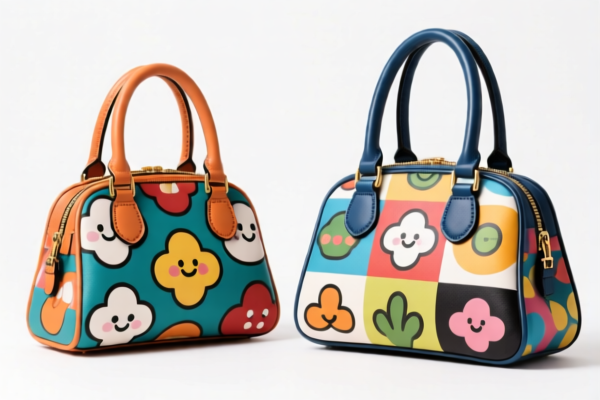
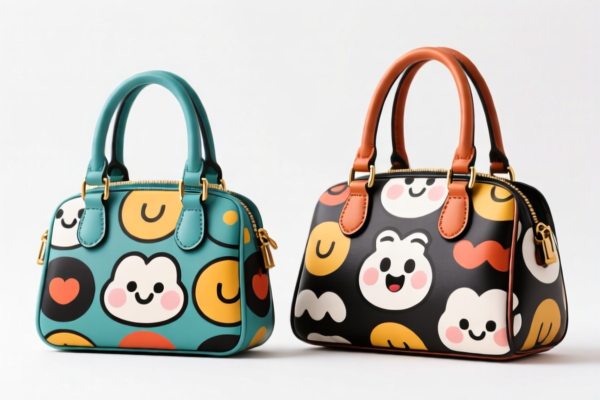
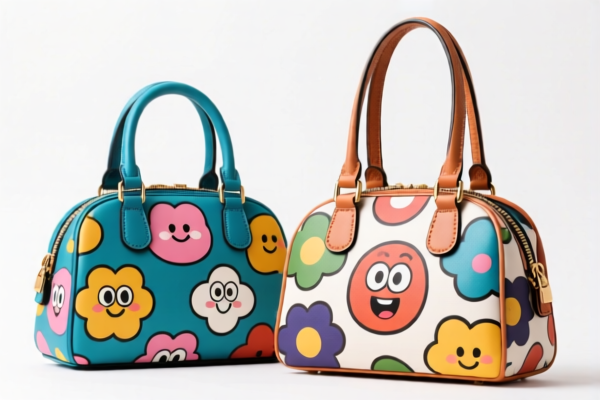
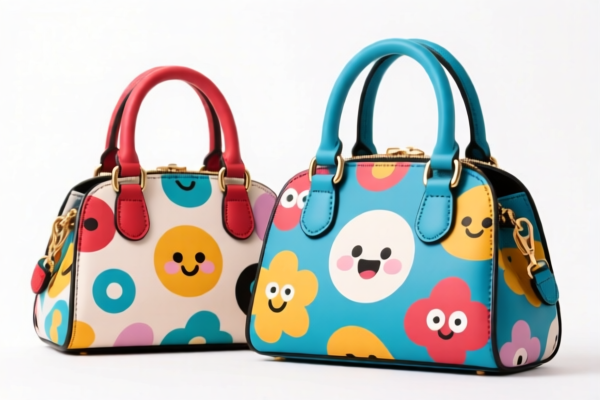
AI Analysis
👜 Cartoon Pattern Handbags (Soft-Lined Containers of Textile Materials)
🌐 HS Code Reference & Customs Clearance Guide | 2026 Latest Tariff Analysis | Professional Clearance Strategy
📌 I. Product Definition & Classification: Do You Truly Understand "Cartoon Handbags"?
Handbags, whether with or without shoulder straps, are classified under Chapter 42 of the Harmonized System. When the outer surface is made of textile materials (fabric, canvas, nylon, etc.) and features cartoon patterns (printed, embroidered, or woven designs), they fall under the category of "Other" handbags that are not specifically listed as "with outer surface of leather, composition leather, or patent leather."
⚠️ Key Classification Logic:
- Material Check: Is the outer surface textile? → Yes → Proceed to Chapter 42.02.
- Type Check: Is it a handbag? → Yes → Subheading 4202.22.
- Detail Check: Is it made of man-made fibers? Or "Other"?
- If made of synthetic/chemical fibers (polyester, nylon, etc.) → 4202.22.81.00
- If made of other textiles (cotton, linen, blends not specified as man-made, or undefined) → 4202.22.89.80
📦 II. HS Code Classification Details (2026 Latest Tariff Authority Comparison)
| HS Code | Product Description | Applicable Scenario | Material Composition |
|---|---|---|---|
4202.22.81.00 |
Handbags, textile outer, man-made fibers | Polyester cartoon bags, Nylon canvas bags, Synthetic fabric handbags | ✅ Man-made fibers |
4202.22.89.80 |
Handbags, textile outer, Other | Cotton canvas bags, Linen blends, Mixed textiles (non-synthetic dominant), Custom textile designs | ✅ Other textile materials |
🔍 Critical Distinction:
- Pattern Irrelevance: The "Cartoon Pattern" itself does not determine the HS Code. It is a decorative feature, not a structural one. Classification depends strictly on the fiber content of the outer shell.
- If Mixed Materials: If the bag has both synthetic and natural fiber outer layers, customs may require a fiber content declaration. Typically, if synthetic fibers are predominant or defined by specific trade rules,4202.22.81.00might apply. Otherwise,4202.22.89.80is the safer "catch-all."
💰 III. 2026 Latest Tariff Rate Details (Detailed Tax Breakdown)
✅ Applicable Country: United States (US)
✅ Origin: China (CN)
✅ Effective Time: Current rates as per 2026 tariff schedules
🎯 1. 4202.22.81.00 —— Handbags, Outer Surface Textile, Man-Made Fibers
| Item | Content |
|---|---|
| Base Tariff (MFN) | 0.0% |
| Section 301 Additional Tariff | 0.0% |
| Total Tariff Rate | 0.0% |
| Tax Calculation | CIF Value × 0% = $0 Duty |
| De Minimis Eligibility | ❓ Depends on Value: - If CIF ≤ $800: Exempt under Section 321 (De Minimis). - If CIF > $800: Subject to 0% base tax (still free duty). |
| Legal Basis Path | HTSUS:4202.22.81.00 → No Section 301 surcharge applies to this specific textile subheading. |
📌 Explanation:
- Unlike many electronics or steel products, textile handbags of man-made fibers currently face zero additional tariffs from the US.
- This makes them a highly favorable category for export compared to electronics or automotive parts.
🎯 2. 4202.22.89.80 —— Handbags, Outer Surface Textile, Other
| Item | Content |
|---|---|
| Base Tariff (MFN) | 0.0% |
| Section 301 Additional Tariff | 0.0% |
| Total Tariff Rate | 0.0% |
| Tax Calculation | CIF Value × 0% = $0 Duty |
| De Minimis Eligibility | ❓ Depends on Value: - If CIF ≤ $800: Exempt under Section 321. - If CIF > $800: Subject to 0% base tax. |
| Legal Basis Path | HTSUS:4202.22.89.80 → No Section 301 surcharge applies. |
📌 Note:
- Whether "Man-made" (81) or "Other" (89), both subheadings currently enjoy 0% total tariff from China to the US.
- No Hidden Fees: There are no known anti-dumping or countervailing duties applied to general cartoon pattern handbags in this category.
🛠️ IV. Customs Clearance Practical Advice (Battle-Tested Pitfall Avoidance)
✅ 1. Required Documentation Checklist (Non-Negotiable)
| Document | Must Provide | Explanation |
|---|---|---|
| ✅ Product Specification Sheet | ✔️ | Must detail: Outer material (e.g., "100% Polyester"), Lining material, Dimensions, Closure type. |
| ✅ Fiber Content Declaration | ✔️ | Critical for distinguishing between 4202.22.81.00 and 4202.22.89.80. |
| ✅ Product Photos | ✔️ | Clear images of the bag, showing the outer surface texture and cartoon pattern. |
| ✅ Commercial Invoice | ✔️ | Must describe item as "Textile Handbag with Cartoon Print," NOT just "Bag." |
| ✅ Packing List | ✔️ | Include weight and volume for freight calculation. |
| ✅ IP Authorization (If Applicable) | ✔️ | CRITICAL: If the cartoon pattern is licensed (e.g., Disney, Sanrio), provide proof of license to avoid IP seizure at customs. |
✅ 2. Declaration Tips (Key Mantras)
🔥 “Material First, Pattern Second, License Clear, Tariff Free!”
| Scenario | Correct Declaration | Wrong Practice |
|---|---|---|
| Polyester Bag with Mickey Mouse | 4202.22.81.00 – "Polyester Handbag, Cartoon Print" |
Vague: "Toy Bag" → May be misclassified as toys (higher tax/different rules). |
| Cotton Canvas Bag with Custom Print | 4202.22.89.80 – "Cotton Handbag, Printed" |
Vague: "Fabric Bag" → Risk of being queried for material type. |
| Bag with Leather Trim | Still 4202.22.xxxx | If leather is <50% or not the "outer surface," it remains textile. If leather is dominant, it may shift to 4202.11/12/13. Check outer surface rule! |
| Set with Multiple Bags | Declare individually | Do not bundle different materials into one line item. |
✅ 3. Special Case Handling
| Situation | Handling Advice |
|---|---|
| Intellectual Property (IP) Risks | 🚨 High Alert: Cartoon patterns often involve trademarks/copyrights. Ensure you have written authorization from the IP owner (e.g., Disney, Sanrio). US Customs (CBP) actively seizes counterfeit or unauthorized IP goods. |
| Mixed Material Bags | If the bag has textile outer but leather handles/straps, ensure the "outer surface" is still primarily textile. If leather elements are prominent, consult a broker to avoid reclassification to leather goods (which may have different tariffs). |
| De Minimis ($800) | For B2C shipments (e.g., dropshipping), if individual order value ≤ $800, it enters duty-free under Section 321, regardless of HS Code. Ensure accurate valuation. |
| Sample Shipments | Mark as "Commercial Sample – No Commercial Value" if applicable, but still provide full documentation to avoid delays. |
🌍 V. Global Market Comparison (2026 Latest)
| Country/Region | Recommended HS Code | Tariff (China Origin) | Key Requirements |
|---|---|---|---|
| 🇺🇸 USA | 4202.22.81.00 / 89.80 |
0.0% | IP Authorization, Fiber Declaration |
| 🇨🇳 China | 4202.22.81.00 / 89.80 |
8.0% - 10.0% | Import License (if applicable) |
| 🇪🇺 EU | 4202.22.10 / 89 |
12.0% | CE (if safety claims), REACH (chemicals in dye) |
| 🇬🇧 UK | 4202.22.10 / 89 |
12.0% | Post-Brexit Rules of Origin apply |
| 🇯🇵 Japan | 4202.22.090 |
8.0% | No special IP enforcement at low volumes, but strict on counterfeits |
📌 Conclusion:
- USA is the most favorable market for these goods due to 0% tariff.
- EU and China have higher base tariffs, so margin planning must account for 8-12% duties.
- IP Compliance is the #1 risk factor globally, not tariffs.
📌 VI. Common Mistakes & Pitfall Guide (Lessons from Tears)
❌ Mistake 1: Ignoring IP Rights
👉 Consequence: Goods seized at US/EU borders, fines, and blacklisting.
✅ Solution: Always have proof of license for cartoon characters.
❌ Mistake 2: Vague Material Description
👉 Consequence: Customs queries for fiber content, delaying clearance by weeks.
✅ Solution: Specify "100% Polyester," "65% Cotton/35% Polyester," etc.
❌ Mistake 3: Misclassifying as "Toys" (HS 95)
👉 Consequence: Incorrect duty rates and regulatory requirements.
✅ Solution: Handbags are functional containers, not toys, even if they look cute.
❌ Mistake 4: Overlooking Leather Trims
👉 Consequence: If leather handles are considered part of the "outer surface," it may shift to leather goods classification (different tariff).
✅ Solution: Ensure textile is the primary outer surface material.
✅ Correct Declaration Example:
"Women’s Handbag, Outer Surface: 100% Polyester Twill, Lining: 100% Polyester, Feature: Printed Cartoon Pattern, Brand: [Authorized Brand], Model: XYZ."
🎯 VII. Conclusion: Professional Clearance, Zero Duty, Happy Profits!
🎯 Remember the Mantra:
🔹 “Textile Outer, Cartoon Print, Zero Duty in US.”
🔹 “IP License is Key, Fiber Content is Queen.”
📌 Pro Tip:
- For US Imports: Leverage the 0% tariff advantage.
- For De Minimis: Keep B2C shipments under $800 per package to bypass even basic documentation hurdles (Section 321).
- Always verify IP rights for cartoon designs to avoid catastrophic seizure risks.
📣 Immediate Action:
📞 Contact a licensed customs broker for pre-classification if the material is mixed.
📄 Secure IP Authorization Letters before shipping.
🚀 Ship confidently with 0% Duty in the US market!
✨ Professional Clearance Starts with Accurate Classification!
💼 Your margin deserves precision!
Customer Reviews
About HS Code Classification
The Harmonized System (HS) is an internationally standardized nomenclature developed by the World Customs Organization (WCO) to classify traded products. Over 200 countries use the HS system as the basis for customs tariffs, trade statistics, and import/export regulations.
Each HS code follows a hierarchical structure:
- Chapter (2 digits) — Broad category of goods (e.g., Chapter 84: Machinery and Mechanical Appliances)
- Heading (4 digits) — More specific grouping within the chapter
- Subheading (6 digits) — Internationally standardized breakdown, used by all WCO member countries
- National subdivisions (8-10 digits) — Country-specific extensions for further classification, such as US HTSUS 10-digit codes
Correct HS code classification is essential for smooth customs clearance, accurate duty payment, and compliance with trade regulations. Misclassification can lead to customs delays, overpayment of duties, or penalties.
When importing from CN to US, the applicable tariff rates may include:
- Most-Favored-Nation (MFN) rate — The standard duty rate applied to WTO members
- General rate — Applied to countries without trade agreements
- Trade remedy duties — Additional tariffs such as Section 301 (anti-dumping), Section 232 (national security), or countervailing duties
The information provided on this page is for reference purposes only. For official classification, please consult with your local customs authority or a licensed customs broker.