Cartoon Plush Clothing
CN → US| HS Code | Tariff Rate | Origin | Destination | Doc |
|---|---|---|---|---|
| 4303100030 | 39.0% | CN | US | Official Doc |
| 4303100060 | 39.0% | CN | US | Official Doc |
| 9503000073 | 10.0% | CN | US | Official Doc |
| 9503000071 | 10.0% | CN | US | Official Doc |
| 6307909891 | 24.5% | CN | US | Official Doc |
Product Images
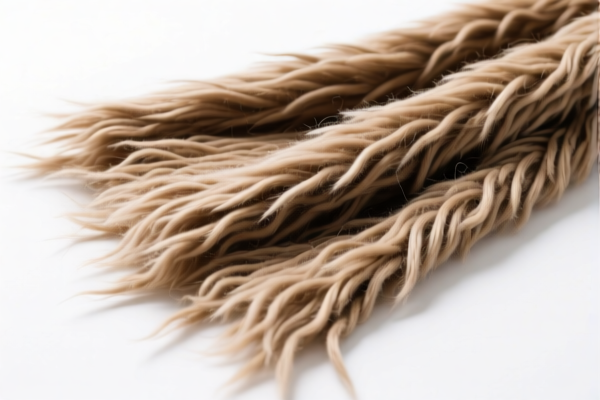
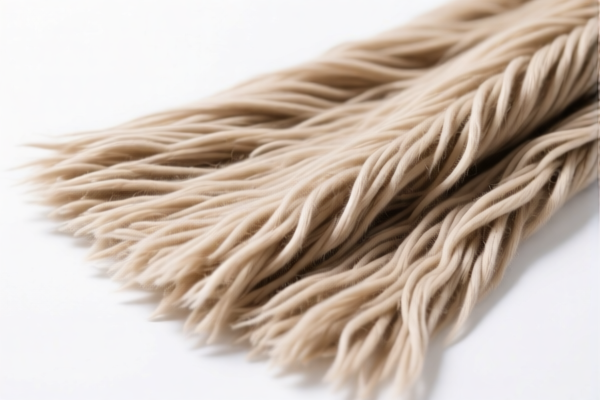

AI Analysis
🧸 Cartoon Plush Clothing (毛绒卡通服装)
🌐 HS Code Reference & Customs Clearance Guide | 2026 Latest Tariff Analysis | Professional Entry Strategy
📌 1. Product Definition: What is "Cartoon Plush Clothing"?
"Cartoon Plush Clothing" refers to garments made primarily from plush, artificial fur, or synthetic fiber materials, often designed with cartoon characters, animal shapes, or whimsical patterns. In international trade, these items are categorized based on their material composition and structural form. They are distinct from general textile garments because the "plush" or "fur-like" characteristic drives their classification under Chapter 43 (Furskins) or Chapter 95 (Toys), depending on whether they are worn as apparel or used as play items.
⚠️ Key Distinction:
- If the item is structured as a garment (has sleeves, legs, collar, or fasteners for wearing) → It falls under Chapter 43 (Fur/Apparel).
- If the item is a toy (e.g., a stuffed animal costume worn for play, or a plush doll accessory) → It may fall under Chapter 95 (Toys).
- If it is a generic finished textile product not fitting specific toy or fur definitions → It may fall under Chapter 63 (Other Made-up Textile Articles).
📦 2. HS Code Classification Details (2026 Latest Tariff Authority)
Based on the provided data, here are the three primary HS Codes applicable to "Cartoon Plush Clothing," along with their specific descriptions and tax implications.
| HS Code | Product Description | Applicable Scenario | Material/Form |
|---|---|---|---|
4303.10.00.30 |
Fur Clothing, conforming to the form of fur apparel | Wearable Garments: Coats, jackets, or full-body outfits made of plush/fur material, designed for wear. | ✅ Wearable Apparel |
4303.10.00.60 |
Fur Clothing, other fur apparel | Other Fur Apparel: Plush clothing that does not fit the specific definition of 4303.10.00.30 but is still classified as fur/plush apparel. | ✅ Wearable Apparel |
9503.00.00.73 |
Plush Toys, purpose as toys, material as plush | Toy Costumes/Dolls: Items marketed primarily as toys (e.g., plush animal costumes for children to wear as play, or plush accessories). | ✅ Toy/Play Item |
9503.00.00.71 |
Plush Toys, other toys, material as plush | Other Plush Toys: Plush items with a cartoon design that are classified as toys rather than apparel. | ✅ Toy/Play Item |
6307.90.98.91 |
Other Made-up Articles, plush toys as finished consumer goods | Generic Plush Items: Plush clothing or accessories that do not fit strictly into fur apparel or specific toy categories, often treated as general finished textile goods. | ✅ Finished Textile Good |
🔍 Critical Reminder:
- Wearability is Key: If the item is intended to be worn as everyday clothing (even if made of plush), it strongly favors HS 4303.
- Marketing Matters: If sold as a "Halloween Costume" or "Play Toy," customs may shift it to HS 9503.
- Generic Classification: If the item is a plush robe or accessory without clear toy or fur characteristics, HS 6307 may apply.
💰 3. 2026 Latest Tariff Rate Details (Including Surcharges & Policy Add-ons)
✅ Applicable Country: United States (US)
✅ Country of Origin: China (CN)
✅ Effective Date: Current rates apply (including Section 301 and IEEPA surcharges)
🎯 1. HS Codes 4303.10.00.30 & 4303.10.00.60 — Fur/Plush Clothing
| Item | Detail |
|---|---|
| Base Tariff Rate | 4.0% (Ad Valorem) |
| Section 301 Surcharge | +25.0% (Trade Act of 1974, Section 301) |
| IEEPA Surcharge (Section 122) | +10.0% (International Emergency Economic Powers Act) |
| Total Tariff Rate | 39.0% |
| Tax Calculation | CIF Value × 39% |
| De Minimis Exemption? | ❌ No (Cannot use $800 de minimis exemption for these HS codes if they are subject to IEEPA/Section 301) |
| Legal Basis Path | USITC:4303.10.00.30/60 → FOOTNOTE:301 → IEEPA:9903.01.24 |
📌 Explanation:
- Plush/fur clothing is considered a high-risk category for trade disputes.
- The 25% Section 301 tariff applies to most Chinese-made apparel and textiles.
- The 10% IEEPA tariff adds further cost.
- Total 39% is a significant cost driver. Proper classification is crucial to avoid overpayment or misclassification penalties.
🎯 2. HS Codes 9503.00.00.73 & 9503.00.00.71 — Plush Toys
| Item | Detail |
|---|---|
| Base Tariff Rate | 0.0% (Ad Valorem) |
| Section 301 Surcharge | 0.0% (Exempt from most Section 301 lists if properly classified as toys) |
| IEEPA Surcharge (Section 122) | +10.0% (Applies to Chinese-origin toys under current IEEPA rules) |
| Total Tariff Rate | 10.0% |
| Tax Calculation | CIF Value × 10% |
| De Minimis Exemption? | ⚠️ Check Eligibility: If classified as a toy, some entries may qualify for de minimis, but IEEPA surcharges often apply regardless. |
| Legal Basis Path | USITC:9503.00.00.71/73 → IEEPA:9903.01.24 |
📌 Explanation:
- Base rate is 0% for toys, which is a major advantage.
- However, the 10% IEEPA surcharge still applies.
- Total 10% is significantly lower than the 39% for apparel.
- Strategic Tip: If the item can be legitimately classified as a "toy" (e.g., a plush costume for play), it saves 29% in tariffs.
🎯 3. HS Code 6307.90.98.91 — Other Made-up Articles (Plush Toys as Finished Goods)
| Item | Detail |
|---|---|
| Base Tariff Rate | 7.0% (Ad Valorem) |
| Section 301 Surcharge | +7.5% (Partial Section 301 coverage for certain textile articles) |
| IEEPA Surcharge (Section 122) | +10.0% |
| Total Tariff Rate | 24.5% |
| Tax Calculation | CIF Value × 24.5% |
| De Minimis Exemption? | ❌ No (Subject to IEEPA) |
| Legal Basis Path | USITC:6307.90.98.91 → FOOTNOTE:301 → IEEPA:9903.01.24 |
📌 Explanation:
- This is a middle-ground classification.
- It is more expensive than toys (10%) but cheaper than fur apparel (39%).
- Use this only if the item does not fit neatly into "fur apparel" or "toy" categories.
🛠️ 4. Customs Clearance Practical Advice (Avoid Pitfalls)
✅ 1. Preparation Checklist (Non-Negotiable)
| Document | Required | Explanation |
|---|---|---|
| ✅ Product Photos | ✔️ | Clear images showing the item’s structure (wearable vs. toy). |
| ✅ Composition Label | ✔️ | Must state material content (e.g., "100% Polyester Plush"). |
| ✅ Marketing Materials | ✔️ | Brochures, website links showing if it’s sold as "Clothing" or "Toy." |
| ✅ Commercial Invoice | ✔️ | Must accurately describe the item using the chosen HS code description. |
| ✅ Origin Certificate | ✔️ | If not China-origin, may qualify for lower rates. |
✅ 2. Classification Strategy (Key Tips)
🔥 "Wear for Life, Not Just Play: Choose HS 4303. Wear for Fun, Choose HS 9503."
| Scenario | Recommended HS Code | Reason |
|---|---|---|
| Plush Coat, Jacket, or Onesie for Daily Wear | 4303.10.00.30 or 4303.10.00.60 |
Intended as apparel, has structure for wearing. |
| Halloween Costume (Plush Animal) | 9503.00.00.73 |
Marketed as a costume/toy, not daily wear. |
| Plush Doll or Stuffed Animal Accessory | 9503.00.00.71 |
Clearly a toy. |
| Generic Plush Robe or Blanket | 6307.90.98.91 |
Does not fit apparel or toy definitions. |
⚠️ Warning:
- Misclassification Risk: Declaring a plush coat as a "toy" to save tariffs can lead to seizure, fines, and back-taxes.
- Evidence is Key: Keep product catalogs, sales pages, and customer reviews that clarify the item’s primary use.
✅ 3. Special Cases & Mitigation
| Situation | Action |
|---|---|
| Dual-Use Item (e.g., Plush Onesie for Babies) | Argue for HS 9503 if marketed as a "play costume." Provide evidence of toy-like features. |
| High-Value Plush Apparel | Consider Advance Ruling from CBP to lock in classification and avoid surprise audits. |
| Non-China Origin | If produced in Vietnam, Mexico, or Canada, Section 301 and IEEPA may not apply. Check Free Trade Agreement (FTA) benefits. |
🌍 5. Global Market Comparison (2026)
| Country/Region | Recommended HS Code | Tariff Rate (China Origin) | Notes |
|---|---|---|---|
| 🇺🇸 USA | 4303.10.00.30 |
39% | High tariff due to Section 301 + IEEPA. |
| 🇪🇺 EU | 4303.10 |
Varies (0-12%) | No Section 301/IEEPA. Check CE marking. |
| 🇨🇳 China | 4303.10 |
1-4% | Low import duty. No surcharges. |
| 🇬🇧 UK | 4303.10 |
Varies (0-10%) | Post-Brexit rules apply. |
📌 Conclusion:
- USA is the most expensive market for plush clothing due to叠加 tariffs.
- EU and UK are more favorable if proper documentation is provided.
- China domestic market has low barriers for import.
📌 6. Common Mistakes & Pitfalls (Lessons Learned)
❌ Mistake 1: Classifying a plush winter coat as a "toy" to avoid 39% tariff.
👉 Consequence: CBP audits, back-taxes, and penalties.
✅ Fix: Use accurate descriptions like "Plush Winter Jacket, Model XYZ."
❌ Mistake 2: Ignoring IEEPA surcharges.
👉 Consequence: Unexpected 10% additional cost at customs.
✅ Fix: Always include IEEPA in your cost calculation.
❌ Mistake 3: Using vague descriptions like "Plush Item."
👉 Consequence: Customs delays, reclassification, and higher rates.
✅ Fix: Be specific: "Children's Plush Costume, Halloween Theme, 100% Polyester."
🎯 7. Conclusion: Optimize Classification, Save Costs!
🎯 Remember:
🔹 "Wearability = 39%, Playability = 10%, Generic = 24.5%."
🔹 "HS Code determines your duty. Choose wisely!"
🔹 "Evidence is your best defense. Keep marketing materials ready."
📌 Pro Tip:
If your plush clothing is originated outside China (e.g., Vietnam, Bangladesh), you may exempt Section 301 and IEEPA surcharges.
👉 Action: Source from non-China countries or apply for Pre-Ruling to confirm classification.
📣 Immediate Action:
📞 Consult a licensed customs broker.
📸 Provide product images and marketing materials.
📝 Apply for CBP Pre-Ruling if uncertain.
✨ Professional Clearance Starts with Accurate Classification!
💼 Every percentage point saved is pure profit!
Customer Reviews
About HS Code Classification
The Harmonized System (HS) is an internationally standardized nomenclature developed by the World Customs Organization (WCO) to classify traded products. Over 200 countries use the HS system as the basis for customs tariffs, trade statistics, and import/export regulations.
Each HS code follows a hierarchical structure:
- Chapter (2 digits) — Broad category of goods (e.g., Chapter 84: Machinery and Mechanical Appliances)
- Heading (4 digits) — More specific grouping within the chapter
- Subheading (6 digits) — Internationally standardized breakdown, used by all WCO member countries
- National subdivisions (8-10 digits) — Country-specific extensions for further classification, such as US HTSUS 10-digit codes
Correct HS code classification is essential for smooth customs clearance, accurate duty payment, and compliance with trade regulations. Misclassification can lead to customs delays, overpayment of duties, or penalties.
When importing from CN to US, the applicable tariff rates may include:
- Most-Favored-Nation (MFN) rate — The standard duty rate applied to WTO members
- General rate — Applied to countries without trade agreements
- Trade remedy duties — Additional tariffs such as Section 301 (anti-dumping), Section 232 (national security), or countervailing duties
The information provided on this page is for reference purposes only. For official classification, please consult with your local customs authority or a licensed customs broker.