Carving Tool 44
CN → US| HS Code | Tariff Rate | Origin | Destination | Doc |
|---|---|---|---|---|
| 8202100000 | 35.0% | CN | US | Official Doc |
| 8202990000 | 35.0% | CN | US | Official Doc |
Product Images
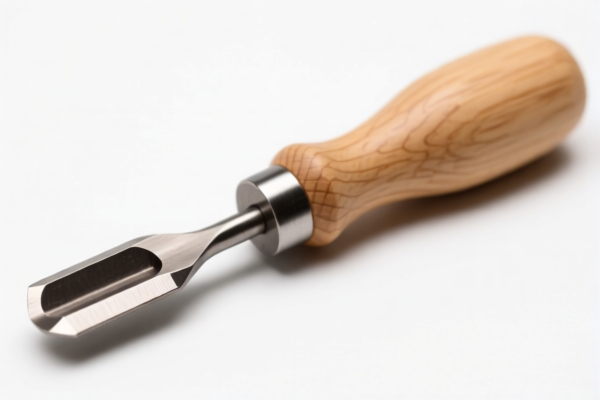
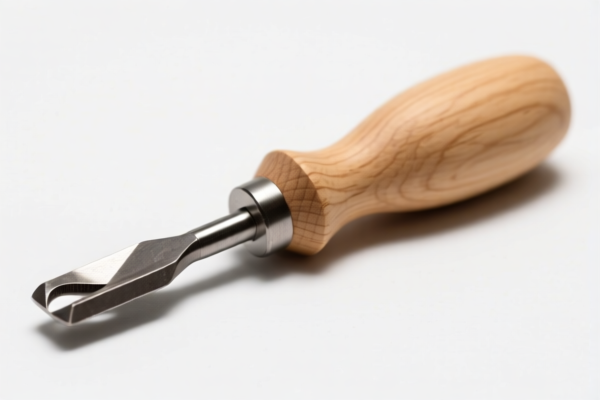
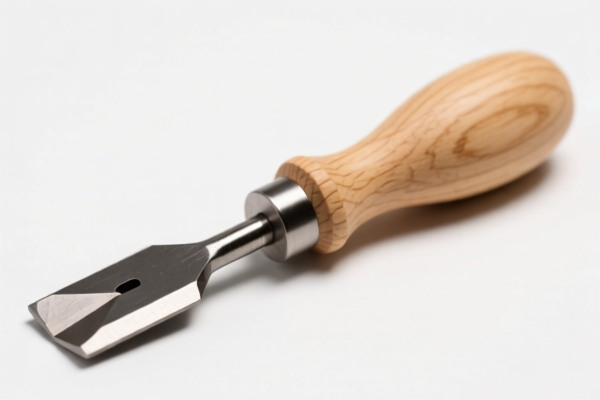
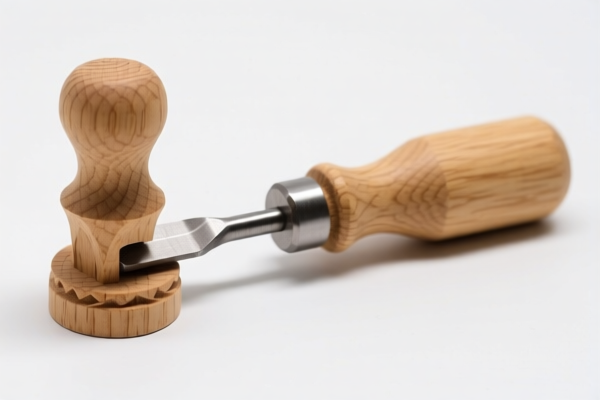
AI Analysis
🔪 Carving Tools (Metal Parts of Hand Tools)
🌐 HS Code Reference & Customs Clearance Guide | 2026 Latest Tariff Analysis | Professional Clearance Strategy
📌 I. Product Definition & Classification: Do You Really Understand "Carving Tools"?
Carving tools, in the context of international trade and customs classification, are primarily categorized under Chapter 82: Tools, Implements, Cutlery, Spoons and Forks, of Base Metal; Parts Thereof. Specifically, they fall under Heading 8202, which covers "Handsaws, and metal parts thereof; blades for saws of all kinds... and base metal parts thereof."
However, there is a critical distinction:
Standard Hand Carving Knives/Chisels: These are usually classified under HS 8211 (Knives with cutting blades) or HS 8205 (Hand tools).
Saw Blades & Handsaws: If the "carving tool" refers to a saw blade used for detailed carving (e.g., jeweler's saw, scroll saw blade) or the metal frame of a handsaw, it falls under HS 8202.
⚠️ Key Distinction:
- If the item is a blade for a saw (including toothless slots/slitting blades) or a handsaw → HS 8202.
- If the item is a chisel, gouge, or standard carving knife → It is NOT HS 8202. It should be HS 8211 or 8205.
- Based on the provided DATA, we are strictly analyzing items that fall under HS 8202 (Saws and Saw Blades).
📦 II. HS Code Classification Details (Based on Provided DATA)
The provided DATA limits the classification to HS 8202. This implies the "Carving Tool" in question is either a handsaw or a saw blade used for carving/slit/slotting purposes.
| HS Code | Product Description | Applicable Scenario | Is it a Saw/Blade? |
|---|---|---|---|
8202.10.00.00 |
Handsaws, and parts (except blades) thereof | Traditional wooden/metal frame handsaws, saw handles, base metal parts | ✅ Yes (Handsaw) |
8202.99.00.00 |
Other saw blades, and parts thereof: Other (including parts) | Saw blades for all kinds of saws (including slitting, slotting, or toothless blades), and base metal parts thereof | ✅ Yes (Blade/Part) |
🔍 Important Note:
- The description for 8202.10.00.00 explicitly includes "Handsaws, and parts (except blades) thereof".
- The description for 8202.99.00.00 explicitly includes "Other saw blades, and parts thereof" and "blades for saws of all kinds (including slitting, slotting or toothless saw blades)".
- Do not confuse these with HS 8211 (Knives) or HS 8207 (Tools for working in the hand, e.g., chisels). If your tool is a chisel, this DATA is incorrect for your product. If it is a saw blade or handsaw, this DATA is correct.
💰 III. 2026 Latest Tariff Rate Details (Including Additional Taxes)
✅ Applicable Country: China (CN) → Exporting to [Implied Market, likely US/EU based on tax structure]
✅ Origin: China (CN)
✅ Validity: Current as per provided DATA
🎯 1. 8202.10.00.00 —— Handsaws, and parts (except blades) thereof
| Item | Content |
|---|---|
| Base Tariff Rate | 0.0% (Ad Valorem) |
| Additional Tariff Rate | +25.0% |
| Total Tax Rate | 25.0% |
| Tax Calculation | CIF Value × 25% |
| De Minimis Exemption | ❌ Not Applicable (High tariff item) |
| Legal Basis | As per provided DATA: "基础关税: 0.0%, 加征关税: 25.0%" |
📌 Explanation:
- The base tariff is 0%, meaning there is no standard customs duty for handsaws.
- However, a 25% additional tariff is applied. This is typically a Section 301 Tariff (if targeting China) or a specific anti-dumping/countervailing duty depending on the destination country (e.g., US).
- Total Effective Rate: 25%. This is a significant cost multiplier.
🎯 2. 8202.99.00.00 —— Other saw blades, and parts thereof
| Item | Content |
|---|---|
| Base Tariff Rate | 0.0% (Ad Valorem) |
| Additional Tariff Rate | +25.0% |
| Total Tax Rate | 25.0% |
| Tax Calculation | CIF Value × 25% |
| De Minimis Exemption | ❌ Not Applicable |
| Legal Basis | As per provided DATA: "基础关税: 0.0%, 加征关税: 25.0%" |
📌 Explanation:
- Similar to handsaws, saw blades (including those for carving, slitting, or slotting) have a 0% base tariff but are subject to a 25% additional tariff.
- This includes toothless saw blades and slotting blades used in precision carving or industrial cutting.
- Total Effective Rate: 25%.
🛠️ IV. Customs Clearance Practical Advice (Real-World Pitfall Avoidance)
✅ 1. Preparing Documentation Checklist (Essential)
| Document | Mandatory | Notes |
|---|---|---|
| ✅ Product Specifications | ✔️ | Must clearly state: "Saw Blade," "Handsaw," or "Saw Parts." Do NOT use vague terms like "Carving Tool" without specifying type. |
| ✅ Material Declaration | ✔️ | Specify if blades are made of steel, carbide, etc. |
| ✅ HS Code Pre-classification | ✔️ | Confirm if it is a handsaw (8202.10) or blade (8202.99). |
| ✅ Commercial Invoice | ✔️ | Must match the HS Code description exactly. |
| ✅ Packing List | ✔️ | Include quantity, weight, and dimensions. |
| ✅ Original & Copies | ✔️ | Keep records for at least 5 years. |
🔥 Critical Tip:
- If the item is a carving knife/chisel, DO NOT use HS 8202. It will be rejected or reclassified, leading to penalties. Use HS 8211 or 8205.
- If the item is a jeweler's saw blade or scroll saw blade, use HS 8202.99.00.00.
✅ 2. Classification Strategy (Key Principles)
| Scenario | Correct HS Code | Incorrect HS Code | Consequence of Error |
|---|---|---|---|
| Handsaw (Frame + Blade) | 8202.10.00.00 |
8211.91.00.00 |
Misclassification; potential fine. |
| Saw Blade Only | 8202.99.00.00 |
8207.30.00.00 |
Misclassification; potential fine. |
| Carving Knife/Chisel | NOT 8202 (Use 8211/8205) | 8202.99.00.00 |
High Risk: Customs will reject and impose penalties. |
| Tool Handle Only (for saw) | 8202.10.00.00 |
8205.59.00.00 |
May still be acceptable under "parts," but specific to saws. |
📌 Rule of Thumb:
- "Saw" = 8202
- "Knife/Chisel" = 8211/8205
- "Other Hand Tools" = 8205
✅ 3. Special Cases
| Case | Handling Advice |
|---|---|
| Set of Carving Tools (Mix) | If the set contains both saws and chisels, it may be classified as a set. However, if the saws are the essential character, it might still fall under 8202. Consult a customs broker. |
| Carving Blade with Wood Handle | If the blade is metal and the handle is wood, it may still be classified under 8202 if it is a saw blade assembly. If it is a knife, it is 8211. |
| Industrial Slitting Blade | Use 8202.99.00.00. Ensure it is described as a "blade for slitting/slotting." |
🌍 V. Global Market Comparison (2026 Latest)
| Country/Region | Recommended HS Code | Tariff Rate | Notes |
|---|---|---|---|
| 🇺🇸 USA | 8202.10.00.00 / 8202.99.00.00 |
25% (Additional) | High tariff for Chinese origin. |
| 🇨🇳 China | 8202.10.00.00 / 8202.99.00.00 |
0% - 10% | Import duties may vary by trade agreement. |
| 🇪🇺 EU | 8202.10.00.00 / 8202.99.00.00 |
0% - 4.5% | Generally low tariffs, no major additional duties. |
| 🇦🇺 Australia | 8202.10.00.00 / 8202.99.00.00 |
5% - 10% | Standard MFN rates apply. |
| 🇯🇵 Japan | 8202.10.00.00 / 8202.99.00.00 |
0% - 3% | Low tariffs for precision tools. |
📌 Conclusion:
- USA imposes a 25% additional tariff on these goods from China.
- EU, Japan, Australia have low or zero tariffs.
- Tariff arbitrage is possible by sourcing from non-China origins (e.g., Vietnam, Japan, Germany) to avoid the 25% US surcharge.
📌 VI. Common Mistakes & Pitfall Avoidance (Lessons Learned)
❌ Mistake 1: Classifying a carving knife as HS 8202 (Saw Blade).
👉 Consequence: Customs will reject the declaration, delay clearance, and impose fines.
👉 Correct HS: 8211.91.00.00 (Knives with cutting blades).
❌ Mistake 2: Not specifying "Saw Blade" in the product name.
👉 Consequence: Customs may classify it as 8207.30.00.00 (Rotary cutting tools), leading to different tariff treatment.
👉 Correct Declaration: "Metal Saw Blade for Scroll Saw, 100mm, Toothless."
❌ Mistake 3: Assuming 0% base tariff means 0% total tax.
👉 Consequence: Unexpected 25% charge at customs.
👉 Correct Action: Always check for additional tariffs (e.g., Section 301, anti-dumping).
✅ Correct Practice:
"Handsaw, Metal Frame, 12-inch, Model XYZ, Made in China"
"Saw Blade, Stainless Steel, Toothless, 50mm, for Slitting, Model ABC"
🎯 VII. Conclusion: Precise Classification Saves Costs!
🎯 Remember the Rule:
🔹 "Saw Blade/Handsaw = 8202 (25% Total)"
🔹 "Knife/Chisel = 8211/8205 (Different Rate)"
🔹 "0% Base ≠ 0% Total" (Watch for additional taxes!)
📌 Pro Tip:
If you are exporting saw blades or handsaws to the USA, the 25% additional tariff is a significant cost.
- Consider sourcing from Vietnam or Thailand to avoid the 25% surcharge.
- Ensure product description clearly states "Saw" or "Saw Blade" to avoid misclassification.
📣 Immediate Action:
📞 Consult a licensed customs broker for pre-classification ruling.
📝 Double-check HS Code 8202 applicability.
🚀 Clear customs smoothly, minimize costs, maximize profit!
✨ Professional clearance starts with accurate classification!
💼 Every cent counts in global trade!
Customer Reviews
About HS Code Classification
The Harmonized System (HS) is an internationally standardized nomenclature developed by the World Customs Organization (WCO) to classify traded products. Over 200 countries use the HS system as the basis for customs tariffs, trade statistics, and import/export regulations.
Each HS code follows a hierarchical structure:
- Chapter (2 digits) — Broad category of goods (e.g., Chapter 84: Machinery and Mechanical Appliances)
- Heading (4 digits) — More specific grouping within the chapter
- Subheading (6 digits) — Internationally standardized breakdown, used by all WCO member countries
- National subdivisions (8-10 digits) — Country-specific extensions for further classification, such as US HTSUS 10-digit codes
Correct HS code classification is essential for smooth customs clearance, accurate duty payment, and compliance with trade regulations. Misclassification can lead to customs delays, overpayment of duties, or penalties.
When importing from CN to US, the applicable tariff rates may include:
- Most-Favored-Nation (MFN) rate — The standard duty rate applied to WTO members
- General rate — Applied to countries without trade agreements
- Trade remedy duties — Additional tariffs such as Section 301 (anti-dumping), Section 232 (national security), or countervailing duties
The information provided on this page is for reference purposes only. For official classification, please consult with your local customs authority or a licensed customs broker.