Cash Register Paper
CN → US| HS Code | Tariff Rate | Origin | Destination | Doc |
|---|---|---|---|---|
| 4811908030 | 35.0% | CN | US | Official Doc |
| 4811909030 | 35.0% | CN | US | Official Doc |
Product Images
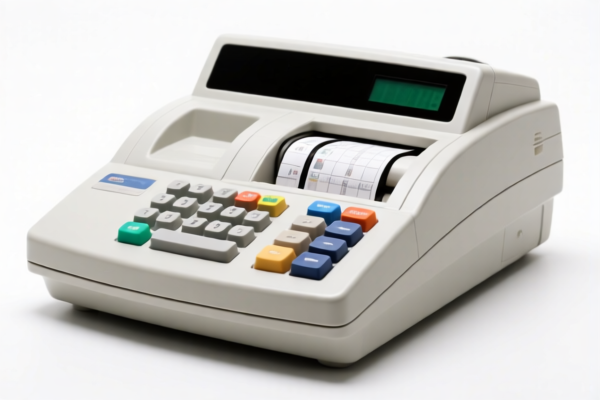
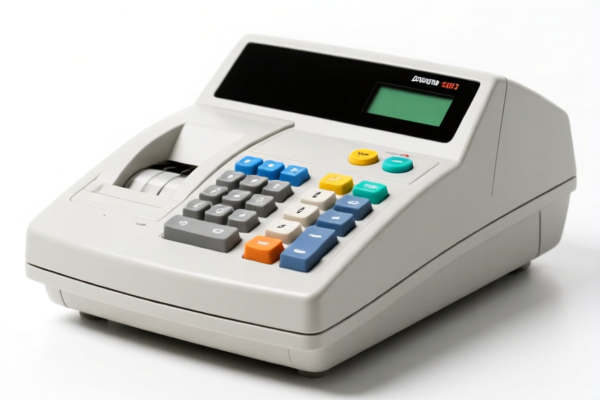


AI Analysis
🧾 Cash Register Paper (Thermal Receipt Paper)
🌐 HS Code Reference & Customs Clearance Guide | 2026 Latest Tariff Analysis | Professional Clearance Strategy
📌 I. Product Definition and Classification: Do You Really Understand "Cash Register Paper"?
Cash Register Paper, commonly known as Thermal Receipt Paper or Direct Thermal Paper, is a specialized paper product coated with heat-sensitive materials. When passed through a thermal printer head, the coated areas turn black, creating text and images without the need for ink or toner.
In international trade, it is strictly categorized under Chapter 48: Paper and Paperboard. It is NOT considered simple writing paper or printing paper, but rather a processed, coated product specifically for thermal recording.
⚠️ Key Distinction Point:
- If the paper is Direct Thermal Coated (no carbon paper or ink required): It falls under 4811.90.
- If the paper is Uncoated/Standard Bond Paper: It would fall under different headings (e.g., 4802), but Cash Register Paper is almost exclusively Thermal/Coated.
- Shape Matters: Classification depends heavily on whether it is in rolls/strips or sheets.
📦 II. HS Code Classification Details (2026 Latest Tariff Authoritative Comparison)
Based on the provided data, there are two primary HS Codes for Direct Thermal Coated Paper, differentiated by dimensions.
| HS Code | Product Description | Dimensions Requirement | Applicable Scenario | Tax Rate (Total) |
|---|---|---|---|---|
4811.90.80.30 |
Direct Thermal Coated Paper | Width > 15 cm (Rolls/Strips) OR Sheets: One side > 36 cm AND other side > 15 cm |
Large format thermal receipts, industrial labels, large-ticket receipts, POS systems for supermarkets | 25.0% |
4811.90.90.30 |
Direct Thermal Coated Paper | Other (Does not meet the size criteria above) | Standard small receipt rolls (e.g., width ≤ 15 cm), small thermal labels, small sheets | 25.0% |
🔍 Critical Note:
- Both HS Codes carry the same total tax rate of 25.0%.
- The distinction is purely dimensional.
- Standard Thermal Rolls (like those in small coffee shops, often 80mm or 57mm wide) likely fall under4811.90.90.30because the width is ≤ 15 cm.
- Large Format Thermal Paper (e.g., for invoices or large labels > 15 cm wide) falls under4811.90.80.30.
💰 III. 2026 Latest Tariff Rate Details (Including Additional Taxes & Policy Surcharges)
✅ Applicable Country: United States (US)
✅ Origin: China (CN)
✅ Effective Date: November 10, 2025 (including subsequent imports)
🎯 1. 4811.90.80.30 —— Direct Thermal Coated Paper (Larger Dimensions)
| Item | Content |
|---|---|
| Base Tariff | 0.0% (Ad Valorem) |
| Section 301 Additional Tariff | +25.0% (Applied to goods from China) |
| Total Tax Rate | 25.0% |
| Tax Calculation | CIF Value × 25% |
| De Minimis Exemption | ❌ Not Applicable (Section 301 goods are excluded from $800 de minimis exemption) |
| Legal Basis Path | HTSUS:4811.90.80.30 → USITC Footnote: Section 301 List 4 → USTR Determination |
📌 Explanation:
- The base duty for this paper category is 0%, which is common for many paper products.
- However, the 25% surcharge is imposed under Section 301 of the Trade Act of 1974 due to the "China-specific" tariff list.
- Total Effective Rate: 25%. This is a significant cost factor that must be priced into the CIF value.
🎯 2. 4811.90.90.30 —— Direct Thermal Coated Paper (Other/Smaller Dimensions)
| Item | Content |
|---|---|
| Base Tariff | 0.0% (Ad Valorem) |
| Section 301 Additional Tariff | +25.0% (Applied to goods from China) |
| Total Tax Rate | 25.0% |
| Tax Calculation | CIF Value × 25% |
| De Minimis Exemption | ❌ Not Applicable (Section 301 goods are excluded from $800 de minimis exemption) |
| Legal Basis Path | HTSUS:4811.90.90.30 → USITC Footnote: Section 301 List 4 → USTR Determination |
📌 Note:
- Same as above. Whether the roll is small or large, the 25% surcharge applies.
- Do not assume "smaller = cheaper duty." In this category, the base is 0% for both, but the surcharge is uniform.
🛠️ IV. Customs Clearance Practical Advice (Battle-Tested Pitfall Avoidance Guide)
✅ 1. Required Documentation Checklist (Missing Items = Delay)
| Document | Mandatory? | Description |
|---|---|---|
| ✅ Commercial Invoice | ✔️ | Must clearly state: "Direct Thermal Coated Paper," HS Code, Country of Origin (China), and Unit Price. |
| ✅ Product Specification Sheet | ✔️ | Detail: Basis weight (g/m²), coating type, width, length per roll, core size. Crucial for determining HS Code (80.30 vs 90.30). |
| ✅ Packing List | ✔️ | Show total weight, number of rolls/cartons. Ensure dimensions match invoice. |
| ✅ Certificate of Origin (CO) | ✔️ | Proves Chinese origin to confirm Section 301 applicability. |
| ✅ Declaration of Non-Coated/Non-Ink | ✔️ | Optional but helpful: Confirm it is Direct Thermal (no ink/carbon), not thermal transfer or photo paper. |
✅ 2. Declaration Tips (Key Mantra)
🔥 "Width is King, Thermal is Key, Don't Say 'Receipts,' Say 'Paper'!"
| Situation | Correct Declaration | Wrong Practice |
|---|---|---|
| Thermal Rolls (e.g., 80mm width) | HS Code: 4811.90.90.30Description: "Direct Thermal Coated Paper in Rolls" |
Declaring as "Receipt Paper" or "Printing Paper" → May be misclassified as 4802/4809 → Risk of audit. |
| Large Thermal Sheets (>15cm) | HS Code: 4811.90.80.30Description: "Direct Thermal Coated Paper in Sheets" |
Using same code as rolls → Incorrect dimension classification. |
| Pre-cut Receipts (with printed text) | If merely cut, still 4811.90.x0.30. If heavily printed as finished goods, check heading 4811 vs 4901. |
Assuming printed receipts = Heading 4901 → Risk of misclassification. |
| Thermal Transfer Paper (needs ribbon) | NOT this category. Likely 4811.90.90.90 or other. | Using Thermal Receipt Code for Thermal Transfer → Customs penalty. |
✅ 3. Special Circumstances Handling
| Situation | Handling Advice |
|---|---|
| Small Parcels (De Minimis) | ⚠️ Critical: Section 301 goods are EXCLUDED from the $800 de minimis exemption (US Customs Ruling HQ H309438). Even if < $800, you MUST pay the 25% tax. Do not try to bypass via postal. |
| Mixed Containers | If shipping with other goods (e.g., POS machines), ensure thermal paper is clearly separated on the invoice. Do not bundle with hardware to hide value. |
| Weight per m² | The data specifies "Over 30 g/m²". Ensure your paper meets this. If < 30 g/m², it may fall under different sub-headings (not covered in this data), but 25% surcharge likely still applies under Section 301. |
🌍 V. Global Major Market Comparison (2026 Latest)
| Country/Region | Recommended HS Code | Tariff (China Origin) | Certification Requirements | Notes |
|---|---|---|---|---|
| 🇺🇸 USA | 4811.90.80.30 / 4811.90.90.30 |
25.0% (Total) | No specific US certification for paper. | 25% surcharge is mandatory. De minimis does NOT apply. |
| 🇨🇳 China | 4811.90 | 5-10% (Varies) | None | Low import tax. |
| 🇪🇺 EU | 4811.90 | 6.5% (Standard) | REACH (Chemical content in coating) | Check if coating contains restricted substances. |
| 🇬🇧 UK | 4811.90 | 6.5% | UKCA (if applicable to other goods) | Post-Brexit rules similar to EU. |
| 🇯🇵 Japan | 4811.90 | 6.5% | JIS Standards (Optional) | No special surcharges. |
| 🇦🇺 Australia | 4811.90 | 5% | ACCC (Chemical safety) | Low tariff, but check chemical safety. |
📌 Conclusion:
- The US market is the most expensive due to the 25% Section 301 surcharge.
- No other major market imposes such a high specific tariff on thermal paper.
- Cost Advantage: Consider sourcing or assembling in countries not subject to Section 301 (e.g., Vietnam, Mexico) if exporting to the US, though paper coatings often limit this flexibility.
📌 VI. Common Errors & Pitfall Guide (Lessons Learned)
❌ Error 1: Declaring as "Printing Paper" (HS 4802) to avoid 25% tax
👉 Consequence: Customs will reclassify to 4811, assess 25% tax + penalties + interest. High risk.
❌ Error 2: Using De Minimis for small shipments (<$800)
👉 Consequence: US Customs will detain and assess 25% tax. Fines apply. Section 301 goods are explicitly excluded.
❌ Error 3: Not specifying "Direct Thermal" in description
👉 Consequence: Ambiguity leads to manual classification delays. Clear description is key.
❌ Error 4: Confusing with "Thermal Transfer" paper
👉 Consequence: Thermal transfer paper may have different coating properties. Ensure correct HS sub-heading if not direct thermal.
✅ Correct Declaration Example:
"Direct Thermal Coated Paper, 80mm Width, 30g/m², in Rolls, Origin: China, HS Code: 4811.90.90.30, Subject to 25% Section 301 Surcharge."
🎯 VII. Conclusion: Precise Classification Saves Money
🎯 Remember the Mantra:
🔹 "Thermal Paper is 4811, 25% Tax is Inevitable."
🔹 "Small Rolls are 90.30, Large Rolls are 80.30, But Tax is Same: 25%."
🔹 "De Minimis Does NOT Apply to Section 301 Goods!"
📌 Pro Tip:
If you are importing large volumes, consider bonded warehouses or foreign trade zones (FTZs) in the US to defer duty payments until the goods are sold domestically. This improves cash flow.
📣 Immediate Action:
📞 Consult your freight forwarder to confirm HS Code 4811.90.x0.30 applies to your specific roll widths.
📊 Calculate CIF × 25% in your profit margin. Do not underestimate this cost.
📋 Ensure your invoice explicitly states "China Origin" and "Thermal Coated" to avoid delays.
✨ Professional Clearance Starts with Accurate Classification!
💼 Your Every Dollar is Worth Precise Calculation!
Customer Reviews
About HS Code Classification
The Harmonized System (HS) is an internationally standardized nomenclature developed by the World Customs Organization (WCO) to classify traded products. Over 200 countries use the HS system as the basis for customs tariffs, trade statistics, and import/export regulations.
Each HS code follows a hierarchical structure:
- Chapter (2 digits) — Broad category of goods (e.g., Chapter 84: Machinery and Mechanical Appliances)
- Heading (4 digits) — More specific grouping within the chapter
- Subheading (6 digits) — Internationally standardized breakdown, used by all WCO member countries
- National subdivisions (8-10 digits) — Country-specific extensions for further classification, such as US HTSUS 10-digit codes
Correct HS code classification is essential for smooth customs clearance, accurate duty payment, and compliance with trade regulations. Misclassification can lead to customs delays, overpayment of duties, or penalties.
When importing from CN to US, the applicable tariff rates may include:
- Most-Favored-Nation (MFN) rate — The standard duty rate applied to WTO members
- General rate — Applied to countries without trade agreements
- Trade remedy duties — Additional tariffs such as Section 301 (anti-dumping), Section 232 (national security), or countervailing duties
The information provided on this page is for reference purposes only. For official classification, please consult with your local customs authority or a licensed customs broker.