Cash Register Paper Roll
CN → US| HS Code | Tariff Rate | Origin | Destination | Doc |
|---|---|---|---|---|
| 4823400000 | 35.0% | CN | US | Official Doc |
| 4811592000 | 35.0% | CN | US | Official Doc |
| 4805911090 | 35.0% | CN | US | Official Doc |
| 4811902000 | 35.0% | CN | US | Official Doc |
| 4823908680 | 35.0% | CN | US | Official Doc |
Product Images
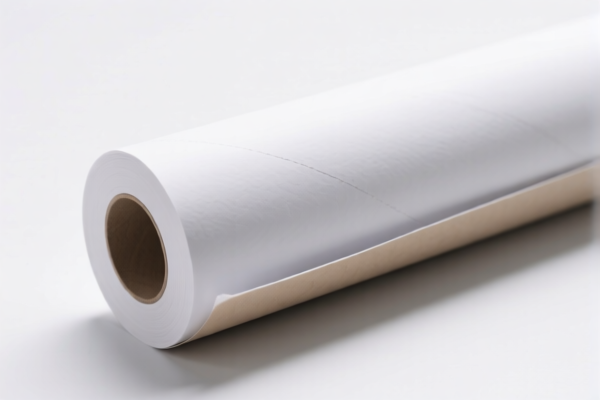
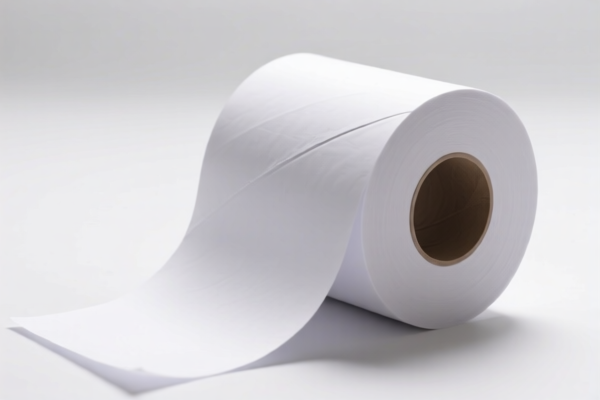
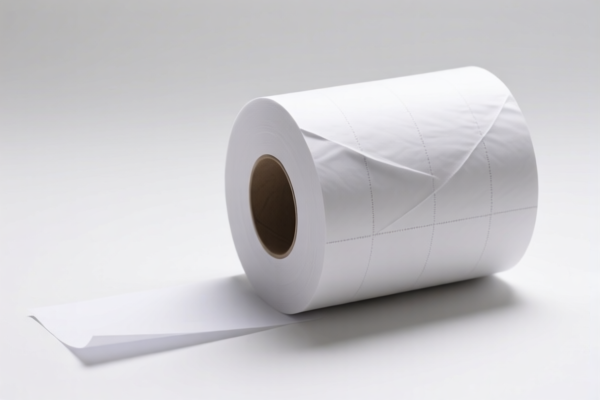

AI Analysis
🧾 Cash Register Paper Roll (Thermal Receipt Rolls)
🌐 HS Code Reference & Customs Clearance Guide | 2026 Latest Tariff Analysis | Professional Entry Strategy
📌 I. Product Definition & Classification: Do You Truly Understand "Cash Register Paper"?
Cash register paper rolls, commonly known as thermal receipt rolls, are the essential consumables for point-of-sale (POS) systems, ATMs, medical equipment, and logistics printers. In international trade, they are strictly categorized based on their material composition, surface treatment (coating), and physical form.
The critical distinction lies in whether the paper is coated (thermal/printed) or uncoated (plain raw stock), and whether it falls under specific sub-categories for printing or general paper products.
⚠️ Key Distinction Point:
- If the paper is uncoated and intended for general use or further processing → May fall under 4805.91.10.90;
- If the paper is coated, printed, or processed for specific thermal/inkjet applications → Falls under 4811 or 4823 series;
- Width matters: Rolls wider than 15cm often trigger specific sub-headers for "other paper rolls."
📦 II. HS Code Classification Details (2026 Latest Tariff Authority Mapping)
Based on the provided data, here are the five valid HS Codes for "Cash Register Paper Rolls" and the rationale for each:
| HS Code | Product Description | Application Scenario | Classification Logic |
|---|---|---|---|
4823.40.00.00 |
Wide-format printing paper roll, paper material, roll form, for printing | General wide-format receipt rolls, standard POS rolls | Classified as "Paper rolls for printing"; broad category for printed/usable paper rolls |
4811.59.20.00 |
Wide-format printing paper roll, paper material, roll form, width meets wide-format criteria, coated/printed paper attributes | Thermal receipt rolls, inkjet-ready rolls, coated stock | Classified as "Processed/Paper coated or impregnated"; specific to paper with surface treatment for printing |
4805.91.10.90 |
Wide-format printing paper roll, paper material, roll form, uncoated paper category | Raw stock, non-thermal plain paper rolls, base paper for further processing | Classified as "Uncoated paper"; applies if the roll lacks thermal coating or specific printing treatment |
4811.90.20.00 |
Wide-format printing paper roll, paper material, roll form, width > 15cm, other category | Specialty wide rolls, industrial receipt paper, non-standard widths | Classified as "Other paper articles"; catches wider rolls that don't fit standard narrow-width categories |
4823.90.86.80 |
Wide-format printing paper roll, paper material, roll form, other paper products | General waste paper rolls, non-specific paper rolls, miscellaneous paper items | Classified as "Other paper制品"; fallback category for rolls not fitting specific printing/coated definitions |
🔍 Key Reminder:
- Thermal Coated Rolls (most common in POS) typically fall under 4811 series due to chemical coating;
- Plain/Uncoated Rolls fall under 4805;
- Width is critical: Rolls >15cm often move out of standard narrow-roll categories into 4811 or 4823;
- Do not mix "coated" and "uncoated" declarations for the same shipment.
💰 III. 2026 Latest Tariff Rate Breakdown (Including Surcharges & Policy Add-ons)
✅ Applicable Country: United States (US)
✅ Country of Origin: China (CN)
✅ Effective Date: 2025 November 10 onwards (including subsequent imports)
All five HS Codes listed in the data share the exact same tax structure, as they are all subject to the same trade policy framework for Chinese-origin paper products.
🎯 Universal Tax Structure for All Listed HS Codes
| HS Code | Base Tariff | Section 301 Tariff | Section 122 Tariff | Total Tax Rate | Tax Calculation |
|---|---|---|---|---|---|
4823.40.00.00 |
0.0% | 25.0% | 10.0% | 35.0% | CIF Value × 35% |
4811.59.20.00 |
0.0% | 25.0% | 10.0% | 35.0% | CIF Value × 35% |
4805.91.10.90 |
0.0% | 25.0% | 10.0% | 35.0% | CIF Value × 35% |
4811.90.20.00 |
0.0% | 25.0% | 10.0% | 35.0% | CIF Value × 35% |
4823.90.86.80 |
0.0% | 25.0% | 10.0% | 35.0% | CIF Value × 35% |
📌 Explanation of Tax Components:
- "Base Tariff: 0.0%": The standard Most Favored Nation (MFN) rate for paper products is often 0% or very low.
- "Section 301 Tariff: 25.0%": The additional tariff imposed under US Trade Law Section 301 against Chinese goods. This is the dominant cost driver.
- "Section 122 Tariff: 10.0%": An additional tariff under Section 122 of the Trade Expansion Act (often applied to national security concerns or specific material categories).
- "Total: 35.0%": A very high effective rate. Importers must budget for this heavily.
- De Minimis Exemption: ❌ NOT APPLICABLE. Section 301 tariffs are not covered by the $800 de minimis exemption. Every shipment, regardless of value, is subject to the 35% duty.
- Legal Authority Path:Section 301→Section 122→USITC HS Code→Footnote Application
🛠️ IV. Customs Clearance Practical Advice (Battle-Tested Pitfall Guide)
✅ 1. Required Documentation Checklist (All Mandatory)
| Document | Required? | Notes |
|---|---|---|
| ✅ Product Specification Sheet | ✔️ | Must specify: Paper type (thermal/plain), coating type, width, length, weight per roll, core size. |
| ✅ Material Safety Data Sheet (MSDS) | ✔️ | For thermal paper, especially if containing BPA/BPS, to confirm chemical compliance. |
| ✅ Commercial Invoice | ✔️ | Must clearly state: "Cash Register Paper Roll," HS Code, Country of Origin (China), CIF value. |
| ✅ Packing List | ✔️ | Detail number of rolls per carton, total weight, dimensions. Avoid vague terms like "Office Supplies." |
| ✅ Proof of Origin | ✔️ | Certificate of Origin (CO) from China is mandatory for Section 301/122 assessment. |
| ✅ Test Reports | ✔️ | If claiming thermal coating, provide lab reports confirming coating composition (thermal vs. non-thermal). |
✅ 2. Declaration Strategy (Critical Rules)
🔥 "Declare Material, Declare Form, Declare Width!"
| Scenario | Correct Declaration | Wrong Declaration | Consequence |
|---|---|---|---|
| Thermal Receipt Roll (most common) | HS Code 4811.59.20.00 + "Coated Thermal Paper Roll" |
Declaring as 4805 (Uncoated) |
Misclassification Penalty + Back Duties |
| Plain Paper Roll (no coating) | HS Code 4805.91.10.90 + "Uncoated Paper Roll" |
Declaring as 4811 (Coated) |
Audit Risk + Potential Fine |
| Wide Roll >15cm | HS Code 4811.90.20.00 or 4823.40.00.00 |
Declaring as standard narrow roll | Incorrect Tariff Application |
| Mixed Shipment (Thermal + Plain) | Split Declaration | Mixed under one HS Code | Customs Hold + Rejection |
✅ 3. Special Circumstances Handling
| Situation | Handling Advice |
|---|---|
| BPA-Free Thermal Paper | Provide MSDS and test reports to prove compliance; still subject to 35% tariff. |
| OEM Branded Rolls | Provide OEM agreement; brand name does not affect HS Code, but must be declared accurately. |
| Rolls with Printer Heads | Do not declare as paper! If printer heads are included, the entire unit may be classified as a printer (HS Code 8443), with different tax rates. Keep paper and printer separate. |
| Recycled Paper Rolls | Must provide recycled content percentage; may affect environmental compliance but not tariff rate. |
🌍 V. Global Market Comparison for Cash Register Paper Rolls (2026)
| Country/Region | Recommended HS Code | Tariff Rate (China Origin) | Certification Requirements | Notes |
|---|---|---|---|---|
| 🇺🇸 United States | 4811.59.20.00 (Thermal) |
35% (0% Base + 25% Sec 301 + 10% Sec 122) | None specific, but MSDS recommended | Highest Cost Market. No de minimis exemption. |
| 🇨🇳 China | 4811.59.20.00 |
5% - 10% (Import Duty) | China RoHS (if applicable) | Domestic production dominates. |
| 🇪🇺 European Union | 4811.59.00.00 |
6.5% (Standard) | REACH, BPA Restrictions | EU has strict BPA limits; ensure compliance. |
| 🇯🇵 Japan | 4811.59.00.00 |
5% | JIS Standards | High quality standards; frequent audits. |
| 🇦🇺 Australia | 4811.59.00.00 |
5% | Australian Standards | No major surcharges, but strict labeling. |
📌 Conclusion:
- The US is by far the most expensive market for Chinese-made cash register paper due to the 35% combined tariff.
- EU, Japan, and Australia have standard tariffs around 5-6.5%, making them more cost-effective for export.
- BPA-Free Compliance is critical for all markets, especially EU and US, to avoid product recalls.
📌 VI. Common Errors & Pitfall Guide (Lessons Learned)
❌ Error 1: Declaring "Thermal Paper" as "Uncoated Paper" (4805) to avoid surcharges
👉 Consequence: Customs inspection will reveal thermal coating → Penalty, Back Taxes, and Ship Delay.
❌ Error 2: Including printer cartridges or printer heads in the same shipment
👉 Consequence: Misclassification → The entire shipment may be reclassified as printing equipment → Different HS Code, Different Tax.
❌ Error 3: Using vague descriptions like "Office Paper" or "Receipt Paper" without HS Code specificity
👉 Consequence: Customs officer has discretion to assign incorrect HS Code → Audit Risk.
❌ Error 4: Ignoring Section 122 Tariff (10%)
👉 Consequence: Underpaying duties → Seizure and Fines.
✅ Correct Practice:
"Thermal Cash Register Paper Roll, Width 80mm, Length 100m, Coated, BPA-Free, Model XYZ, Origin: China"
HS Code:4811.59.20.00
🎯 VII. Conclusion: Professional Declaration Saves Money!
🎯 Key Takeaways:
🔹 "Thermal Paper = Coated Paper = HS Code 4811"
🔹 "US Market = 35% Total Tariff (No Exemptions)"
🔹 "Separate Paper from Printers!"
🔹 "BPA-Free Certification is Non-Negotiable in EU/US"
📌 Pro Tip:
If you are exporting to the US, consider transshipment through a third country (e.g., Vietnam, Malaysia) for paper reprocessing to potentially avoid Section 301 tariffs. However, ensure substantial transformation occurs to change the Country of Origin legally.
For all other markets, direct export is more cost-effective due to lower tariffs.
📣 Immediate Action Required:
📞 Verify Coating Type (Thermal vs. Uncoated)
📞 Confirm Roll Width (>15cm or <15cm)
📞 Calculate 35% Tariff Impact on CIF Value
🚀 Ensure MSDS and BPA-Free Reports are Ready for Customs Inspection
✨ Precision in Declaration, Profit in Export!
💼 Every Roll Counts – Declare It Right!
Customer Reviews
About HS Code Classification
The Harmonized System (HS) is an internationally standardized nomenclature developed by the World Customs Organization (WCO) to classify traded products. Over 200 countries use the HS system as the basis for customs tariffs, trade statistics, and import/export regulations.
Each HS code follows a hierarchical structure:
- Chapter (2 digits) — Broad category of goods (e.g., Chapter 84: Machinery and Mechanical Appliances)
- Heading (4 digits) — More specific grouping within the chapter
- Subheading (6 digits) — Internationally standardized breakdown, used by all WCO member countries
- National subdivisions (8-10 digits) — Country-specific extensions for further classification, such as US HTSUS 10-digit codes
Correct HS code classification is essential for smooth customs clearance, accurate duty payment, and compliance with trade regulations. Misclassification can lead to customs delays, overpayment of duties, or penalties.
When importing from CN to US, the applicable tariff rates may include:
- Most-Favored-Nation (MFN) rate — The standard duty rate applied to WTO members
- General rate — Applied to countries without trade agreements
- Trade remedy duties — Additional tariffs such as Section 301 (anti-dumping), Section 232 (national security), or countervailing duties
The information provided on this page is for reference purposes only. For official classification, please consult with your local customs authority or a licensed customs broker.