Casings Cutter
CN → US| HS Code | Tariff Rate | Origin | Destination | Doc |
|---|---|---|---|---|
| 8203406000 | 38.3% | CN | US | Official Doc |
| 8203403000 | 41.0% | CN | US | Official Doc |
| 8461504010 | 39.4% | CN | US | Official Doc |
| 8461508010 | 39.4% | CN | US | Official Doc |
| 8466933000 | 40.8% | CN | US | Official Doc |
| 8466931530 | 35.0% | CN | US | Official Doc |
Product Images
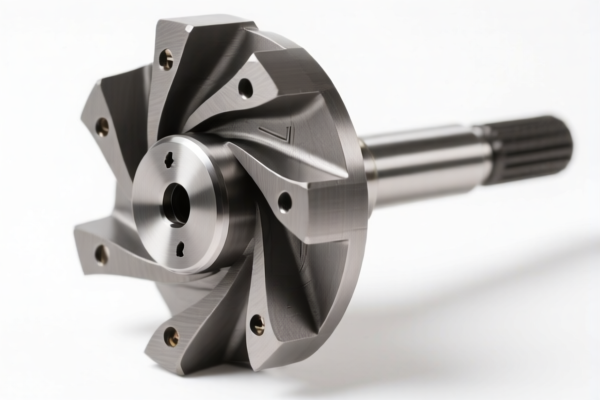
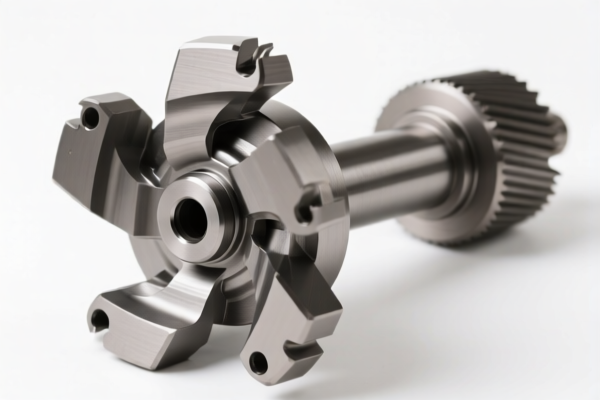
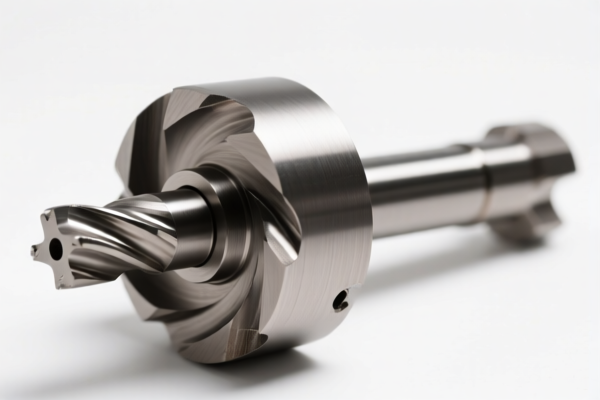
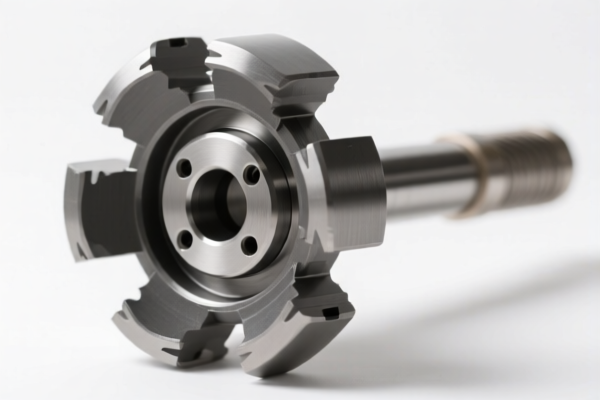
AI Analysis
🔪 Casings Cutter (Industrial/Handheld Cutting Tools)
🌐 HS Code Reference & Customs Clearance Guide | 2026 Latest Tariff Analysis | Professional-Level Clearance Strategy 📌 I. Product Definition & Classification: What Exactly is a "Casings Cutter"?
In international trade, "Casings Cutter" is a functional description rather than a strict legal term. It generally refers to tools used to slice, trim, or sever various types of casings, including food casings (collagen/cellulose), cable sheaths, rubber tubes, or plastic pipes.
Based on the specific material and mechanism, these tools fall into two main categories in the HS Code system:
- Hand Tools: Manual pliers, shears, or knives used for small-scale cutting.
- Example: Manual cable stripping pliers, handheld collagen casing cutters.
- Machine Tools: Powered or numerically controlled (CNC) machines used in industrial settings for mass production.
- Example: CNC tube cutting machines, automated industrial saws.
⚠️ Key Distinction: - If it is a manual tool (pliers, shears, pincers) → Look at Chapter 82 (Hand Tools). - If it is a powered machine (sawing, cutting-off machine) → Look at Chapter 84 (Machinery). - Critical Check: Is it "Used/Rebuilt"? This significantly affects the HS Code and duty rate.
📦 II. HS Code Classification Details (2026 Latest Tariff Authority Comparison)
Based on the provided data, here are the specific HS Codes relevant to "Cutting Tools" and "Cutting Machines":
| HS Code | Product Description | Applicable Scenario | Condition/Feature |
|---|---|---|---|
8203.40.60.00 |
Hand Tools: Pipe cutters, bolt cutters, perforating punches, and similar tools | Manual cutting of pipes, cables, or casings; Handheld shears | Other (Standard hand tools) |
8203.40.30.00 |
Hand Tools: Pipe cutters, bolt cutters, perforating punches, and similar tools | Manual cutting tools with high durability | Alloy Content: Cutting part contains >0.2% Cr/Mo/W or >0.1% V |
8461.50.40.10 |
Machine Tools: Sawing or cutting-off machines | Industrial automated cutting | Numerically Controlled (CNC) Used or Rebuilt |
8461.50.80.10 |
Machine Tools: Sawing or cutting-off machines | Industrial automated cutting | Other (Non-CNC) Used or Rebuilt |
8466.93.30.00 |
Machine Parts: For metalworking machine tools | Spare parts for gear cutting machines | Castings/Weldments for gear cutting machines |
8466.93.15.30 |
Machine Parts: For metalworking machine tools | Spare parts (cleaned cast-iron parts) | For gear cutting, grinding, or finishing machines |
🔍 Key Reminder: - Manual Casings Cutters (e.g., pliers for cable casing) typically fall under 8203.40. - Industrial Casings Cutting Machines (e.g., CNC tube cutters) fall under 8461.50. - Parts for these machines fall under 8466.93, but only if they are specifically for metalworking/gear machines. Generic parts for plastic/rubber cutters might not fit this exact subheading.
💰 III. 2026 Latest Tariff Rate Breakdown (Including Additional Duties)
✅ Applicable Country: United States (US) ✅ Origin: China (CN) ✅ Effective Date: From Nov 10, 2025 (and subsequent imports)
🎯 1. 8203.40.60.00 & 8203.40.30.00 —— Hand Tools (Pipe Cutters, Pliers, Shears)
| Item | Content |
|---|---|
| Base Duty Rate | 0.0% (Ad Valorem) |
| Additional Duty (Section 301/IEEPA) | 0.0% |
| Total Tax Rate | 0.0% |
| Tax Calculation | CIF Value × 0% = $0 |
| De Minimis Exemption | ✅ Yes (For shipments < $800, though duties are already 0%) |
| Legal Basis Path | HTSUS: 8203.40.x0.00 |
📌 Explanation: - Excellent News: Standard hand tools like pipe cutters, bolt cutters, and pliers (including those used for cutting casings) currently have 0% base duty and 0% additional duty. - This applies to both standard tools (
8203.40.60.00) and high-alloy tools (8203.40.30.00). - Low Risk: No special inspections or high tariffs are expected for manual cutting tools.
🎯 2. 8461.50.40.10 & 8461.50.80.10 —— Used/Rebuilt Machine Tools
| Item | Content |
|---|---|
| Base Duty Rate | 0.0% (For CNC Used) 4.4% (For Non-CNC Used) |
| Additional Duty | 0.0% |
| Total Tax Rate | 0.0% (CNC) 4.4% (Non-CNC) |
| Tax Calculation | CIF Value × 0% or 4.4% |
| De Minimis Exemption | ❌ No (Used machinery is strictly controlled) |
| Legal Basis Path | HTSUS: 8461.50.x0.10 |
📌 Explanation: - Used Machinery: Importing used or rebuilt cutting machines is strictly monitored. - CNC Used (
8461.50.40.10): 0% duty. - Non-CNC Used (8461.50.80.10): 4.4% duty. - New vs. Used: This data only covers Used/Rebuilt. New machines may have different HS codes and duties (typically higher base rates before any exemptions). - Compliance: Ensure proper documentation for used machinery (age, condition, environmental compliance).
🎯 3. 8466.93.30.00 & 8466.93.15.30 —— Machine Parts (Gear Cutting Machines)
| Item | Content |
|---|---|
| Base Duty Rate | 5.8% |
| Additional Duty (Section 301) | 25.0% |
| Total Tax Rate | 30.8% (8466.93.30.00) 25.0% ( 8466.93.15.30) |
| Tax Calculation | CIF Value × 30.8% or 25.0% |
| De Minimis Exemption | ❌ No (High-value parts) |
| Legal Basis Path | USITC:8466.93.30.00 → FOOTNOTE:301 |
📌 Explanation: - High Tariff Alert: Parts specifically for metalworking machine tools for cutting gears are subject to significant tariffs. -
8466.93.30.00: 30.8% Total (5.8% Base + 25% Additional). -8466.93.15.30: 25.0% Total (0.0% Base + 25% Additional, for cleaned cast-iron parts). - Relevance: If your "Casings Cutter" is part of a larger gear cutting machine system, these parts apply. For generic casing cutters, this may not be the primary classification.
🛠️ IV. Customs Clearance Practical Advice (Avoid Pitfalls)
✅ 1. Documentation Checklist (Essential)
| Document | Required | Notes |
|---|---|---|
| ✅ Product Specifications | ✔️ | Clearly state: Manual vs. Machine; Material (Steel, Alloy); Usage (Cable, Food, Plastic). |
| ✅ Technical Data Sheet | ✔️ | For machines: Include CNC capabilities, power specs, cutting speed. |
| ✅ Photos (Clear) | ✔️ | Show the entire tool, cutting edge, and any brand/model labels. |
| ✅ Commercial Invoice | ✔️ | Describe accurately: "Manual Pipe Cutter" or "Used CNC Tube Cutting Machine". |
| ✅ Proof of Origin (CO) | ✔️ | To verify country of origin for tariff application. |
| ✅ For Used Machinery | ✔️ | Include bill of sale, age certificate, and condition report. |
✅ 2. Classification Strategy (Key Rules)
🔥 "Manual Tools 0%, Used Machines 4%, Parts 30%!"
| Scenario | Correct HS Code | Risk Level | Action |
|---|---|---|---|
| Manual Pliers/Shears for cutting casing | 8203.40.60.00 |
🟢 Low | Declare as "Hand Tool". Duty: 0%. |
| High-Alloy Manual Cutter (>0.2% Cr) | 8203.40.30.00 |
🟢 Low | Declare as "Alloy Hand Tool". Duty: 0%. |
| Used CNC Cutting Machine | 8461.50.40.10 |
🟡 Medium | Provide detailed usage proof. Duty: 0%. |
| Used Non-CNC Cutting Machine | 8461.50.80.10 |
🟡 Medium | Duty: 4.4%. Ensure "Used" status is clear. |
| Parts for Gear Cutting Machine | 8466.93.30.00 |
🔴 High | Duty: 30.8%. Ensure parts are specifically for gear machines. |
📌 Critical Note: - Do Not Misclassify: Do not declare a manual cutter as a machine part to avoid high duties. - Do Not Overstate: Do not declare a non-cnc used machine as CNC to save duty. Customs will inspect and penalize for misdeclaration.
✅ 3. Special Cases
| Scenario | Handling Advice |
|---|---|
| Food-Grade Casing Cutter | Ensure material is food-safe (304/316 Stainless Steel). Provide FDA compliance if required. |
| Electric/Powered Hand Tools | If motorized, it may not be a "hand tool" (Ch 82). It may fall under Ch 84 (Motors) or Ch 85 (Electrical). Check carefully! |
| OEM Custom Tools | Provide design drawings to prove specific functionality and avoid generic classification disputes. |
🌍 V. Global Market Comparison (2026)
| Country/Region | Recommended HS Code | Duty Rate | Notes |
|---|---|---|---|
| 🇺🇸 USA | 8203.40.60.00 |
0% | Best for manual tools. |
| 🇨🇳 China | 8203.40.60.00 |
~5-10% | Import duty applies. |
| 🇪🇺 EU | 8203.40 |
0-2.7% | Low duty for hand tools. |
| 🇦🇺 Australia | 8203.40 |
5% | Standard import tariff. |
📌 Conclusion: - USA offers 0% duty for manual cutting tools, making it competitive for hand tools. - Used machinery has low duties (0-4.4%) but strict compliance requirements. - Machine parts for gear machines are heavily taxed (25-30.8%) in the US.
📌 VI. Common Errors & Pitfalls (Lessons Learned)
❌ Error 1: Declaring an electric motorized cutter as a "Hand Tool" (Ch 82). 👉 Consequence: Misclassification penalty. Electric tools are often Ch 84 or 85.
❌ Error 2: Declaring new machines as "Used/Rebuilt" to get 0% duty. 👉 Consequence: Severe fines, seizure of goods, and legal action for fraud.
❌ Error 3: Ignoring alloy composition.
👉 Consequence: If >0.2% Cr, it must be 8203.40.30.00. While duty is same (0%), incorrect HS code can cause delays.
❌ Error 4: Including generic parts under gear machine parts. 👉 Consequence: 30.8% duty applied incorrectly or penalties for improper classification.
✅ Correct Practice:
"Manual Stainless Steel Pipe Cutter, Handheld, for PVC/Copper Pipes, Model XYZ" →
8203.40.60.00(0% Duty)
🎯 VII. Conclusion: Professional Declaration for Cost Savings
🎯 Remember the Rules:
🔹 Manual Tools = 0% Duty (Ch 82)
🔹 Used CNC Machines = 0% Duty (Ch 84)
🔹 Used Non-CNC Machines = 4.4% Duty (Ch 84)
🔹 Gear Machine Parts = 25-30% Duty (Ch 84)
🔹 Electric Tools ≠ Hand Tools (Check Ch 84/85!)
📌 Tips:
- Always verify the power source (Manual vs. Electric).
- Always verify the condition (New vs. Used).
- Get an Advance Ruling if unsure about the classification of complex tools.
📣 Act Now:
📞 Contact a professional customs broker + Provide product specs + Apply for HS Code Pre-ruling 🚀 Ensure smooth clearance, avoid high tariffs, and maximize profit!
✨ Professional Clearance Starts with Accurate Classification! 💼 Every cent of tax matters!
Customer Reviews
About HS Code Classification
The Harmonized System (HS) is an internationally standardized nomenclature developed by the World Customs Organization (WCO) to classify traded products. Over 200 countries use the HS system as the basis for customs tariffs, trade statistics, and import/export regulations.
Each HS code follows a hierarchical structure:
- Chapter (2 digits) — Broad category of goods (e.g., Chapter 84: Machinery and Mechanical Appliances)
- Heading (4 digits) — More specific grouping within the chapter
- Subheading (6 digits) — Internationally standardized breakdown, used by all WCO member countries
- National subdivisions (8-10 digits) — Country-specific extensions for further classification, such as US HTSUS 10-digit codes
Correct HS code classification is essential for smooth customs clearance, accurate duty payment, and compliance with trade regulations. Misclassification can lead to customs delays, overpayment of duties, or penalties.
When importing from CN to US, the applicable tariff rates may include:
- Most-Favored-Nation (MFN) rate — The standard duty rate applied to WTO members
- General rate — Applied to countries without trade agreements
- Trade remedy duties — Additional tariffs such as Section 301 (anti-dumping), Section 232 (national security), or countervailing duties
The information provided on this page is for reference purposes only. For official classification, please consult with your local customs authority or a licensed customs broker.