Cassette Furnace
CN → US| HS Code | Tariff Rate | Origin | Destination | Doc |
|---|---|---|---|---|
| 8417100000 | 37.9% | CN | US | Official Doc |
| 8417800000 | 38.9% | CN | US | Official Doc |
Product Images
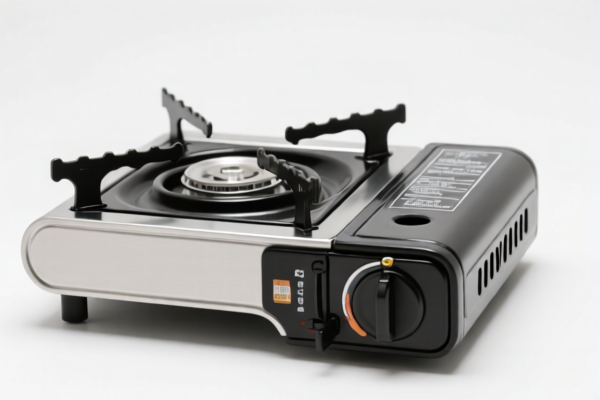
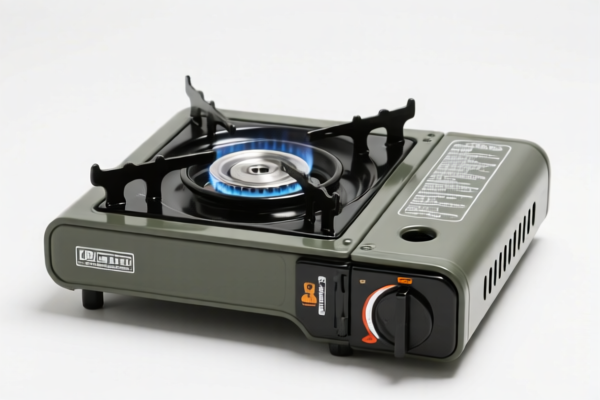
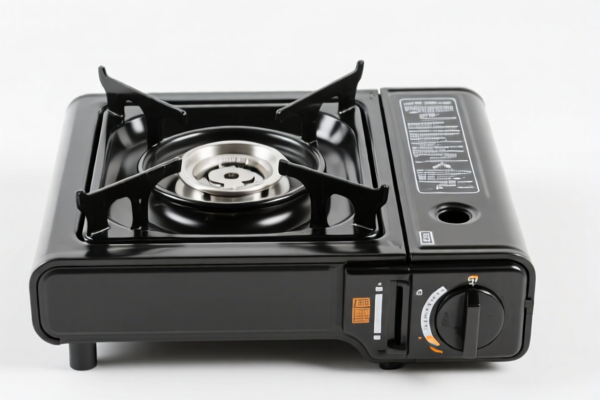
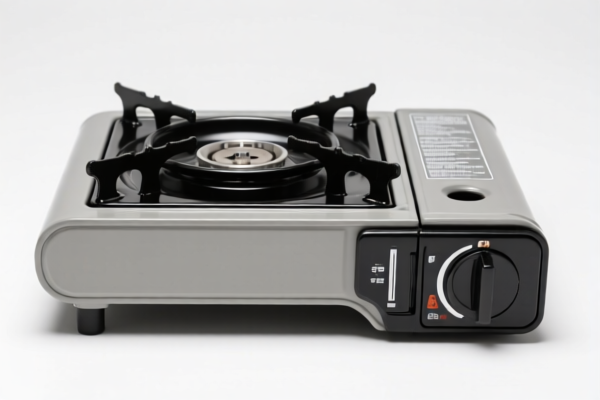
AI Analysis
🔥 Cassette Furnace: The High-Precision Heat Treatment Powerhouse
🌐 HS Code Reference & Customs Clearance Guide | 2026 Latest Tariff Analysis | Professional Customs Strategy
📌 I. Product Definition & Classification: Do You Really Understand "Cassette Furnace"?
A Cassette Furnace (often referred to as a Cassette Oven or Horizontal/Vertical Tube Furnace with Cassette Loading) is a specialized industrial or laboratory heating device. It is designed for roasting, melting, sintering, annealing, or other heat treatments of materials, particularly ores, pyrites, or metals.
In international trade, the classification depends heavily on electric vs. nonelectric operation and the specific purpose (metals/ores vs. general use).
⚠️ Key Distinction Point:
- Electric Furnaces: Generally fall under 8514 (Industrial/Electrical Furnaces).
- Nonelectric Furnaces: Fall under 8417 (Industrial/Laboratory Furnaces, Non-electric).Based on the provided DATA, we are analyzing Nonelectric Cassette Furnaces classified under 8417.
📦 II. HS Code Classification Details (2026 Latest Tariff Authority Comparison)
The provided data identifies two main categories for nonelectric industrial/laboratory furnaces. The "Cassette" design typically refers to the loading mechanism (cassettes for holding samples/parts), but the HS code is determined by the heat treatment function.
| HS Code | Product Description | Application Scenario | Specific Function |
|---|---|---|---|
8417.10.00.00 |
Furnaces and ovens for roasting, melting, or other heat treatment of ores, pyrites, or metals | Metal smelting, ore roasting, metallurgical sintering, ceramic firing (metal-based) | Targeted: Metals/Ores |
8417.80.00.00 |
Other industrial or laboratory furnaces and ovens, including incinerators, except parts | General laboratory heating, non-metal heat treatment, plastic processing, general industrial drying/annealing | General: Non-specific metals/ores |
🔍 Critical Note for "Cassette Furnace":
- If your cassette furnace is used specifically for roasting, melting, or heat treating metals, ores, or pyrites, it MUST be classified under8417.10.00.00.
- If it is used for other purposes (e.g., heating chemicals, plastics, or general lab samples not involving metal/ore treatment), it falls under8417.80.00.00.
- Parts (like the cassette trays themselves) are excluded from these main codes and would require separate classification (usually under 8417.90 if specified as parts, but the provided data explicitly excludes parts in 8417.80).
💰 III. 2026 Latest Tariff Rate Breakdown (Detailed Tax Clauses)
✅ Applicable Region: United States (US)
✅ Origin: China (CN)
✅ Effective Date: Current tariffs apply (as per provided data)
🎯 1. HS Code 8417.10.00.00
Description: Furnaces and ovens for the roasting, melting or other heat treatment of ores, pyrites or of metals.
| Item | Content |
|---|---|
| Base Tariff Rate | 0.0% (Ad Valorem) |
| Additional Tariff (Section 301) | 0.0% |
| Total Effective Tax Rate | 0.0% |
| Tax Calculation | CIF Value × 0.0% = $0 |
| De Minimis Eligibility | ❌ Not Applicable (High-value industrial equipment) |
| Legal Basis | HTSUS 8417.10.00.00 → No additional Section 301 footnote applies to this specific subheading in the provided data. |
📌 Explanation:
- Despite being an industrial furnace, nonelectric furnaces for metal/ore treatment currently enjoy a 0% total tariff rate in this dataset.
- No additional punitive tariffs (such as the 25% or 10% IEEPA/301 tariffs often seen on electronics) are listed for this specific code in the provided data.
- Verification: Always confirm with the latest USITC ruling, as tariff policies can change.
🎯 2. HS Code 8417.80.00.00
Description: Other industrial or laboratory furnaces and ovens, including incinerators, nonelectric, and parts thereof: Other, except parts.
| Item | Content |
|---|---|
| Base Tariff Rate | 0.0% (Ad Valorem) |
| Additional Tariff (Section 301) | 0.0% |
| Total Effective Tax Rate | 0.0% |
| Tax Calculation | CIF Value × 0.0% = $0 |
| De Minimis Eligibility | ❌ Not Applicable (High-value industrial equipment) |
| Legal Basis | HTSUS 8417.80.00.00 → No additional Section 301 footnote applies to this specific subheading in the provided data. |
📌 Explanation:
- Other nonelectric furnaces (non-metal/ore specific) also benefit from a 0% total tariff rate.
- This makes nonelectric industrial ovens highly competitive in terms of import duty compared to many electrical goods.
🛠️ IV. Customs Clearance Practical Advice (Avoid Pitfalls)
✅ 1. Preparation Checklist (Essential Documents)
| Document | Required? | Purpose |
|---|---|---|
| ✅ Product Specification Sheet | ✔️ | Must clearly state: Nonelectric, Heat Treatment Type (e.g., sintering, roasting), Max Temperature, Load Capacity. |
| ✅ Technical Diagram | ✔️ | Show heating mechanism (e.g., gas-fired, resistance heater) to prove nonelectric status if applicable, or clarify if "nonelectric" refers to control vs. heating. |
| ✅ Commercial Invoice | ✔️ | Clearly describe as "Cassette Furnace for Metal Heat Treatment" or "Laboratory Oven (Nonelectric)" based on HS code. |
| ✅ Certificate of Origin | ✔️ | Required for tariff eligibility (though 0% in this case, still needed for origin verification). |
| ✅ Parts List | ✔️ | If cassettes/trays are shipped separately, clarify if they are sold as parts (different HS) or accessories included in the main unit. |
✅ 2. Classification Tips (Crucial for Accuracy)
🔥 Golden Rule:
"If it treats metals/ores → 8417.10. If it does other things → 8417.80. If it’s electric → NOT in this dataset (likely 8514)."
| Scenario | Correct HS Code | Why? |
|---|---|---|
| Cassette furnace for sintering metal powder | 8417.10.00.00 |
Directly treats metals. |
| Cassette furnace for roasting copper ore | 8417.10.00.00 |
Directly treats ores. |
| Cassette furnace for annealing plastic components | 8417.80.00.00 |
Does not treat metals/ores; "Other". |
| Cassette furnace for lab chemical heating | 8417.80.00.00 |
General lab use; "Other". |
| Electrical resistance cassette furnace | NOT COVERED | Falls under 8514 (Industrial Electric Furnaces), which has different tariffs. |
✅ 3. Special Case Handling
| Situation | Recommendation |
|---|---|
| Shipped with Spare Cassettes | Declare as one unit with accessories. Do not split cassettes as separate parts unless explicitly stated in the contract as spare parts for repair. |
| "Nonelectric" Clarification | If the furnace uses electric resistance heating but is labeled "nonelectric" due to external gas control, it is likely Electric (8514). Ensure the heating element is NOT electric. If it’s gas-fired or fuel-fired, then 8417 is correct. |
| Parts Only | If importing only the cassettes/trays (without the furnace), they are not covered under 8417.10 or 8417.80. They may fall under 8417.90 (Parts). Check separately. |
🌍 V. Global Market Comparison (2026)
| Country/Region | Recommended HS Code | Tariff Rate | Notes |
|---|---|---|---|
| 🇺🇸 USA | 8417.10.00.00 |
0.0% | Based on provided data. |
| 🇨🇳 China | 8417.10.00.00 |
~0-5% | Check local Chinese import tariffs. |
| 🇪🇺 EU | 8417.80 |
~4-6.5% | EU typically applies a standard duty for 8417. |
| 🇮🇳 India | 8417.80 |
~7.5-10% | Higher duties often apply to industrial equipment. |
📌 Conclusion:
The USA market offers a 0% tariff advantage for nonelectric cassette furnaces under this dataset. However, strict classification is key to avoid misdeclaration, which could lead to penalties or reclassification under a higher-duty category.
📌 VI. Common Mistakes & Pitfalls (Lessons Learned)
❌ Mistake 1: Misclassifying an electric furnace as nonelectric.
👉 Consequence: If it’s electric, it should be 8514, which may have different tariffs (e.g., 2.5% base + possible Section 301). Misdeclaration leads to underpayment of duties and penalties.
❌ Mistake 2: Using 8417.10 for a furnace that treats non-metallic materials (e.g., ceramics not classified as "metals").
👉 Consequence: Customs may reclassify to 8417.80 or 8417.20 (laboratory ovens), causing delays and potential duty reassessment.
❌ Mistake 3: Failing to declare gas/fuel type for nonelectric furnaces.
👉 Consequence: Customs may question the "nonelectric" status. Provide proof of non-electric heating (e.g., gas burner specs).
✅ Correct Practice:
"Nonelectric Cassette Furnace, Gas-Fired, for Metal Sintering, Max Temp 1200°C, Model XYZ"
🎯 VII. Conclusion: Precise Classification, Smooth Clearance!
🎯 Remember the Rule:
🔹 "Metal/Ore → 8417.10 (0%)
🔹 Other Heat Treatment → 8417.80 (0%)
🔹 Electric? → NOT 8417!"
📌 Pro Tip:
If your furnace is gas-fired or fuel-fired, ensure your documentation explicitly states "Nonelectric Heating Source" to support the 8417 classification. If it uses electric resistance, verify if it falls under 8514 (Electric Industrial Furnaces) instead, which may have different tariff implications.
📣 Immediate Action:
📞 Consult with a licensed customs broker to confirm the heating mechanism (electric vs. nonelectric) and material treated (metal/ore vs. other).
🚀 Accurate HS Code = Zero Duty + Fast Clearance!
✨ Precision in Classification, Profit in Logistics!
💼 Your furnace is just as important as your product—treat it with care!
Customer Reviews
About HS Code Classification
The Harmonized System (HS) is an internationally standardized nomenclature developed by the World Customs Organization (WCO) to classify traded products. Over 200 countries use the HS system as the basis for customs tariffs, trade statistics, and import/export regulations.
Each HS code follows a hierarchical structure:
- Chapter (2 digits) — Broad category of goods (e.g., Chapter 84: Machinery and Mechanical Appliances)
- Heading (4 digits) — More specific grouping within the chapter
- Subheading (6 digits) — Internationally standardized breakdown, used by all WCO member countries
- National subdivisions (8-10 digits) — Country-specific extensions for further classification, such as US HTSUS 10-digit codes
Correct HS code classification is essential for smooth customs clearance, accurate duty payment, and compliance with trade regulations. Misclassification can lead to customs delays, overpayment of duties, or penalties.
When importing from CN to US, the applicable tariff rates may include:
- Most-Favored-Nation (MFN) rate — The standard duty rate applied to WTO members
- General rate — Applied to countries without trade agreements
- Trade remedy duties — Additional tariffs such as Section 301 (anti-dumping), Section 232 (national security), or countervailing duties
The information provided on this page is for reference purposes only. For official classification, please consult with your local customs authority or a licensed customs broker.