Cast Crystal Block
CN → US| HS Code | Tariff Rate | Origin | Destination | Doc |
|---|---|---|---|---|
| 3822190080 | 10.0% | CN | US | Official Doc |
| 7018105000 | 35.0% | CN | US | Official Doc |
| 7017106000 | 39.6% | CN | US | Official Doc |
Product Images
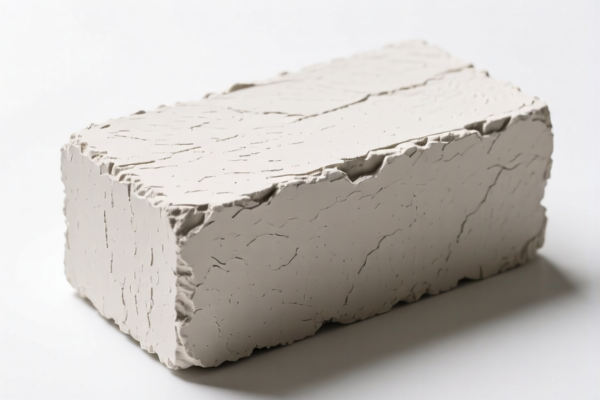
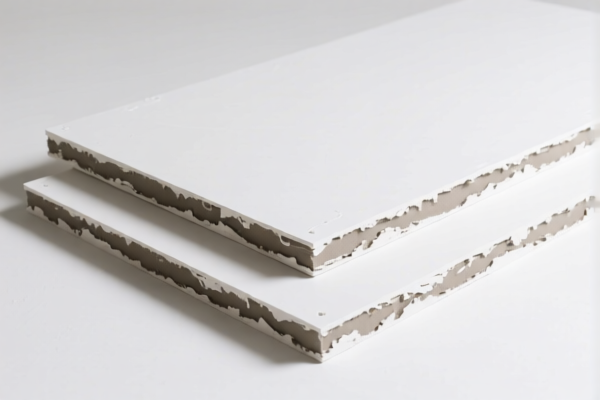


AI Analysis
💎 Cast Crystal Block (Cast Quartz/Silica Wafer)
🌐 HS Code Reference & Clearance Guide | 2026 Latest Tariff Analysis | Professional Customs Strategy
📌 I. Product Definition & Classification: What Exactly is a "Cast Crystal Block"?
In the context of international trade and semiconductor/lab equipment supply chains, a "Cast Crystal Block" (often referred to as Crystal Wafer or Single Crystal Silicon/Quartz Wafer) is a precision-manufactured flat slice of high-purity crystalline material. It serves two primary functions depending on its composition and purity:
- Semiconductor/Industrial Substrate: If made of high-purity silicon or fused silica, it acts as a foundational carrier for chip manufacturing or lab diagnostics.
- Raw Material/Component: If classified under mineral/glass categories, it is treated as a processed semi-precious stone or glass substrate.
⚠️ Key Distinction Point:
- Is it a diagnostic/lab reagent component (functional)? → Look at 3822.
- Is it a man-made gemstone/glass sheet (material-based)? → Look at 7018.
- Is it fused silica/quartz (industrial material)? → Look at 7017.
📦 II. HS Code Classification Details (2026 Latest Authoritative Mapping)
The following three HS Codes represent the most likely classifications for "Cast Crystal Block" based on different interpretations of its material, purpose, and processing level.
| HS Code | Product Description | Application Scenario | Basis for Classification |
|---|---|---|---|
3822.19.00.80 |
Diagnostic or Laboratory Reagents; Prepared Enzymes; Other | Semiconductor diagnostics, lab analysis carriers, test substrates | Function-Based: The block is used as a carrier or substrate in diagnostic/analytical processes. It fits the "application" logic without conflicting with material categories. |
7018.10.50.00 |
Glass Beads; Glass Shavings; Glass Blocks; Cast Glass/Mineral Products | Decorative crystal, artificial gemstone blanks, non-technical glass substrates | Material-Based: Treated as "Cast Crystal" similar to artificial gems or glass slices. Matches the "Other" category for material/shape logic under Chapter 70. |
7017.10.60.00 |
Laboratory, Technical, or Industrial Glass; Quartz/Fused Silica | Semiconductor manufacturing, optical devices, high-purity quartz wafers | Material & Use: Composed of fused silica/quartz (common for high-end crystal wafers). Used in industrial/lab settings. Matches "Fused Silica" criteria. |
🔍 Critical Note:
- 3822 focuses on the use (diagnostic/lab aid).
- 7018 focuses on the form (cast glass/crystal block, often decorative or raw gem-like).
- 7017 focuses on the material purity (quartz/fused silica for industrial/lab use).
- Do not mix these: Misclassifying a high-purity semiconductor wafer as decorative crystal (7018) can lead to severe penalties.
💰 III. 2026 Latest Tariff Rate Breakdown (Including Add-Ons & Policy Surcharges)
✅ Applicable Country: United States (US)
✅ Country of Origin: China (CN)
✅ Effective Date: November 10, 2025 (and subsequent imports)
🎯 1. 3822.19.00.80 —— Diagnostic/Laboratory Reagent Carrier
| Item | Content |
|---|---|
| Base Tariff | 0% (Ad Valorem) |
| USITC Add-On Tariff | 0% |
| Section 301 / IEEPA Add-On Tariff | +10% (Targeting China/China-HK products under 122 Clause) |
| Total Tariff Rate | 10.0% |
| Tax Calculation | CIF Value × 10% |
| De Minimis Exemption | ❌ Not Eligible (Deny De Minimis) |
| Legal Basis Path | IEEPA:9903.01.25 → USITC:3822.19.00.80 |
📌 Explanation:
- This is the most favorable classification if the product can be legally argued as a "diagnostic or laboratory aid."
- The base rate is 0%, with only the 10% IEEPA/122 clause surcharge applied.
- Risk: Customs may challenge this if the "diagnostic" purpose is not clearly documented or if the item is a generic raw material.
🎯 2. 7018.10.50.00 —— Cast Crystal/Glass Block (Non-Special Glass)
| Item | Content |
|---|---|
| Base Tariff | 0% |
| USITC Add-On Tariff | +25% (Section 301 Tariff) |
| IEEPA Add-On Tariff | +10% (Targeting China/China-HK products) |
| Total Tariff Rate | 35.0% |
| Tax Calculation | CIF Value × 35% |
| De Minimis Exemption | ❌ Not Eligible |
| Legal Basis Path | IEEPA:9901.25 → IEEPA:9903.01.24 → USITC:7018.10.50.00 → FOOTNOTE:9903.88.01 |
📌 Explanation:
- This classification treats the crystal block as a generic "cast glass/mineral product."
- The 25% Section 301 tariff applies heavily here.
- Risk: If the product is actually high-purity quartz for semiconductor use, this classification may be deemed incorrect, leading to reclassification and penalties.
🎯 3. 7017.10.60.00 —— Laboratory/Industrial Fused Silica/Quartz
| Item | Content |
|---|---|
| Base Tariff | 4.6% |
| USITC Add-On Tariff | +25% (Section 301 Tariff) |
| IEEPA Add-On Tariff | +10% (Targeting China/China-HK products) |
| Total Tariff Rate | 39.6% |
| Tax Calculation | CIF Value × 39.6% |
| De Minimis Exemption | ❌ Not Eligible |
| Legal Basis Path | IEEPA:9903.01.25 → USITC:7017.10.60.00 |
📌 Explanation:
- This is the most technically accurate classification for high-purity quartz/fused silica used in industrial or lab settings.
- It carries a 4.6% base tariff plus 25% + 10% surcharges.
- Recommendation: If the product is confirmed to be fused silica/quartz, this is the safest "correct" classification, but it is the most expensive.
🛠️ IV. Clearance Practical Advice (Battle-Tested Pitfall Avoidance)
✅ 1. Documentation Checklist (Mandatory)
| Document | Required? | Description |
|---|---|---|
| ✅ Technical Data Sheet | ✔️ | Must specify: Material (Silicon, Fused Silica, Glass), Purity %, Dimensions, Tolerance. |
| ✅ Declaration of Use | ✔️ | Explicitly state: "Used for Semiconductor Manufacturing," "Lab Diagnostic Carrier," or "Decorative Glass." |
| ✅ Product Photos | ✔️ | Clear images showing surface finish, edge quality, and any markings (e.g., "QS" for Quartz). |
| ✅ Commercial Invoice | ✔️ | Must match the declared HS Code description exactly. |
| ✅ Certificate of Origin | ✔️ | Required to verify China origin for 122 Clause application. |
| ✅ Material Safety Data Sheet (MSDS) | ✔️ | If applicable, to confirm chemical stability. |
✅ 2. Declaration Tips (Key Mnemonics)
🔥 "Purpose Drives Code 3822, Material Drives Code 7017, Form Drives Code 7018!"
| Scenario | Correct Declaration Strategy | Wrong Practice |
|---|---|---|
| High-Purity Quartz Wafer for Semiconductors | Declare as 7017.10.60.00 with "Fused Silica Substrate" | Misdeclare as 3822 to save tax → High risk of audit |
| Lab Diagnostic Carrier Block | Declare as 3822.19.00.80 with "Diagnostic Laboratory Aid" | Declare as 7018 → Unjustified 35% tariff |
| Decorative Crystal Block / Glass Blank | Declare as 7018.10.50.00 with "Cast Glass/Crystal Block" | Declare as 7017 → Unjustified base tariff |
✅ 3. Special Circumstances Handling
| Situation | Handling Advice |
|---|---|
| Mixed Shipment | Separate items by HS Code. Do not bundle "Lab Reagents" with "Decorative Crystals" in one line item. |
| OEM Custom Wafer | Provide OEM contract + specs. Prove "Specific Use" to support 3822 classification if applicable. |
| Dispute on Material | If Customs questions "Quartz vs. Glass," provide an independent lab test report confirming SiO2 purity >99.9%. |
| Origin Fraud Risk | Ensure no transshipment through third countries to hide Chinese origin. IEEPA 10% applies strictly to China-origin goods. |
🌍 V. Global Market Comparison (2026 Latest)
| Country/Region | Recommended HS Code | Tariff (China Origin) | Certification | Notes |
|---|---|---|---|---|
| 🇺🇸 USA | 3822.19.00.80 |
10% (Best Case) | N/A | Lowest tariff if "Diagnostic Use" is proven. |
| 🇺🇸 USA | 7017.10.60.00 |
39.6% | N/A | Highest but most accurate for industrial quartz. |
| 🇨🇳 China | 7017.10.60.00 |
~4-6% | CCC (if applicable) | No IEEPA surcharge. |
| 🇪🇺 EU | 7017.10.60.00 |
0-4.5% | CE (if electronic) | No Section 301/IEEPA equivalent. |
| 🇯🇵 Japan | 7017.10.60.00 |
0-3.5% | PSE (if applicable) | Generally low tariffs for industrial materials. |
📌 Conclusion:
- The USA is the most challenging market due to叠加 tariffs (Section 301 + IEEPA).
- Strategy: If the product is purely a lab/diagnostic carrier, aggressively pursue 3822.19.00.80 to reduce tax from ~39.6% to 10%.
- Caution: This requires strong documentation proving the "diagnostic/analytical" function.
📌 VI. Common Mistakes & Pitfall Guide (Blood-Lesson Insights)
❌ Mistake 1: Declaring a high-purity semiconductor wafer as "Glass Block" (7018)
👉 Consequence: While tax might be 35% vs 39.6%, the misclassification of material (Glass vs. Quartz) can lead to import bans or seizures if the material specs don't match.
❌ Mistake 2: Declaring a generic glass block as "Diagnostic Reagent" (3822)
👉 Consequence: Customs Fraud. If no diagnostic use is evident, you face penalties, back-taxes, and potential legal action for false declaration.
❌ Mistake 3: Ignoring the 122 Clause (IEEPA 10%)
👉 Consequence: Even if base tariff is 0%, failing to declare the 10% surcharge results in immediate debt collection + interest.
✅ Correct Practice:
"High-Purity Fused Silica Wafer, 6-inch, 99.99% SiO2, for Semiconductor Etching Process, Model XYZ, Origin: China"
HS Code:7017.10.60.00
OR
"Laboratory Diagnostic Carrier Substrate, Cast Crystal, for ELISA Testing, Model ABC, Origin: China"
HS Code:3822.19.00.80
🎯 VII. Conclusion: Precision Classification Saves Money!
🎯 Remember Mnemonics:
🔹 "Diagnose it to save tax (10%), Quartz it to pay more (39.6%), Glass it to risk audit (35%)."
🔹 "HS Code is King, Documentation is Queen, Misclassification is Death!"
📌 Pro Tip:
If your crystal block is not Chinese-origin (e.g., produced in Vietnam, Thailand, or Malaysia), you may avoid IEEPA 10%. However, Section 301 (25%) may still apply if the value-added process is insufficient. Always verify the "Substantial Transformation" rules.
📣 Immediate Action Required:
📞 Contact a licensed customs broker + Provide Technical Data Sheet + Apply for Pre-Ruling if unsure.
🚀 Ensure your "Cast Crystal Block" clears customs smoothly, legally, and profitably.
✨ Professional Clearance Starts with Accurate Classification!
💼 Every percentage point of tax matters!
Customer Reviews
About HS Code Classification
The Harmonized System (HS) is an internationally standardized nomenclature developed by the World Customs Organization (WCO) to classify traded products. Over 200 countries use the HS system as the basis for customs tariffs, trade statistics, and import/export regulations.
Each HS code follows a hierarchical structure:
- Chapter (2 digits) — Broad category of goods (e.g., Chapter 84: Machinery and Mechanical Appliances)
- Heading (4 digits) — More specific grouping within the chapter
- Subheading (6 digits) — Internationally standardized breakdown, used by all WCO member countries
- National subdivisions (8-10 digits) — Country-specific extensions for further classification, such as US HTSUS 10-digit codes
Correct HS code classification is essential for smooth customs clearance, accurate duty payment, and compliance with trade regulations. Misclassification can lead to customs delays, overpayment of duties, or penalties.
When importing from CN to US, the applicable tariff rates may include:
- Most-Favored-Nation (MFN) rate — The standard duty rate applied to WTO members
- General rate — Applied to countries without trade agreements
- Trade remedy duties — Additional tariffs such as Section 301 (anti-dumping), Section 232 (national security), or countervailing duties
The information provided on this page is for reference purposes only. For official classification, please consult with your local customs authority or a licensed customs broker.