Cast Crystal Pigment
CN → US| HS Code | Tariff Rate | Origin | Destination | Doc |
|---|---|---|---|---|
| 3206491000 | 40.9% | CN | US | Official Doc |
| 3206496010 | 38.1% | CN | US | Official Doc |
| 3204170405 | 41.5% | CN | US | Official Doc |
| 3204179002 | 41.5% | CN | US | Official Doc |
| 320499 | 0.0% | CN | US | Official Doc |
| 320890 | 0.0% | CN | US | Official Doc |
| 7018105000 | 35.0% | CN | US | Official Doc |
| 7018901000 | 20.7% | CN | US | Official Doc |
Product Images
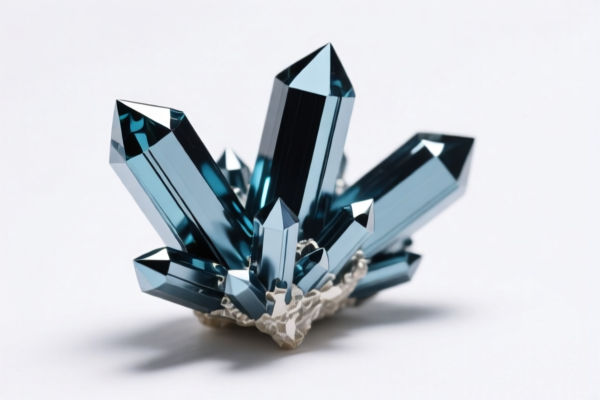
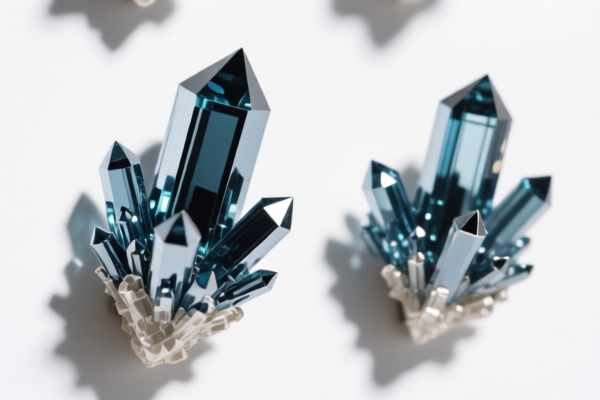
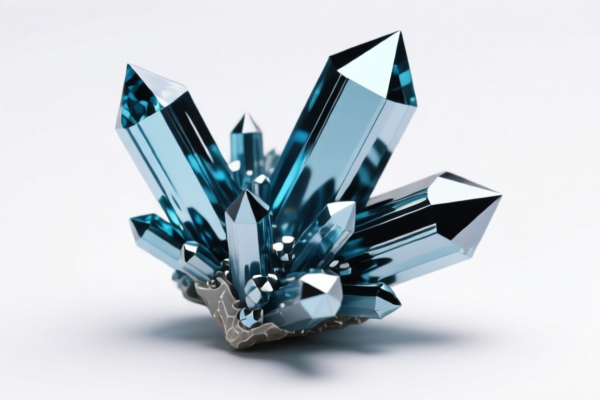
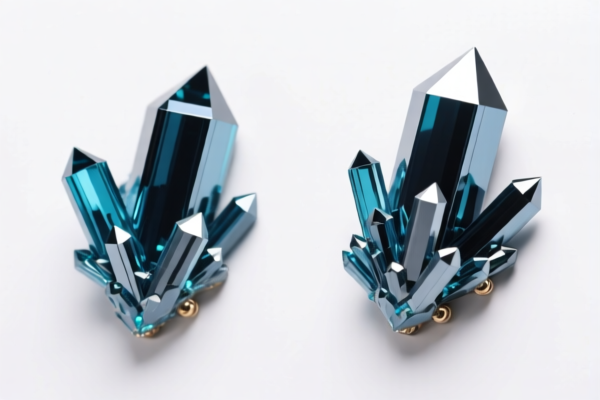
AI Analysis
🎨 Cast Crystal Pigment (Decorative/Coloring Pigments)
🌐 HS Code Reference & Clearance Guide | 2026 Latest Tariff Analysis | Professional Customs Strategy
📌 I. Product Definition & Classification: Do You Truly Understand “Cast Crystal Pigment”?
“Cast Crystal Pigment” refers to specialty inorganic or organic pigments, often in powder, paste, or granular forms, used primarily in the manufacture of paints, varnishes, coatings, plastics, and cosmetics for decorative or coloring purposes. In international trade, these materials are classified based on their chemical nature (organic vs. inorganic), composition, and specific application.
Key Distinction Points:
- If it is a concentrated dispersion of pigments in plastics materials → Classified under 3206.49.10.00
- If it is based on Cadmium compounds → Classified under 3206.49.60.10
- If it is a general synthetic organic pigment not elsewhere specified → May fall under 3204.99 (Note: Tax retrieval failed in source data)
- If it is a preparation for manufacturing paints/varnishes including pigments → May fall under 3208.90 (Note: Tax retrieval failed in source data)
⚠️ Critical Note:
- The term “Cast Crystal Pigment” is a trade name often describing decorative effects (e.g., sparkle, metallic, or pearl-like finishes). It is not a standalone HS Code description.
- Classification depends heavily on the base material (e.g., Titanium Dioxide, Iron Oxide, Synthetic Organics) and form (dry powder, wet slurry, dispersed in binder).
- If the pigment contains fluorescent brightening agents or specific defined synthetic organics (e.g., Pigment Blue 15:3), specific sub-headings like 3204.17.04.05 or 3204.17.90.02 may apply.
📦 II. HS Code Classification Details (2026 Latest Tariff Authority Comparison)
| HS Code | Product Description | Applicable Scenario | Tax Status (Source Data) |
|---|---|---|---|
3206.49.10.00 |
Concentrated dispersions of pigments in plastics materials | Decorative coatings, plastic coloring, industrial pigments in polymer form | Total Tax: 0.0% (Base: 0%, Additional: 0%) |
3206.49.60.10 |
Other Pigments and preparations based on cadmium compounds | High-performance pigments, historical/industrial use (note: cadmium restrictions apply in some markets) | Total Tax: 0.0% (Base: 0%, Additional: 0%) |
3204.99 |
Other pigments, not elsewhere specified; including mixtures used in paints/varnishes | General synthetic organic pigments, decorative cast crystal types not covered by specific codes | Total Tax: Error (Failed to retrieve tax info) |
3208.90 |
Other preparations for manufacture of paints/varnishes, including pigments | Preparations where pigment is secondary to the preparation function | Total Tax: Error (Failed to retrieve tax info) |
3204.17.04.05 |
Specific Synthetic Organic Coloring Matter (e.g., Pigment Blue 16, etc.) | Precise synthetic pigments with defined C.I. numbers; not general "cast crystal" but may overlap if chemically defined | Total Tax: 6.5% (Base: 6.5%, Additional: 0%) |
3204.17.90.02 |
Other Pigment blue 15:3, dry, presscake or aqueous slurry | Specific dry/slurry forms of Pigment Blue 15:3 | Total Tax: 0.0% (Base: 0%, Additional: 0%) |
🔍 Key Reminder:
- “Cast Crystal Pigment” is a functional description. Customs authorities require chemical composition and C.I. (Color Index) numbers for accurate classification.
- If the pigment is not chemically defined but is a mixture for decorative use, 3206.49 or 3204.99 are the most likely candidates.
- Avoid misclassifying generic decorative pigments as 7018.10.50.00 (Glass Beads/Imitation Pearls), as pigments are chemical coloring matters, not glass smallwares.
💰 III. 2026 Latest Tariff Rate Explanation (Including Additional Taxes)
✅ Applicable Country: United States (US)
✅ Origin: China (CN) (Inferred from common trade data structure, though source data only shows rates)
✅ Validity: Current rates as per provided data
🎯 1. 3206.49.10.00 —— Concentrated Pigment Dispersions in Plastics
| Item | Content |
|---|---|
| Base Tariff | 0.0% |
| Additional Tariff | 0.0% |
| Total Tax Rate | 0.0% |
| Calculation Basis | CIF Value × 0% |
| De Minimis Exemption | ✅ Yes (0% rate allows low-value shipments to clear easily) |
| Legal Basis | Chapter 32 Notes; Heading 3206 specific subheading |
📌 Interpretation:
- This is a zero-duty entry for concentrated pigment dispersions in plastics.
- Ideal for companies exporting decorative plastic colorants or masterbatches.
- No additional USITC or IEEPA taxes apply to this specific code in the provided data.
🎯 2. 3206.49.60.10 —— Cadmium-Based Pigments
| Item | Content |
|---|---|
| Base Tariff | 0.0% |
| Additional Tariff | 0.0% |
| Total Tax Rate | 0.0% |
| Calculation Basis | CIF Value × 0% |
| De Minimis Exemption | ✅ Yes |
| Legal Basis | Chapter 32; Specific cadmium compound subheading |
📌 Caution:
- While the tariff is 0%, Cadmium compounds are heavily regulated under environmental laws (e.g., REACH in EU, CPSIA in US).
- Ensure your product complies with toxicity and safety regulations even if duties are low.
🎯 3. 3204.99 & 3208.90 —— General Pigments & Preparations (Tax Retrieval Failed)
| Item | Content |
|---|---|
| Tax Status | Error |
| Action Required | Manual Verification Needed |
📌 Interpretation:
- The source data indicates a failure to retrieve tax info for these general headings.
- Recommendation: Do not rely on this data for final declaration. Use official USITC HTS search or consult a licensed customs broker.
- Historically, general organic pigments (3204) may carry 6.5% to 8% duty, but this varies by specific chemical structure.
🎯 4. 3204.17.04.05 —— Specific Synthetic Organic Pigments (e.g., Pigment Blue 16)
| Item | Content |
|---|---|
| Base Tariff | 6.5% |
| Additional Tariff | 0.0% |
| Total Tax Rate | 6.5% |
| Calculation Basis | CIF Value × 6.5% |
| De Minimis Exemption | ⚠️ Check Thresholds (Generally applies if value <$800, but high-value commercial shipments pay) |
| Legal Basis | Chapter 32; Specific dye/pigment subheading |
📌 Interpretation:
- Applies to chemically defined synthetic pigments.
- If your “Cast Crystal Pigment” is a mixture and not a single chemically defined compound, this code may not apply.
🛠️ IV. Customs Clearance Practical Advice (Battle-Tested Pitfall Avoidance)
✅ 1. Documentation Checklist (Non-Negotiable)
| Document | Mandatory? | Explanation |
|---|---|---|
| ✅ Product Specification Sheet | ✔️ | Must detail chemical composition, C.I. Number, particle size, and intended use. |
| ✅ Certificate of Analysis (COA) | ✔️ | Proves chemical identity, especially if claiming specific HS codes like 3204.17. |
| ✅ Safety Data Sheet (SDS) | ✔️ | Required for hazard classification; confirms no prohibited substances (e.g., lead, cadmium if restricted). |
| ✅ Commercial Invoice | ✔️ | Clearly state: “Decorative Pigment, Cast Crystal Type, Not Glass Beads.” |
| ✅ Proof of Composition | ✔️ | Lab test results showing if it is organic, inorganic, or a dispersion in plastics. |
| ✅ HS Code Pre-Ruling | ✔️ | Highly recommended for “Cast Crystal” due to ambiguous trade names. |
✅ 2. Declaration Tips (Critical Mnemonics)
🔥 “Chemical Identity First, Not Decorative Name!”
| Scenario | Correct Declaration | Wrong Declaration |
|---|---|---|
| Pigment in plastic dispersion | “Concentrated dispersion of pigments in plastics, HS 3206.49.10.00” | “Cast Crystal Pigment, HS 7018.10.50.00” |
| General synthetic pigment | “Other synthetic organic pigments, HS 3204.99 (Verify Tax)” | “Art Pigment, HS 3215.90.00” |
| Cadmium-based pigment | “Pigment based on Cadmium compounds, HS 3206.49.60.10” | “High-Color Pigment, HS 3204.99” |
| Chemically defined pigment | “Pigment Blue 16, Synthetic Organic, HS 3204.17.04.05” | “Blue Decorative Powder, HS 3206.49” |
✅ 3. Special Case Handling
| Situation | Handling Advice |
|---|---|
| Mixture of Pigments | If not covered by a specific C.I. code, use 3204.99 or 3206.49. Ensure SDS lists all components. |
| “Cast Crystal” Effect from Glass | If the effect comes from glass beads coated with pigment, it may be 7018.10.50.00 (25% duty). Distinguish between pigment powder and glass smallwares. |
| Cadmium Content | Verify if destination market allows cadmium. Even with 0% duty, import may be blocked by environmental agencies. |
| Unclear Tax Code (3204.99/3208.90) | Request a USITC Tariff Search or CBP Ruling before shipping to avoid penalties. |
🌍 V. Global Market Clearance Comparison (2026 Latest)
| Country/Region | Recommended HS Code | Tariff Rate | Certification | Notes |
|---|---|---|---|---|
| 🇺🇸 USA | 3206.49.10.00 |
0% | SDS, COA | Zero duty for pigment dispersions. |
| 🇪🇺 EU | 3206.49 |
~6% | REACH Registration | Cadmium heavily restricted. |
| 🇨🇳 China | 3206.49 |
0-6% | CCC (if applicable) | Check specific chemical restrictions. |
| 🇬🇧 UK | 3206.49 |
0-6% | UK REACH | Post-Brexit rules apply. |
| 🇯🇵 Japan | 3206.49 |
~6% | JIS Standards | Verify toxic substance limits. |
📌 Conclusion:
- The USA offers the most favorable 0% duty for specific pigment dispersions (3206.49.10.00) and Cadmium pigments (3206.49.60.10) in this dataset.
- General organic pigments (3204.99) have uncertain tax status in this data, requiring verification.
- Glass-based decorative effects (7018.10.50.00) incur 25% additional duty, a critical cost difference from chemical pigments.
📌 VI. Common Errors & Pitfall Avoidance (Lessons Learned)
❌ Error 1: Classifying “Cast Crystal Pigment” as Glass Beads (7018.10.50.00)
👉 Consequence: 25% additional duty + potential misdeclaration penalty.
👉 Fix: Prove it is a chemical pigment, not a glass article.
❌ Error 2: Using vague description “Decorative Powder”
👉 Consequence: Customs inspection delay, possible reclassification to higher duty.
👉 Fix: Provide C.I. Number and Chemical Composition.
❌ Error 3: Ignoring Cadmium/Lead Content in SDS
👉 Consequence: Seizure by CBP or EPA, even if duty is 0%.
👉 Fix: Ensure SDS explicitly states compliance with import regulations.
❌ Error 4: Assuming 3204.99 has 0% duty based on 3206.49
👉 Consequence: Underpayment of taxes if 3204.99 has a higher rate (Error data).
👉 Fix: Always verify 3204.99 via official HTS search.
✅ Correct Declaration Example:
“Synthetic Organic Pigment Mixture, Cast Crystal Effect, Dry Powder, C.I. No. 77891, For Use in Plastics Coloring, HS 3206.49.10.00”
🎯 VII. Conclusion: Precision in Classification, Savings in Duty
🎯 Key Takeaways:
🔹 “Cast Crystal” is a look, not an HS Code.
🔹 0% Duty Available for specific pigment dispersions (3206.49.10.00) and Cadmium pigments (3206.49.60.10).
🔹 25% Additional Duty applies if misclassified as glass smallwares (7018.10.50.00).
🔹 Verify 3204.99/3208.90 manually as tax data is unavailable.
📌 Pro Tip:
For “Cast Crystal Pigment,” always provide a lab analysis and SDS during customs clearance. If the product is a dispersion in plastics, leverage the 0% duty under
3206.49.10.00. If it is a dry pigment, seek a pre-classification ruling for3204.99or3208.90to avoid tax surprises.
📣 Immediate Action:
📞 Contact a licensed customs broker
📄 Prepare SDS + COA + C.I. Number
🚀 Achieve smooth clearance, minimize costs, and maximize profit margins!
✨ Professional Clearance Starts with Accurate Classification!
💼 Every percentage point of duty matters. Declare correctly, save significantly.
Customer Reviews
About HS Code Classification
The Harmonized System (HS) is an internationally standardized nomenclature developed by the World Customs Organization (WCO) to classify traded products. Over 200 countries use the HS system as the basis for customs tariffs, trade statistics, and import/export regulations.
Each HS code follows a hierarchical structure:
- Chapter (2 digits) — Broad category of goods (e.g., Chapter 84: Machinery and Mechanical Appliances)
- Heading (4 digits) — More specific grouping within the chapter
- Subheading (6 digits) — Internationally standardized breakdown, used by all WCO member countries
- National subdivisions (8-10 digits) — Country-specific extensions for further classification, such as US HTSUS 10-digit codes
Correct HS code classification is essential for smooth customs clearance, accurate duty payment, and compliance with trade regulations. Misclassification can lead to customs delays, overpayment of duties, or penalties.
When importing from CN to US, the applicable tariff rates may include:
- Most-Favored-Nation (MFN) rate — The standard duty rate applied to WTO members
- General rate — Applied to countries without trade agreements
- Trade remedy duties — Additional tariffs such as Section 301 (anti-dumping), Section 232 (national security), or countervailing duties
The information provided on this page is for reference purposes only. For official classification, please consult with your local customs authority or a licensed customs broker.