Cast Crystal UV Absorber
CN → US| HS Code | Tariff Rate | Origin | Destination | Doc |
|---|---|---|---|---|
| 2825300050 | 40.5% | CN | US | Official Doc |
| 2825300010 | 40.5% | CN | US | Official Doc |
| 3824993600 | 24.0% | CN | US | Official Doc |
| 3824992100 | 35.0% | CN | US | Official Doc |
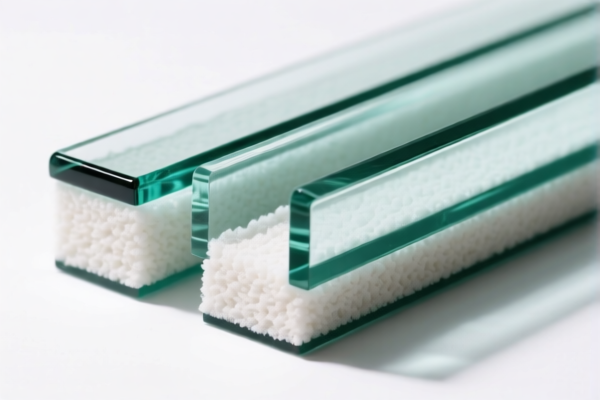
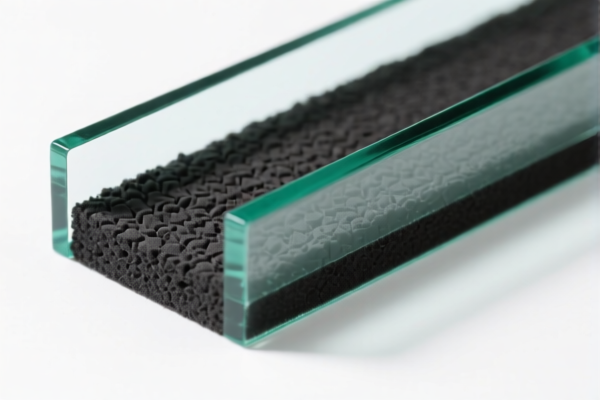
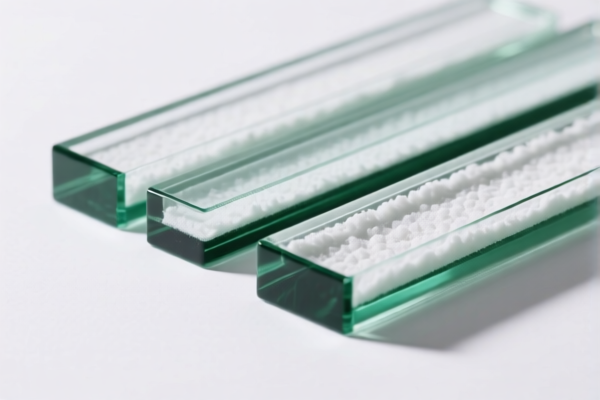
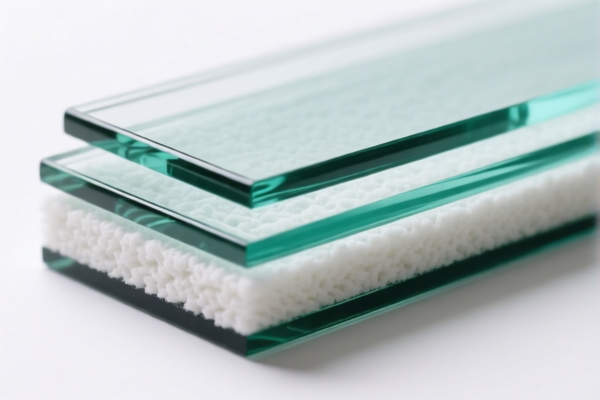
Product Images
AI Analysis
🏗️ Cast Crystal UV Absorber (Vanadium-Based)
🌐 HS Code Reference & Customs Clearance Guide | 2026 Latest Tariff Analysis | Professional Level Entry Strategy
📌 I. Product Definition & Classification: Do You Really Understand "Vanadium-Based Casting UV Absorbers"?
The Cast Crystal UV Absorber described in the data is a specialized chemical additive used in industrial casting processes. Crucially, the provided data specifies that this product is Vanadium-Based and falls into two distinct regulatory categories depending on its precise chemical composition:
- Inorganic Vanadium Compounds: Classified under Chapter 28 as Vanadium oxides and hydroxides.
- Chemical Mixtures/Preparations: Classified under Chapter 38 as chemical products, mixtures, or casting molds/modifiers.
⚠️ Key Distinction Point:
- If the product is primarily pure Vanadium Oxide/Hydroxide (inorganic salt/oxide form) →归入 HS 2825
- If the product is a mixture, complex, or prepared formulation (e.g., blended with binders, resins, or other casting additives) → 归入 HS 3824
📦 II. HS Code Classification Details (2026 Latest Tariff Authority Comparison)
Based on the provided <DATA>, there are 4 unique HS Codes applicable to this product. Note that 2825.30.00.50 appears twice in the source data with identical tariffs but different summaries.
| HS Code | Product Description | Applicable Scenario | Chemical Nature |
|---|---|---|---|
2825.30.00.50 |
Vanadium-based casting UV absorber, matching vanadium oxide & hydroxide material requirements | Pure inorganic vanadium oxide/hydroxide powder or solution | ✅ Inorganic Salt/Oxide |
2825.30.00.10 |
Vanadium-based casting UV absorber, belongs to the category of vanadium oxides and hydroxides | General inorganic vanadium compounds for casting | ✅ Inorganic Salt/Oxide |
3824.99.36.00 |
Casting vanadium-based UV absorber, fits casting use & vanadium inorganic compound mixture characteristics | Pre-mixed casting additives, binders, or complex preparations | ✅ Chemical Mixture/Preparation |
3824.99.21.00 |
Casting UV absorber, fits casting mold modification binder use & chemical preparation category | Mold modifiers, binders, or complex chemical formulations for casting | ✅ Chemical Mixture/Preparation |
🔍 Key Reminder:
- HS 2825 applies if the product is a pure inorganic compound (Vanadium Oxide/Hydroxide).
- HS 3824 applies if the product is a mixture, blend, or prepared formulation (e.g., combined with other casting aids).
- Misclassification Risk: Declaring a mixture as a pure oxide (2825) may lead to lower tariffs but higher scrutiny; declaring a pure oxide as a mixture (3824) may result in higher base duties.
💰 III. 2026 Latest Tariff Rate Breakdown (Including Surcharges & Policy Add-ons)
✅ Applicable Country: United States (US)
✅ Origin: China (CN)
✅ Effective Time: Current trade rules (Includes Section 301 & IEEPA surcharges)
🎯 1. 2825.30.00.50 & 2825.30.00.10 —— Vanadium Oxides & Hydroxides (Chapter 28)
| Item | Content |
|---|---|
| Base Tariff | 5.5% |
| Section 301 Surcharge | +25.0% |
| IEEPA Surcharge | +10.0% (122 Clause) |
| Total Tax Rate | 40.5% |
| Tax Calculation | CIF Value × 40.5% |
| De Minimis Exemption | ❌ Not Applicable (High risk for de minimis) |
| Legal Basis Path | USITC:2825.30.00.50/10 → Section 301: 25% → IEEPA: 10% |
📌 Explanation:
- These HS codes fall under Chapter 28 (Inorganic Chemicals).
- Despite being "chemicals," they are subject to the standard 25% Section 301 tariff for Chinese goods.
- The 10% IEEPA (122 Clause) is additionally applied, bringing the total to 40.5%.
- Base Duty (5.5%) is low, but surcharges dominate the cost.
🎯 2. 3824.99.36.00 —— Casting Additives & Mixtures (Chapter 38)
| Item | Content |
|---|---|
| Base Tariff | 6.5% |
| Section 301 Surcharge | +7.5% |
| IEEPA Surcharge | +10.0% (122 Clause) |
| Total Tax Rate | 24.0% |
| Tax Calculation | CIF Value × 24.0% |
| De Minimis Exemption | ❌ Not Applicable |
| Legal Basis Path | USITC:3824.99.36.00 → Section 301: 7.5% → IEEPA: 10% |
📌 Explanation:
- This code falls under Chapter 38 (Miscellaneous Chemical Products).
- Crucial Advantage: The Section 301 surcharge is only 7.5% (instead of 25%).
- This results in a significantly lower total tax rate of 24.0%, saving 16.5% compared to HS 2825.
- Applicability: Must be proven as a mixture or prepared formulation (e.g., blended with binders).
🎯 3. 3824.99.21.00 —— Mold Modifiers & Binders (Chapter 38)
| Item | Content |
|---|---|
| Base Tariff | 0.0% |
| Section 301 Surcharge | +25.0% |
| IEEPA Surcharge | +10.0% (122 Clause) |
| Total Tax Rate | 35.0% |
| Tax Calculation | CIF Value × 35.0% |
| De Minimis Exemption | ❌ Not Applicable |
| Legal Basis Path | USITC:3824.99.21.00 → Section 301: 25% → IEEPA: 10% |
📌 Explanation:
- This code has a 0% Base Tariff, making it attractive on paper.
- However, it is subject to the full 25% Section 301 surcharge.
- Total tax is 35.0%, which is higher than3824.99.36.00(24.0%) due to the higher Section 301 rate.
- Applicability: Strictly for casting mold modifiers or binders. If the product is not primarily a binder, this classification may be rejected.
🛠️ IV. Customs Clearance Practical Advice (Real-World Pitfall Avoidance Guide)
✅ 1. Preparation Checklist (All Required)
| Document | Mandatory | Explanation |
|---|---|---|
| ✅ Product Specification Sheet | ✔️ | Must detail chemical composition: Pure Vanadium Oxide vs. Mixture with binders/resins. |
| ✅ Formula/Composition List | ✔️ | Critical for distinguishing between HS 2825 (Pure) and HS 3824 (Mixture). |
| ✅ Product Photos (Labeled) | ✔️ | Show packaging, labeling, and physical form (powder/liquid). |
| ✅ Technical Data Sheet (TDS) | ✔️ | Highlight "UV Absorber," "Casting Application," and "Vanadium Content." |
| ✅ Commercial Invoice | ✔️ | Must clearly state: "Vanadium-Based Casting UV Absorber" and HS Code. |
| ✅ Bill of Lading | ✔️ | Match weight and quantity with Invoice. |
✅ 2. Classification Strategy (Key Tips)
🔥 "Pure Oxide = 40.5%, Mixture = 24.0%? Think Twice!"
| Scenario | Recommended HS Code | Tax Rate | Risk Level |
|---|---|---|---|
| Pure Vanadium Oxide/Hydroxide Powder | 2825.30.00.50 or 2825.30.00.10 |
40.5% | ✅ Low (Correctly classified) |
| Pre-mixed Casting Additive (with binders/resins) | 3824.99.36.00 |
24.0% | ✅✅ Best Value (Save 16.5%) |
| Casting Mold Binder/Modifier Only | 3824.99.21.00 |
35.0% | ⚠️ Medium (Must prove binder function) |
| Unclear Composition (Blended) | 3824.99.36.00 |
24.0% | ✅✅ Preferred (If technically justifiable) |
📌 Critical Advice:
- Can you prove it’s a mixture? If the UV absorber is blended with other casting aids, binders, or carriers, HS 3824.99.36.00 (24.0%) is the optimal choice.
- Do not force HS 3824.99.21.00 unless the product is primarily a mold modifier/binder. If it’s just an additive mixed with other chemicals,3824.99.36.00is safer.
- If it’s pure Vanadium Oxide, you must use HS 2825, despite the higher 40.5% tax. Misclassifying pure oxides as mixtures is a common customs violation.
✅ 3. Special Situations Handling
| Situation | Handling Advice |
|---|---|
| OEM/Private Label | Provide supplier’s technical data sheet. Clearly state the chemical nature (Pure vs. Mixture) on the invoice. |
| Liquid vs. Powder | Ensure the physical form matches the description. Liquids are more likely to be considered "mixtures" (HS 3824). |
| Partial Duty Exemption | Check if any IEEPA exemptions apply. Currently, no blanket exemption is mentioned for Vanadium UV absorbers. |
| Pre-Ruling Request | Given the significant tax difference (40.5% vs. 24.0%), apply for an Advance Ruling from US Customs if the product composition is borderline. |
🌍 V. Global Market Comparison (2026 Latest)
| Country/Region | Recommended HS Code | Total Tariff (China Origin) | Key Certification | Remarks |
|---|---|---|---|---|
| 🇺🇸 United States | 3824.99.36.00 (if mixture) |
24.0% | No specific UV certification, but TDS required | Best for mixtures. If pure oxide, 40.5%. |
| 🇺🇸 United States | 2825.30.00.50 (if pure) |
40.5% | No specific UV certification, but TDS required | High tax, but correct for pure oxides. |
| 🇨🇳 China | 2825.30.00.50 |
~5.5% | No specific UV certification | Low tax, no Section 301. |
| 🇪🇺 EU | 2825.30 or 3824 |
0-6.5% | REACH Registration Required | REACH is the biggest hurdle, not tariff. |
| 🇯🇵 Japan | 2825 or 3824 |
0-3.5% | No specific UV certification | Low tariffs, but strict quality standards. |
📌 Conclusion:
- USA is the most critical market due to high Section 301 + IEEPA tariffs.
- Optimization Opportunity: If the product is a mixture, classify under HS 3824.99.36.00 to save 16.5% in tariffs.
- EU/Japan: Focus on REACH (EU) and quality compliance, as tariffs are low.
📌 VI. Common Mistakes & Pitfall Guide (Lessons Learned)
❌ Mistake 1: Declaring a mixture as Pure Vanadium Oxide (2825)
👉 Consequence: Overpaying 16.5% in tariffs.
👉 Fix: Provide formula showing binders/additives → Use HS 3824.99.36.00.
❌ Mistake 2: Declaring a pure oxide as a Mixture (3824)
👉 Consequence: Customs rejection, fines, and potential cargo seizure.
👉 Fix: Provide chemical analysis proving purity → Use HS 2825.
❌ Mistake 3: Using HS 3824.99.21.00 without proving BINDER function
👉 Consequence: Higher tax (35%) than HS 3824.99.36.00 (24%), plus classification risk.
👉 Fix: Only use 3824.99.21.00 if the product is primarily a mold binder.
❌ Mistake 4: Ignoring IEEPA 10% Surcharge
👉 Consequence: Unexpected cost increase. All Chinese-origin HS codes above include this.
👉 Fix: Budget for Total Tax = Base + 301 + IEEPA.
🎯 VII. Conclusion: Professional Classification Saves Money!
🎯 Key Takeaway:
🔹 "Mixture = 24%, Pure = 40.5%. Choose wisely!"
🔹 "If you can prove it’s a blend, go for HS 3824.99.36.00 to save big!"
🔹 "If it’s pure oxide, accept 40.5% – don’t risk misclassification!"
📌 Pro Tip:
- Request a Technical Data Sheet (TDS) from your supplier that explicitly states whether the product is a pure chemical compound or a mixture/preparation.
- If the TDS is unclear, consider applying for a US Customs Advance Ruling before shipment. The cost of a ruling is far less than the 16.5% tariff difference + potential penalties.
📣 Immediate Action:
📞 Contact your freight forwarder + Provide TDS + Verify Composition
🚀 Ensure correct HS Code classification to avoid delays, fines, and excessive taxes!
✨ Professional Customs Clearance Starts with Precise Classification!
💼 Every Dollar Saved is Pure Profit!
Customer Reviews
About HS Code Classification
The Harmonized System (HS) is an internationally standardized nomenclature developed by the World Customs Organization (WCO) to classify traded products. Over 200 countries use the HS system as the basis for customs tariffs, trade statistics, and import/export regulations.
Each HS code follows a hierarchical structure:
- Chapter (2 digits) — Broad category of goods (e.g., Chapter 84: Machinery and Mechanical Appliances)
- Heading (4 digits) — More specific grouping within the chapter
- Subheading (6 digits) — Internationally standardized breakdown, used by all WCO member countries
- National subdivisions (8-10 digits) — Country-specific extensions for further classification, such as US HTSUS 10-digit codes
Correct HS code classification is essential for smooth customs clearance, accurate duty payment, and compliance with trade regulations. Misclassification can lead to customs delays, overpayment of duties, or penalties.
When importing from CN to US, the applicable tariff rates may include:
- Most-Favored-Nation (MFN) rate — The standard duty rate applied to WTO members
- General rate — Applied to countries without trade agreements
- Trade remedy duties — Additional tariffs such as Section 301 (anti-dumping), Section 232 (national security), or countervailing duties
The information provided on this page is for reference purposes only. For official classification, please consult with your local customs authority or a licensed customs broker.