Cast Iron Articles
CN → US| HS Code | Tariff Rate | Origin | Destination | Doc |
|---|---|---|---|---|
| 7323915020 | 15.3% | CN | US | Official Doc |
| 7323920020 | 17.5% | CN | US | Official Doc |
| 7325100080 | 35.0% | CN | US | Official Doc |
| 7325991000 | 85.0% | CN | US | Official Doc |
| 8481302010 | 40.0% | CN | US | Official Doc |
| 8481803010 | 40.6% | CN | US | Official Doc |
Product Images
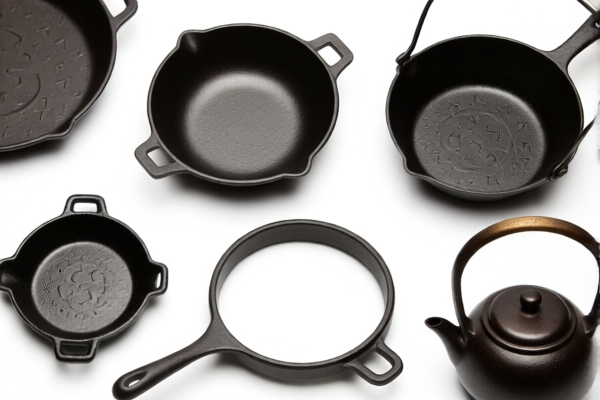
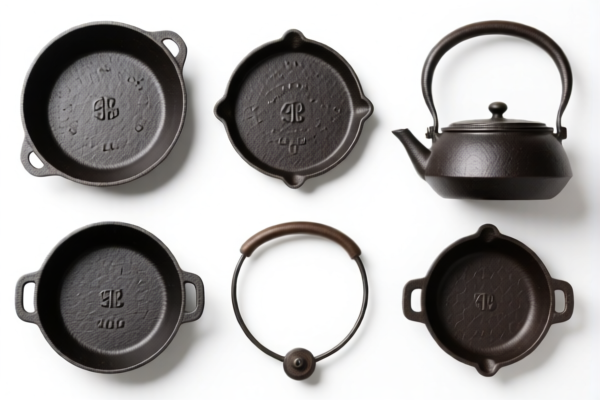
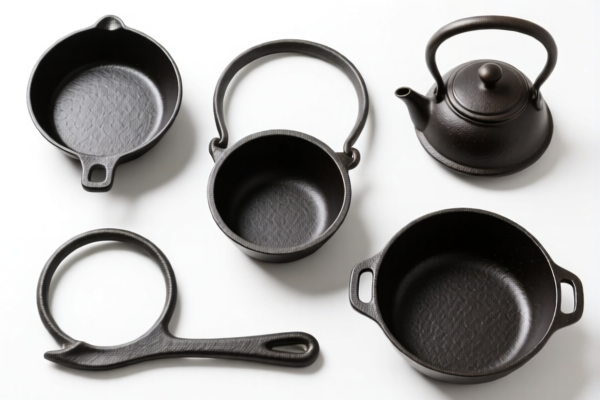
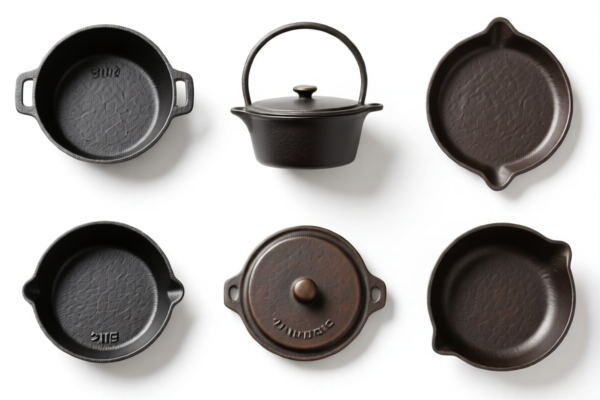
AI Analysis
🏗️ Cast Iron Articles: The Heavyweight Champion of Household & Industrial Goods
🌐 HS Code Reference & Customs Clearance Guide | 2026 Latest Tariff Analysis | Professional Strategy for US Imports
📌 I. Product Definition & Classification: Do You Really Know "Cast Iron"?
Cast iron articles encompass a wide range of products, primarily divided into two main categories in international trade:
- Household Cast Iron Articles (HS Chapter 73): Including bakeware, cookware, tableware, and decorative items made of cast iron. These are typically finished goods for consumer use.
- Other Cast Articles of Iron or Steel (HS Chapter 73, Subheading 7325): This includes non-malleable cast iron parts, industrial components, and other miscellaneous cast items not specifically classified elsewhere.
⚠️ Key Distinction:
- If it’s enamelled (coated with ceramic/glass-like finish) vs. non-enamelled (raw black iron), the HS code and tax rates differ significantly.
- If it’s bakeware (oven-only) vs. stovetop cookware, specific subheadings apply.
- If it’s a valve/fitting (industrial part), it falls under Chapter 84, not Chapter 73.
📦 II. HS Code Classification Details (2026 Latest Tariff Authority Comparison)
Based on the provided data, here are the precise HS codes for "Cast Iron Articles" and related items:
| HS Code | Product Description | Application Scenario | Key Features |
|---|---|---|---|
7323.91.50.20 |
Non-enamelled Cast Iron Bakeware | Oven-only bakeware (bread pans, muffin tins) | Not suitable for stovetop; No enamel coating; Raw cast iron |
7323.92.00.20 |
Enamelled Cast Iron Bakeware | Decorative or functional ovenware (e.g., Staub-style pots, decorative trays) | Enamel coating; Oven-only use |
7325.10.00.80 |
Other Cast Articles: Nonmalleable Cast Iron | Industrial parts, weights, decorative sculptures, machine bases | Made of nonmalleable cast iron; General industrial use |
7325.99.10.00 |
Other Cast Articles: Of Cast Iron | Miscellaneous cast iron products (pots, pans, fittings not covered elsewhere) | General cast iron items; Subject to specific surtaxes |
8481.30.20.10 |
Check (Nonreturn) Valves: Of Iron | Industrial piping systems, water treatment plants | Valve component; Not a "household article"; Falls under Ch. 84 |
8481.80.30.10 |
Hand Operated Valves: Gate Type (Of Iron) | Manual water/gas control systems | Gate valve; Industrial plumbing component |
🔍 Critical Reminder:
- Bakeware must be clearly described as "not suitable for stovetop use" to qualify for7323.91.50.20or7323.92.00.20.
- Enamelled items attract a different surtax (7.5%) compared to non-enamelled (5.3%).
- General cast articles (7325series) face the highest surtax (50% for steel/aluminum/copper articles, 25% for nonmalleable).
- Valves (8481series) are not classified under "cast iron articles" but under "taps/valves," with 0% total tax in this dataset.
💰 III. 2026 Latest Tariff Rate Details (Including Surtax, Policy Surcharge)
✅ Applicable Country: United States (US)
✅ Origin: China (CN)
✅ Effective Date: Current rates apply as per 2026 data.
🎯 1. 7323.91.50.20 – Non-enamelled Cast Iron Bakeware (Oven-only)
| Item | Content |
|---|---|
| Base Tariff | 5.3% (ad valorem) |
| Surtax (Section 301) | 0.0% |
| Total Tax Rate | 5.3% |
| Tax Calculation | CIF Value × 5.3% |
| De Minimis Eligibility | ❌ No (High-value industrial goods usually excluded) |
| Legal Basis Path | HTS:7323.91.50.20 → Section 301 Footnote (No additional surtax for this specific subheading in this dataset) |
📌 Explanation:
- Non-enamelled bakeware has a low surtax (0.0%) in this dataset, making it relatively cheaper to import.
- The 5.3% base tariff is standard for iron/steel household articles.
- Advantage: Lower total cost compared to enamelled or general cast iron articles.
🎯 2. 7323.92.00.20 – Enamelled Cast Iron Bakeware (Oven-only)
| Item | Content |
|---|---|
| Base Tariff | 0.0% |
| Surtax (Section 301) | 7.5% |
| Total Tax Rate | 7.5% |
| Tax Calculation | CIF Value × 7.5% |
| De Minimis Eligibility | ❌ No |
| Legal Basis Path | HTS:7323.92.00.20 → Section 301 Footnote |
📌 Explanation:
- Enamelled bakeware has a 0% base tariff but a 7.5% surtax, resulting in a total of 7.5%.
- Disadvantage: Higher than non-enamelled (5.3%) due to the surtax.
- Note: Enamel coating adds value and cost, so the tax structure reflects this.
🎯 3. 7325.10.00.80 – Other Cast Articles: Nonmalleable Cast Iron
| Item | Content |
|---|---|
| Base Tariff | 0.0% |
| Surtax (Section 301) | 25.0% |
| Total Tax Rate | 25.0% |
| Tax Calculation | CIF Value × 25.0% |
| De Minimis Eligibility | ❌ No |
| Legal Basis Path | HTS:7325.10.00.80 → Section 301 Footnote |
📌 Explanation:
- Nonmalleable cast iron articles (e.g., industrial weights, machine parts) face a 25% surtax.
- High Cost: This is a significant increase from household bakeware.
- Application: Use for industrial, decorative, or heavy-duty items not classified as "tableware."
🎯 4. 7325.99.10.00 – Other Cast Articles: Of Cast Iron
| Item | Content |
|---|---|
| Base Tariff | 0.0% |
| Surtax (Section 301) | 50.0% (Steel, Aluminum, Copper Articles Surtax) |
| Total Tax Rate | 50.0% |
| Tax Calculation | CIF Value × 50.0% |
| De Minimis Eligibility | ❌ No |
| Legal Basis Path | HTS:7325.99.10.00 → Steel/Aluminum/Copper Surtax Rule |
📌 Explanation:
- General cast iron articles fall under this "catch-all" category and are subject to the 50% surtax.
- Highest Cost: This is the most expensive classification for cast iron items.
- Avoidance Strategy: Ensure your product is correctly classified as "bakeware" (7323) if possible, to avoid the 50% rate.
🎯 5. 8481.30.20.10 – Check (Nonreturn) Valves: Of Iron
| Item | Content |
|---|---|
| Base Tariff | 0.0% |
| Surtax (Section 301) | 0.0% |
| Total Tax Rate | 0.0% |
| Tax Calculation | CIF Value × 0.0% |
| De Minimis Eligibility | ✅ Yes (if under de minimis threshold) |
| Legal Basis Path | HTS:8481.30.20.10 → No Surtax |
📌 Explanation:
- Valves are classified under Chapter 84, not Chapter 73.
- 0% Total Tax: This is the most cost-effective option if the item is a valve.
- Misclassification Risk: Do not misclassify cast iron pots as valves to avoid taxes. Customs will reject this.
🎯 6. 8481.80.30.10 – Hand Operated Valves: Gate Type (Of Iron)
| Item | Content |
|---|---|
| Base Tariff | 0.0% |
| Surtax (Section 301) | 0.0% |
| Total Tax Rate | 0.0% |
| Tax Calculation | CIF Value × 0.0% |
| De Minimis Eligibility | ✅ Yes (if under de minimis threshold) |
| Legal Basis Path | HTS:8481.80.30.10 → No Surtax |
📌 Explanation:
- Gate valves also fall under Chapter 84 with 0% total tax.
- Industrial Use: These are for plumbing/piping systems, not household cookware.
🛠️ IV. Customs Clearance Practical Advice (Battle-Tested Pitfall Avoidance Guide)
✅ 1. Required Documentation Checklist (Non-negotiable)
| Document | Must Provide | Explanation |
|---|---|---|
| ✅ Product Specification Sheet | ✔️ | Include material (cast iron), coating (enamelled/non-enamelled), usage (bakeware/industrial) |
| ✅ Photos (Clear & Detailed) | ✔️ | Show product, coating, markings, and any certification labels |
| ✅ Commercial Invoice | ✔️ | Clearly state "Cast Iron Bakeware" or "Cast Iron Valve" as applicable |
| ✅ Packing List | ✔️ | Itemize weights and dimensions per package |
| ✅ Material Test Report | ✔️ | Confirm cast iron composition (nonmalleable vs. malleable) |
| ✅ Coating Certification (if enamelled) | ✔️ | Verify food-safe enamel for bakeware |
✅ 2. Declaration Tips (Critical Mnemonic)
🔥 "Bakeware vs. Valve, Enamel vs. Raw, Tax Rates Vary A Lot!"
| Scenario | Correct Declaration | Wrong Approach |
|---|---|---|
| Oven-only bakeware (no enamel) | 7323.91.50.20 – "Non-enamelled cast iron bakeware, oven use only" |
"Cast iron pan" → May be misclassified as 7325.99.10.00 (50% tax) |
| Oven-only bakeware (enamelled) | 7323.92.00.20 – "Enamelled cast iron bakeware, oven use only" |
"Decorative iron pot" → May be misclassified as 7325.99.10.00 (50% tax) |
| Industrial cast iron part | 7325.10.00.80 or 7325.99.10.00 – "Nonmalleable cast iron industrial component" |
"Iron weight" → May be misclassified as household article |
| Cast iron valve | 8481.30.20.10 or 8481.80.30.10 – "Check valve/Gate valve, iron, industrial" |
"Iron fitting" → May be misclassified as 7325 (high tax) |
✅ 3. Special Case Handling
| Scenario | Handling Advice |
|---|---|
| OEM Custom Bakeware | Provide design drawings and material specs to prove "bakeware" classification |
| Enamelled with Food-Safe Certification | Include FCC/CE/FDA reports to support food-grade claim for 7323.92.00.20 |
| Mixed Shipment (Bakeware + Valves) | Separate lines: Declare bakeware under 7323 and valves under 8481 to optimize tax |
| Cast Iron Weights (Gym Equipment) | Declare as 7325.10.00.80 (nonmalleable) or 7325.99.10.00 (general), not as "household articles" |
🌍 V. Global Market Customs Clearance Comparison (2026 Latest)
| Country/Region | Recommended HS Code | Tariff | Certification Requirement | Notes |
|---|---|---|---|---|
| 🇺🇸 USA | 7323.91.50.20 (Bakeware) |
5.3% (Non-enamelled) | FDA (if food-contact) | Highest surtax on general cast iron (50%) |
| 🇨🇳 China | 7323.91.00.00 |
5% | CCC (if applicable) | Lower base tariff, no surtax |
| 🇪🇺 EU | 7323.91.00.00 |
0–6% | REACH, Food-Grade Compliance | Varies by member state |
| 🇬🇧 UK | 7323.91.00.00 |
0–6% | UKCA, Food-Grade | Post-Brexit rules apply |
| 🇦🇺 Australia | 7323.91.00.00 |
5% | RCM, Food-Grade | No major surtax |
📌 Conclusion:
- USA has the most complex tariff structure with surtaxes ranging from 0% to 50%.
- Correct classification is critical to avoid 50% penalties.
- Bakeware (7323) is cheaper than general cast iron (7325) in the US.
📌 VI. Common Mistakes & Pitfall Avoidance Guide (Blood-Lesson Advice)
❌ Mistake 1: Declaring "Enamelled Bakeware" as "Cast Iron Pot" (7325.99.10.00)
👉 Consequence: Tax jumps from 7.5% to 50% → Cost increase of 42.5%!
❌ Mistake 2: Declaring "Cast Iron Valve" as "Cast Iron Household Item"
👉 Consequence: Misclassification → Delay, penalties, or refusal of entry.
❌ Mistake 3: Failing to specify "Oven-Only" for Bakeware
👉 Consequence: Customs may classify as "stovetop cookware" (different HS code) → Higher tax or rejection.
❌ Mistake 4: Using "Iron Art" as a generic description
👉 Consequence: Ambiguity → Customs chooses highest tariff category → 50% surtax.
✅ Correct Approach:
"Cast Iron Bakeware, Non-enamelled, Oven-Use Only, Food-Safe, Model ABC, FDA Compliant"
OR
"Cast Iron Gate Valve, Industrial Grade, Manual Operation, Model XYZ, ISO Certified"
🎯 VII. Conclusion: Professional Declaration, Time-Saving, Cost-Efficient!
🎯 Remember the Mnemonic:
🔹 "Bakeware is 5-7%, General is 50%, Valves are Free, Misclassify and Pay!"
🔹 "HS Code determines fate, tax difference is huge, declare accurately, save thousands!"
📌 Pro Tip:
If your cast iron articles are originating from Vietnam, Mexico, Thailand, or Malaysia, check for IEEPA exemptions or FTA benefits, which may reduce tariffs to 0%~5%.
Recommend applying for an Advance Ruling to avoid clearance risks.
📣 Take Action Now:
📞 Contact a professional customs broker + Provide product photos + Apply for HS Code Advance Ruling
🚀 Let your cast iron goods clear customs smoothly, export efficiently, and maximize profits!
✨ Professional Clearance Starts with Precise Classification!
💼 Every penny of your cost deserves precise calculation!
Customer Reviews
About HS Code Classification
The Harmonized System (HS) is an internationally standardized nomenclature developed by the World Customs Organization (WCO) to classify traded products. Over 200 countries use the HS system as the basis for customs tariffs, trade statistics, and import/export regulations.
Each HS code follows a hierarchical structure:
- Chapter (2 digits) — Broad category of goods (e.g., Chapter 84: Machinery and Mechanical Appliances)
- Heading (4 digits) — More specific grouping within the chapter
- Subheading (6 digits) — Internationally standardized breakdown, used by all WCO member countries
- National subdivisions (8-10 digits) — Country-specific extensions for further classification, such as US HTSUS 10-digit codes
Correct HS code classification is essential for smooth customs clearance, accurate duty payment, and compliance with trade regulations. Misclassification can lead to customs delays, overpayment of duties, or penalties.
When importing from CN to US, the applicable tariff rates may include:
- Most-Favored-Nation (MFN) rate — The standard duty rate applied to WTO members
- General rate — Applied to countries without trade agreements
- Trade remedy duties — Additional tariffs such as Section 301 (anti-dumping), Section 232 (national security), or countervailing duties
The information provided on this page is for reference purposes only. For official classification, please consult with your local customs authority or a licensed customs broker.