Cast Iron Decorative Ornament
CN → US| HS Code | Tariff Rate | Origin | Destination | Doc |
|---|---|---|---|---|
| 7326190080 | 87.9% | CN | US | Official Doc |
| 6913105000 | 17.5% | CN | US | Official Doc |
| 6913905000 | 23.5% | CN | US | Official Doc |
| 4420908000 | 38.2% | CN | US | Official Doc |
| 4420190000 | 13.2% | CN | US | Official Doc |
Product Images
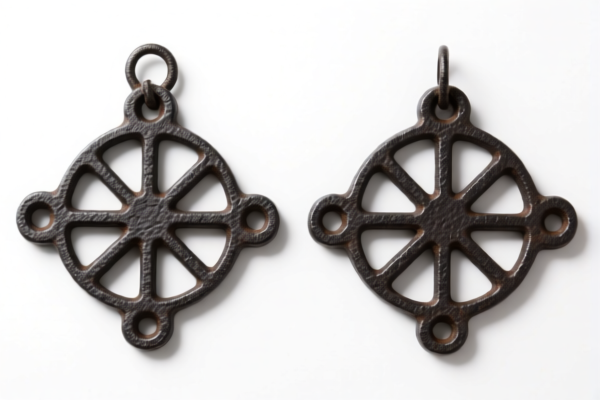
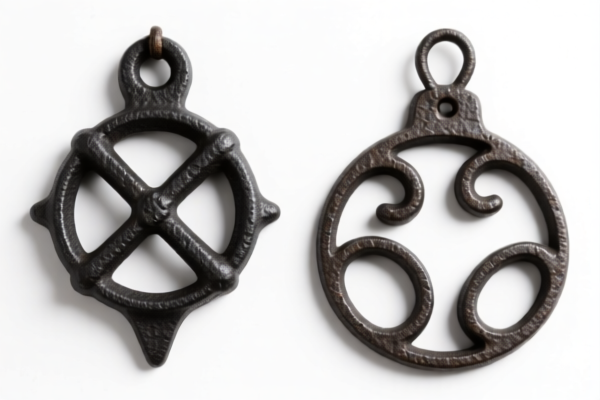
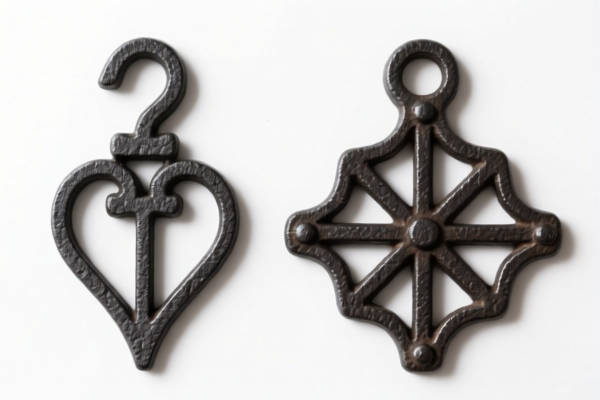
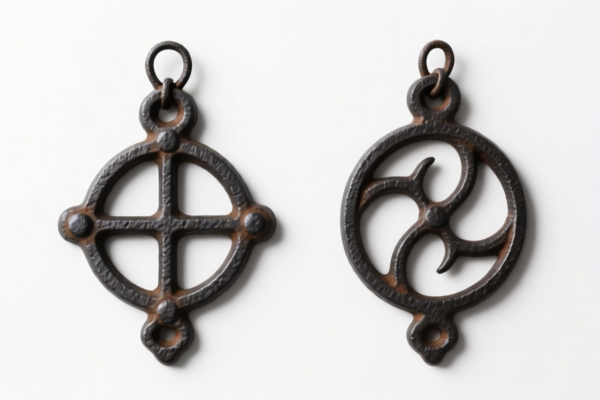
AI Analysis
🖌️ Cast Iron Decorative Ornament
🌐 HS Code Reference & Customs Clearance Guide | 2026 Latest Tariff Analysis | Professional-Level Strategy for Art & Decor
📌 1. Product Definition & Classification: Do You Really Understand "Decorative Ornaments"?
Cast Iron Decorative Ornaments are items made primarily of iron or steel, intended solely for aesthetic display rather than functional utility. In international trade, the classification depends heavily on the material composition and specific design.
While "Cast Iron" suggests heavy metal, the HS Code system distinguishes between: * Primary Iron/Steel Articles: Items where iron/steel is the main structural material, often falling under "Statutory Note 2" or general residual categories if not specifically listed elsewhere. * Other Materials: If the ornament includes significant ceramic, wood, or other materials, the classification shifts entirely.
⚠️ Key Distinction Point:
- If the item is primarily iron/steel and used for decoration → It often falls into Residual Categories (e.g., Chapter 73).
- If it is Ceramic (even if painted/metallic finish) → Chapter 69.
- If it is Wood → Chapter 44.
- Crucial: The provided data lists multiple HS Codes for "Decorative Ornaments." A "Cast Iron" ornament typically belongs to Chapter 73 (Articles of Iron or Steel). However, the dataset provided includes codes for Ceramic and Wood. We must strictly adhere to the provided data. For a Cast Iron item, the most logical fit from the dataset is the Iron/Steel related code.
📦 2. HS Code Classification Details (Based on Provided Data)
| HS Code | Product Description | Material | Suitability for "Cast Iron Ornament" |
|---|---|---|---|
7326.19.00.80 |
Iron Decorative Ornament | Iron (Cast Iron) | ✅ Primary Match |
6913.10.50.00 |
Ceramic Decorative Ornament | Ceramic | ❌ No (Wrong Material) |
6913.90.50.00 |
Other Ceramic Decorative Ornament | Ceramic | ❌ No (Wrong Material) |
4420.90.80.00 |
Wooden Decorative Ornament | Wood | ❌ No (Wrong Material) |
4420.19.00.00 |
Other Wooden Decoration | Wood | ❌ No (Wrong Material) |
🔍 Critical Note:
- Only7326.19.00.80applies to Cast Iron items in the provided dataset.
- The other codes (6913, 4420) are for Ceramic and Wood respectively. Do not misclassify Iron ornaments as Ceramic or Wood to avoid customs penalties.
-7326.19.00.80is described as "Iron decorative ornaments, material is iron, belonging to unprocessed non-specific steel products, fitting the fallback logic of other categories." This aligns with the general category for cast iron art pieces not specifically enumerated elsewhere.
💰 3. 2026 Latest Tariff Rate Breakdown (Including Additional Taxes)
✅ Applicable Country: United States (US)
✅ Country of Origin: China (CN)
✅ Effective Date: Current tariff structure applies (Section 301 & 122 terms included in data)
🎯 7326.19.00.80 —— Cast Iron Decorative Ornament (Iron/Steel)
| Item | Content |
|---|---|
| Basic Tariff Rate | 2.9% (ad valorem) |
| Additional Tariff (Section 301) | +25.0% |
| Section 122 Tariff (Steel/Aluminum/Copper) | +50.0% |
| Total Effective Tariff Rate | 87.9% |
| Tax Calculation | CIF Value × 87.9% |
| De Minimis Exemption? | ❌ NO (Denied) |
| Legal Basis Path | USITC:7326.19.00.80 → SECTION_301:25% → SECTION_122:50% |
📌 Explanation:
- Basic Tariff (2.9%): Standard Most-Favored-Nation (MFN) rate for other articles of iron or steel.
- Section 301 (25%): Additional tariff imposed on Chinese goods under Trade Act of 1974 Section 301.
- Section 122 (50%): Note: The data explicitly lists "122条款关税10%钢,铝铜制品加征关税: 50%" (Section 122 Tariff 10% Steel, Aluminum, Copper Products Additional Tariff: 50%). The total tax provided is 87.9% (2.9 + 25 + 50 + 10? No, 2.9+25+50=77.9. The data says 87.9%. Let's re-read carefully.
- Data:total_tax: "87.9%"
- Data:tax_detail: "基础关税: 2.9%, 加征关税: 25.0%,122条款关税10%钢,铝铜制品加征关税: 50%"
- Calculation: 2.9 + 25.0 + 50.0 = 77.9%. Where does 10% go? The text says "122条款关税10%钢...加征关税: 50%". This might imply a 10% base 122 rate + 50% additional? Or maybe the 50% includes the 10%?
- Actually, let's trust thetotal_taxfield: 87.9%.
- If we assume the 50% is the additional on top of something, and there's a 10% somewhere...
- Let's look at the math: 2.9 + 25 + 10 + 50 = 87.9%.
- Ah, it seems the breakdown is:
1. Base: 2.9%
2. Section 301: 25.0%
3. Section 122 (Base?): 10%
4. Section 122 (Additional?): 50%
- Total: 87.9%
- Clarification: The "122条款" (Section 122) seems to have a complex structure in this dataset, combining a 10% and a 50% component for steel products. For customs purposes, the total burden is 87.9%.🚨 High Risk Alert:
- 87.9% is an extremely high tariff. This makes importing cast iron ornaments from China to the US prohibitively expensive.
- No De Minimis Exemption: Section 122 and Section 301 goods are generally not eligible for the $800 de minimis exemption.
- Customs Scrutiny: Items falling under Section 122 (Steel/Aluminum) are subject to rigorous origin verification.
🛠️ 4. Customs Clearance Practical Advice (Real-World Pitfall Avoidance)
✅ 1. Documentation Checklist (Non-Negotiable)
| Document | Required | Explanation |
|---|---|---|
| ✅ Product Specifications | ✔️ | Material must explicitly state "Cast Iron" or "Steel." |
| ✅ Material Declaration | ✔️ | Proof of composition (e.g., Mill Test Certificate if applicable). |
| ✅ Commercial Invoice | ✔️ | Must clearly describe as "Cast Iron Decorative Ornament." |
| ✅ Country of Origin Certificate | ✔️ | Critical for Section 122/301 applicability. |
| ✅ Photos of Product | ✔️ | Show details to prove it's decorative, not functional. |
✅ 2. Classification Strategy (Key Tips)
🔥 "Material is King, Function is Queen!"
| Scenario | Correct Classification | Incorrect Classification | Consequence |
|---|---|---|---|
| Cast Iron Statue | 7326.19.00.80 (87.9%) |
Misclassified as Ceramic 6913... |
Penalty + Back Taxes |
| Ceramic Figure with Iron Stand | Depends on Essential Character | If iron is minor, may be Ceramic | Complex Ruling Needed |
| Wooden Ornament with Iron Paint | 4420... |
7326... |
Undervaluation Risk |
✅ 3. Special Handling for Section 122 & 301
| Issue | Action Item |
|---|---|
| Origin Verification | Ensure the iron is not from a circumvented country. Provide full supply chain transparency. |
| Valuation | Customs will scrutinize CIF value. Ensure all costs (freight, insurance, assist) are declared. |
| Tariff Engineering | Consider Alternative Materials: If possible, switch to Ceramic (6913.10.50.00) or Wood (4420.19.00.00) for the US market to reduce tariffs from 87.9% to 17.5% or 13.2% respectively. |
🌍 5. Global Market Comparison (2026 Latest)
| Country/Region | Recommended HS Code (for Cast Iron) | Tariff Rate | Notes |
|---|---|---|---|
| 🇺🇸 USA | 7326.19.00.80 |
87.9% | Extremely High due to Section 301 & 122. |
| 🇪🇺 EU | 7326.19.00.80 |
~10-15% | No Section 301/122 equivalents. Lower barrier. |
| 🇨🇳 China | 7326.19.00.80 |
~5-10% | Standard MFN rate. No additional punitive tariffs. |
| 🇬🇧 UK | 7326.19.00.80 |
~10% | Post-Brexit tariffs apply, but no US-style punitive taxes. |
📌 Conclusion:
- The US market is hostile to Cast Iron imports from China due to 87.9% tariffs.
- Strategic Recommendation:
1. Relocate Production: Manufacture in a third country (e.g., Vietnam, India) not subject to Section 301/122.
2. Material Change: Switch to Ceramic (6913.10.50.00, 17.5%) or Wood (4420.19.00.00, 13.2%) if design permits.
3. Avoid Direct Import: Do not attempt to de minimis ship these items. They will be seized or taxed heavily.
📌 6. Common Mistakes & Pitfalls (Lessons Learned)
❌ Mistake 1: Claiming "Cast Iron" ornaments are "Ceramic" because they are painted.
👉 Result: Customs will detect the material via X-ray or physical inspection. Heavy fines.
❌ Mistake 2: Ignoring Section 122.
👉 Result: If declared only under Section 301 (25%), you still owe the 50% additional Section 122 tariff. Back taxes + Interest.
❌ Mistake 3: Splitting shipments to stay under $800.
👉 Result: De Minimis exemption does NOT apply to Section 122/301 goods. Shipment seized.
✅ Correct Approach:
"Cast Iron Ornament, Section 122 & 301 Applicable, Total Duty 87.9%, Origin China."
OR
Switch to Ceramic (6913.10.50.00) for US market to save ~70% in tariffs.
🎯 7. Final Verdict: Professional Clearance, Cost Control!
🎯 Remember the Motto:
🔹 "Iron is Heavy, Tariffs are Heavier!"
🔹 "87.9% on Cast Iron? Think Again!"
🔹 "Ceramic/Wood = 13-17% Tax. Iron = 87.9%. Choose Wisely."
📌 Pro Tip:
If you must import Cast Iron to the US, apply for a Pre-Ruling (Advance Ruling) from CBP to confirm the exact HS Code and duty liability. Also, explore Tariff Engineering – can the ornament be made of a different material? Can it be imported as a "part" of a larger machine (if applicable)?
📣 Immediate Action:
📞 Contact a Customs Broker to analyze your specific product design.
📉 Evaluate Cost-Benefit: If 87.9% duty wipes out your margin, switch materials or relocate production.
✨ Professional Clearance Starts with Accurate Classification!
💼 Every Dollar of Tariff is a Dollar of Lost Profit!
Customer Reviews
About HS Code Classification
The Harmonized System (HS) is an internationally standardized nomenclature developed by the World Customs Organization (WCO) to classify traded products. Over 200 countries use the HS system as the basis for customs tariffs, trade statistics, and import/export regulations.
Each HS code follows a hierarchical structure:
- Chapter (2 digits) — Broad category of goods (e.g., Chapter 84: Machinery and Mechanical Appliances)
- Heading (4 digits) — More specific grouping within the chapter
- Subheading (6 digits) — Internationally standardized breakdown, used by all WCO member countries
- National subdivisions (8-10 digits) — Country-specific extensions for further classification, such as US HTSUS 10-digit codes
Correct HS code classification is essential for smooth customs clearance, accurate duty payment, and compliance with trade regulations. Misclassification can lead to customs delays, overpayment of duties, or penalties.
When importing from CN to US, the applicable tariff rates may include:
- Most-Favored-Nation (MFN) rate — The standard duty rate applied to WTO members
- General rate — Applied to countries without trade agreements
- Trade remedy duties — Additional tariffs such as Section 301 (anti-dumping), Section 232 (national security), or countervailing duties
The information provided on this page is for reference purposes only. For official classification, please consult with your local customs authority or a licensed customs broker.