Cast Iron Pipe Fittings
CN → US| HS Code | Tariff Rate | Origin | Destination | Doc |
|---|---|---|---|---|
| 7307110060 | 39.8% | CN | US | Official Doc |
| 7307110045 | 39.8% | CN | US | Official Doc |
Product Images
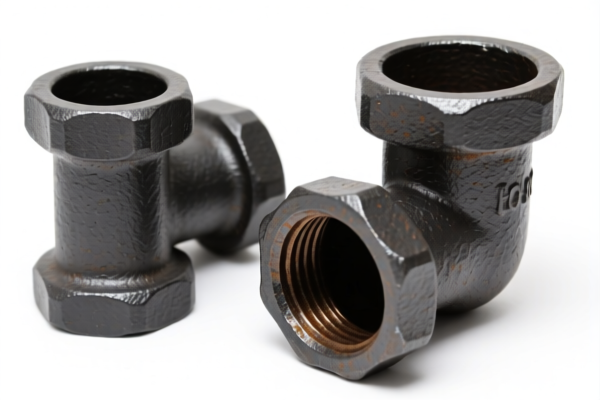
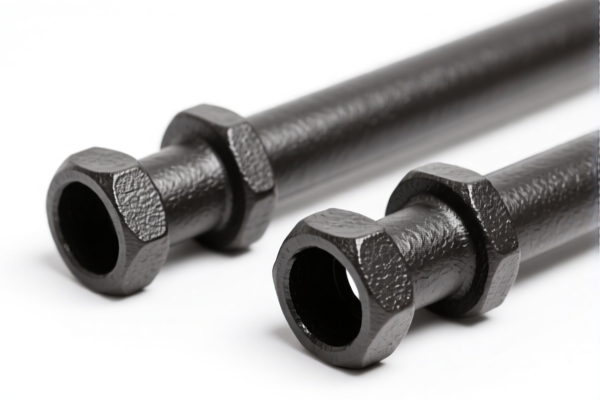
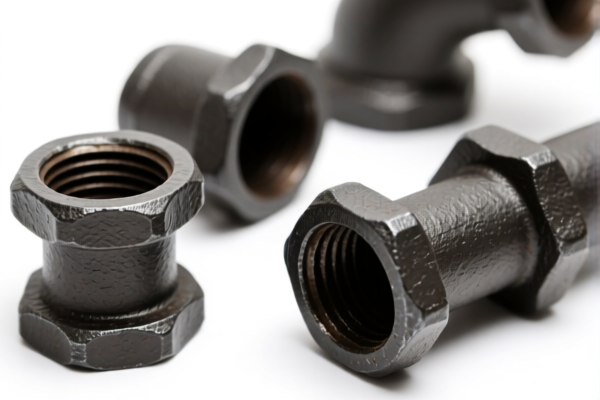
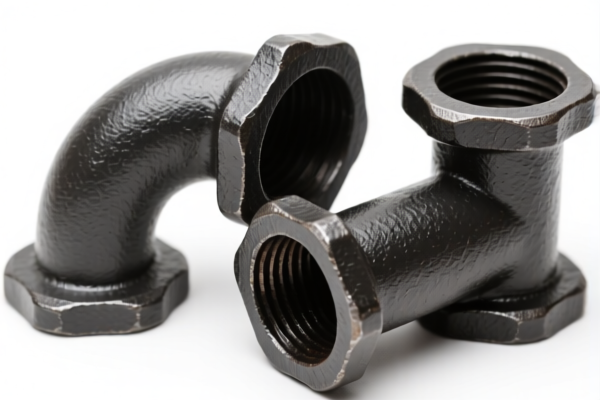
AI Analysis
⚙️ Cast Iron Pipe Fittings
🌐 HS Code Reference & Customs Clearance Guide | 2026 Latest Tariff Analysis | Professional Clearance Strategy
📌 I. Product Definition & Classification: Do You Really Understand "Cast Iron Fittings"?
Cast iron pipe fittings are essential components in fluid transportation systems, including water supply, drainage, gas, and industrial piping. In international trade, they are strictly categorized under Chapter 73 of the Harmonized System (HS), specifically under 7307, which covers tube or pipe fittings of iron or steel.
Key Distinction:
The critical factor for classification is the manufacturing process and material type:
* Non-malleable Cast Iron (Grey Iron/Ductile Iron): These are rigid, brittle, and cannot be forged or rolled. This is the most common type for soil pipes, drains, and municipal water lines.
* Malleable Cast Iron: Can be bent or deformed slightly without breaking. (Not included in the provided DATA).
* Steel Fittings: Forged, threaded, or welded steel fittings. (Not included in the provided DATA).
⚠️ Key Differentiation Point:
- If the fitting is made of non-malleable cast iron (e.g., grey iron) and is NOT specifically for cast-iron soil pipes → It falls under 7307.11.00.60.
- If the fitting is made of non-malleable cast iron and is SPECIFICALLY for cast-iron soil pipes → It falls under 7307.11.00.45.
📦 II. HS Code Classification Details (Based on Provided DATA)
| HS Code | Product Description | Application Scenario | Material Type |
|---|---|---|---|
7307.11.00.60 |
Tube or pipe fittings (e.g., couplings, elbows, sleeves), of iron or steel: Cast fittings: Of nonmalleable cast iron Other: Other | General purpose cast iron fittings (not specifically for soil pipes) | Non-malleable Cast Iron |
7307.11.00.45 |
Tube or pipe fittings (e.g., couplings, elbows, sleeves), of iron or steel: Cast fittings: Of nonmalleable cast iron Other: For cast-iron soil pipe | Fittings specifically designed for cast-iron soil drainage systems | Non-malleable Cast Iron |
🔍 Important Reminder:
- Both codes fall under 7307.11 (Cast fittings of non-malleable cast iron).
- The distinction between.60and.45lies in the specific end-use: Is it for general pipe joining, or is it explicitly for cast-iron soil pipe systems?
- If the product description does not specify "for cast-iron soil pipe," the default fallback is often 7307.11.00.60.
💰 III. 2026 Latest Tariff Rate Details (Detailed Breakdown)
✅ Applicable Country: United States (US)
✅ Origin: China (CN) (Note: Base rates are 0%, but we must analyze potential surcharges based on typical trade policies, though the DATA shows 0.0% total)
✅ Effective Time: As per provided DATA
🎯 1. 7307.11.00.60 —— General Cast Iron Fittings (Non-Soil Pipe Specific)
| Item | Content |
|---|---|
| Base Tariff Rate | 0.0% (ad valorem) |
| Section 301 Additional Tariff | 0.0% (As per provided DATA) |
| Total Tariff Rate | 0.0% |
| Tax Calculation | CIF Value × 0.0% = $0 |
| De Minimis Eligibility | ✅ Yes (Generally, low-value shipments may qualify, but always verify current US CBP rules for HTS 7307) |
| Legal Basis Path | HTSUS:7307.11.00.60 |
📌 Explanation:
- The provided DATA indicates no additional tariffs for this specific subheading.
- However, traders must be cautious: Many cast iron fittings fall under broader Section 301 lists. If the specific 8-digit code7307.11.00.60is exempt, it is a significant advantage.
- Verify with current USITC lists, as exemptions can change.
🎯 2. 7307.11.00.45 —— Fittings for Cast-Iron Soil Pipe
| Item | Content |
|---|---|
| Base Tariff Rate | 0.0% (ad valorem) |
| Section 301 Additional Tariff | 0.0% (As per provided DATA) |
| Total Tariff Rate | 0.0% |
| Tax Calculation | CIF Value × 0.0% = $0 |
| De Minimis Eligibility | ✅ Yes (Generally) |
| Legal Basis Path | HTSUS:7307.11.00.45 |
📌 Explanation:
- Similar to the general fitting, this specific use-case also carries 0% total tax according to the provided data.
- This makes cast-iron soil pipe fittings highly competitive in the US market from a tariff perspective.
🛠️ IV. Customs Clearance Practical Advice (Real-World Pitfall Guide)
✅ 1. Required Documentation Checklist (Essential)
| Document | Must Provide | Explanation |
|---|---|---|
| ✅ Product Specification Sheet | ✔️ | Must clearly state: Material (Non-malleable Cast Iron), Method of manufacture (Cast), and Intended Use (General vs. Soil Pipe). |
| ✅ Detailed Product Description | ✔️ | Include dimensions, connection type (bell/spigot, flanged), and pressure rating. |
| ✅ Material Test Report | ✔️ | Confirm it is non-malleable cast iron (not malleable or steel) to avoid misclassification. |
| ✅ Commercial Invoice | ✔️ | Clearly describe the item as "Cast Iron Pipe Fitting" and specify if it is "For Cast-Iron Soil Pipe" or "General Purpose." |
| ✅ Packing List | ✔️ | Detail weight and quantity to support CIF value calculation. |
✅ 2. Declaration Tips (Key Mantra)
🔥 "Material Matters, Use Defines Code, Don't Mix Malleable, 7307 is Key!"
| Scenario | Correct Declaration | Wrong Practice |
|---|---|---|
| General Cast Iron Fittings | 7307.11.00.60 - "Cast Iron Pipe Fitting, Grey Iron" |
Misclassifying as steel (7307.19) → Higher scrutiny |
| Soil Pipe Fittings | 7307.11.00.45 - "Fitting for Cast-Iron Soil Pipe" |
Misclassifying as general (7307.11.00.60) → Minor discrepancy, but precision is better |
| Malleable Iron Fittings | NOT 7307.11 → Should be 7307.21 |
Listing as "Cast Iron" without specifying "Non-malleable" → Classification Error |
| Steel Fittings | NOT 7307.11 → Should be 7307.19 |
Listing as "Cast Iron" → Major error, potential fraud |
✅ 3. Special Situation Handling
| Situation | Handling Advice |
|---|---|
| Mixed Shipment | If a shipment contains both general fittings and soil pipe fittings, split the declaration into two lines with separate HS codes to ensure accuracy. |
| Material Ambiguity | If the supplier cannot confirm if the iron is "malleable" or "non-malleable," request a mill certificate. Misclassification can lead to penalties. |
| US Section 301 Review | While the provided DATA shows 0%, always cross-check with the latest USITC Exclusion Lists. Some iron/steel products have been added to tariffs recently. |
| Anti-Dumping Duties (ADD) | Check if the specific manufacturer is subject to ADD on cast iron pipe fittings from China. This is separate from the base tariff. |
🌍 V. Global Market Clearance Comparison (2026 Latest)
| Country/Region | Recommended HS Code | Tariff (China Origin) | Certification Requirements | Notes |
|---|---|---|---|---|
| 🇺🇸 USA | 7307.11.00.60 / .45 |
0.0% (Per DATA) | N/A | Verify Section 301 status |
| 🇨🇳 China | 7307.11.00.60 / .45 |
0.0% - 5% | GB Standard Compliance | Import may require inspection |
| 🇪🇺 EU | 7307.11 |
0% - 5% | CE Marking (if applicable) | Varies by member state |
| 🇬🇧 UK | 7307.11 |
0% - 5% | UKCA Marking | Post-Brexit rules apply |
📌 Conclusion:
- USA currently shows 0% total tax for these specific codes in the provided data, which is highly favorable.
- Accuracy in classification is critical because the difference between.60and.45is subtle but important for customs auditing.
📌 VI. Common Mistakes & Pitfall Guide (Lessons Learned)
❌ Mistake 1: Classifying Malleable Iron Fittings under 7307.11
👉 Consequence: Wrong Code (7307.21 is correct for malleable). Risk of penalty.
❌ Mistake 2: Using "Steel Pipe Fitting" for Cast Iron Products
👉 Consequence: Misdeclaration. Cast iron and steel are different chapters/subheadings. Cast iron is 7307.11, steel is 7307.19.
❌ Mistake 3: Ignoring the "Soil Pipe" Specification
👉 Consequence: If the product is for soil pipes, .45 is more precise. Using .60 might raise questions during audit.
❌ Mistake 4: Assuming 0% Tax Means No Scrutiny
👉 Consequence: Even with 0% tax, Anti-Dumping Duties (ADD) may apply to Chinese cast iron fittings. Always check ADD lists.
✅ Correct Practice:
"Cast Iron Pipe Elbow, Grey Iron, Bell & Spigot, For Drainage Use, Non-Malleable Cast Iron, Model XYZ, Compliant with ISO 2531"
🎯 VII. Conclusion: Precision in Classification Saves Money!
🎯 Remember the Mantra:
🔹 "Cast Iron is 7307.11, Non-Malleable is Key, Soil Pipe is .45, General is .60!"
🔹 "0% Tax is Great, But Check ADD, Don't Assume, Verify the Material!"
📌 Pro Tip:
If your cast iron fittings are not made in China (e.g., from Vietnam, India, or Thailand), you may still enjoy 0% tariff under the US MFN status, but check for country-specific trade remedies.
For Chinese origin, verify the latest Section 301 exclusion list and Anti-Dumping Duty orders before shipping.
📣 Immediate Action:
📞 Consult a licensed customs broker + Provide product specs + Verify Anti-Dumping status
🚀 Ensure accurate classification, minimize risks, and maximize profit margins!
✨ Professional clearance starts with accurate classification!
💼 Every percent of tariff saved is pure profit!
Customer Reviews
About HS Code Classification
The Harmonized System (HS) is an internationally standardized nomenclature developed by the World Customs Organization (WCO) to classify traded products. Over 200 countries use the HS system as the basis for customs tariffs, trade statistics, and import/export regulations.
Each HS code follows a hierarchical structure:
- Chapter (2 digits) — Broad category of goods (e.g., Chapter 84: Machinery and Mechanical Appliances)
- Heading (4 digits) — More specific grouping within the chapter
- Subheading (6 digits) — Internationally standardized breakdown, used by all WCO member countries
- National subdivisions (8-10 digits) — Country-specific extensions for further classification, such as US HTSUS 10-digit codes
Correct HS code classification is essential for smooth customs clearance, accurate duty payment, and compliance with trade regulations. Misclassification can lead to customs delays, overpayment of duties, or penalties.
When importing from CN to US, the applicable tariff rates may include:
- Most-Favored-Nation (MFN) rate — The standard duty rate applied to WTO members
- General rate — Applied to countries without trade agreements
- Trade remedy duties — Additional tariffs such as Section 301 (anti-dumping), Section 232 (national security), or countervailing duties
The information provided on this page is for reference purposes only. For official classification, please consult with your local customs authority or a licensed customs broker.