Cast Iron Pipes and Fittings
CN → USProduct Images
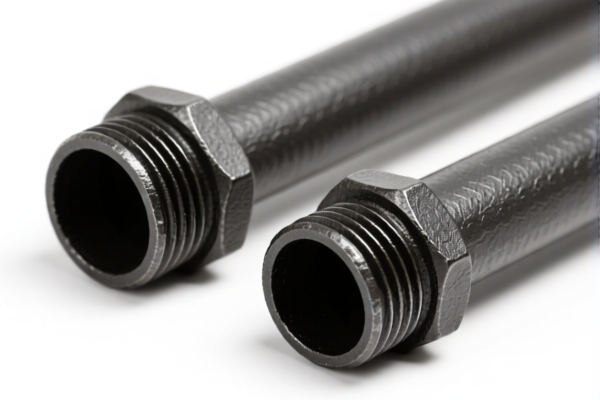
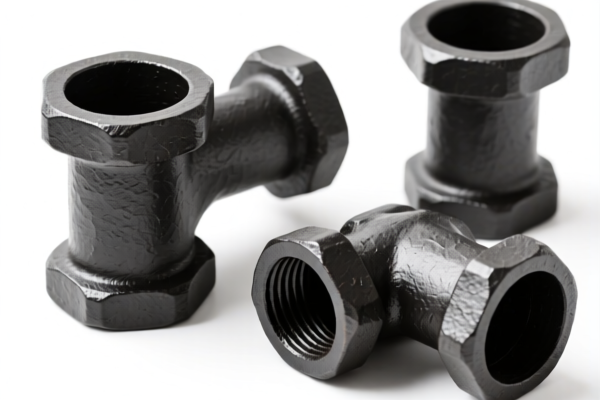
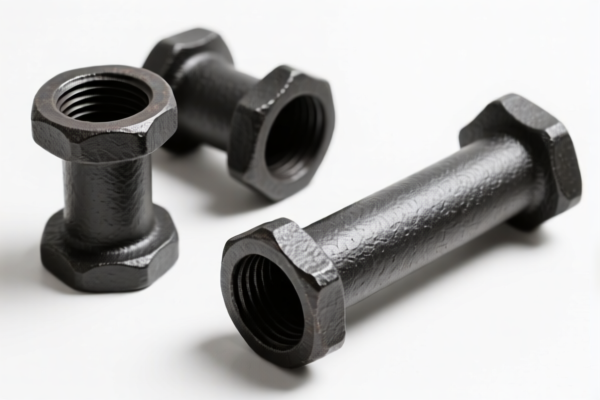
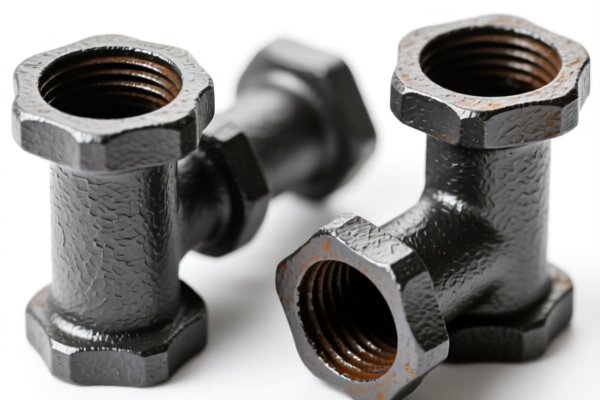
AI Analysis
🏗️ Cast Iron Pipes and Fittings (Sanitary and Storm Sewer)
🌐 HS Code Reference & Customs Clearance Guide | 2026 Latest Tariff Analysis | Professional-Level Entry Strategy
📌 I. Product Definition & Classification: Do You Truly Understand "Cast Iron Pipes"?
Cast iron pipes and fittings are the backbone of urban drainage, sewage systems, and industrial fluid transport due their exceptional durability, pressure resistance, and noise-dampening properties. In international trade, they are strictly categorized based on material composition, application, and structural form.
Core Categories:
1. Cast Iron Pipes (Pipes) Long, tubular structures used for conveying wastewater, stormwater, or industrial fluids. Typically made of grey cast iron (sand cast or ductile).
2. Cast Iron Fittings (Joints/Elbows/Tees) Connecting components (elbows, tees, reducers, couplings) that join pipes or change direction.
⚠️ Key Distinction:
- If the product is a long, continuous pipe intended for sewage/storm systems → Classified under Chapters 73.
- If the product is a small fitting (elbow, tee, flange) used to connect pipes → Classified under Chapter 73 or Chapter 84/85 if it contains mechanical moving parts (rare for standard fittings).
- Crucial Note: "Cast Iron" in customs terminology usually refers to Grey Cast Iron or Ductile Iron. Wrought iron or steel pipes fall under different codes (e.g., 7304).
📦 II. HS Code Classification Details (2026 Latest Tariff Authority Comparison)
| HS Code | Product Description | Applicable Scenario | Material/Type |
|---|---|---|---|
7302.40.00.00 |
Cast iron pipes and tubes | Sanitary sewer pipes, storm water drains, cast iron soil pipes | Grey/Ductile Cast Iron |
7307.19.00.00 |
Other cast iron tubes and pipes fittings | Elbows, tees, reducers, flanges, couplings for cast iron pipes | Grey/Ductile Cast Iron |
7307.99.00.00 |
Cast iron fittings (other than malleable or non-malleable cast iron) | Specialty cast iron fittings, heavy-duty industrial joints | Grey Cast Iron (non-malleable) |
7307.29.00.00 |
Flanges, of other iron or steel | Cast iron flanges (often grouped here if distinct from simple pipe fittings) | Cast Iron |
🔍 Priority Reminder:
- Pipes go to 7302.40.00.00.
- Fittings (elbows, tees, bends) generally go to 7307.19.00.00 or 7307.99.00.00 depending on exact form and malleability.
- Do NOT confuse with Steel Pipes (7304) or Plastic Pipes (3917). Cast iron has a distinct rough surface, high weight, and specific casting marks.
- Malleable Cast Iron Fittings are classified under 7307.11.00.00 or 7307.19.00.00 (check if annealed/heat-treated to increase ductility). Most standard sanitary fittings are grey cast iron (brittle).
💰 III. 2026 Latest Tariff Rate Details (Including Surtaxes, Policy Surcharges)
✅ Applicable Country: United States (US)
✅ Origin: China (CN)
✅ Effective Date: Post-November 2025 (including subsequent imports)
🎯 1. 7302.40.00.00 —— Cast Iron Pipes
| Item | Content |
|---|---|
| Base Rate | 2.5% (ad valorem) |
| USITC Surcharge (Section 301) | +25% |
| IEEPA Surcharge | +10% (for China/HK origin, effective Nov 10, 2025) |
| Total Rate | 37.5% |
| Tax Calculation | CIF Value × 37.5% |
| De Minimis Exemption? | ❌ No (deny_de_minimis) |
| Legal Path | IEEPA:9903.01.25 → USITC:7302.40.00.00 → FOOTNOTE:9903.88.01 |
📌 Explanation:
- Section 301 Surcharge (25%): Applies to structural steel and pipe products from China.
- IEEPA Surcharge (10%): New 2025 policy targeting Chinese industrial goods.
- Total 37.5% is a high barrier for bulk pipe imports. Profit margins must account for this.
🎯 2. 7307.19.00.00 —— Cast Iron Pipe Fittings (Other)
| Item | Content |
|---|---|
| Base Rate | 2.7% (ad valorem) |
| USITC Surcharge (Section 301) | +25% |
| IEEPA Surcharge | +10% |
| Total Rate | 37.7% |
| Tax Calculation | CIF Value × 37.7% |
| De Minimis Exemption? | ❌ No |
| Legal Path | IEEPA:9903.01.25 → USITC:7307.19.00.00 → FOOTNOTE:9903.88.01 |
📌 Note:
- Fittings are often lighter and cheaper per unit than pipes, but the percentage tax is similar.
- If classified as Malleable Cast Iron (7307.11.00.00), the base rate might differ slightly, but Section 301 and IEEPA surcharges still apply.
- Do not under-declare value to avoid penalties; CBP uses automated risk analysis.
🛠️ IV. Customs Clearance Practical Advice (Battle-Tested Pitfall Avoidance Guide)
✅ 1. Required Documentation Checklist (None Missing)
| Document | Mandatory | Description |
|---|---|---|
| ✅ Product Specification Sheet | ✔️ | Must state: Material (Grey/Ductile Cast Iron), Standard (ASTM A74, A48, ISO 2531), Pressure Rating |
| ✅ Material Certificate (Mill Cert) | ✔️ | Proof of chemical composition and mechanical properties |
| ✅ Product Photos (Markings) | ✔️ | Clear shots of casting marks, size labels, "CI" or "Cast Iron" stamps |
| ✅ Commercial Invoice | ✔️ | Must specify "Cast Iron Pipe" or "Cast Iron Fitting," NOT generic "Steel Pipe" |
| ✅ Packing List | ✔️ | Detail weight and dimensions; cast iron is heavy, ensure accurate GW/NW |
| ✅ Certificate of Origin (CO) | ✔️ | If claiming preferential rates (e.g., via other countries, but China-origin faces surcharges) |
✅ 2. Declaration Tips (Key Mantras)
🔥 “Material Must Be Clear, HS Code Precise, Weight Accurate, Tax Avoidable!”
| Scenario | Correct Declaration | Wrong Practice |
|---|---|---|
| Grey Cast Iron Pipe | 7302.40.00.00 - Cast Iron Pipe |
Misdeclare as Steel Pipe (7304) → Lower base rate but high penalty for misclassification |
| Cast Iron Elbow/Tee | 7307.19.00.00 - Cast Iron Fitting |
Misdeclare as Steel Fitting → Risk of Section 301 exemption loss |
| Malleable Cast Iron Fitting | 7307.11.00.00 - Malleable Fitting |
Confusing with grey iron → Different base rate, same surcharges |
| Bundle with Plastic Fittings | Split Declaration | Mixed declaration → Delays, potential seizure |
✅ 3. Special Cases Handling
| Scenario | Handling Advice |
|---|---|
| OEM Custom Pipes | Provide customer drawings and material specs. Avoid "General Purpose" labels. |
| Pipe + Fitting Bundles | Declare separately. Pipes under 7302, Fittings under 7307. Do not bundle under one code unless specifically allowed. |
| Used/Recycled Cast Iron | If used, may fall under 7326 (Other articles of iron/steel). Different tax treatment. Must declare as "Used." |
| Heavy Weight Issues | Cast iron is dense. Ensure shipping weight matches declared weight. Discrepancies >5% trigger audits. |
🌍 V. Global Market Customs Comparison (2026 Latest)
| Country/Region | Recommended HS Code | Tariff Rate (China Origin) | Certification Requirements | Notes |
|---|---|---|---|---|
| 🇺🇸 USA | 7302.40.00.00 / 7307.19.00.00 |
37.5% - 37.7% | ASTM A74/A48 Compliance | High surcharges. Strict material verification. |
| 🇨🇳 China (Import) | 7302.40.00.00 |
0% - 5% (depending on trade agreement) | GB Standard Compliance | Low duty for import into China. |
| 🇪🇺 EU | 7302.40.00.00 |
2.5% + Anti-Dumping (if applicable) | CE Marking (if pressure equipment) | Anti-dumping duties may apply for certain Chinese cast iron products. |
| 🇯🇵 Japan | 7302.40.00.00 |
1.9% | JIS Standard Compliance | No major surcharges. |
| 🇦🇺 Australia | 7302.40.00.00 |
5% | AS/NZS Standard | GST applicable. |
📌 Conclusion:
- USA is the most challenging market due to Section 301 + IEEPA surcharges totaling ~37.5%.
- EU may have anti-dumping duties on specific Chinese cast iron goods. Check latest EU trade measures.
- Other markets are relatively stable with low tariffs.
📌 VI. Common Errors & Pitfalls (Blood-Taught Lessons)
❌ Error 1: Declaring "Cast Iron Pipe" as "Steel Pipe"
👉 Consequence: Base rate is lower, but misclassification penalty + interest. CBP checks weight and magnetism. Cast iron is less magnetic and heavier.
👉 Result: Seizure or heavy fines.
❌ Error 2: Confusing "Grey Cast Iron" with "Ductile Iron"
👉 Consequence: Different material standards. Ductile iron is tougher. If declared wrong, fails inspection.
👉 Result: Rejection at port.
❌ Error 3: Ignoring "Malleable Cast Iron" distinction
👉 Consequence: Malleable fittings (annealed) have different HS codes (7307.11) vs Grey (7307.19).
👉 Result: Delayed clearance for reclassification.
❌ Error 4: Under-declaring Weight
👉 Consequence: Cast iron is expensive to ship. Under-declaring weight is a major red flag.
👉 Result: Cargo held, fines, and potential blacklist.
✅ Correct Practice:
"ASTM A74 Cast Iron Soil Pipe, 4-inch Diameter, 3-Test Standard, Grey Cast Iron, for Sewer System"
"ASTM A536 Ductile Iron Fitting, 90-Degree Elbow, Mechanical Joint, for Water Distribution"
🎯 VII. Conclusion: Professional Declaration, Time-Saving, Cost-Effective!
🎯 Remember the Mantra:
🔹 "Material First, HS Code Precise, Weight Accurate, Surcharge Avoidable!"
🔹 "USA 37.5% Tax, EU Anti-Dumping Risk, Other Markets Low Rate!"
📌 Pro Tip:
If your cast iron pipes/fittings are shipped from Vietnam, Thailand, or India (not China-origin), you may avoid Section 301 and IEEPA surcharges, reducing total tariff to ~2.5-5%.
Ensure Certificate of Origin clearly shows non-Chinese origin.
For China-origin goods, pre-ruling (Advance Ruling) is highly recommended to confirm HS code and avoid surprises.
📣 Immediate Action:
📞 Contact a licensed customs broker + Provide Material Certs + Verify Origin
🚀 Ensure your cast iron products clear customs smoothly, efficiently, and cost-effectively!
✨ Professional Customs Clearance Starts with Precise Classification!
💼 Every Dollar of Cost Deserves Accurate Calculation!
Customer Reviews
About HS Code Classification
The Harmonized System (HS) is an internationally standardized nomenclature developed by the World Customs Organization (WCO) to classify traded products. Over 200 countries use the HS system as the basis for customs tariffs, trade statistics, and import/export regulations.
Each HS code follows a hierarchical structure:
- Chapter (2 digits) — Broad category of goods (e.g., Chapter 84: Machinery and Mechanical Appliances)
- Heading (4 digits) — More specific grouping within the chapter
- Subheading (6 digits) — Internationally standardized breakdown, used by all WCO member countries
- National subdivisions (8-10 digits) — Country-specific extensions for further classification, such as US HTSUS 10-digit codes
Correct HS code classification is essential for smooth customs clearance, accurate duty payment, and compliance with trade regulations. Misclassification can lead to customs delays, overpayment of duties, or penalties.
When importing from CN to US, the applicable tariff rates may include:
- Most-Favored-Nation (MFN) rate — The standard duty rate applied to WTO members
- General rate — Applied to countries without trade agreements
- Trade remedy duties — Additional tariffs such as Section 301 (anti-dumping), Section 232 (national security), or countervailing duties
The information provided on this page is for reference purposes only. For official classification, please consult with your local customs authority or a licensed customs broker.