Cast Iron Stove and Radiator
CN → US| HS Code | Tariff Rate | Origin | Destination | Doc |
|---|---|---|---|---|
| 8419815040 | 17.5% | CN | US | Official Doc |
| 8419909580 | 39.0% | CN | US | Official Doc |
| 7321890010 | 67.5% | CN | US | Official Doc |
| 7321890050 | 67.5% | CN | US | Official Doc |
Product Images
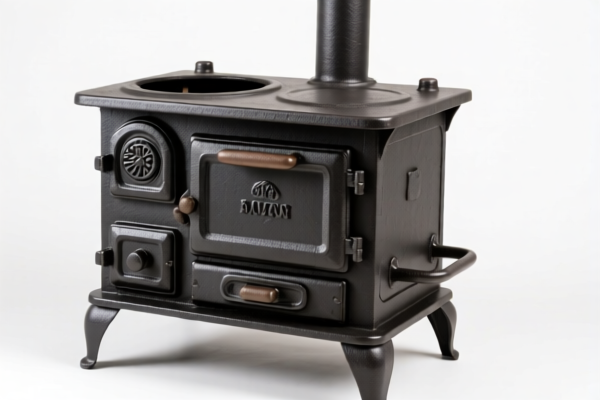
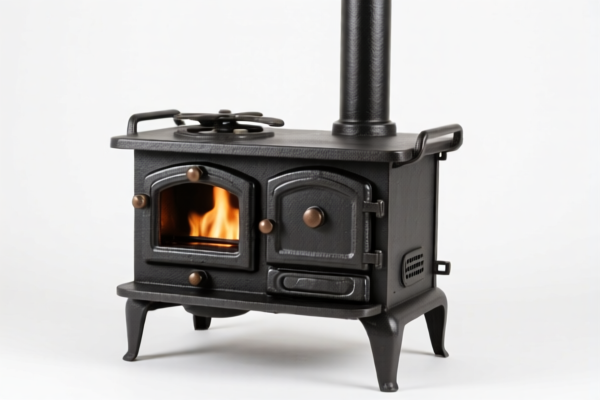
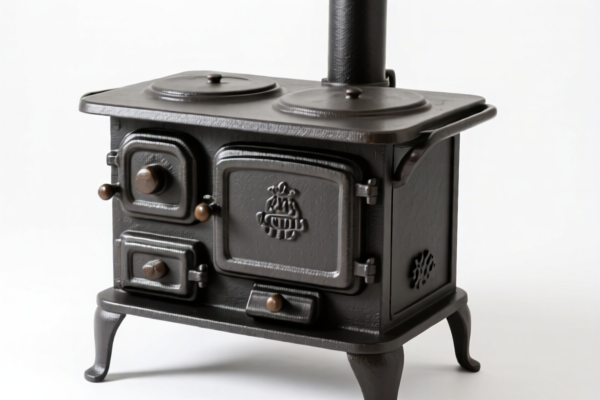
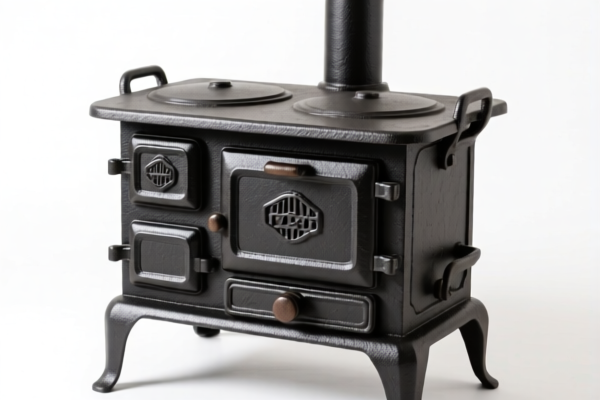
AI Analysis
🔥 Cast Iron Stove and Radiator (Domestic Heating & Cooking Appliances)
🌐 HS Code Reference & Customs Clearance Guide | 2026 Latest Tariff Analysis | Professional Clearance Strategy
📌 I. Product Definition & Classification: What Exactly is a "Cast Iron Stove"?
A Cast Iron Stove and Radiator refers to non-electric domestic appliances used for heating spaces or cooking, typically constructed from cast iron due to its heat retention properties. In international trade, these items are primarily classified under Chapter 73 (Articles of Iron or Steel) or Chapter 84 (Nuclear Reactors, Boilers, Machinery), depending on their specific function and fuel source.
Key Distinctions:
1. Domestic vs. Industrial: Appliances designed for home use (cooking, space heating, barbecues) fall under different subheadings compared to large-scale industrial equipment.
2. Electric vs. Non-Electric: The provided data strictly covers non-electric appliances. If the stove has electric heating elements, it likely falls under Chapter 85, which is not included in the provided <DATA> scope.
3. Material: Specifically made of cast iron or other iron/steel alloys.
⚠️ Critical Classification Point:
- If it is a domestic appliance (cooking/heating) made of iron/steel → Chapter 73.
- If it is a part of such an appliance → Chapter 73.
- If it is machinery for temperature treatment (industrial/cooking stoves for civil aircraft) → Chapter 84.
📦 II. HS Code Classification Details (2026 Latest Tariff Authority Comparison)
Based on the provided <DATA>, here are the specific HS Codes and their corresponding descriptions and tax rates.
| HS Code | Product Description | Application Scenario | Tax Rate (Total) |
|---|---|---|---|
7321.89.00.10 |
Other appliances for solid fuel (e.g., Fireplace grates of cast iron) | Domestic fireplaces, solid fuel stoves, cast iron radiators/heaters | 57.5% |
7321.89.00.50 |
Other appliances (Other, including appliances for solid fuel) | General non-electric domestic stoves, ranges, grates, barbecues, braziers | 57.5% |
8419.81.50.40 |
Cooking stoves, ranges, and ovens (For use in civil aircraft) | Specialized equipment for aircraft, not typical domestic use | 7.5% |
8419.90.95.80 |
Parts of machinery for treatment of materials by temperature change | Spare parts for the above industrial/aviation machinery | 29.0% |
🔍 Key Insight:
- Standard Domestic Stoves/Radiators: Most cast iron stoves and radiators for home use will fall under 7321.89.00.10 or 7321.89.00.50. These attract the highest tariffs.
- Aviation/Industrial: Only if the stove/radiator is explicitly for civil aircraft or industrial temperature treatment does it fall under 8419, which has lower duties.
- Parts: If you are importing only replacement parts (e.g., burner grates, doors) for these appliances, check 8419.90.95.80 if they are parts of machinery, or potentially parts of 7321 if classified differently (though data provided only lists 8419 parts).
💰 III. 2026 Latest Tariff Rate Breakdown (Detailed Tax Clauses)
✅ Applicable Country: United States (US)
✅ Origin: China (CN)
✅ Effective Date: Based on current trade policies (Subject to change)
🎯 1. 7321.89.00.10 & 7321.89.00.50 – Domestic Cast Iron Stoves & Radiators
| Item | Detail |
|---|---|
| Base Tariff | 0.0% (Ad Valorem) |
| Additional Tariff (Section 301) | +7.5% |
| Additional Tariff (Steel/Aluminum/Copper) | +50% |
| Total Tax Rate | 57.5% |
| Tax Calculation | CIF Value × 57.5% |
| De Minimis Eligibility | ❌ Not Eligible (High tariff items are generally excluded from de minimis exemptions if the total value exceeds thresholds or if specific trade remedies apply). |
| Legal Basis | Section 301 (7.5%) + USITC Steel/Aluminum/Copper Duties (50%) |
📌 Explanation:
- The 0% base rate is standard for many iron/steel articles.
- The 7.5% is the standard Section 301 additional duty for Chinese goods.
- The 50% is a specific surcharge on steel, aluminum, and copper products imported from certain countries (often linked to national security or trade defense measures).
- Total: 57.5% is a very high tariff. This significantly impacts the landed cost.
🎯 2. 8419.81.50.40 – Cooking Stoves for Civil Aircraft
| Item | Detail |
|---|---|
| Base Tariff | 0.0% |
| Additional Tariff (Section 301) | +7.5% |
| Total Tax Rate | 7.5% |
| Tax Calculation | CIF Value × 7.5% |
| De Minimis Eligibility | ⚠️ Check Specifics (May be eligible if value is low and not restricted, but industrial goods often face stricter scrutiny). |
| Legal Basis | Section 301 (7.5%) |
📌 Explanation:
- This code is specific to civil aircraft. If your "stove" is a standard home cast iron stove, DO NOT USE THIS CODE. Misclassification can lead to severe penalties.
- The tariff is much lower (7.5%) because it’s not classified under the heavy steel/iron surcharge in this specific subheading for this use case.
🎯 3. 8419.90.95.80 – Parts of Temperature Treatment Machinery
| Item | Detail |
|---|---|
| Base Tariff | 4.0% |
| Additional Tariff (Section 301) | +25.0% |
| Total Tax Rate | 29.0% |
| Tax Calculation | CIF Value × 29.0% |
| De Minimis Eligibility | ⚠️ Check Specifics |
| Legal Basis | Section 301 (25%) + Base Rate (4%) |
📌 Explanation:
- Applies to parts of machinery described in 8419. If you are importing replacement parts for a cast iron stove, determine if they are "parts of household appliances" (Chapter 73) or "parts of machinery" (Chapter 84). The data provided only lists this 8419 part code.
🛠️ IV. Customs Clearance Practical Advice (Avoiding Pitfalls)
✅ 1. Documentation Checklist (Must-Haves)
| Document | Required? | Notes |
|---|---|---|
| ✅ Product Specification Sheet | ✔️ | Must specify: Material (Cast Iron), Fuel Type (Solid/Oil/Gas), Power Output, Dimensions. |
| ✅ Commercial Invoice | ✔️ | Clearly state "Cast Iron Stove" or "Cast Iron Radiator". Avoid vague terms like "Heater". |
| ✅ Packing List | ✔️ | List items separately if packaging includes accessories. |
| ✅ Certificate of Origin | ✔️ | Required to verify Chinese origin for tariff calculation. |
| ✅ Material Declaration | ✔️ | Confirm the item is made of cast iron. If it contains significant non-iron components, classification may change. |
| ✅ Safety Certifications | ✔️ | UL, ETL, or CSA marks may be required for fire safety compliance. |
✅ 2. Classification Strategy (Key Rules)
🔥 "Rule of Thumb":
- Home Use Cast Iron Stove →7321.89.00.10or7321.89.00.50→ 57.5% Tariff.
- Aircraft Oven →8419.81.50.40→ 7.5% Tariff.
- Parts for Aircraft Machinery →8419.90.95.80→ 29.0% Tariff.
| Scenario | Correct HS Code | Wrong HS Code | Consequence of Error |
|---|---|---|---|
| Domestic Cast Iron Fireplace | 7321.89.00.10 |
8419.81.50.40 |
Underpayment: 57.5% vs 7.5%. Penalty + Back Duties. |
| Domestic Cast Iron Stove | 7321.89.00.50 |
8419.90.95.80 |
Underpayment: 57.5% vs 29.0%. Penalty + Back Duties. |
| Parts for Domestic Stove | Not in Data (Likely 7321) | 8419.90.95.80 |
Overpayment: You might pay 29% when it should be different, or vice versa if misclassified as aircraft parts. |
✅ 3. Special Considerations
| Situation | Recommendation |
|---|---|
| Mixed Materials | If the stove has significant non-iron parts (e.g., glass doors, steel handles), still likely 7321 if cast iron is the essential character. |
| Electric Components | If the "radiator" has an electric fan or igniter, it may not be considered "non-electric" and could fall under Chapter 85. The provided data does not cover electric appliances. |
| Industrial vs. Domestic | Be very clear about the end-use. "Civil Aircraft" requires proof (e.g., airline contract, specification sheets). |
🌍 V. Global Market Comparison (2026 Snapshot)
| Market | Recommended HS Code | Estimated Tariff (China Origin) | Notes |
|---|---|---|---|
| 🇺🇸 USA | 7321.89.00.10/50 |
57.5% | High due to steel/aluminum surcharge. |
| 🇪🇺 EU | 7321.89 |
~7.5% + Anti-Dumping? | Check for anti-dumping duties on iron/steel articles from China. |
| 🇨🇳 China | 7321.89 |
~15-20% (Import) | Import duty for foreign cast iron stoves. |
| 🇨🇦 Canada | 7321.89 |
~7.5% | MFN rate, check for CUSMA exemptions if applicable. |
📌 Conclusion:
- The US market is the most expensive for cast iron stoves due to the 57.5% total tariff.
- Cost Calculation: For a $1,000 CIF shipment, the duty alone is $575. This must be factored into your pricing strategy.
- Alternative: Consider sourcing from countries with Free Trade Agreements (FTAs) with the US (e.g., Mexico, Canada) to reduce tariffs.
📌 VI. Common Mistakes & Pitfalls (Lessons Learned)
❌ Mistake 1: Classifying a domestic stove as "Aircraft Oven" (8419.81.50.40) to get 7.5% instead of 57.5%.
👉 Consequence: Customs audit, seizure, fines, and loss of trust.
❌ Mistake 2: Ignoring the 50% Steel/Aluminum/Copper Surcharge.
👉 Consequence: Unexpected $500+ per $1,000 of goods.
❌ Mistake 3: Claiming "De Minimis" for high-value cast iron stoves.
👉 Consequence: If the shipment value is over $800 (de minimis threshold), duties apply. Even if under, high-duty items may be scrutinized.
✅ Best Practice:
"Declare Accurately, Pay Fully, Plan Ahead."
- Use precise descriptions: "Cast Iron Wood-Burning Stove, Domestic Use".
- Consult a customs broker for binding rulings if unsure.
🎯 VII. Conclusion: Mastering Cast Iron Stove Imports
🎯 Key Takeaway:
🔹 Domestic Cast Iron Stoves/Radiators = 57.5% Tariff in the US.
🔹 Aircraft Ovens = 7.5% Tariff (but requires strict proof of use).
🔹 Parts = 29.0% Tariff (if classified under 8419).
📌 Pro Tip:
If you are importing large volumes, consider supply chain diversification to countries with lower tariffs (e.g., Vietnam, Mexico) or explore tariff engineering (if legally permissible) to classify parts differently.
📣 Immediate Action:
📞 Contact a Licensed Customs Broker to verify the exact HS Code for your specific product design.
📄 Request a Binding Tariff Ruling from U.S. Customs and Border Protection (CBP) for certainty.
🚀 Optimize Your Logistics to absorb or pass on the 57.5% tariff cost.
✨ Professional Customs Clearance Starts with Precise Classification!
💼 Your Cost Efficiency Depends on It!
Customer Reviews
About HS Code Classification
The Harmonized System (HS) is an internationally standardized nomenclature developed by the World Customs Organization (WCO) to classify traded products. Over 200 countries use the HS system as the basis for customs tariffs, trade statistics, and import/export regulations.
Each HS code follows a hierarchical structure:
- Chapter (2 digits) — Broad category of goods (e.g., Chapter 84: Machinery and Mechanical Appliances)
- Heading (4 digits) — More specific grouping within the chapter
- Subheading (6 digits) — Internationally standardized breakdown, used by all WCO member countries
- National subdivisions (8-10 digits) — Country-specific extensions for further classification, such as US HTSUS 10-digit codes
Correct HS code classification is essential for smooth customs clearance, accurate duty payment, and compliance with trade regulations. Misclassification can lead to customs delays, overpayment of duties, or penalties.
When importing from CN to US, the applicable tariff rates may include:
- Most-Favored-Nation (MFN) rate — The standard duty rate applied to WTO members
- General rate — Applied to countries without trade agreements
- Trade remedy duties — Additional tariffs such as Section 301 (anti-dumping), Section 232 (national security), or countervailing duties
The information provided on this page is for reference purposes only. For official classification, please consult with your local customs authority or a licensed customs broker.