Cast Iron Stoves and Radiators
CN → US| HS Code | Tariff Rate | Origin | Destination | Doc |
|---|---|---|---|---|
| 7321890010 | 67.5% | CN | US | Official Doc |
| 7321890050 | 67.5% | CN | US | Official Doc |
| 8419815040 | 17.5% | CN | US | Official Doc |
| 8419909580 | 39.0% | CN | US | Official Doc |
Product Images
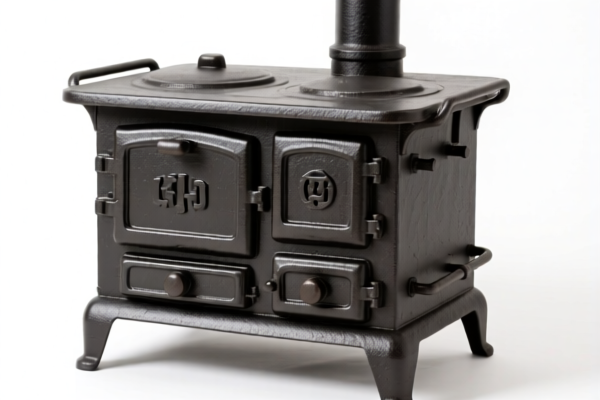
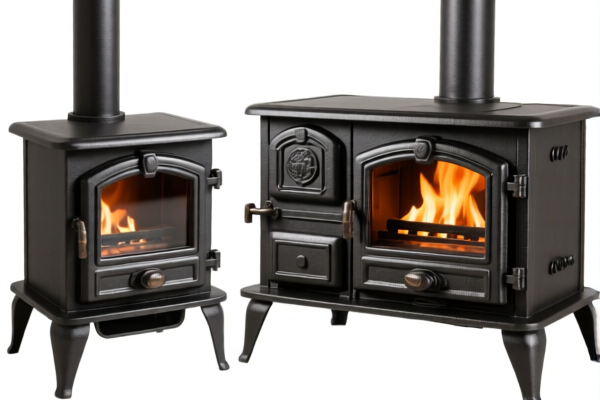
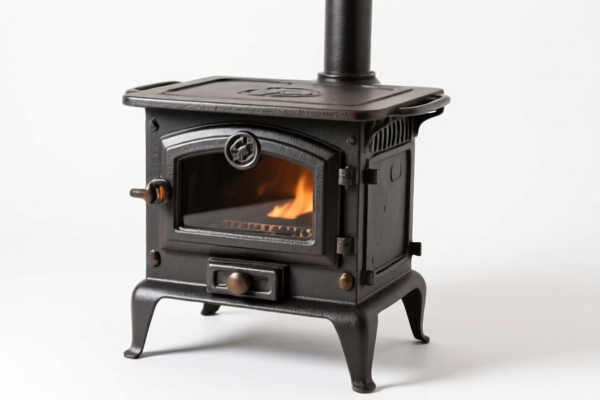
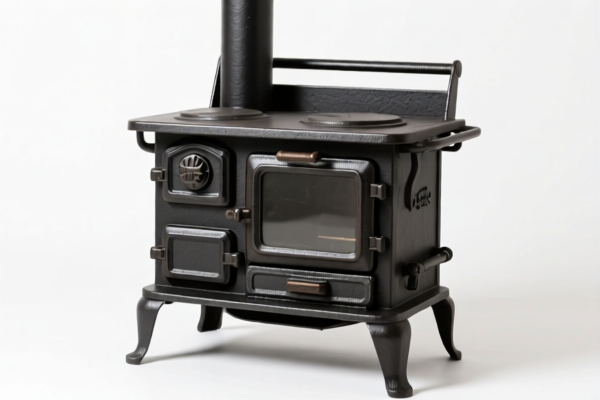
AI Analysis
🔥 Cast Iron Stoves, Ranges & Radiators: The Definitive 2026 HS Code & Tax Guide
🌐 HS Code Reference & Customs Clearance Guide | 2026 Latest Tariff Analysis | Professional Entry Strategy
📌 I. Product Definition & Classification: Do You Truly Understand "Cast Iron Appliances"?
Cast iron stoves, radiators, and similar heating appliances are not just simple metal objects; they are specialized thermal equipment. In international trade, their classification hinges on material composition, functionality, and power source (Electric vs. Non-Electric).
1. Cast Iron Fireplaces & Grates (Non-Electric)
These are traditional heating units made primarily of iron or steel. The key identifier is "Cast Iron" and "Non-Electric."
- Core Feature: Fuel combustion (wood, coal, gas) or passive heat radiation.
- Key Distinction: If it is strictly "Cast Iron" and used for solid fuel/fireplaces, it falls under a specific sub-heading of Heading 7321.
2. Other Non-Electric Domestic Stoves/Ranges (Iron/Steel)
Appliances made of iron/steel but not cast iron fireplaces (e.g., gas rings, plate warmers, general steel cookstoves).
3. Industrial/Commercial Cooking Machinery (Electric or Non-Electric)
Large-scale equipment for treating materials by temperature change (cooking, sterilizing, etc.) that is not for domestic use. This includes specific equipment for civil aircraft.
4. Parts of Heating Machinery
Components like burners, grates, or heating elements used in the machinery mentioned above.
⚠️ Critical Distinction Point:
- If the item is a Cast Iron Fireplace Grate → It is a specific product under 7321.89.00.10.
- If the item is a General Steel Gas Stove → It falls under 7321.89.00.50.
- If the item is an Industrial/Civil Aircraft Cooking Oven → It moves to Chapter 84 (8419.81.50.40).
- If you are shipping Parts for non-domestic heating equipment → It falls under 8419.90.95.80.
📦 II. HS Code Classification Details (2026 Latest Tariff Authority)
Based on the provided data, here is the precise mapping for Cast Iron Stoves, Radiators, and related heating equipment.
| HS Code | Product Description | Application Scenario | Material/Type |
|---|---|---|---|
7321.89.00.10 |
Fireplace grates of cast iron (under "Other appliances for solid fuel") | Traditional wood/coal fireplaces, cast iron radiators, decorative heating units | ✅ Cast Iron |
7321.89.00.50 |
Other appliances (non-electric, iron/steel) | Gas rings, plate warmers, general steel stoves, barbecues (non-electric) | ✅ Iron/Steel (Non-Cast Iron Specifics) |
8419.81.50.40 |
Cooking stoves, ranges, and ovens for use in civil aircraft | Galley equipment for airplanes, industrial heating units not for domestic use | ✅ Mechanical/Industrial |
8419.90.95.80 |
Parts of other machinery/plant for heat treatment | Spare parts for industrial cookers, heaters, or non-domestic heating plants | ✅ Parts Only |
🔍 Key Reminder:
- "Cast Iron" is the keyword for7321.89.00.10.
- "Other" (non-cast iron specific) falls under7321.89.00.50.
- "Domestic" vs. "Non-Domestic" is the split between Chapter 73 (Household) and Chapter 84 (Industrial/Machinery).
- Parts are classified separately under Chapter 84 if they belong to industrial machinery.
💰 III. 2026 Latest Tariff Rate Breakdown (Including Surtaxes & Policy Add-ons)
✅ Applicable Country: United States (US)
✅ Origin: China (CN)
✅ Effective Date: Current rates apply based on the provided data (2024/2025 surcharge context)
🎯 1. 7321.89.00.10 – Fireplace Grates of Cast Iron
| Item | Content |
|---|---|
| Base Tariff | 0.0% (Ad Valorem) |
| Additional Tariff (Section 301) | +7.5% (Standard USITC 301 Surtax) |
| Steel/Aluminum/Copper Surcharge | +50% (Specific surcharge for steel products under current trade policies) |
| Total Tax Rate | 57.5% |
| Tax Calculation | CIF Value × 57.5% |
| De Minimis Exemption | ❌ Not Eligible (High risk of seizure if undervalued or misdeclared) |
| Legal Basis Path | USITC:7321.89.00.10 → Section 301: 7.5% → Steel Surcharge: 50% |
📌 Explanation:
- Cast iron is classified as Steel/Iron products.
- The 50% surcharge is a critical, high-cost component targeting Chinese steel imports.
- Total 57.5% is a VERY HIGH tariff. Cost planning must account for this.
🎯 2. 7321.89.00.50 – Other Non-Electric Stoves (Iron/Steel)
| Item | Content |
|---|---|
| Base Tariff | 0.0% |
| Additional Tariff (Section 301) | +7.5% |
| Steel/Aluminum/Copper Surcharge | +50% |
| Total Tax Rate | 57.5% |
| Tax Calculation | CIF Value × 57.5% |
| De Minimis Exemption | ❌ Not Eligible |
| Legal Basis Path | USITC:7321.89.00.50 → Section 301: 7.5% → Steel Surcharge: 50% |
📌 Note:
- Even if not explicitly "cast iron," any iron/steel non-electric domestic stove faces the same 50% steel surcharge.
- Do not try to evade this by mislabeling; customs will inspect material composition.
🎯 3. 8419.81.50.40 – Cooking Stoves for Civil Aircraft
| Item | Content |
|---|---|
| Base Tariff | 0.0% |
| Additional Tariff (Section 301) | +7.5% |
| Steel Surcharge | ❌ Not Applied (This is specialized machinery, not general steel goods) |
| Total Tax Rate | 7.5% |
| Tax Calculation | CIF Value × 7.5% |
| De Minimis Exemption | ❌ Not Eligible |
| Legal Basis Path | USITC:8419.81.50.40 → Section 301: 7.5% |
📌 Explanation:
- This is a specialized niche (Civil Aircraft).
- Much Lower Tax (7.5%) compared to household cast iron stoves.
- Strict Condition: Must be proven to be for use in civil aircraft (e.g., airline galleys, maintenance parts for aircraft).
🎯 4. 8419.90.95.80 – Parts for Non-Domestic Heating Machinery
| Item | Content |
|---|---|
| Base Tariff | 4.0% |
| Additional Tariff (Section 301) | +25.0% |
| Steel Surcharge | ❌ Not Applied (Parts of machinery, not bulk steel) |
| Total Tax Rate | 29.0% |
| Tax Calculation | CIF Value × 29.0% |
| De Minimis Exemption | ❌ Not Eligible |
| Legal Basis Path | USITC:8419.90.95.80 → Section 301: 25% |
📌 Note:
- This applies to parts of industrial or non-domestic heating equipment (not household cast iron stoves).
- 29% is significantly lower than the 57.5% for finished cast iron goods.
- Key: Ensure the part belongs to machinery under Heading 8419, not 7321.
🛠️ IV. Customs Clearance Practical Advice (Real-World Pitfall Avoidance)
✅ 1. Required Documentation Checklist (Non-Negotiable)
| Document | Must Provide | Purpose |
|---|---|---|
| ✅ Product Specification Sheet | ✔️ | Detail material (Cast Iron vs. Steel), fuel type, dimensions |
| ✅ Material Certification | ✔️ | Proof of "Cast Iron" content to justify HS 7321.89.00.10 |
| ✅ Commercial Invoice | ✔️ | Clearly state "Non-Electric Domestic Stove" or "Aircraft Galley Oven" |
| ✅ Packing List | ✔️ | Ensure no mixed shipments (e.g., don’t mix cast iron grates with electronic parts) |
| ✅ Certificate of Origin | ✔️ | Confirm Chinese origin to apply correct surcharges |
| ✅ Photos (Labeled) | ✔️ | Show brand, model, input/output, and material texture |
✅ 2. Declaration Tips (Key Mnemonics)
🔥 "Cast Iron = 57.5%, Aircraft Oven = 7.5%, Parts = 29%! Declare Wrong, Pay Double!"
| Scenario | Correct HS Code | Consequence of Error |
|---|---|---|
| Cast Iron Fireplace | 7321.89.00.10 |
If declared as "Steel Part" → 57.5% (Correct) |
| Gas Range (Steel) | 7321.89.00.50 |
If declared as "Cast Iron" → 57.5% (Correct, but verify material) |
| Aircraft Oven | 8419.81.50.40 |
If declared as "Domestic Stove" → 57.5% vs 7.5% (Save 50%!) |
| Heater Part | 8419.90.95.80 |
If declared as "Whole Stove" → 57.5% vs 29% (Overpay) |
✅ 3. Special Cases & Handling
| Situation | Handling Advice |
|---|---|
| Mixed Materials | If stove has plastic handles or glass doors, it still falls under 7321 if the essential character is cast iron. |
| "Cast Iron" vs. "Cast Steel" | Customs may test for carbon content. "Cast Iron" is a specific metallurgical classification. Provide mill certificates. |
| Aircraft Parts | Must include proof of end-use (e.g., airline purchase order, aircraft maintenance manual reference) to qualify for 8419.81.50.40. |
| Parts Separately | If importing burners and grates separately, declare as Parts (8419.90.95.80) if they fit the industrial definition, potentially saving tax if not "domestic." |
🌍 V. Global Market Customs Comparison (2026 Latest)
| Country/Region | Recommended HS Code | Tariff Rate (China Origin) | Key Requirement |
|---|---|---|---|
| 🇺🇸 USA | 7321.89.00.10 |
57.5% (50% Steel + 7.5% 301) | Strict material verification |
| 🇺🇸 USA | 8419.81.50.40 |
7.5% | Proof of Aircraft Use |
| 🇨🇳 China | 7321.89.00.10 |
~10-13% | Standard Import VAT |
| 🇪🇺 EU | 7321.89.00 |
~15-20% | CE Marking (if electric components present) |
| 🇬🇧 UK | 7321.89.00 |
~15% | Post-Brexit rules apply |
📌 Conclusion:
- The US market is the most expensive for cast iron/steel stoves due to the 50% steel surcharge.
- Aircraft equipment has a massive tax advantage (7.5% vs 57.5%).
- Parts are cheaper than finished goods if correctly classified under Chapter 84.
📌 VI. Common Mistakes & Pitfall Guide (Blood Lessons)
❌ Mistake 1: Calling a "Cast Iron Stove" a "Metal Heater" to avoid steel surcharges
👉 Result: Customs inspects material → Finds cast iron → Assesses 57.5% + penalties.
❌ Mistake 2: Declaring an "Aircraft Oven" as a "Domestic Stove"
👉 Result: Pay 57.5% instead of 7.5%. Loss of 50% tax savings.
❌ Mistake 3: Shipping "Grates" as "Stoves"
👉 Result: If they are parts, they might qualify for 29% (if industrial) or be misclassified. If they are fireplace grates, they are 57.5%. Be specific.
❌ Mistake 4: Ignoring the "Steel Surcharge"
👉 Result: Budgeting fails. The 50% is on top of 301 duties. Many importers underquote costs.
✅ Correct Approach:
"Cast Iron Fireplace Grate, Non-Electric, Solid Fuel, 2026 Model, Mill Certificate Attached, for Domestic Use"
→ HS 7321.89.00.10, 57.5% Tax."Galley Oven for Civil Aircraft, Electric/Non-Electric, Model XYZ, Airline Purchase Order Attached"
→ HS 8419.81.50.40, 7.5% Tax.
🎯 VII. Conclusion: Precise Classification Saves Thousands
🎯 Remember the Mantra:
🔹 "Cast Iron = Steel Surcharge (50%)! Aircraft = Low Tax (7.5%)! Parts = Middle Tax (29%)!"
🔹 "Material Proof is Key. End-Use Proof is King."
📌 Pro Tip:
If you are importing Cast Iron Stoves into the US:
1. Verify the 50% Steel Surcharge is unavoidable unless origin changes.
2. Consider supply chain restructuring if margins are thin.
3. For Aircraft Equipment, ensure end-use documentation is flawless to claim the 7.5% rate.
📣 Immediate Action:
📞 Contact your customs broker with Material Certificates and End-Use Declarations.
🚀 Don't let a 50% surprise destroy your profit margin!
✨ Professional Customs Clearance Starts with Accurate Classification!
💼 Every Percent of Tax Saved is Pure Profit!
Customer Reviews
About HS Code Classification
The Harmonized System (HS) is an internationally standardized nomenclature developed by the World Customs Organization (WCO) to classify traded products. Over 200 countries use the HS system as the basis for customs tariffs, trade statistics, and import/export regulations.
Each HS code follows a hierarchical structure:
- Chapter (2 digits) — Broad category of goods (e.g., Chapter 84: Machinery and Mechanical Appliances)
- Heading (4 digits) — More specific grouping within the chapter
- Subheading (6 digits) — Internationally standardized breakdown, used by all WCO member countries
- National subdivisions (8-10 digits) — Country-specific extensions for further classification, such as US HTSUS 10-digit codes
Correct HS code classification is essential for smooth customs clearance, accurate duty payment, and compliance with trade regulations. Misclassification can lead to customs delays, overpayment of duties, or penalties.
When importing from CN to US, the applicable tariff rates may include:
- Most-Favored-Nation (MFN) rate — The standard duty rate applied to WTO members
- General rate — Applied to countries without trade agreements
- Trade remedy duties — Additional tariffs such as Section 301 (anti-dumping), Section 232 (national security), or countervailing duties
The information provided on this page is for reference purposes only. For official classification, please consult with your local customs authority or a licensed customs broker.